15 16
Pursuant to Article 22 (items 1 and 2) of the Act on Waste Electrical and
Electronic Equipment (Polish Journal of Laws, no. 180, item 1495), waste
electrical and electronic equipment may not be intermingled, disposed
of or stored with other waste. Hazardous substances in waste electrical
and electronic equipment present considerable hazard to plants, micro-
organisms, and mainly to human health, because they may damage the
central and peripheral nervous system, cardiovascular and internal sys-
tems and moreover, they can cause severe allergic reactions. The waste
equipment should be handed over to a collection point for waste elec-
trical equipment, registered by the Chief Inspectorate of Environmental
Protection and conducting selective waste collection.
OBSERVE!
Pursuant to Article 35 of the Act, the user of appliances destined for do-
mestic use shall dispose of the worn out items by handing them over
to the collection point for electrical and electronic equipment. The se-
lective collection and recycling of household waste help to protect the
environment by reducing the amount of harmful substances emitted to
the atmosphere and discharged to surface waters.
1.3. Shipment
Prior to unpacking from the cardboard box, and prior to the installation, it
is required to check if the package has been damaged in any way during
thorn off or cut. It is recommended to check if the device case/housing
has been damaged in transport. Should any of the above situations occur,
+48 58 761
1.4. First steps prior to installation
Prior to installation, it is recommended to check the contents of the pack-
age.
It should contain the following items:
Be sure to disconnect power supply and protect it from reclosing prior to
start installation or maintenance.
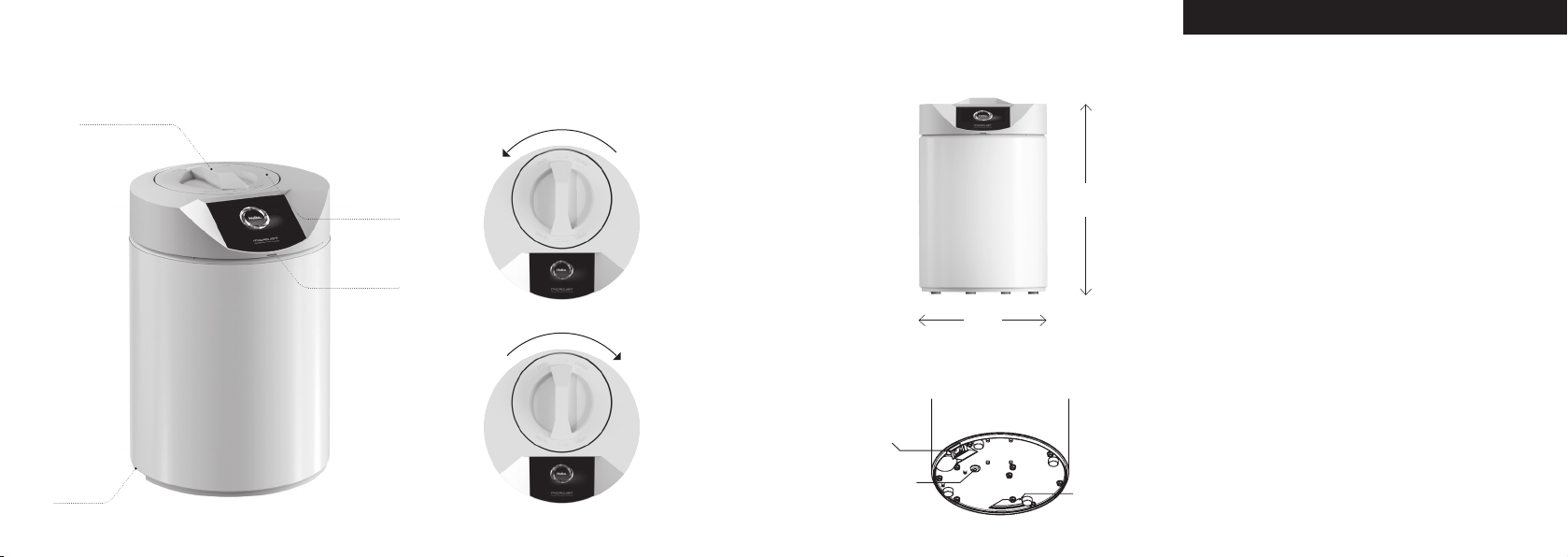
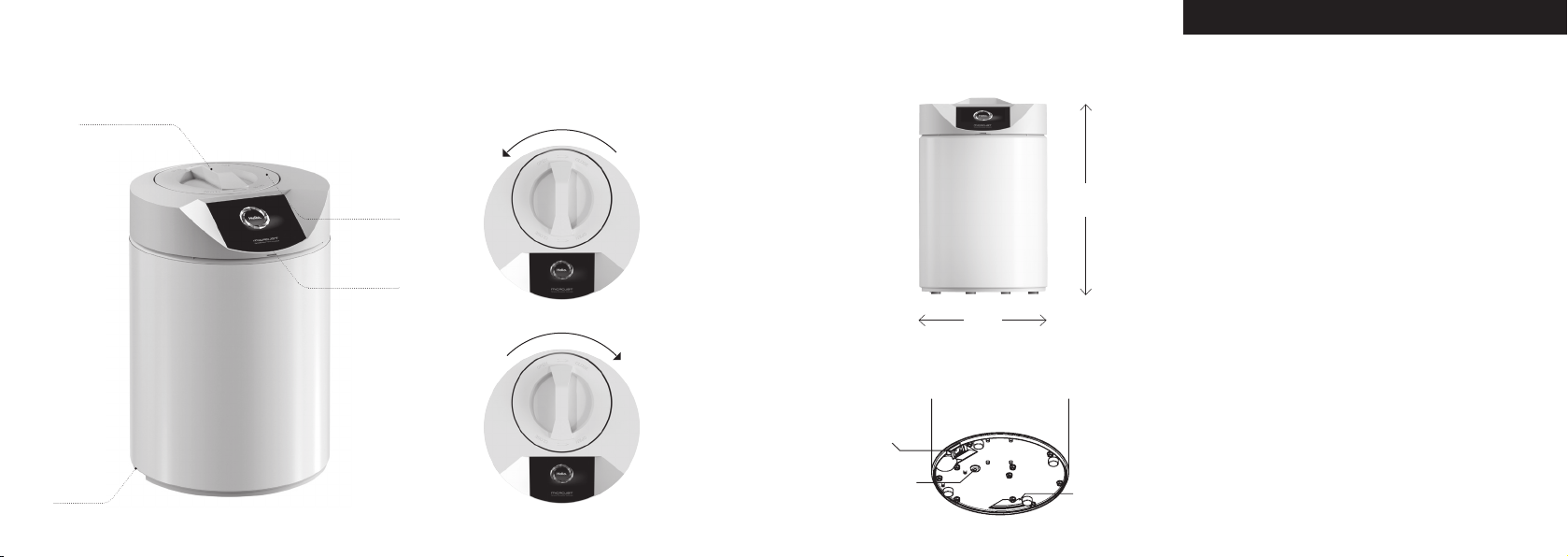
2. DEVICE PARTS, INTENDED USE AND PRINCIPLE
OF OPERATION.
2.1. Intended use
The Microjet unit is intended for sterilization of liquid media, in a low vol-
ume, by the thermal method. Liquid media can be sterilized in glass flasks
or other containers of capacity in the range from 100 to 500 ml. The flasks
made of plastic materials certified for sterilization in temperature of 135°C
can also be applied.
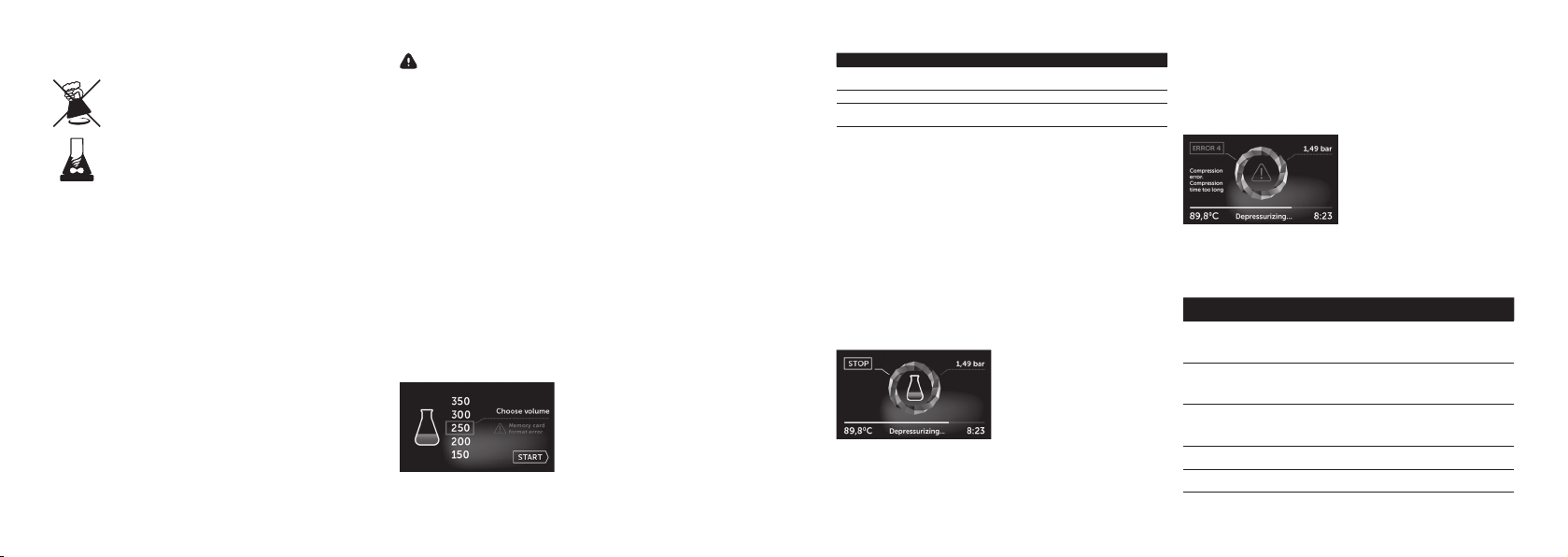
Only one flask can be placed in the process chamber at one time,
regardless of its size! DO NOT start the sterilization programme when
the chamber is empty.
1. INTRODUCTION.
1.1. Precautions, requirements and recommendations
The present documentation has to be read carefully, as the assem-
blage and usage of the device according to the descriptions contained
therein and following all safety requirements are the principles of the
appropriate and safe operation of the instrument. Any use contradictory
to this instruction may cause accidents with serious consequences. Un-
authorized personnel should have limited access to the device, while the
manning personnel should be properly trained. The term manning per-
sonnel refers to people, who, as the result of completed training, personal
experience and knowledge of important standards, documentation and
provisions concerning safety and working conditions, have been author-
ized to carry out necessary activities and are able to recognize potential
hazards and avoid them. This technical documentation has to be delivered
together with the equipment. The documentation contains information
concerning assembly and installation, as well as start-up, operation, repair
and maintenance of the device. Providing that the device is operated con-
forming to its intended use, this documentation contains sufficient instruc-
tions, essential for the qualified personnel. The documentation should be
located close to the device to be readily available to the service team. The
manufacturer reserves the right to introduce changes to the instruction as
well as changes to the device that affect its operation without prior notice.
Enbio Technology Sp. z o.o. shall bear no responsibility for ongoing main-
tenance, inspections, programming of equipment and damage, caused
by standstills related to awaiting for warranty services, any damage to the
Client’s property other than the device in question, neither malfunctions
resulting from incorrect installation or improper use of the device.
1.2. Precautions to avoid possible exposure to excessive microwave
energy
Failure to observe the following safety precautions may result in
harmful exposure to microwave energy.
insert any object into the lock holes.
the chamber case or allow deposits of e.g. cleaning agent residues to
accumulate on sealing surfaces. Ensure that the device cover and cover
sealing surfaces are clean by wiping after use with a damp cloth, and then
with a soft dry cloth.
-
paired by a qualified service technician trained by the manufacturer.
Particular attention has to be paid if the cover of the process chamber clos-
es properly and there is no damage to the:
The device should be regulated or repaired solely by a qualified service
technician adequately trained by the manufacturer.
This product is a Group 2 Class B ISM equipment.The definition of Group
2 devices comprises all ISM equipment in which energy of radio-fre-
quency is intentionally generated and/or used in the form of electro-
magnetic radiation for the material processing, and EDM-processing
and arc welding.
Being the Class B appliance the sterilizer is suitable for domestic use and
in establishments with direct connection to low voltage power supply
network in residential constructions.