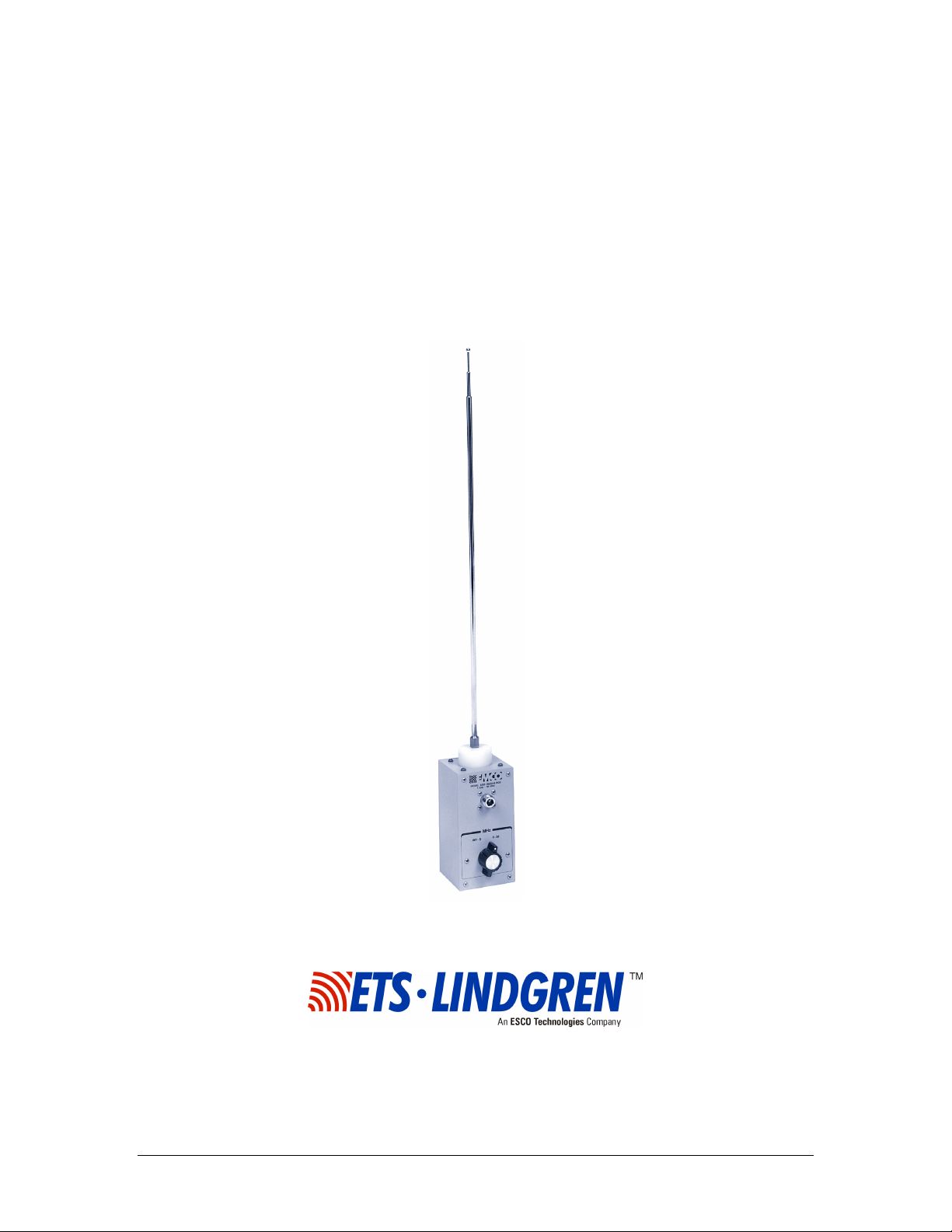
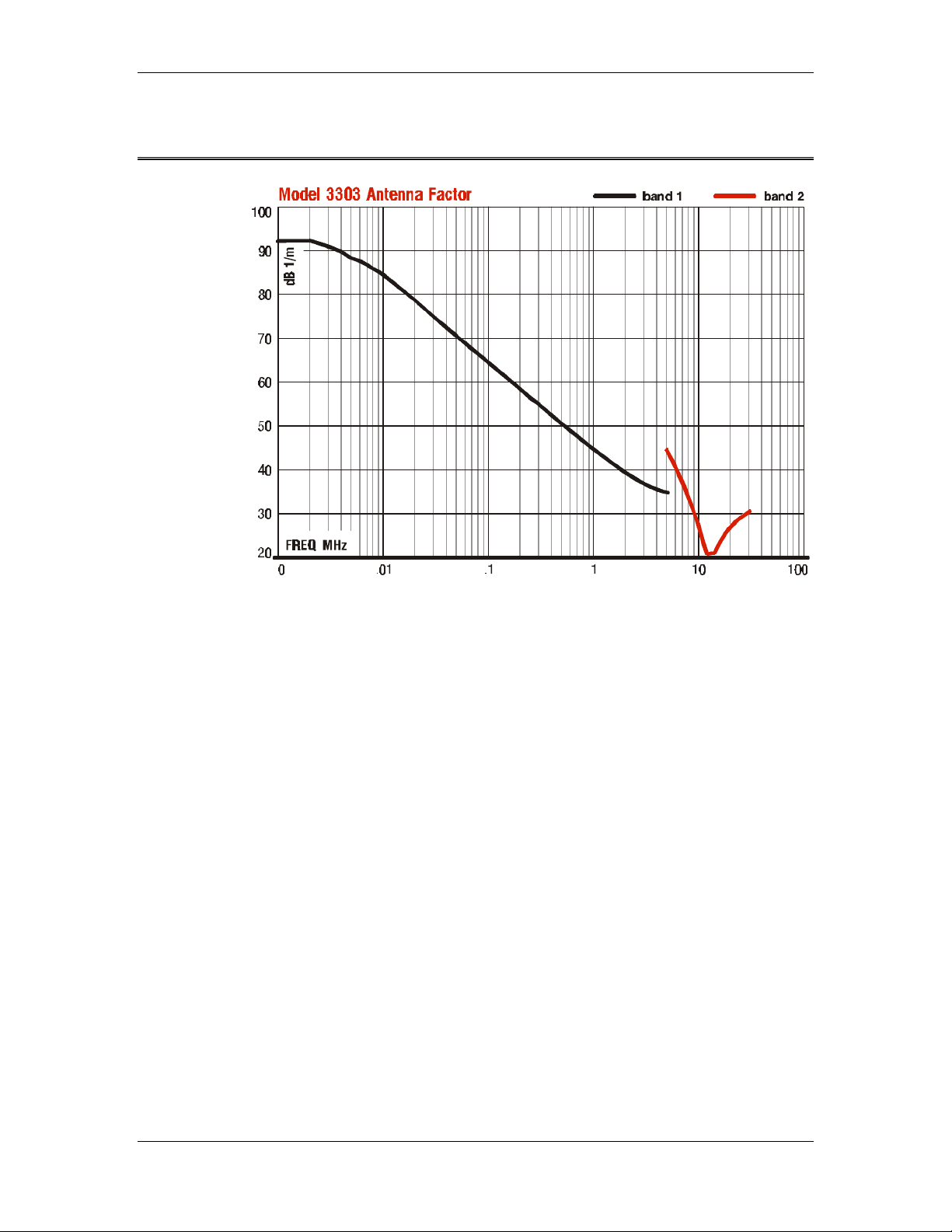
MODEL 3303 ROD ANTENNA Model 3305 System Setup
© EMC TEST SYSTEMS, L.P. –OCTOBER 2002 5
REV B –PN 399047
MODEL 3305 SYSTEM SETUP
SUGGESTED TEST PROCEDURE FOR
MEASURING ELECTRONIC FIELD
SHIELDING EFFECTIVENESS
Set the transmitting and receiving antennas, 24 inches + thickness
of screen room wall, apart from each other. Set up equipment as
shown in Figure 1. Turn generator to “ON” position. Disable RF
output of generator. Turn amplifier to “ON” position. Turn
receiver to “ON” position. Turn Model 3301B receiver rod power
“ON” (verify green light is “ON”). Set receiver. Set the attenuator
at maximum (100-150 dB) attenuation. Enable RF output of the
generator.
Adjust signal amplitude on signal generator to maximum allowed
by amplifier Input. Establish a reference level by decreasing the
attenuation level until the signal can be detected by the receiver.
Note the attenuator setting. Relocate antennas with screen room
wall between them. Reduce attenuation further until signal is again
seen at the same level as without shielding. The difference in the
two attenuator settings is the shielding effectiveness. If the signal
cannot be seen with a zero setting; then the shielding effectiveness
is greater than the attenuation range or the power amplifier does
not have enough power. Refer to Figure 1 for Test Set-up. Table 1
shows the maximum shielding effectiveness measuring capability
of the 3305 Rod Set and the approximate wattage required for the
Transmitting Rod 3303 to meet the minimum shielding
requirements of NSA 65-6.
NOTE: These shielding effectiveness readings are valid only if the
power amplifier is operating in the linear region. This can be
verified by reducing (or increasing) attenuation and observing the
receiver signal on the analyzer or receiver. If the receiving signal
also decreases (or increases) by the same amount then the amplifier
is operating in the linear region.