manuals.online logo
Brands
  1. Home
  2. •
  3. Brands
  4. •
  5. FuzzDog
  6. •
  7. Music Pedal
  8. •
  9. FuzzDog Clay Jones OD V2 User manual

FuzzDog Clay Jones OD V2 User manual

Other FuzzDog Music Pedal manuals

FuzzDog BSIAB2 User manual

FuzzDog

FuzzDog BSIAB2 User manual

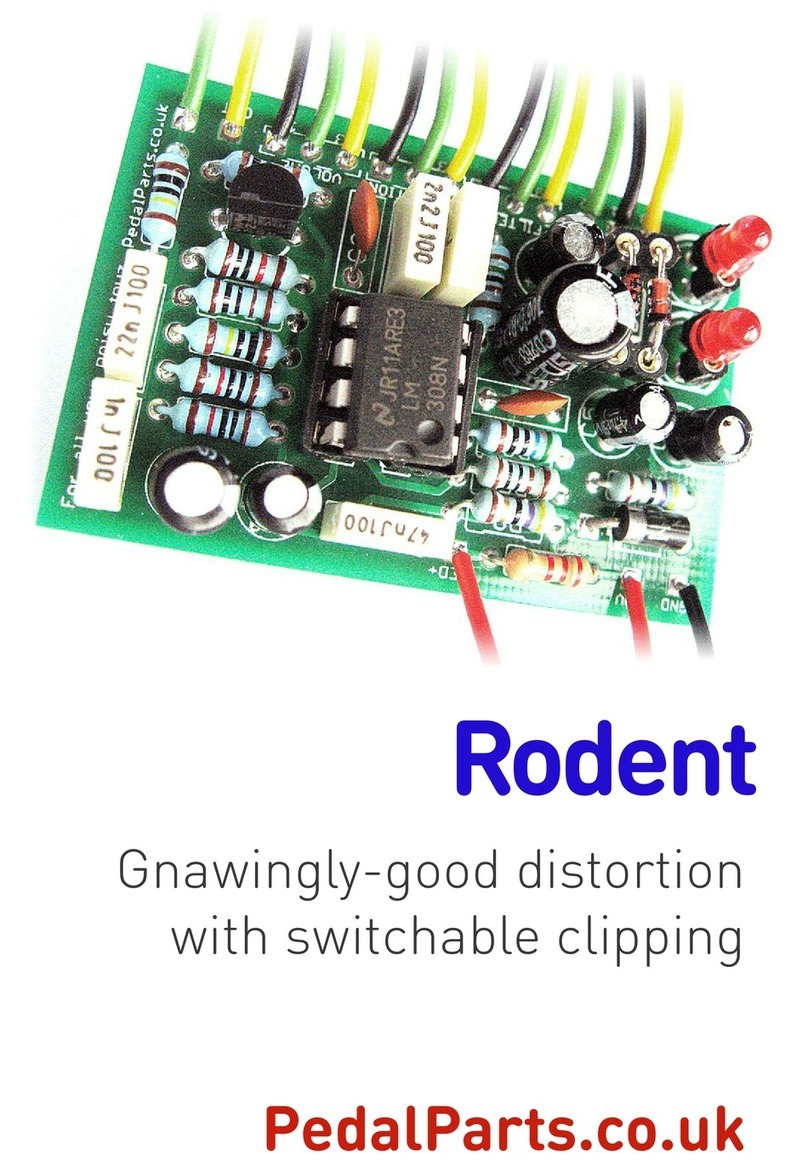
FuzzDog Rodent User manual

FuzzDog

FuzzDog Rodent User manual

FuzzDog Peachy Fuzz User manual

FuzzDog

FuzzDog Peachy Fuzz User manual

FuzzDog AB/Y User manual

FuzzDog

FuzzDog AB/Y User manual

FuzzDog Animatron User manual

FuzzDog

FuzzDog Animatron User manual

FuzzDog 7 of Dwarves Auto Wah User manual

FuzzDog

FuzzDog 7 of Dwarves Auto Wah User manual

FuzzDog Toxic Minx Distortion plus User manual

FuzzDog

FuzzDog Toxic Minx Distortion plus User manual

FuzzDog Hot Snake Boost User manual

FuzzDog

FuzzDog Hot Snake Boost User manual

FuzzDog BrassBlender User manual

FuzzDog

FuzzDog BrassBlender User manual

FuzzDog Axis Fuzz User manual

FuzzDog

FuzzDog Axis Fuzz User manual

FuzzDog SimpleTestRig User manual

FuzzDog

FuzzDog SimpleTestRig User manual

FuzzDog Wrecktifier User manual

FuzzDog

FuzzDog Wrecktifier User manual

FuzzDog Ultimatum Fuzz User manual

FuzzDog

FuzzDog Ultimatum Fuzz User manual

FuzzDog Rodent User manual

FuzzDog

FuzzDog Rodent User manual

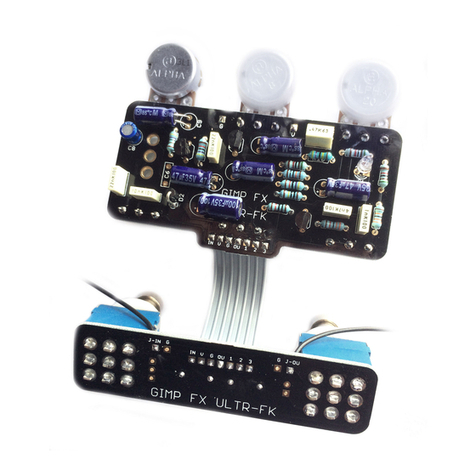
FuzzDog GimpFX Ultr-Fk User manual

FuzzDog

FuzzDog GimpFX Ultr-Fk User manual

FuzzDog MicrAmp User manual

FuzzDog

FuzzDog MicrAmp User manual

FuzzDog FuzzPup Rodent User manual

FuzzDog

FuzzDog FuzzPup Rodent User manual

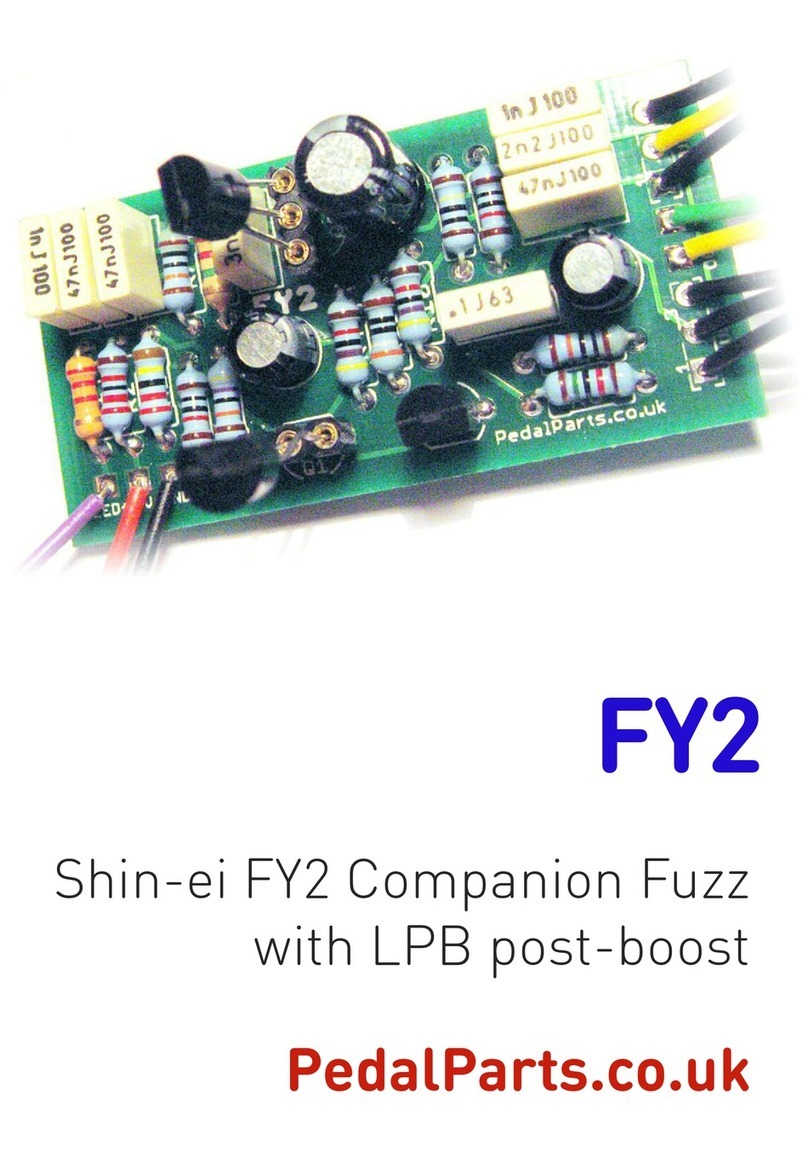
FuzzDog Shin-Ei FY2 Companion Fuzz User manual

FuzzDog

FuzzDog Shin-Ei FY2 Companion Fuzz User manual

FuzzDog Ruby/NoisyCricket User manual

FuzzDog

FuzzDog Ruby/NoisyCricket User manual

FuzzDog Jordan Bosstone User manual

FuzzDog

FuzzDog Jordan Bosstone User manual

FuzzDog FY2 User manual

FuzzDog

FuzzDog FY2 User manual

FuzzDog Pussy King User manual

FuzzDog

FuzzDog Pussy King User manual

FuzzDog PHASE 90 User manual

FuzzDog

FuzzDog PHASE 90 User manual

FuzzDog Tube Screamer v4.0 User manual

FuzzDog

FuzzDog Tube Screamer v4.0 User manual

Popular Music Pedal manuals by other brands

Walrus Audio ARP-87 instruction manual

Walrus Audio

Walrus Audio ARP-87 instruction manual

Ibanez Phaser Mini owner's manual

Ibanez

Ibanez Phaser Mini owner's manual

Ashdown GEEZER BUTLER PEDAL OF DOOM user guide

Ashdown

Ashdown GEEZER BUTLER PEDAL OF DOOM user guide

TC Electronic G-Natural user manual

TC Electronic

TC Electronic G-Natural user manual

Pro-MIDI G25 user manual

Pro-MIDI

Pro-MIDI G25 user manual

Whirlwind oc-bass quick start guide

Whirlwind

Whirlwind oc-bass quick start guide

Strymon Lex-rotary user manual

Strymon

Strymon Lex-rotary user manual

Behringer PB600 manual

Behringer

Behringer PB600 manual

Lexicon MX200 user guide

Lexicon

Lexicon MX200 user guide

Dunlop Hendrix 68 Shrine Octavio Fuzz Series quick start guide

Dunlop

Dunlop Hendrix 68 Shrine Octavio Fuzz Series quick start guide

Matthews Effects Whaler V2 manual

Matthews Effects

Matthews Effects Whaler V2 manual

Grid 1 Pedal Jeanie user manual

Grid 1

Grid 1 Pedal Jeanie user manual

Amptweaker tightboost user manual

Amptweaker

Amptweaker tightboost user manual

Ibanez TS-808 Tube Screamer Overdrive Pro owner's manual

Ibanez

Ibanez TS-808 Tube Screamer Overdrive Pro owner's manual

DW 7000 owner's manual

DW

DW 7000 owner's manual

FAMC Liquid-Foot Jr. Series user manual

FAMC

FAMC Liquid-Foot Jr. Series user manual

Dimavery EPVP-50 manual

Dimavery

Dimavery EPVP-50 manual

Tefi Vintage Lab GEGÈ operating manual

Tefi Vintage Lab

Tefi Vintage Lab GEGÈ operating manual

manuals.online logo
manuals.online logoBrands
  • About & Mission
  • Contact us
  • Privacy Policy
  • Terms and Conditions

Copyright 2025 Manuals.Online. All Rights Reserved.

Clay Jones OD V2
Super-rare, silly-expensive
boutique Tube Screamer
Contents of this document are ©2016 Pedal Parts td.
No reproduction permitted without the express written
permission of Pedal Parts td. All rights reserved.
Schematic +BOM
R1 1K
R2 510K
R3 10K
R5 10K
R6 1K
R7 10K
R8 1K
R9 10K
R10 10K
R11 220R
R12 510K
R13 10K
R14 10K
R15 100R
R16 empty
R17 1K
R18 1K
R22 1M*
R ED 2K2
C1 22n
C2 1u
C3 220n
C4 50p‡
C5 220n**
C7 47u
C8 1u
C9 220n**
C10 100n
C11 10u
C12 100u
IC OPA2134
Q1,2 BC546B***
D1,2 3mm red ED
D3 Jumper
D4 1N4148
or 1N4001
TONE 20KB/W
DRIVE 1MA
EVE 100KB
*R22 - optional anti-pop resistor not on original.
**C5 and C9 are polarised tantalums on a normal Tube
Screamer. In the CJOD they’re non-polarised film, so
you’ll have to source some with 2.5mm pitch if you want
them to fit nicely.
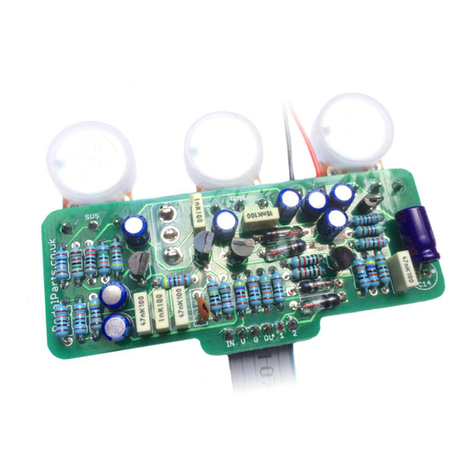
***BC546B has pin-out opposite to the 2N3904 the PCB
was designed for. They should go the opposite way round
to those shown on the PCB. See image on first page.
‡47p at C4 will be totally fine - seriously.
As this circuit is being built on a Tube Screamer PCB that has extra component spots for
modifications you’ll find you have empty spaces. Don’t worry about it.
PCB ayout ©2016 Pedal Parts td.
The power and signal pads on the
PCB conform to the FuzzDog Direct
Connection format, so can be paired
with the appropriate daughterboard
for quick and easy offboard wiring.
Be very careful when soldering the
ED, transistors and diodes. They’re
very sensitive to heat. You should use
some kind of heat sink (crocodile clip
or reverse action tweezers) on each
leg as you solder them. Keep
exposure to heat to a minimum
(under 2 seconds). You should use a
socket for IC1 or be ultra careful
when soldering.
The cathode (striped end) of the diodes go
into the square pads. The anode (long leg)
of electrolytic capacitors go into the square
pads. C12 can be bent over the adjacent
resistors to save on height (see pic on first
page), giving more clearance when
mounting in the enclosure.
Snap the small metal tag off the pots so
they can be mounted flush in the enclosure.
If you’re using a footswitch daugherboard
don’t bother soldering R ED. You’ll use that
on the daughterboard instead. What does
C R mean? Current imiting Resistor. It’s
what stops your ED from popping. You can
use anything from 1K-4K7 here, depending
how bright you want your ED to be. ower
value = brighter.
Pots mount on the back side of the board.
You can use vertical-mount pots or just wire
up ‘normal’ ones. It’s a good idea to place
the pots in their holes in the enclosure
when you’re soldering them in place on the
PCB. That way you know they’re going to
line up ok. Best way to do it is to solder a
single pin of each pot in place, then do a
visual check to see that they’re sitting at the
same height. If not, melt the joints and
readjust any that are off.
POT POSITIONS
You’ll notice there are two lots of pads for
EVE and DRIVE. The lower set were
added so those pots could be offset if using
the switch S1 for a Tube Screamer More
Bass mod. For correct postitioning you
should use the upper pads on your build.
The cover image doesn’t show C7 in place.
The pretty photo was taken before we
realised it was missing. Make sure you
include it.

Test the board!
NDER NO CIRC MSTANCES will troubleshooting help
be offered if you have skipped this stage. No exceptions.
Once you’ve finished the circuit it makes sense to test is before
starting on the switch and LED wiring. It’ll cut down
troubleshooting time in the long run. If the circuit works at this
stage, but it doesn’t once you wire up the switch - guess what?
You’ve probably made a mistake with the switch.
Solder some nice, long lengths of wire to the board connections for
9V, GND, IN and O T. Connect IN and O T to the jacks as shown.
Connect all the GNDs together (twist them up and add a small
amount of solder to tack it). Connect the battery + lead to the 9V
wire, same method. Plug in. Go!
If it works, crack on and do your switch wiring. If not... aw man.
At least you know the problem is with the circuit. Find out why, get
it working, THEN worry about the switch etc.
BATTERY
IN OUT
Your nice, new circuit board
INCLUDING WIRED POTS!!!!
IN 9V GND OUT
(if using a daughterboard please refer to the relevant document)
Wire it up - with battery
This circuit is standard, Negative GND. Your power supply should be
Tip Negative / Sleeve Positive. That’s the same as your standard pedals
(Boss etc), and you can safely daisy-chain your supply to this pedal.
The BOARD GND connections don’t all have to connect to one point. They
can be daisy-chained around the circuit, using larger connection points
(such as jack socket lugs) for multiple connections. As long as they all

connect together in some way.
L
E
D
BOARD
OUT
BOARD
9V
BOARD
GND
BOARD
GND
BOARD
GND
BOARD
INPUT
BATTERY
+
IN
OUT
L
E
D
BOARD
GND
BOARD
LED+
+
(if using a daughterboard please refer to the relevant document)
Wire it up - DC only version
This circuit is standard, Negative GND. Your power supply should be
Tip Negative / Sleeve Positive. That’s the same as your standard pedals
(Boss etc), and you can safely daisy-chain your supply to this pedal.
The BOARD GND connections don’t all have to connect to one point. They
can be daisy-chained around the circuit, using larger connection points
(such as jack socket lugs) for multiple connections. As long as they all
connect together in some way.
L
E
D
BOARD
OUT
BOARD
9V
BOARD
GND
BOARD
GND
BOARD
GND
BOARD
INPUT
+
IN
OUT
L
E
D
BOARD
GND
BOARD
LED+
This template is a rough guide only. You should ensure correct marking of your
enclosure before drilling. You use this template at your own risk.
Pedal Parts td can accept no responsibility for incorrect drilling of enclosures.
PedalParts.co.uk
Drillin template
Hammond 1590B
60 x 111 x 31mm
It’s a ood idea to drill the
pot and to le switch holes
1mm bi er if you’re
board-mountin them.
Wi le room = ood!
Recommended drill sizes:
Pots 7mm
Jacks 10mm
Footswitch 12mm
DC Socket 12mm
32mm
21mm