-2- -19-
0.0 Introduction to HomePlug Networking
0.1 Understanding HomePlug Networking Concept
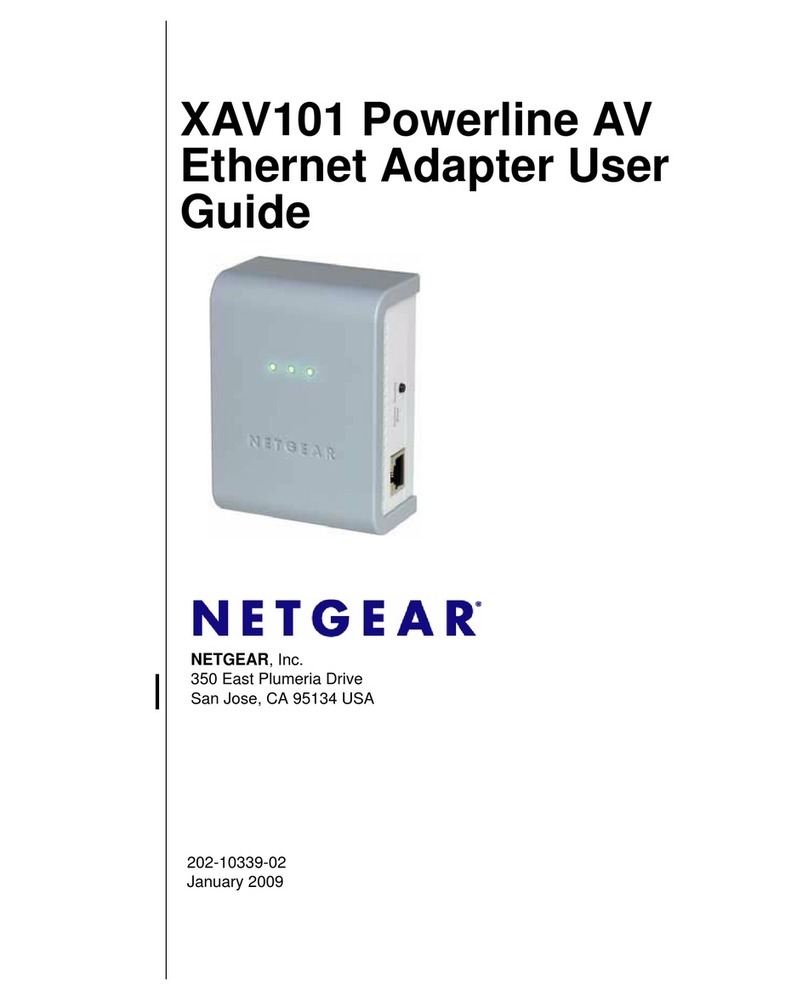
HomePlug networking, not to be confused with Power over Ethernet,
has a whole different usage and features. Power over Ethernet is a
device that serves the purpose of a Hub or Switch, drawing its power
from nearby unsuspecting computers connected to it by a Cat. 5.
On the other hand, HomePlug Networking uses your current existing
or featured power line to transfer network data. One might ask, isn’t
there something called X10 or HPNA already? Yes, however,
HomePlug can reach up to the speed of 14Mbps! Also, 24Mbps is
already being tested.
The way HomePlug works is that a device is connected at one end
of the house to your computer and wall plug, where it draws power.
Then, at the second section of the house or building, a second
computer is connected with the same steps. It’s that simple! Now
you have a network connecting two computers. In addition, you
can replace the computers with switches so that you are
connecting networks instead of computers. The process is done
within minutes with no additional cables running all over the place
and no painful cable pulling in the walls or behind closets.
The technology behind the real working mechanism remains
classified. Hopefully in the future, everyone will have a better
understanding.
0.2 Understanding Encryption and Security
Encryption is a method of security used to prevent intruders or
unwanted access from within or outside of your network. It is
basically a string of letters and/or numbers used as keys to encrypt
your data. Any person will need to know the encryption key in order
to access the data. Even though the data may be exposed to all
environments, the encryption will still protect your security from
threats.
This is the end of configuration and ends setup for this HomePlug
device only. This program must be run on all computers that have
connected HomePlug devices. This program cannot be run
remotely. Each computer must have its own program installed.
Upon completion of the installation, this program does not need to
be run again unless the encryption is to be changed. The HomePlug
adapter will not lose its encryption key by unplugging the power, so
the unit can be setup and moved to the correct location.
This will provide basic protection against unwanted access.
However, any person that has physical access to the unit just
configured can still take over a network. If you think such a scenario
is possible, please read the advanced encryption section.