Page 2
CAUTION! DO NOT LOOK DIRECTLY AT THESE LED’S WHILE THEY ARE ON.
MOMENTARY BLINDNESS AND/OR EYE DAMAGE COULD RESULT!
IMPORTANT WARNING!
WARNING! All customer supplied wires that connect to the
positive terminal of the battery must be sized to supply at least
125% of the maximum operating current and FUSED at the battery
to carry that load. DO NOT USE CIRCUIT BREAKERS WITH THIS
PRODUCT!
Operation -
Scan-Lock™ - TIR3™ lightheads have a special set of flash patterns,
with each pattern available in two modes; Phase 1 and Phase 2. The
patterns are changed with the WHT wire.
To advance to the next pattern, apply +12VDC to the WHT wire for less
than 1 second. To cycle backwards to previous patterns, apply +12VDC
for more than 1 second.
To reset to the factory default pattern, begin by turning off power to the
lighthead. While applying +12VDC to the WHT wire, turn the lighthead
back on. Continue to apply voltage to the WHT wire for 5 seconds.
All lightheads configured to display the Phase 1 mode of a given pattern
will flash simultaneously. Any lightheads configured to display the
Phase 2 mode of a pattern, will alternate with any Phase 1 lightheads
with the same pattern.
Sync - To sync two lightheads, configure both lightheads to display the
same Phase 1 pattern. With the power off, connect the BLUE wires
from each lighthead together. When the lightheads are activated, their
patterns will be synchronized. To configure the two lightheads to
alternate their patterns, advance the pattern of either lighthead to the
Phase 2 mode of the current pattern.
To understand how to use the SYNC feature with more than 2
lightheads, the principles will be applied to a sample system consisting
of 4 lightheads. 2 are mounted on the rear, driver side of the vehicle and
2 mounted on the rear, passenger side of the vehicle.
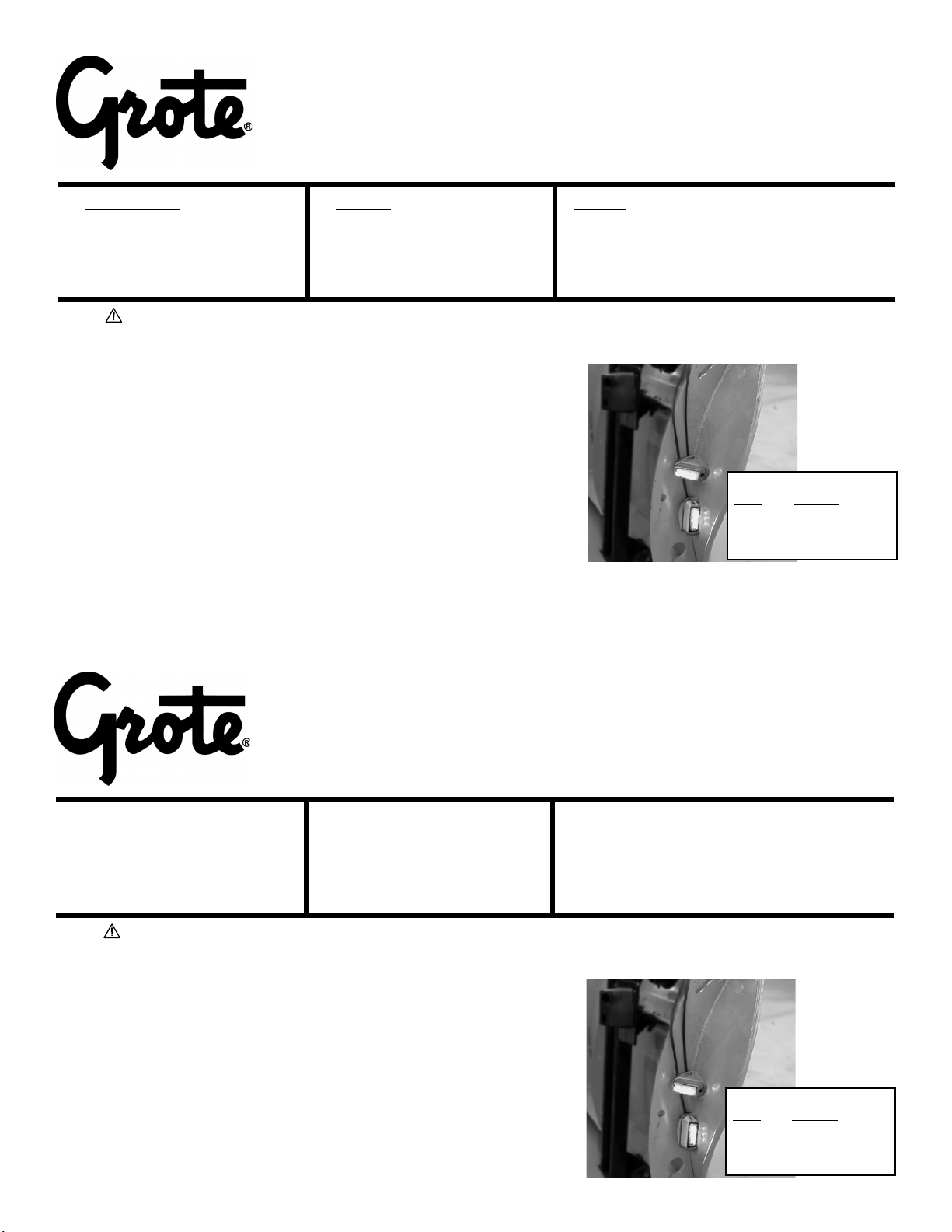
With all the wiring complete, turn on the 4 lightheads. As shipped from
the factory, all the lightheads will simultaneously display the same
pattern (SignalAlert™ 75 Phase 1).
EXAMPLE: To configure the passenger side lightheads to alternate
with the driver side lightheads, change the flash patterns for either the
passenger or driver side to Phase 2 mode of the same pattern.
Available Scan-Lock™ Patterns
SYNC Flash Patterns: SignalAlert™ 75 Phase 1 > SignalAlert™ 75
Phase 2 > CometFlash® 75 Phase 1 > CometFlash® 75 Phase 2 >
DoubleFlash 75 Phase 1 > DoubleFlash 75 Phase 2 > SingleFlash 75
Phase 1 > SingleFlash 75 Phase 2 > ComAlert™ 75 Phase 1 >
ComAlert™ 75 Phase 2 > LongBurst™ 75 Phase 1 > LongBurst™ 75
Phase 2 > PingPong 75 Phase 1 > PingPong 75 Phase 2 > Regular
Flash Patterns: SingleFlash 60 > SingleFlash 90 > SingleFlash 120
> SingleFlash 300 > DoubleFlash 150 > ComAlert™ 150 > Action-
Flash™ 1 > ActionFlash™ 2 > ModuFlash™ > ActionScan™ >
Steady
IMPORTANT! It is the responsibility of the installation technician
to make sure that the installation and operation of this product will
not interfere with or compromise the operation or efficiency of any
vehicle equipment!
IMPORTANT! Before returning the vehicle to active service,
visually confirm the proper operation of this product, as well as all
vehicle components/equipment.
CAUTION! DO NOT LOOK DIRECTLY AT THESE LED’S WHILE THEY ARE ON.
MOMENTARY BLINDNESS AND/OR EYE DAMAGE COULD RESULT!
IMPORTANT WARNING!
WARNING! All customer supplied wires that connect to the
positive terminal of the battery must be sized to supply at least
125% of the maximum operating current and FUSED at the battery
to carry that load. DO NOT USE CIRCUIT BREAKERS WITH THIS
PRODUCT!
Operation -
Scan-Lock™ - TIR3™ lightheads have a special set of flash patterns,
with each pattern available in two modes; Phase 1 and Phase 2. The
patterns are changed with the WHT wire.
To advance to the next pattern, apply +12VDC to the WHT wire for less
than 1 second. To cycle backwards to previous patterns, apply +12VDC
for more than 1 second.
To reset to the factory default pattern, begin by turning off power to the
lighthead. While applying +12VDC to the WHT wire, turn the lighthead
back on. Continue to apply voltage to the WHT wire for 5 seconds.
All lightheads configured to display the Phase 1 mode of a given pattern
will flash simultaneously. Any lightheads configured to display the
Phase 2 mode of a pattern, will alternate with any Phase 1 lightheads
with the same pattern.
Sync - To sync two lightheads, configure both lightheads to display the
same Phase 1 pattern. With the power off, connect the BLUE wires
from each lighthead together. When the lightheads are activated, their
patterns will be synchronized. To configure the two lightheads to
alternate their patterns, advance the pattern of either lighthead to the
Phase 2 mode of the current pattern.
To understand how to use the SYNC feature with more than 2
lightheads, the principles will be applied to a sample system consisting
of 4 lightheads. 2 are mounted on the rear, driver side of the vehicle and
2 mounted on the rear, passenger side of the vehicle.
With all the wiring complete, turn on the 4 lightheads. As shipped from
the factory, all the lightheads will simultaneously display the same
pattern (SignalAlert™ 75 Phase 1).
EXAMPLE: To configure the passenger side lightheads to alternate
with the driver side lightheads, change the flash patterns for either the
passenger or driver side to Phase 2 mode of the same pattern.
Available Scan-Lock™ Patterns
SYNC Flash Patterns: SignalAlert™ 75 Phase 1 > SignalAlert™ 75
Phase 2 > CometFlash® 75 Phase 1 > CometFlash® 75 Phase 2 >
DoubleFlash 75 Phase 1 > DoubleFlash 75 Phase 2 > SingleFlash 75
Phase 1 > SingleFlash 75 Phase 2 > ComAlert™ 75 Phase 1 >
ComAlert™ 75 Phase 2 > LongBurst™ 75 Phase 1 > LongBurst™ 75
Phase 2 > PingPong 75 Phase 1 > PingPong 75 Phase 2 > Regular
Flash Patterns: SingleFlash 60 > SingleFlash 90 > SingleFlash 120
> SingleFlash 300 > DoubleFlash 150 > ComAlert™ 150 > Action-
Flash™ 1 > ActionFlash™ 2 > ModuFlash™ > ActionScan™ >
Steady
IMPORTANT! It is the responsibility of the installation technician
to make sure that the installation and operation of this product will
not interfere with or compromise the operation or efficiency of any
vehicle equipment!
IMPORTANT! Before returning the vehicle to active service,
visually confirm the proper operation of this product, as well as all
vehicle components/equipment.