Operating Instructions
Situations may vary; it is impossible to list all Hazards. Stay alert. Be aware. YOU can help or
prevent accidents
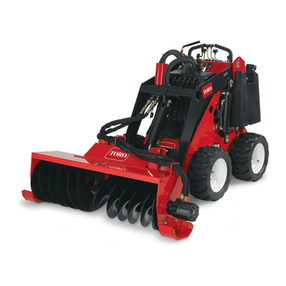
• Before any operation of Spin Doctor, be familiar with the locations and functions of the unit’s
instruments and controls. Being familiar with the machine and its controls will increase efficiency and
reduce the possibility of personal injury or damage to the unit. The operator should work slowly and
carefully until he feels comfortable with the machine. Speed and skill will be attained much easier if
the necessary time is spent to familiarize the operator with the machine and its operations.
• Always check engine oil level and hydraulic oil level in reservoir prior to starting engine.
• Attach hydraulic boom hoses to the power pack, making sure they are correctly connected and coupler
is locked.
• Remove position lock pins from boom to allow boom to extend and swivel.
• Start power pac engine. (See engine owners manual for operating instructions)
• Insert extension key attaching to valve nut. (Valve manufacturers recommend the first and last turn be
done by hand).
• Insert hydraulic motor drive into valve extension wrench.
AMERICAN WATER WORKS RECOMMENDED VALVE MAINTENANCE PROCEDURES:
Operation and maintenance procedures for various types of valves are detailed in manufacturer’s operation
manuals and in the appropriate product standards. The following paragraphs provide the guidelines for most
situations.
A valve that has not been operated for a number of years needs to be closed by using a series of up and
down motions. Crews attempting to close a difficult valve should never use a T-handle and cheater bar to
force the valve closed. Exceeding manufacturers recommended torque values to obtain a positive shutoff can
cause damage to the valve. Torque-limiting devices are available. Crews should follow these guidelines to
close a valve properly:
1. Begin with a steady amount of torque in the direction necessary to close the valve,
moving through 5 to 10 rotations.
2. Reverse for two or three rotations.
3. Reverse again and rotate 5 to 10 more turns in the closing direction.
4. Repeat this procedure until full closure is attained.
5. Once the valve is fully closed, it should be opened a few turns so that high-velocity water
flowing under the gates can move the remainder of the sediment downstream with more
force and clear the bottom part of the valve body for seating.
6. Fully close the valve again.
5