TDM Microphone Array Demo Board Guide
InvenSense reserves the right to change the detail
specifications as may be required to permit
improvements in the design of its products.
1745 Technology Drive, San Jose, CA 95110 U.S.A
+1(408) 988–7339
www.invensense.com
Document Number: AN-000094
Revision: 1.0
Release Date: 4/6/2017
GENERAL DESCRIPTION
This user guide describes operation of the TDM Microphone
Array Demo board, which uses 16 ICS-52000 microphones.
This allows evaluation of the ICS-52000 in a large 4x4 array,
with 15 mm spacing between adjacent microphones in the
array. The order of the microphones in the 16 TDM slots in
shown on the board’s top silkscreen.
TABLE 1. BOARD SETTINGS
Jumpers,
Switches Description
Connect SCK to mics 13-16
Connect SD between rows 1 & 2
Connect SD between rows 2 & 3
Connect SD between rows 3 & 4
Board power connection, >2.3 V, 40 mA
Select whether the board’s SD output signal is
buffered (left) or unbuffered (right).
Select whether the board’s SCK input signal is
buffered (left) or unbuffered (right)
TABLE 2. J1 PINOUT
Board VDD, Output of 1.8 V regulator. Do not
connect external supply to this pin.
SD – microphone data output
SCK – microphone serial clock input
WS – microphone frame clock input
BOARD OPERATION
The board can be set up for arrays of 4, 8, 12, or 16
microphones. The SCK signal to each horizontal row of four
microphones is enabled with jumpers J2-5. For an array of 4
mics, only populate jumper J2, for an array of 8 mics,
populate J2 & J3, and so on.
Jumpers J6-8 are used to connect or disconnect the SD trace
between rows, depending on how many mics are being used.
This is to minimize the loading of the SD line on a long trace.
Typically, switches S1 and S2 are set to enable buffers for the
SD output and SCK input. These can be disabled if necessary
for evaluation.
The board is powered by applying 2.3 – 3.3 V on J9. The
bottom pin of this jumper is VDD, the top pin is ground.
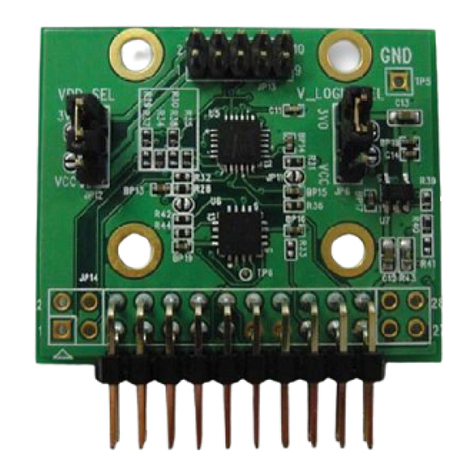
Figure 1. TDM Microphone Array Demo Board