manuals.online logo
Brands
  1. Home
  2. •
  3. Brands
  4. •
  5. JBL
  6. •
  7. Subwoofer
  8. •
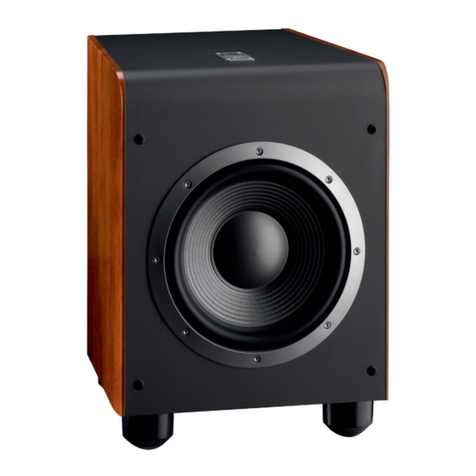
  9. JBL Decade DS100 User manual

JBL Decade DS100 User manual

This manual suits for next models

1

Other JBL Subwoofer manuals

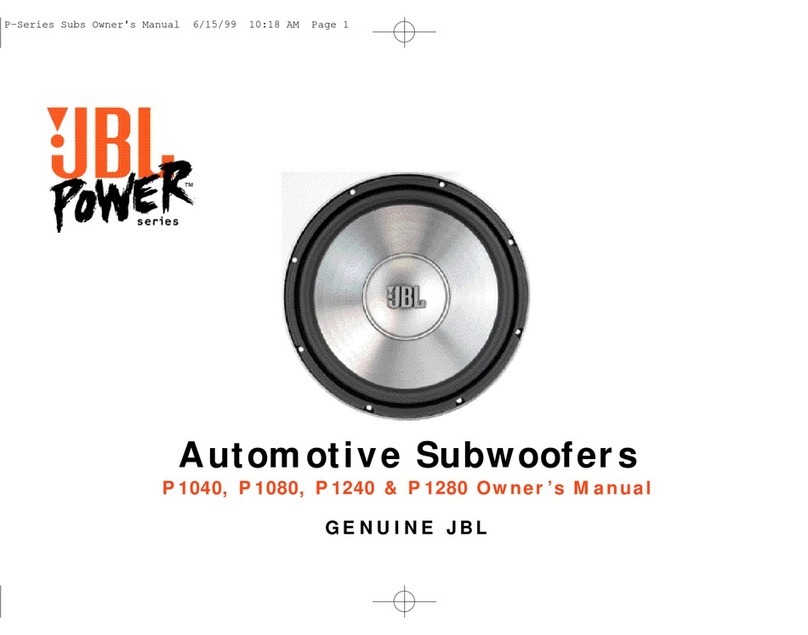
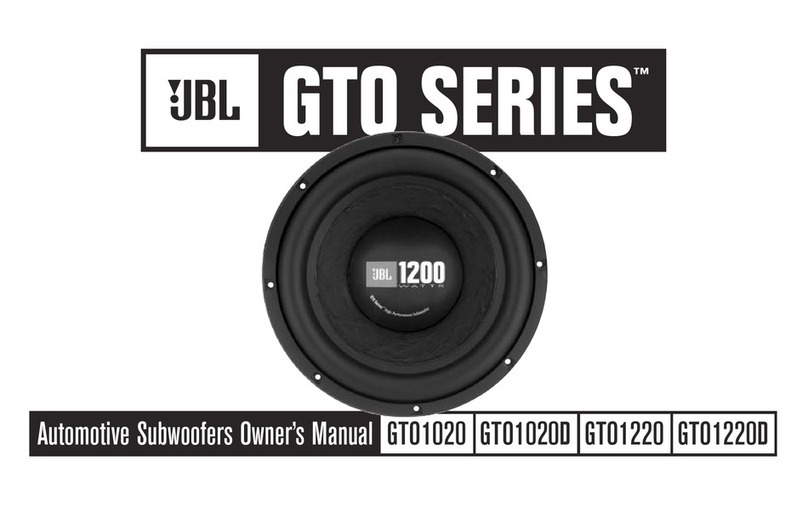
JBL GT120D Instruction manual

JBL

JBL GT120D Instruction manual

JBL 1000GTi Instruction manual

JBL

JBL 1000GTi Instruction manual

JBL TLX PS12 User manual

JBL

JBL TLX PS12 User manual

JBL SUB 250P User manual

JBL

JBL SUB 250P User manual

JBL Studio S120PII User manual

JBL

JBL Studio S120PII User manual

JBL CS1014 User manual

JBL

JBL CS1014 User manual

JBL TiK Sub User manual

JBL

JBL TiK Sub User manual

JBL Grand Touring GTO1014 User manual

JBL

JBL Grand Touring GTO1014 User manual

JBL Loud+Clear LC-S1050W User manual

JBL

JBL Loud+Clear LC-S1050W User manual

JBL TLX PS12 User manual

JBL

JBL TLX PS12 User manual

JBL GT4 User manual

JBL

JBL GT4 User manual

JBL Balboa SUB/230 User manual

JBL

JBL Balboa SUB/230 User manual

JBL SUB 250P User manual

JBL

JBL SUB 250P User manual

JBL STADIUM 1024 User manual

JBL

JBL STADIUM 1024 User manual

JBL 600GTI User manual

JBL

JBL 600GTI User manual

JBL SP-150 User manual

JBL

JBL SP-150 User manual

JBL SR4715X User manual

JBL

JBL SR4715X User manual

JBL SUB80P User manual

JBL

JBL SUB80P User manual

JBL P1224 Instruction manual

JBL

JBL P1224 Instruction manual

JBL CS10 User manual

JBL

JBL CS10 User manual

JBL BASSPRO User manual

JBL

JBL BASSPRO User manual

JBL ES150P User manual

JBL

JBL ES150P User manual

JBL GT-BassPro12 User manual

JBL

JBL GT-BassPro12 User manual

JBL 1800GTI Instruction manual

JBL

JBL 1800GTI Instruction manual

Popular Subwoofer manuals by other brands

Sony XS-AW8 operating instructions

Sony

Sony XS-AW8 operating instructions

Sony XS-L836 Specifications

Sony

Sony XS-L836 Specifications

B&C Speakers 15 HPL 76W Specifications

B&C Speakers

B&C Speakers 15 HPL 76W Specifications

Velodyne DD-18+ Specifications

Velodyne

Velodyne DD-18+ Specifications

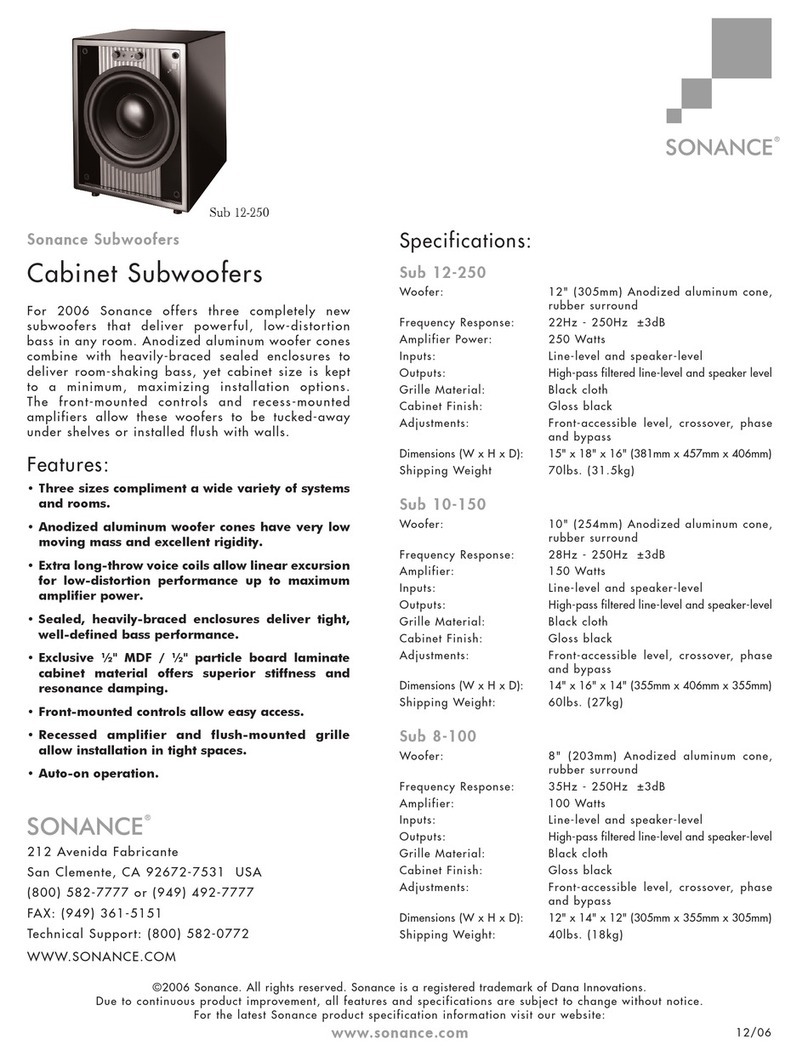
Sonance Cinema Series SUB 10-150 Specifications

Sonance

Sonance Cinema Series SUB 10-150 Specifications

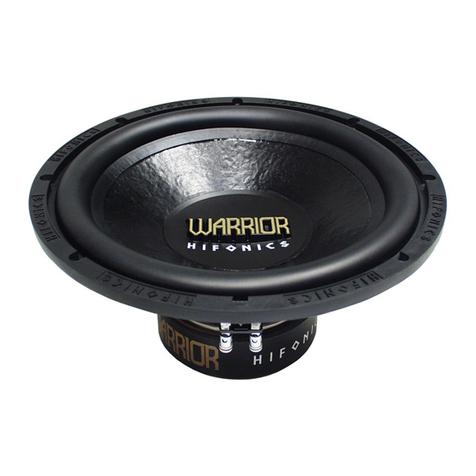
Hifonics HW-12 Owners & installation manual

Hifonics

Hifonics HW-12 Owners & installation manual

Magnat Audio ADR 130 BP user manual

Magnat Audio

Magnat Audio ADR 130 BP user manual

Blitz BZP106 Specifications

Blitz

Blitz BZP106 Specifications

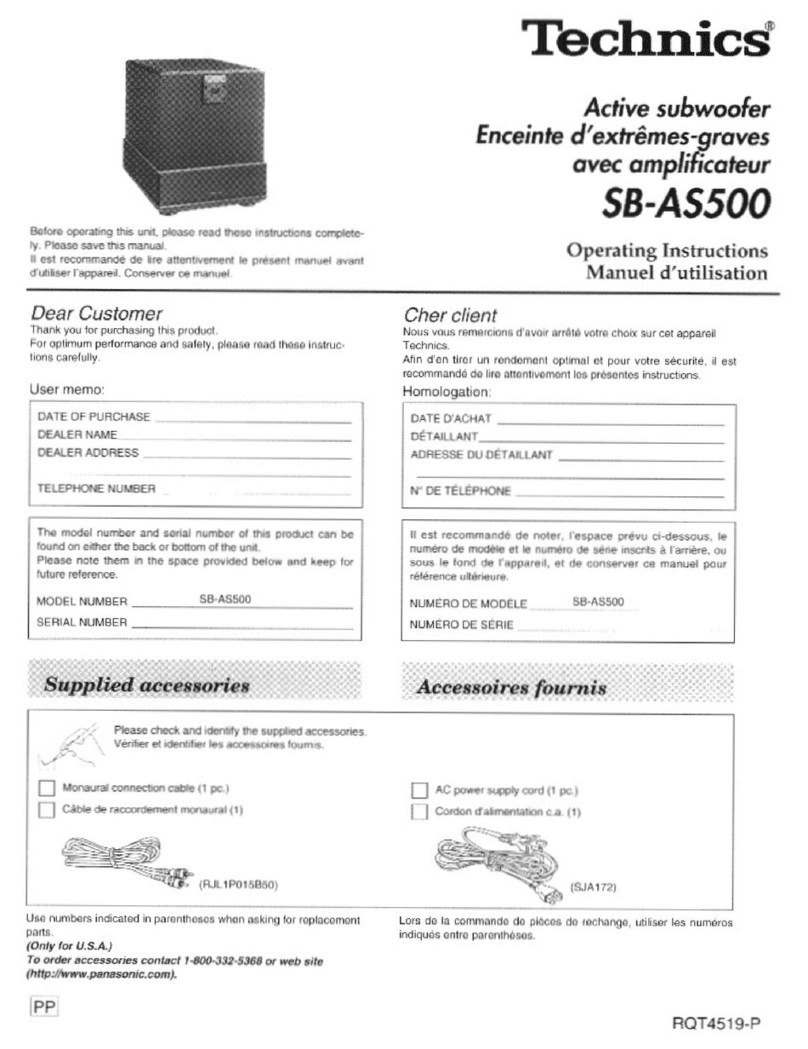
Technics SB-AS500 Operaing instructions

Technics

Technics SB-AS500 Operaing instructions

Lyngdorf BW-2 owner's manual

Lyngdorf

Lyngdorf BW-2 owner's manual

Lyngdorf BW-3 owner's manual

Lyngdorf

Lyngdorf BW-3 owner's manual

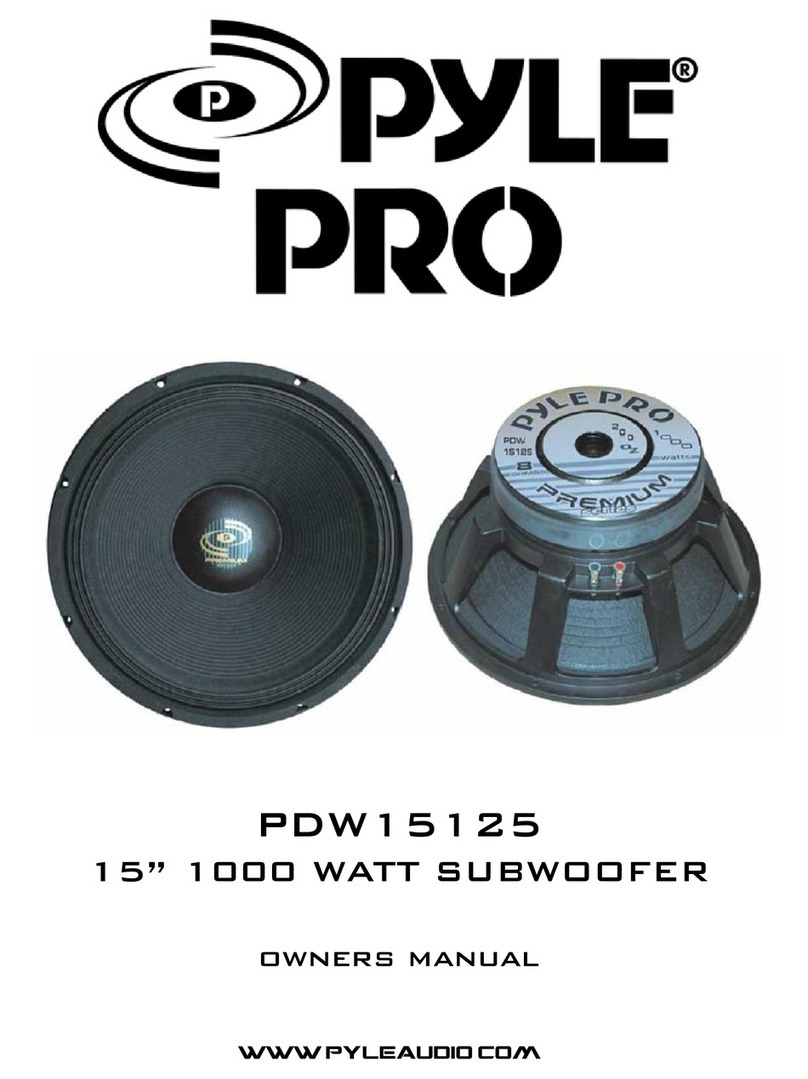
Pyle Pro PYLE PRO PDW15125 owner's manual

Pyle Pro

Pyle Pro PYLE PRO PDW15125 owner's manual

REL Acoustics Q Series operating instructions

REL Acoustics

REL Acoustics Q Series operating instructions

L-Acoustics KIVA SB15M Rigging manual

L-Acoustics

L-Acoustics KIVA SB15M Rigging manual

Pioneer Elite S-W1EX Service manual

Pioneer

Pioneer Elite S-W1EX Service manual

B&C Speakers Woofer 12 HPL 76 specification

B&C Speakers

B&C Speakers Woofer 12 HPL 76 specification

KEF KUBE 200 installation manual

KEF

KEF KUBE 200 installation manual

Yamaha SW500 owner's manual

Yamaha

Yamaha SW500 owner's manual

manuals.online logo
manuals.online logoBrands
  • About & Mission
  • Contact us
  • Privacy Policy
  • Terms and Conditions

Copyright 2025 Manuals.Online. All Rights Reserved.

DECADE
™
DS100, DS120
GENUINE JBL
DS100/DS120 OM 7/14/98 1:32 PM Page 1
2
A Few Words About Enclosures
Your Decade Series subwoofer requires
an enclosure to realize its full low-
frequency response. The speaker’s design
is flexible enough to produce exceptional
results no matter whether you specify a
small sealed, vented or bandpass enclo-
sure. In vented and bandpass enclosures,
box size and port tuning frequency will
also help dictate the low-frequency
performance and output capability of
your system.
Your Decade Series subwoofer will also
work in infinite baffle applications where
there is no space or budget to build a
box. Be aware that infinite baffle or “free
air” mounting will reduce the power han-
dling of any subwoofer compared to an
application using an enclosure.
Finally, any deviation from recommended
enclosure volumes or port dimensions
should be made using dedicated
enclosure-design software, such as JBL
Speakershop™. If this type of software is
not available to you, look for assistance
on JBL’s Web site at www.jbl.com or from
your authorized JBL dealer.
Your Car and Bass Reproduction
Depending on the size of the vehicle’s
interior listening space, reproduced
frequencies below 80Hz are actually
boosted by nearly 12dB per octave as
frequency decreases. NOTE: This effect,
known as the vehicle’s transfer function,
plays an important part in shaping the
overall in-car response and is displayed
graphically along with freespace
response on the enclosed data sheet for
your Decade Series subwoofer.
Enclosure Calculations and
Building Boxes
Use the recommended box designs on
the enclosed data sheet. Choose cabinet
dimensions to fit your vehicle, but do not
change the enclosure’s volume. Doing so
will change the tuning frequency of the
enclosure and may adversely affect final
performance. If you cannot perform the
necessary calculations yourself, please
contact your authorized JBL dealer for
help and for information about JBL
Speakershop, a dedicated enclosure-
design software program for experienced
car-audio enthusiasts.
In addition, there are a number of points
you’ll want to keep in mind as you con-
struct an enclosure:
1. Use 3/4" (19mm) MDF (medium-density
fiberboard) or marine birch plywood to
build an enclosure. Enclosures for 12"
and larger subwoofers, or small sub-
woofers driven by high power ampli-
fiers, should be constructed using 1"
(25mm) material.
2. Seal all joints with glue and screws; do
not use nails. We recommend “deck” or
“zip” screws since they have coarse
threads for better grip and don’t require
pre-drilling holes. Once the box has
been tested, seal all interior joints with
silicone caulk.
3. Depending on the application, fill the
enclosure according to the design you
have chosen from the enclosed data
sheet in one of three ways: zero-percent
fill (i.e., no fill), 50-percent fill (i.e.,
1"-thick polyfill sheets on all inside
walls except where subwoofer is
mounted), or 100-percent fill (i.e., entire
box is stuffed with loosely packed poly-
ester fiberfill).
Thank you for choosing a JBL Decade™
Series subwoofer. Decade Series sub-
woofers are designed to suit a broad
range of mobile-audio applications and
can be used in a wide variety of enclo-
sure types to produce extended, powerful
bass in a limited amount of vehicle
space. To ensure maximum subwoofer
performance, we strongly recommend
that installation be left to a qualified pro-
fessional. Although these instructions
explain how to install a JBL Decade
Series subwoofer in a general sense, they
do not show box construction details and
exact installation methods for your partic-
ular vehicle. If you do not feel you have
experience, do not attempt the installa-
tion yourself, but instead ask your autho-
rized JBL dealer about professional
installation options.
Remember to keep your sales receipt
with this manual in a safe place so both
are available for future reference.
DS100/DS120 OM 7/14/98 1:32 PM Page 2

3
4. Use PVC or ABS pipe for ports. Keep in
mind that the openings at either end of
the port must be at least one port
diameter away from any obstructions,
including filling material inside the box.
Rectangular vents can be used as long
as the cross-section surface area
matches the recommended port-area
values in the enclosed data sheet.
Power-Handling Limitations
The power-handling capability of any
woofer is related to both its ability to dis-
sipate heat and maximum excursion lim-
its of its cone. Once the speaker’s voice
coil moves outside the magnetic gap,
power can no longer be converted into
motion and all the amplifier’s power is
converted into heat in the voice coil.This
voice-coil heating is the largest detriment
to speaker longevity, so overexcursion
should be avoided. Since speaker-cone
excursion is different for each type of
enclosure, power handling is different for
each enclosure.
• Voice-coil overheating and burning, due
to overexcursion, are often caused by
overdriving an amplifier into “clipping.”
A severely clipped signal, or square
wave, contains nearly twice the power
of a clean sine wave at the same level.
Bass that sounds broken up and distort-
ed at higher volumes usually indicates
that the amplifier is clipping and is
being asked to deliver power beyond
its rated power.
• Infinite baffle or “free air” mounting
applications allow for greater cone
excursion than subwoofers mounted in
an enclosure. In order to compensate,
recognize that the power-rating value of
the subwoofer will likely be half its
rated power in this application.
Sealed enclosures exert the most control
over the motion of a subwoofer because
the air acts like a spring against the
motion of the woofer cone. Larger boxes
allow for more excursion, thus providing
more low-frequency output for the
amount of power used. When placed in a
sealed box larger than its compliance
(Vas), the subwoofer will perform as if it
were in an infinite baffle installation.
Vented and bandpass enclosures have
the lowest amount of excursion for the
amount of sound output. This is a result
of port tuning reinforcing the sound out-
put of the speaker. Vented boxes do not
provide adequate woofer control when
driven below the port tuning range, so
proper design is important. A vented
bandpass box will have the lowest overall
cone excursion at the expense of limited
bandwidth.
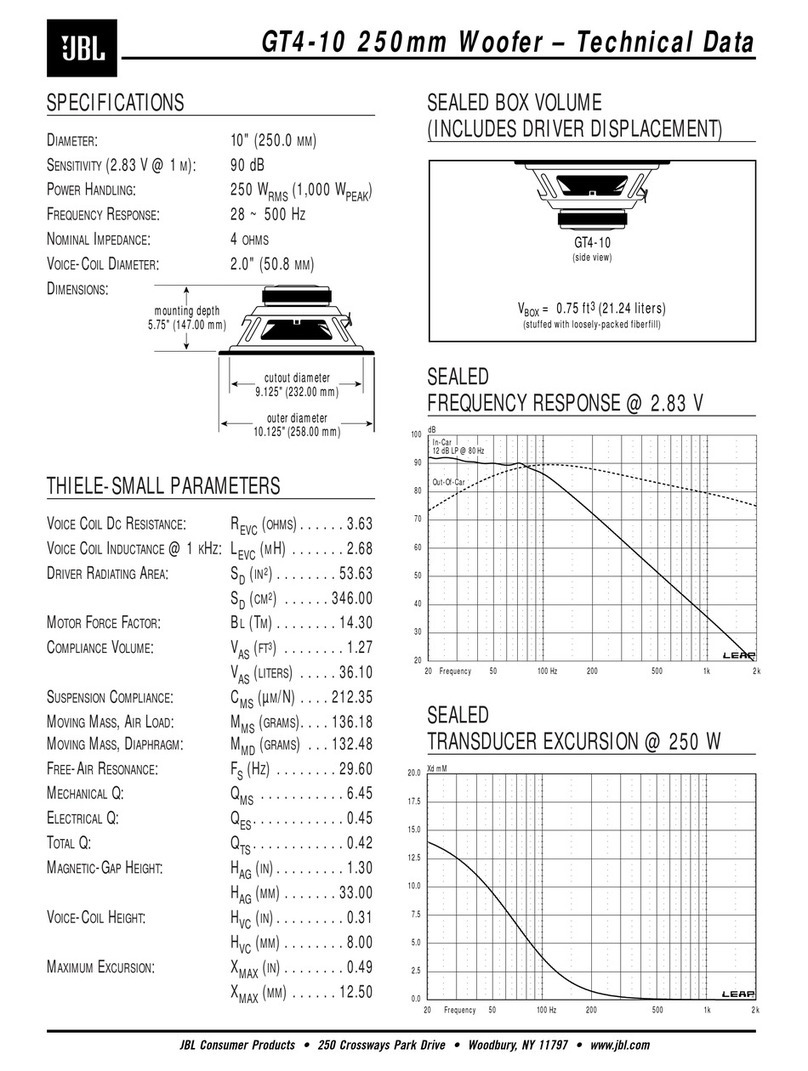
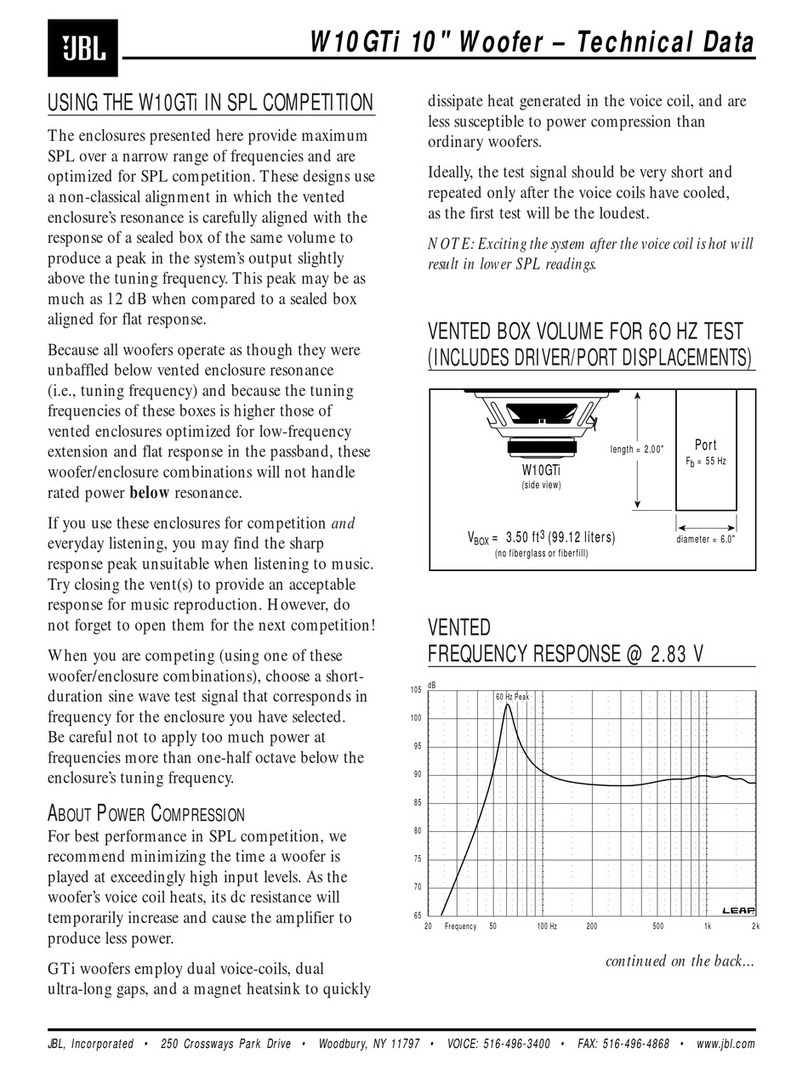
• Study the excursion curves on the
enclosed JBL Decade Series data sheet
and note the differences for different
enclosure applications. The type and
size of box used will produce different
excursion demands on the enclosed
subwoofer and, consequently, different
levels of power handling. As long as
recommended parameters are used,
the subwoofer will perform properly in
its enclosed environment. However,
any design deviation may result in less
than optimum performance, and may
also subject the subwoofer to overex-
cursion (i.e., where the voice coil leaves
the gap) that can eventually damage
the speaker. For additional help with
this issue, please contact your autho-
rized JBL dealer.
DS100/DS120 OM 7/14/98 1:32 PM Page 3
4
Declaration of Conformity
We, JBL Europe A/S
Kongevejen 194B
DK-3460 Birkerød
DENMARK
declare in own responsibility, that the products described
in this owner’s manual are in compliance with technical
standards:
EN 50 081-1/1992
EN 50 082-1/3.1995
Steen Michaelsen
JBL Europe A/S
Birkerød. DENMARK. 3/98
Specifications
DS100, DS120
Specifications DS100 DS120
Configuration 10" woofer 12" woofer
Recommended amplifier power range: 18 – 150W 18 – 200W
Sensitivity @ 2.83V/1m: 93dB 95dB
Frequency Response: 35Hz – 3.5kHz 30Hz – 3kHz
Mounting Depth: 4-3/8" (112mm) 5-1/16" (129mm)
Cut-out Diameter: 9" (229mm) 10-7/8" (277mm)
JBL Consumer Products
250 Crossways Park Drive
Woodbury, NY 11797
www.jbl.com
Part No. DS100/120OM
Made in China
DS100/DS120 OM 7/14/98 1:32 PM Page 4