2.0 Valve Installation
Only companies and their personnel which are certified by the Association
of American Railroads shall perform maintenance and testing of Kelso
angle valves, pursuant to either M1002 or M1003.
2.1 Preliminary Considerations
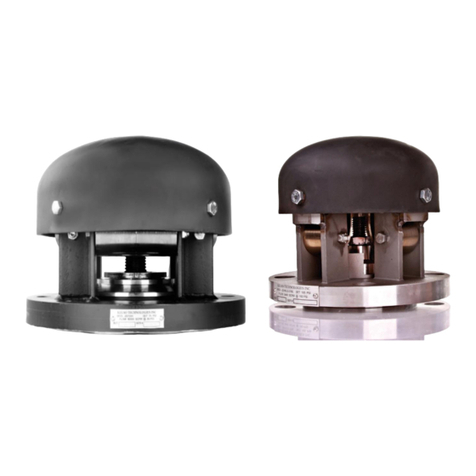
New valves are tested, adjusted and sealed at Kelso. If a new valve has
been left in its original packaging, is undamaged and is not more than six
months old, it may be installed on a tank car without retesting or
recalibration. If the valve has exceeded six months, it must be returned
for retesting and recalibration. Prior to installation, ensure that the valve
remains clean and that the gasket sealing surfaces are not damaged in
any way, shape or form.
2.2 Installation Procedure
1. Prior to removing any valve or fitting from a tank, ensure
that the internal pressure is atmospheric and that
personnel exposure to hazardous chemicals are
eliminated.
2. When the securement bolts have been removed from the
mounting flange, remove the valve and discard the old
flange gasket.
3. The flange mating surface should be free from gouges,
scrapes, and excessive corrosion. With a tongue and
groove mating surface, ensure that while removing the
old gasket no damage is done to the bottom of the
groove. Any burrs, radial gouges and debris should be
removed.
4. A new valve should be kept in its original packaging to
prevent damage to the valve or its components.
5. A test certificate should be available to verify the test
date of the valve, if the last known test date was within
six months, the valve can be installed without retesting or
requalifying.
6. Place a new gasket on the tank mounting flange. Kelso
Technologies does not supply the flange gasket. Gasket
material should be compatible with the chemical being
shipped. Inspect the valve mating flange for defects as
described in Paragraph 3 above. Install the valve on the
mounting flange and secure using bolts, tightening to a
prescribed