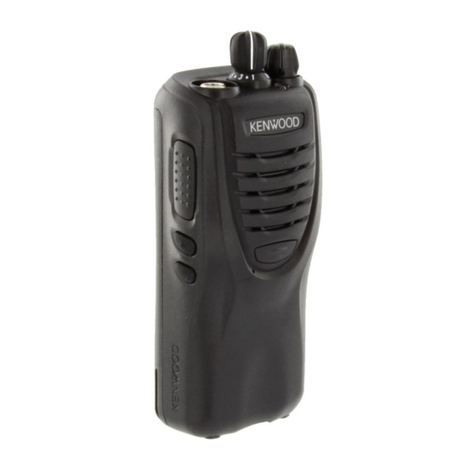
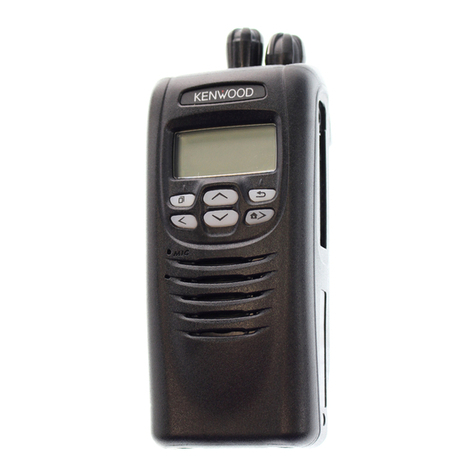
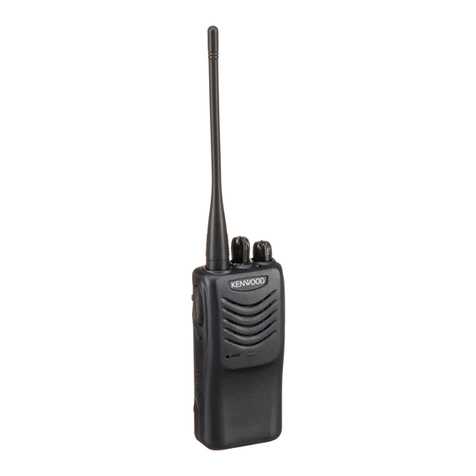
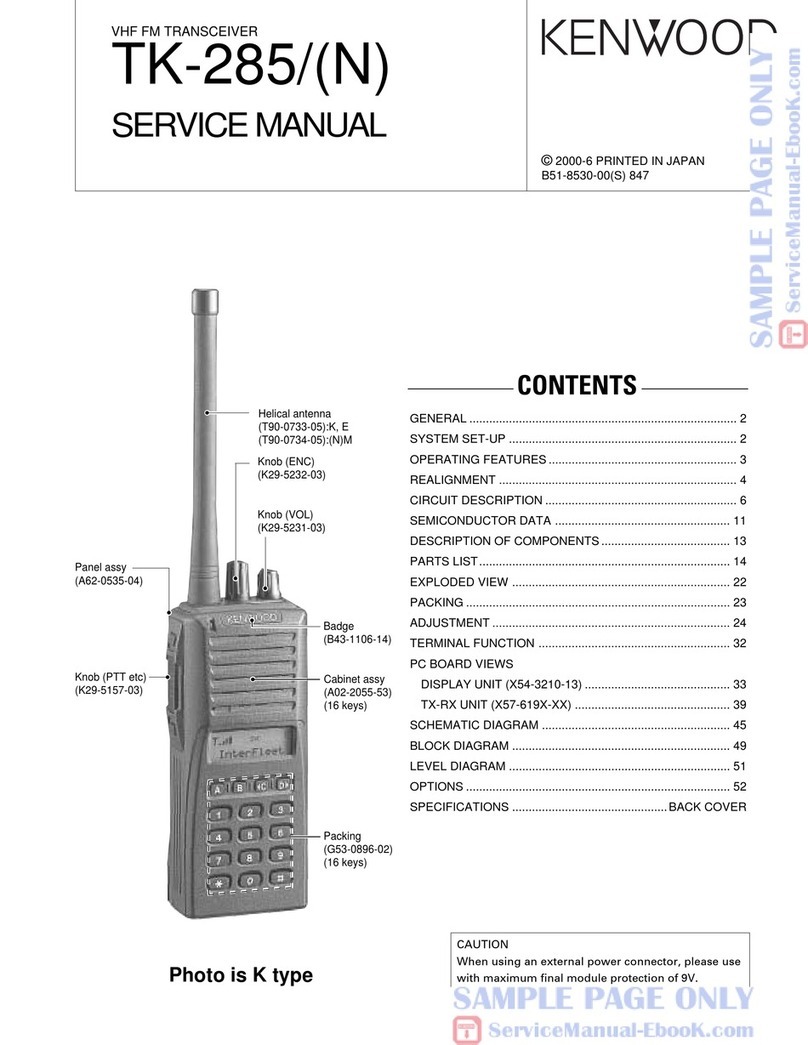
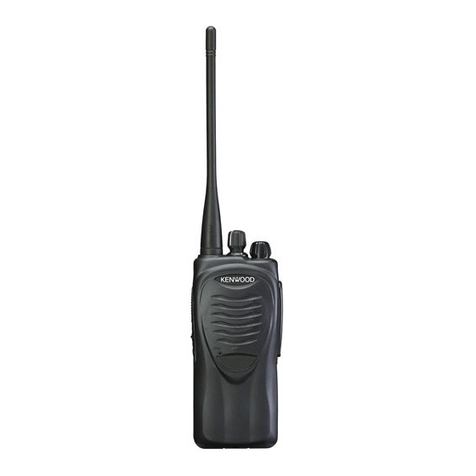
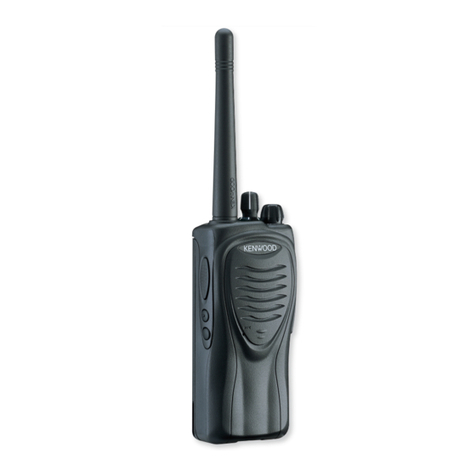
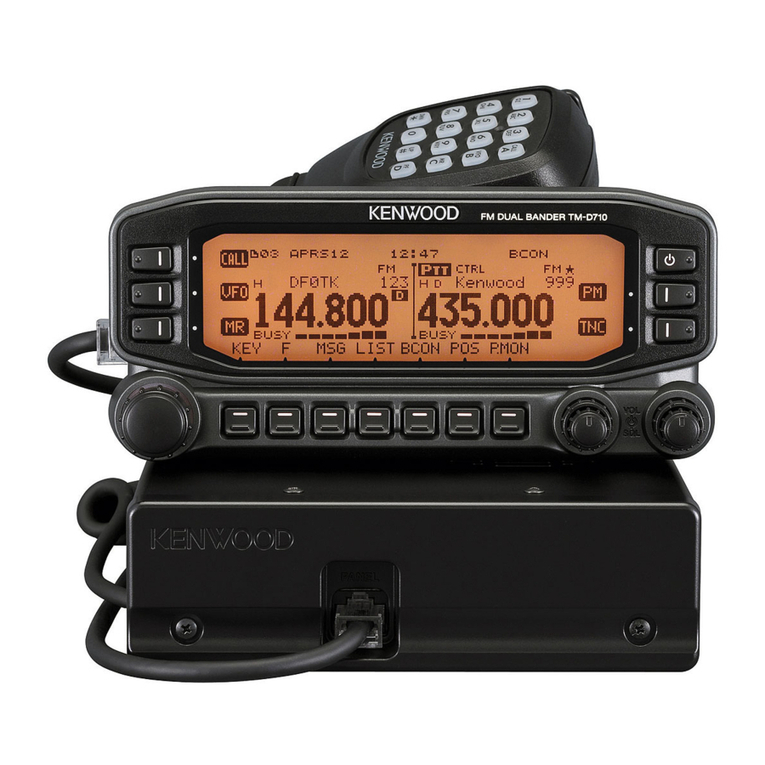
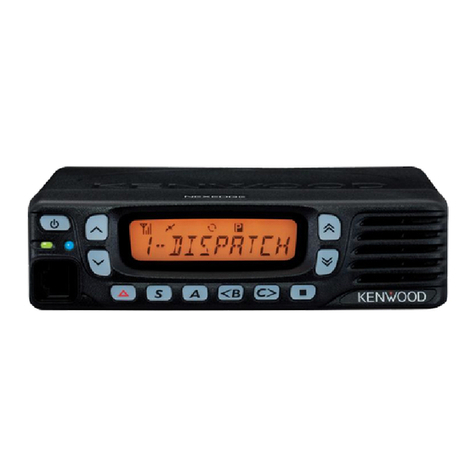
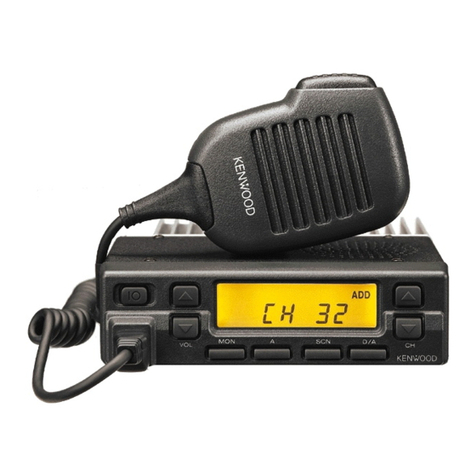
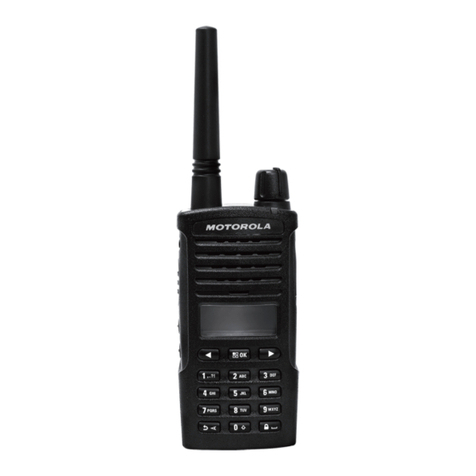
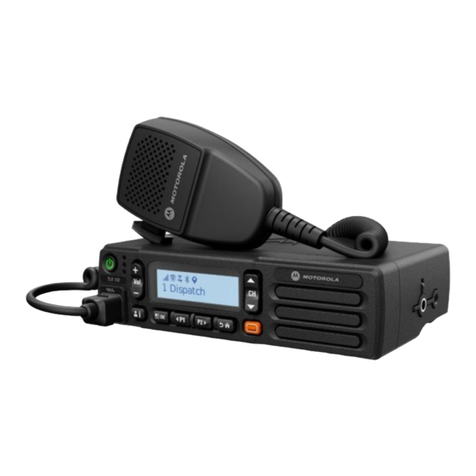
NX-300-K, NX-300-K3, TK-5320-K, TK-5320-K3
FCC ID: ALH378500
INSTRUCTION MANUAL
NX-200/300 TK-5220/5320
THANK YOU!
We are grateful youchoseKENWOOD for your land mobile radio applications. We believe this easy-to-use transceiver
will provide dependable communications to keep personnel operating at peak efficiency.
KENWOOD transceivers incorporatethelatest in advanced technology. As a result, we feel strongly that you will be
pleased withthe quality andfeatures of this product.
NOTICES TO THE USER
WARNING:
•GOVERNMENT LAW PROHIBITS THE OPERATION OF UNLICENSED RADIO TRANSMITTERS WITHIN THE
TERRITORIES UNDER GOVERNMENT CONTROL.
•ILLEGAL OPERATION IS PUNISHABLE BY FINE OR IMPRISONMENT OR BOTH.
•REFER SERVICE TO QUALIFIED TECHNICIANS ONLY.
•DO NOT OPERATE YOUR TRANSCEIVER IN EXPLOSIVE ATMOSPHERES (GASES, DUST, FUMES, ETC.).
•TURN OFF YOUR TRANSCEIVER WHILE TAKING ON FUEL, OR WHILE PARKED IN GASOLINE SERVICE
STATIONS.
SAFETY:
It is important that the operator is aware of and understands hazards commontothe operation of any transceiver.
WARNING:
EXPLOSIVE ATMOSPHERES (GASES, DUST, FUMES, etc.)
Turn off your transceiver while taking onfuel, orwhile parked ingasoline servicestations.
One or more of the following statements maybe applicable:
FCC WARNING
This equipment generates or uses radio frequency energy. Changes or modifications tothis equipment may cause
harmful interference unless the modifications are expressly approved in the instruction manual. The user could lose the
authority to operate this equipment if an unauthorizedchange or modification is made.
INFORMATION TO THE DIGITAL DEVICE USER REQUIRED BY THE FCC
This equipment has been tested andfound to comply with the limits for a Class B digital device, pursuant to Part 15 of
the FCC Rules.
These limits are designed to provide reasonable protection against harmful interference in a residential installation.
This equipment generates, uses and can generate radio frequency energy and, if not installed and used in accordance
with the instructions, may cause harmful interference to radio communications.
However, there is no guarantee that the interference will not occurin a particular installation. If this equipment does
cause harmful interference to radio or television reception, which can be determined by turningthe equipment off and on,
the user is encouraged to try to correct the interference by one or more of the following measures:
· Reorient or relocate the receiving antenna.
· Increase theseparation between the equipment and receiver.
· Connect the equipment to an outlet on a circuit different from that to which the receiver is connected.
· Consult the dealer for technical assistance.