SPECIFIC SAFETY INSTRUCTI NS
F R Y UR BENCH GRINDER
1. EYE PR TECTI N.
Grinding ejects small particles at a high rate of speed. ALWAYS
wear safety glasses when using this machine.
2. M UNTING T BENCH/STAND.
An unsecured grinder may become dangerously out of control dur-
ing operation. ake sure grinder is FIR LY secured to a
bench/stand before use.
3. WHEEL SPEED RATING.
Grinding wheels operated at a faster speed than rated may break
or fly apart. Before mounting a new wheel, be sure the wheel RP
rating is equal or higher than the speed of the grinder.
4. WHEEL FLANGES.
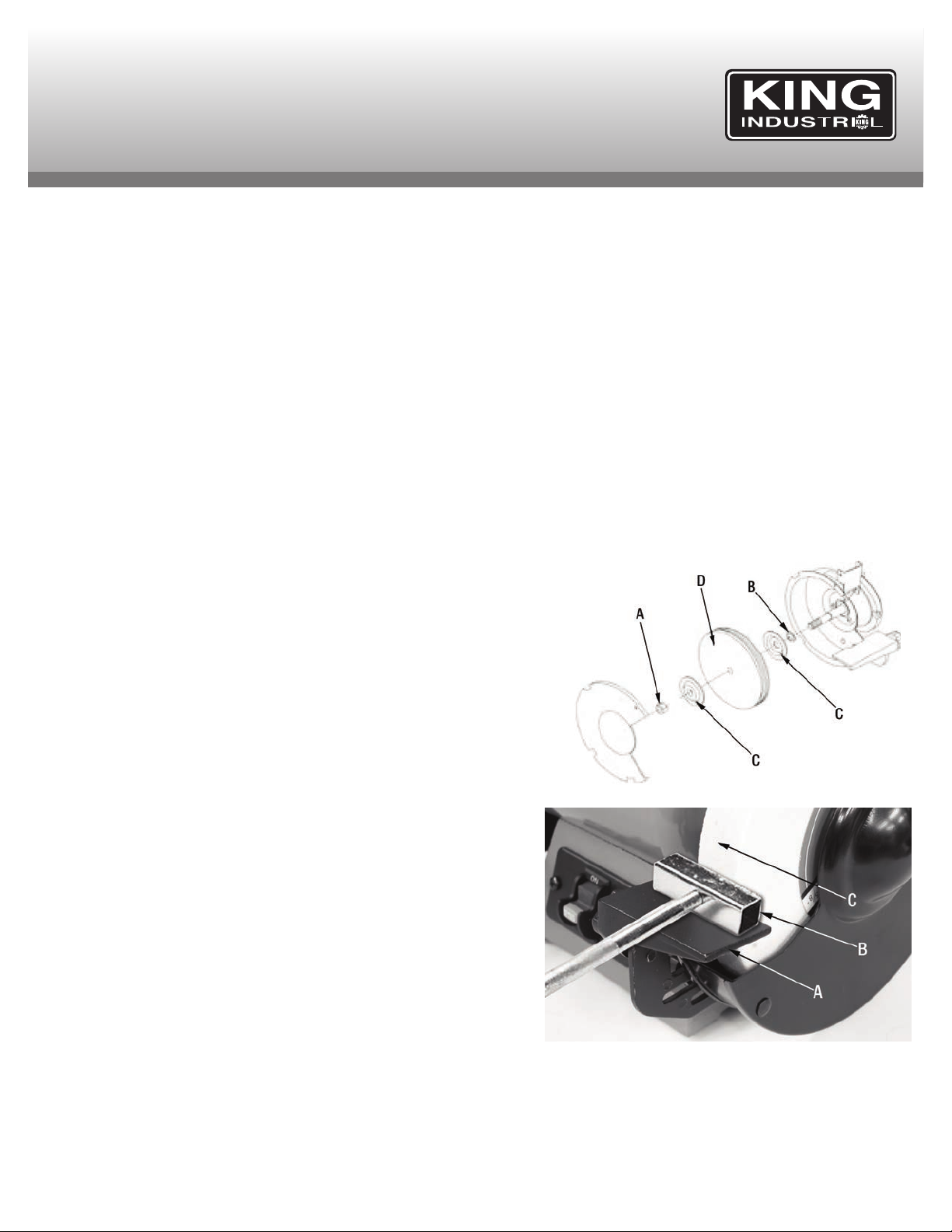
Only use the flanges included with the grinder when mounting
wheels. Other flanges may not properly secure the wheel and
cause an accident.
5. RING TEST.
Perform a "ring test" or “resonate test” on grinding wheels before
installation to ensure that they are safe to use. Tap the grinding
wheel and listen for a “ringing tone”, if you hear a thud and no ring-
ing tone the grinding wheel is not safe to use. A wheel that does
not pass the ring test may break or fly apart during operation.
6. STARTING GRINDER.
If a wheel is damaged, it will usually fly apart shortly after start-up.
To protect yourself, always stand to the side of the grinder when
turning it ON and allow it to run a full minute before standing in
front of it.
7. LUNG PR TECTI N.
Grinding produces hazardous dust, which may cause longterm
respiratory problems. Always wear a NIOSH –approved dust mask
or respirator when grinding.
8. SIDE GRINDING.
Do not grind on the side of the wheel. The wheels provided are
not designed for side grinding. Grinding on the side greatly
stresses the wheel and may cause it to shatter.
9. T P GRINDING.
Grinding on the top of grinding wheels greatly increases the risk
of workpiece kickback. Always grind on the downward part of the
wheel.
10. HAND/WHEEL C NTACT.
Grinding wheels can remove a lot of skin fast. Keep a firm grip
on the workpiece and position your hands a safe distance away
when grinding. DO NOT wear gloves as they may get caught in
the grinding wheel and cause even more serious injuries.
11. T L REST P SITI N.
If the tool rest is too far away from the wheel, the workpiece may
be pulled down, causing loss of control and pulling your hand into
the grinding wheel. Keep the tool rest within 1⁄8” from the grinding
wheel when operating.
12. CRACKED WHEEL.
Cracked wheels may break and fly apart during operation. Re-
place cracked wheels immediately!
13. WEAR THE PR PER PR TECTIVE CL THING.
Particles flying off of a grinding wheel will be traveling very fast,
prepare yourself for this. Wear safety glasses/face shield, a dust
mask, earplugs, a leather apron, and heavy leather boots.
14. GUARDS.
ake sure all guards are in place.
15. SPARKS.
Remember that grinding often produces sparks. Do not allow
anyone to stand in the path of the sparks. DO NOT grind near
flammable materials.
16. MAINTENANCE.
aintain proper care of your wheels.
17. SUPP RT W RKPIECE.
Grasp the workpiece firmly and properly support it on the tool
rest during grinding. aintain even pressure and control of the
workpiece when grinding.
18. C NCENTRATE.
Concentrate on the task at hand. STOP grinding if you are dis-
tracted.
19. GRINDING.
Do not grind workpieces that are heavier than the wheel itself.
This stresses the wheel. In these cases use a handheld grinder
instead.