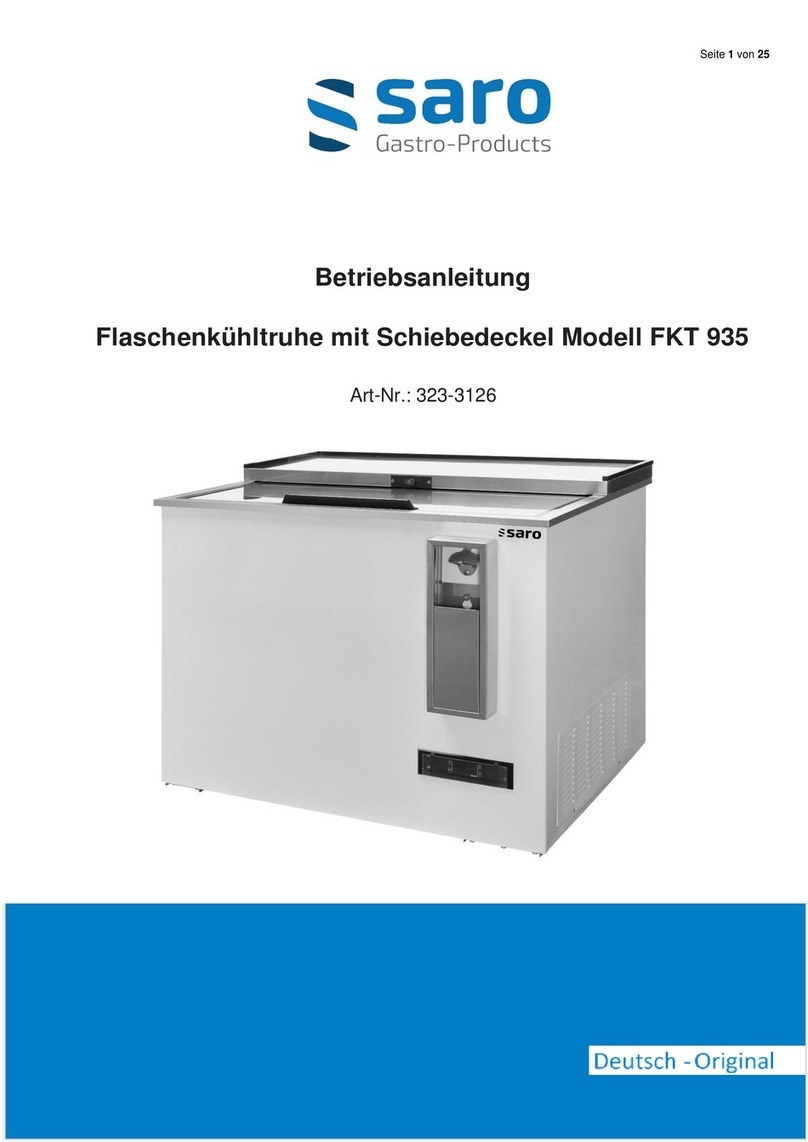
This equipment is designed for storing and displaying non-timed/temperature-sensitive safety
bottled or canned products only. It is not suitable for individuals with reduced physical, sensory,
or mental capacities, or for those lacking experience and knowledge, unless they are under the
supervision of someone responsible for their safety. Children should not use or play with the
appliance without adult supervision.
Please refrain from cleaning or performing maintenance on this appliance if you are underage
and unsupervised. Do not store flammable materials, such as aerosol cans with flammable
propellant, inside the appliance.
To ensure proper operation:
• Keep the appliance’s ventilation openings unobstructed.
• Do not use unauthorized mechanical devices to speed up the defrosting process.
• Avoid damaging the refrigerant circuit.
• Only use electrical appliances inside the designated food storage compartments if
recommended by the manufacturer.
This appliance is suitable for use in:
• Staff kitchen areas in shops, offices, and other commercial environments
• Farmhouses and by hotel, motel, and other residential clients
• Catering and non-retail applications
Do not install the appliance in public corridors or lobbies. Replace parts only with components of
the same type to prevent potential risks. Install the appliance according to the provided safety
warnings.
The appliance should be stored in an area free from continuous ignition sources, such as open
flames or operating gas appliances. Ensure that the storage area is well-ventilated, and the room
size corresponds to the appliance's specifications to avoid creating an environment that could
promote refrigerant leakage.
Avoid piercing or burning the refrigerant, and be aware that it may not have an odor. Store the
appliance in a manner that prevents mechanical damage and takes into account environmental
factors like aging or continuous vibration from compressors or fans.
Prior to the decommissioning process, technicians must be thoroughly acquainted with the
equipment and its specifications. When extracting refrigerant, it is imperative to adhere to the
best practices and ensure all refrigerants are safely recovered. Analysis of oil and refrigerant
samples is mandatory before reuse. Ensure electrical power is accessible before commencing
recovery operations.
Recovery equipment must be operational and accompanied by instructions for the recovery of all
relevant refrigerants, including flammable types when applicable. Return recovered refrigerants to
the supplier using the correct container, and arrange for the disposal documentation
appropriately. Mixing different refrigerants, particularly in cylinders, is strictly prohibited.
WARNING
2