Revision 3 Remote Control Tarp Arm Controller S6 Page | 7
Kramble Industries Inc. is not responsible or liable for indirect, special, or consequential damages arising out of or in connection
with the use or performance of the product or other damage with respect to any economic loss, loss of property, loss of revenue
or profit, or costs of removal, installation, or reinstallation.
Diagnostic Indicators:
There are three ways that the Receiver may use to indicate to the operator that a problem has
been encountered:
1. LOW VOLTAGE: If “low voltage” supply occurs to the drive, the drive will continue to
operate but will reduce speed automatically to maintain maximum torque. The tarp’s
green activity LED will blink slowly (approximately once per second) to indicate this
condition. “Low voltage” is defined as less than 10 volts supply. The “blinking” status will
remain until the supply voltage returns to proper level or the unit is turned off. Check the
battery condition and clean/inspect all electrical connections if this condition arises.
2. HIGH TEMPERATURE: If the temperature of the motor controller becomes too high, the
green activity LED will flash rapidly (approximately three times per second) to indicate
this condition. The high temperature indication will remain and the drive will not operate
until the motor controller has cooled. Check to ensure the tarp moves freely or otherwise
determine the source of the excess load that the drive is working to overcome.
3. CURRENT OVERLOAD PROTECTION: If a “current overload” status occurs, the Tarp Arm
Controller drives are protected by a 100 Amp auto-resetting thermal breaker (fuse)
installed at the tractor battery which disconnects the cabling and drives. This fuse trips
with an audible “click” and the receiver will not operate until the fuse cools and resets
(generally about 15 seconds). The receiver may need to be manually turned on after the
fuse resets.
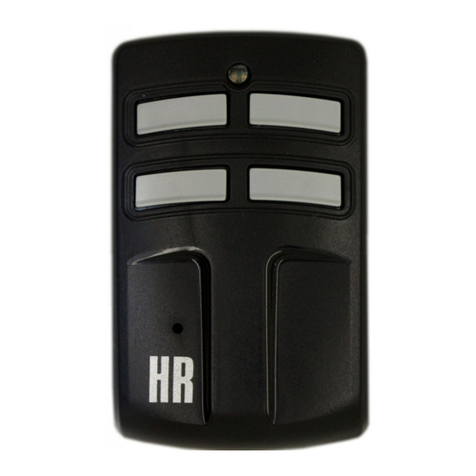
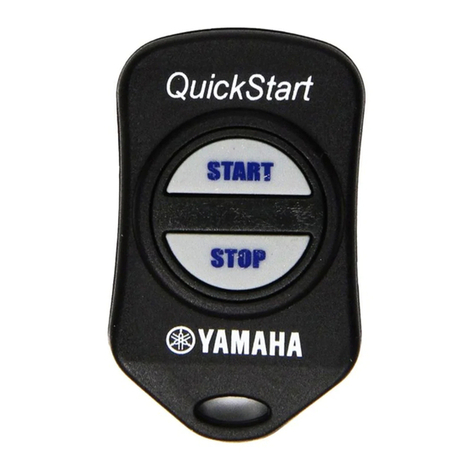
The Receiver is matched to a Transmitter by “learning” the transmitter’s unique security code so
that the receiver will accept commands from that transmitter. The security code is provided to
prevent unwanted operation of the Receiver by other devices. When the transmitter and
receiver are matched and the transmitter "talks" to the Receiver, the yellow “RECEIVE” light will
come on. A newly-purchased system already has its transmitter matched to the receiver. It is
also possible to erase all stored security codes if desired. The Receiver is equipped with a two-
position switch to enable or disable the learn and erase functions. To enable or disable a function,
open the case and locate the switch as illustrated below. The switches and their positions are
labeled on the circuit board. Newly-purchased systems are set by default so that both functions
are enabled.