3
Pressure Washer
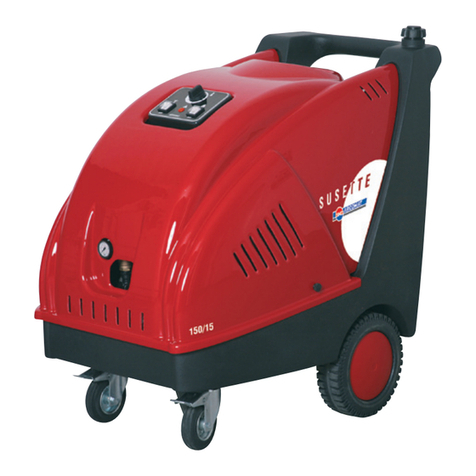
Definition of Pressure Washer: A machine that cleans dirty surfaces with high pressure water. This pressure
washer produces cold water high pressure spray. Cleaning chemicals may be incorporated into the spray if desired
on models equipped for "chemical induction through the pump". The pressure pump for this equipment is
powered by a gasoline internal combustion engine.
Equipment Protection Facts
InspectUponDelivery:
FIRST! Inspectformissingordamagedcomponents.See
“InitialSet-Up/Installation”
section
for wheretoreport missingor
damagedparts.
Add Engine Oil:
Engineisshipped
without oil
. Seethe “Engine Manual” sectionof this manual forinstructions on
capacity and viscosity
recommendations.
WaterFlow Requirements:
Makesureyour supply waterflowrateis 20%higherthan thepressurewasher'sflow
rate(see "Operations",
sectionfordetail),and thatyourwaterisclean andparticlefree.
Do not run Pressure Washer without proper inlet water supply to high pressure pump and for more than 1 minute without
depressing trigger on gun to circulate water to avoid damaging pump.
ChemicalSpraying:
Useonlyapprovedpressurewasherchemicalsdesignedforhigh-pressureuse.Usesoap
adjustmentknobtoregulatecleaning
power(onselectunits).
Storage:
Do not allow water to freeze in the pump, hose, or spray gun(s). See “Storage” for more information.
Maintenance Schedule:
Engine and pump require periodic inspection and servicing to keep pressure washer
functioning efficiently. See “
MaintenanceSchedule
Summary
”forfrequencyofservicing.
Battery:
A battery is requiredfor electric start feature (Denoted by
E in model #
only). A battery isnotincluded. Purchase a
standard12VDC,
10Ahbattery, and furtherdetailin“Specifications”section.
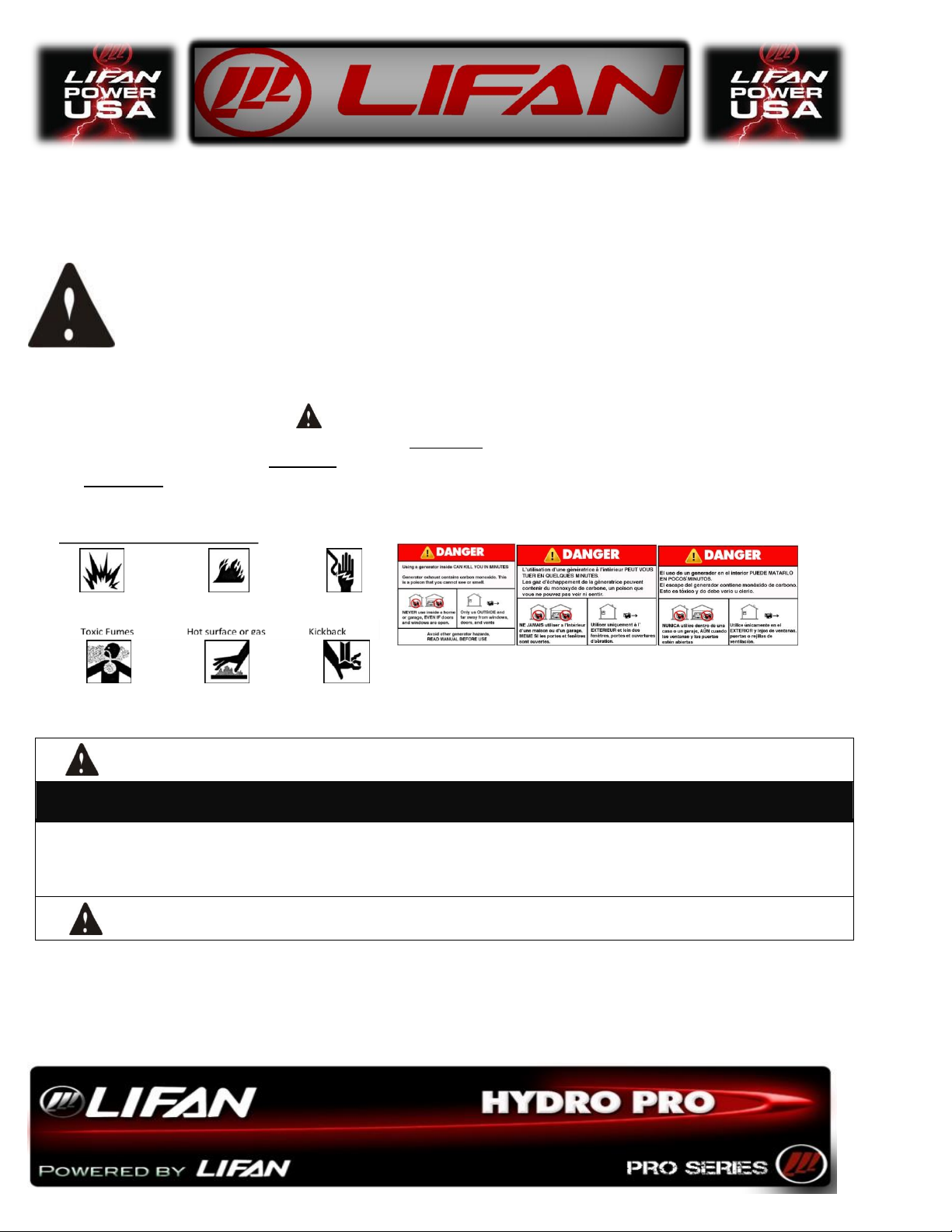
CO
Poisoning:
Exhaust
from
engine
contains
carbon
monoxide,
a
poisonous
gas
that
can
cause
carbon
monoxide poisoning
and
possible
death
if
inhaled.
Injection
Injury
:
High-pressure
spray
can
pierce
skin
and
underlying
tissues,
leading
to
serious
injury
and
possible amputation.
Such
an
injection
injury
can
result
in
blood
poisoning
and/or
severe
tissue
damage.
Flying
Debris
:
High-pressure
spray
can
cause
flying
debris
and
possible
surface
damage.
Electric
shock
:
Operating
equipment
in
wet
conditions
or
near
water
can
cause
electric
shock.
Chemical
Exposure:
Cleaning
chemical
vapors
or
contact
with
skin
may
be
hazardous.
Fire/Explosion:
Engine
sparking
can
ignite
fuel
or
other
flammable
liquids
or
vapors
in
the
vicinity.
Hot
exhaust
from
engine can
ignite
combustible
materials.
Burns
:
Pressure
Washer
pump
and
engine
are
hot
surfaces
that
can
cause
burn
injuries. Detailed
safety
information
about
these
hazards
appears
throughout
this
manual.