manuals.online logo
Brands
  1. Home
  2. •
  3. Brands
  4. •
  5. Lumag
  6. •
  7. Log Splitter
  8. •
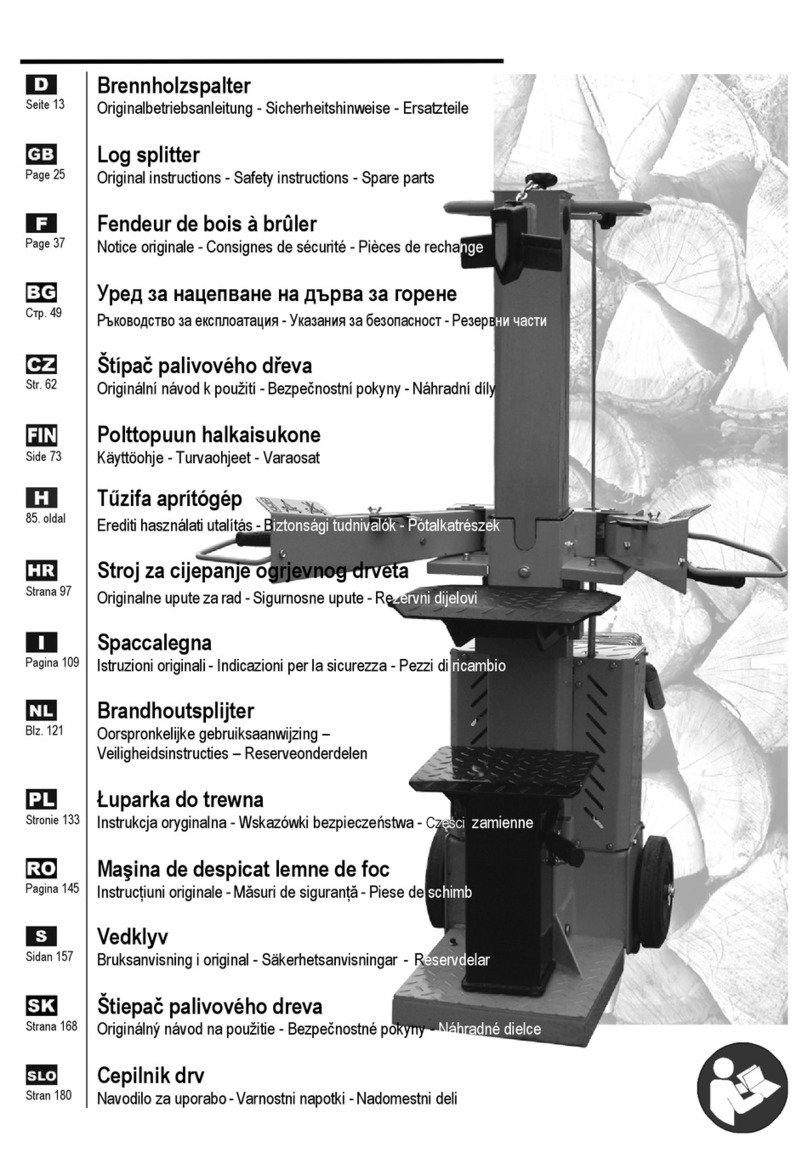
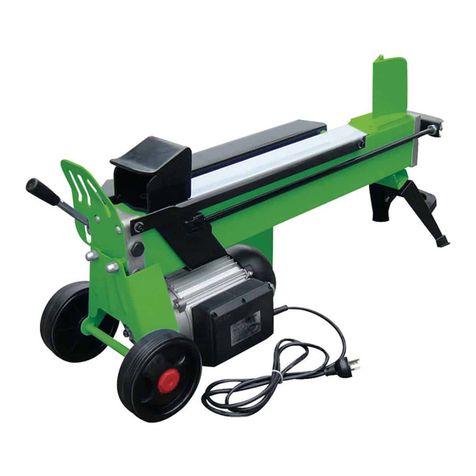
  9. Lumag HOS5A User manual

Lumag HOS5A User manual

Other Lumag Log Splitter manuals

Lumag HB10S User manual

Lumag

Lumag HB10S User manual

Lumag HOS8-230 User manual

Lumag

Lumag HOS8-230 User manual

Popular Log Splitter manuals by other brands

Raider Garden Tools RD-LGS02 user manual

Raider

Raider Garden Tools RD-LGS02 user manual

Bell Pickpine VS S9 Manual for use and maintenance

Bell

Bell Pickpine VS S9 Manual for use and maintenance

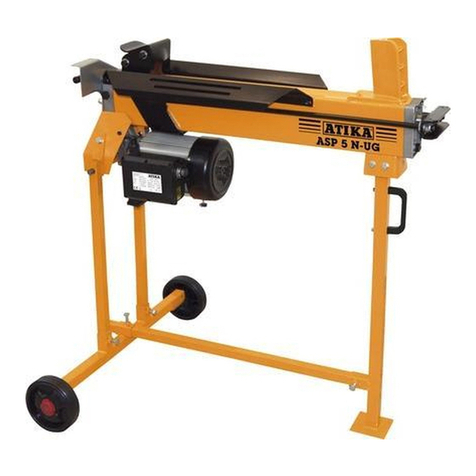
ATIKA ASP 5 N-UG Original instruction

ATIKA

ATIKA ASP 5 N-UG Original instruction

Posch Schälprofi 500 operating instructions

Posch

Posch Schälprofi 500 operating instructions

Champion 91520 Owner's Manual and Operating Instructions

Champion

Champion 91520 Owner's Manual and Operating Instructions

Fieldmann FZLS 1008V-E manual

Fieldmann

Fieldmann FZLS 1008V-E manual

Craftsman 247.28775 owner's manual

Craftsman

Craftsman 247.28775 owner's manual

Scheppach OX 3-1000 Translation from the original instruction manual

Scheppach

Scheppach OX 3-1000 Translation from the original instruction manual

Swisher 21200 owner's manual

Swisher

Swisher 21200 owner's manual

Elem Garden Technic FBHT65-22TCH instructions

Elem Garden Technic

Elem Garden Technic FBHT65-22TCH instructions

Rankin LS-20-1 Operator's manual

Rankin

Rankin LS-20-1 Operator's manual

MTD 243-630-000 owner's guide

MTD

MTD 243-630-000 owner's guide

MTD 241-640A owner's guide

MTD

MTD 241-640A owner's guide

MILLASUR anova RLT8C Instruction and user's manual

MILLASUR

MILLASUR anova RLT8C Instruction and user's manual

Woodstar LV88 Translation from the original instruction manual

Woodstar

Woodstar LV88 Translation from the original instruction manual

Scheppach HL460 Translation of original instruction manual

Scheppach

Scheppach HL460 Translation of original instruction manual

FXA 502018667 instruction manual

FXA

FXA 502018667 instruction manual

MTD 5DM Series Operator's manual

MTD

MTD 5DM Series Operator's manual

manuals.online logo
manuals.online logoBrands
  • About & Mission
  • Contact us
  • Privacy Policy
  • Terms and Conditions

Copyright 2025 Manuals.Online. All Rights Reserved.

Distribution Limited
Hydraulic Log Splitter
Operator’s Manual
HOS5A
FOR YOUR SAFETY
READ AND UNDERSTAND THE ENTIRE MANUAL
BEFORE OPERATING THIS MACHINE
Textkonserve_HOS 5A_GB
Instruction Manual
Electric log splitter
WARNING! Before the equipment is assembled and taken into operation, carefully read the manual. Get acquainted with
both the equipment as well as the handling of it.
WARNING! Before start, loosen the air bleed screw (13) some turns to create air circulation in the oil tank. When
terminating the work, pull tight again.
INFORMATION
In accordance with regulations in force, the manufacturer of this equipment is not responsible for damages on it, nor
damages caused by it, as a result of:
Unsuitable and unprofessional handling
Instructions in the manual which have not been followed
Repairs from third party, not authorized
Replacement and usage of non-original parts
Not intended use
Errors in the electric power system due to violence of regulations in force
In such cases the responsibility falls entirely on the user.
All information such as graphics, pictures, text and lay-outs produced by L.V.G. Hartham GmBH, is without restraint a
property of this company under the current laws of copy right. Duplication and use of such material in any other form,
electronic or printed, is not allowed without written consent from L.V.G. Hartham GmBH.
All rights to type- and design modifications are reserved.
CONTENT
Field of application
Safety prescriptions
General safety information
Specific safety instructions for log splitters
Further risks at operation
Symbols
Controls
Content of equipment
Putting into operation
Storage
Connecting to mains supply
Switching ON/OFF
Hydraulics
Operation
Before operation: aeration of the hydraulics
Recommended dimensions for the logs
Two-hand control
Incorrect location of logs
Log is jamming
Attendance and maintenance
Cleaning
Recommended type of hydraulic oil
Checking the oil level
Replacement of hydraulic oil
Storage conditions
Electric system
Trouble shooting
Protection of the environment
Technical specifications
Warranty and Customer support
Confirmation of EU-conformity
Accessories
Textkonserve_HOS 5A_GB
Specification of components
FIELD OF APPLICATION
This log splitter is a transportable machine tool intended for private household- and hobby use. It is intended for splitting
horizontal material in the direction of the fibers in the wood. Only straight, clean-cut logs may be processed in this splitter.
All other use is in violation of the user conditions. To operate the equipment in violation of these conditions, modify the
design, or the use of third part spare parts which are not approved by the manufacturer, may cause incalculable injuries.
Logs must never be split in upright position or against the fiber direction!
SAFETY REGULATIONS
PLEASE NOTE!
When operating electric tools or tool machines, must – to prevent shocks and injuries – the regulations as stated below be
applied. Read all instructions before the equipment is taken into operation and keep these instructions for future use.
General safety instructions
1. Keep the area of operation in good order
- Poor order at the area of operation may cause injuries
2. Pay attention to environmental protection
- Never expose the equipment for rain
- Never use the equipment in moist and wet areas
- Arrange with good lighting at the working site
- Never use the equipment in areas where there is a risk for fire or explosions.
3. Protection for electric shocks
- Avoid contact with metal parts which are not connected to earth (security 0-lead)
4. Keep non-authorized persons on distance
- Be vigilant that no other persons, especially under aged, are operating the equipment or tampering with the power
cable. Keep these persons away from the working area.
5. Electric tools/tool machines must be stored in a safe way
- Equipment which is not in use shall always be stored in a dry and elevated space, or a space which can be locked,
away from children
6. Never overload the equipment
- It works better and safer within specified power limits
7. Use the right tools for maintenance
- Do not use poor tools for heavy tasks.
- Do not use the equipment for purposes it is not intended for
8. Use suitable working clothes
- Don´t use wide clothes or ornaments, they may hook in moving parts of the equipment
- Working outdoors, use non-slip shoes
- Long hair: use hair net
9. Use protection equipment
- Use protection glasses and hearing protectors
- At dusty areas: use breathing protection
10. Never use the cable for purposes it is not intended for
- Don´t pull the cable; pull the plug for disconnecting from mains
- Protect the cable from heat, oil and sharp edges
11. Secure the log
- Use strap belts or clamp to secure the wood log. This is safer than trying to hold by hand!
12. Avoid uncomfortable body positions
- Stand in a safe and stable position with good balance
Textkonserve_HOS 5A_GB
13. Attendance and maintenance
- Follow the instructions for lubrication and maintenance
- Regularly check the cable and replace if damaged
- For damages on the equipment, let authorized workshop repair
- Regularly check extension cables and if damaged: replace them!
- Keep handles and controls clean from grease and oil
14. Pull the plug!
- When the equipment is not in use, at breaks and for maintenance, disconnect from the mains.
15. Do not forget any tools!
- Before taking into operation, check that all tools have been removed
16. Avoid unintended start
- Before the plug is connected to the mains, check that the power switch is not in position ON.
17. Use outdoor cables!
- Use approved extension cables intended for outdoor use.
18. Pay attention!
- Pay attention to your tasks. Work with common sense and good judgment. Never use the equipment if:
- You are
- Not concentrated
- Tired
- Affected by medicines, drugs or alcohol, which will affect your judgment.
19. Check the equipment
- Before the equipment is taken into operation, all safety devices and slightly damaged parts must be checked for
proper operation without complaints.
- Check that all moving parts do work and does not jam, or if any other parts are damaged. All parts must be assembled
in the right way and fulfill all requirements for a good and safe function.
- Damaged safety devices and parts must unconditionally be replaced or repaired by authorized workshop, if not the
instruction manual indicates anything else.
- Damaged mains switch must be replaced by a service team.
- Never use equipment where the mains switch is not working.
20. VARNING!
The use of wrong type of tools or spare parts may cause personal injuries.
21. Always get the equipment repaired by authorized workshop
This equipment corresponds to the safety regulations in force. Repair should only be carried out by a workshop with
competence, or by our own service teams to ensure that original spare parts are used. If not, there is a risk for accidents.
Certain safety regulations for log splitters
- Pay attention to the warning labels. These may not be taken away.
- The safety devices may not be removed nor made non-operational.
- Before taken into operation, check the function of the safety devices and the two-hand controller.
- The equipment is designed as a one-man tool. Never let anyone else grab the log.
- Before taken into operation, locate the log splitter on an even and firm ground. Arrange with sufficient moving space.
WARNING! For environmental reasons, always place the equipment on a firm and tight surface to prevent
pollutants to penetrate into the ground.
•Only use the splitter in dry areas, never in rain
•When working in closed spaces, check that they are free from gases, smoke gases or very combustible fumes.
•Before taking the equipment in use, check that the mains cable is not damaged.
•Check that all moving parts operate without complaints and do not jam and that no parts are damaged.
•The mains power must correspond to the information on the type label.
•Working outdoors, only use approved and allowed types of cables.
•If a cable drum is used, unwind all cable from the drum to prevent for overheating of the cable.
•At outdoor use, the equipment must be connected over a RCBO (Residual Current Breaker with Overload)
•Always locate the cable backwards, away from the equipment.

Textkonserve_HOS 5A_GB
•The right position for the operator is behind the push-arm, at the control handle. Do not stand in the area of the splitter
wedge.
•Always locate the wood log in horizontal on the working area. Never try to split askew or against the fiber direction.
•Don´t split soaked wood, never work in rain.
•Never split any other material than wood.
•Never split wood logs which may contain other material such as nails, metal- or plastic reinforcements.
•To help out errors or remove logs which have jammed, first stop the splitter and pull the mains plug. Then, remove the
log.
•Never try to load the splitter when the push plate is in motion.
•Don´t bend in over the working area when the push plate is in motion
•Never place a hand or a foot between log and push plate, nor between log and splitting wedge
•Keep hands away when the push plate is returning.
•Never stand on the equipment.
•Don´t load the splitter so hard, that it comes to stand still.
•Use personal protection clothing to prevent injuries and health hazards.
•Hearing protectors prevent damages on the hearing.
WARNING: Noise may damage the hearing. When max noise level of 85 dB (A) is exceeded, hearing protectors must
be used.
•Breathing protectors prevent inhaling dust
•Sight protectors prevent eye injuries
•Safety shoes with steel bonnet prevent foot injuries, gloves prevent hand injuries.
•Persons younger than 18 may for education purposes operate the equipment under supervision by a skilled and
authorized person. Persons under the age of 16 should be kept on distance of the equipment.
•Errors on the equipment, including all cover- and safety devices, shall, as soon as they are detected, be reported to
person in charge.
•All safety- and protection devices shall after repair- or maintenance work be reinstalled.
•Never leave the equipment unattended, nor running on idle for longer periods.
•When leaving the work place, switch the motor off and pull the mains plug.
Caution at transportation
When moving or transporting the equipment, only use the grip handle and never use the protection devices to lift or move the
splitter.
For transportation, put the splitter on both wheels, lift upwards in the handle and pull.
Further risks
Even if the general safety instructions are respected, following risks remain:
•Wrong location of the log, or incorrect operation, may cause finger- and hand injuries.
•Improper securing of the log may hurl it away and cause injuries.
•Not respecting the electrical prescriptions/ faulty components, may cause electrical shock.
•Damages due to faulty cables.
•Fire- or slipping accidents due to oil leakage
•Damaged hearing due to long exposure without hearing protectors.
Further risks can be minimized by following the Field of Application and Safety Instructions and the instruction
manual in general.
Symbols
Before taking into operation, read the instruction manual.
Use sight protectors or mask.
Use hearing protectors.
Use safety shoes.
Use protection gloves.
Disconnect the power supply when the equipment is not in use.
Never try to remove logs which have jammed by bare hands.
Textkonserve_HOS 5A_GB
Ensure sufficient space within the working area. Risks for tripping and slipping! Poor order may cause accidents.
Keep the equipment away from heat, sparks and open fire.
Never let the hydraulic oil out on the ground.
Cover- and safety devices may not be modified or removed.
The equipment is designed as a working place for one person. Only the operator should be within the operating area of
the splitter. Non-authorized persons as well as domestic- and farmer animals should be kept on a distance of at least 5
Meters.
Cut- and pinching injuries! With the equipment in operation, never touch something in the process area.
Always keep full attention to the motions of the push plate.
Live mains! Danger of life!
STOP! Loosen the air bleed screw.
Allow airflow in the hydraulic tank before and during the operation. For transportation: close the screw again.
OPERATING DEVICES (Fig. 1)
1. Push plate
2. Processing area
3. Wedge
4. Transport handle
5. Legs
6. Guide frame
7. ON/OFF switch
8. Motor
9. Junction box
10. Wheels
11. Hydraulic valve (operating lever)
12. Lever plate
13. Air bleed screw
14. Oil drain outlet
15. Piston rod
INCLUDED ITEMS IN THE EQUIPMENT
Unpack the equipment and check for transport damages. If that would be the case, claim it at the transporting agency.
Check that the equipment is complete.
If parts are missing, inform the seller
Pre-assembled unit (Fig. 1)
PUTTING INTO OPERATION
Setting-up
•The equipment should be placed on a safe and stable location and be secured against sliding and moving around.
For environmental reasons, put the equipment on a non-slip, tight surface to prevent pollutions to enter in the
ground.
•Locate the splitter on a working surface with a height of 60 – 75 cm. This offers a comfortable working position.
•Lock the wheels with wedges to prevent rolling and sliding.
•Arrange with good lighting and sufficient space at the site to avoid hazards and accidents. Do not use the
equipment close to gases, petrol fumes or any other inflammable materials.
•Carefully read through the safety prescriptions. (see Safety Prescriptions)
•Before the equipment is taken into use, all cover- and safety devices must be assembled the right way. When
working with pre-prepared wood logs, ensure that they don´t contain any other material.
DANGER! Modifications of the equipment, or use of spare parts which have not been approved by the
manufacturer, may cause incalculable damages during operation.
•Always only use the parts contained in the delivery
•Do not modify the parts!
Textkonserve_HOS 5A_GB
WARNING! Connecting to mains supply
Do not connect to the mains before all assembly is done. The motor is dimensioned for the voltage and frequency as
stated in the Technical Specifications. Normally the equipment can handle the tasks as far as the voltage doesn´t deviate
more than +/- 10% from this value.
Operating the equipment outside these limits may cause overheating or short circuit in the motor. Heavy load calls for a
voltage which doesn´t fall below this stated value. Only connect the equipment to a mains supply which fulfills the
following conditions:
•Connect over a RCBO (Residual Current Breaker with Overload) with max 30 mA error current.
•The wall socket shall be of the prescribed type, with safety lead (earth connection) and approved in installation.
•Locate the power cables so they will not become damaged during operation.
•Protect the cable for heat, aggressive liquids and sharp edges.
•Only use extension cables with sufficient area (2, 5 mm²).
•Never pull out the plug by pulling the cable, just pull the plug.
Connecting/disconnecting
Connecting
Push the green switch (7). The motor is running as long as the switch is pushed.
Disconnecting
Release the switch (7).
Never use equipment where this security switch is not operating. Faulty parts shall without delay be replaced or
repaired by an authorized workshop.
Hydraulics
The hydraulic system is a closed circuit system with oil tank, oil pump and a pressure relief valve. These components may
in no way be modified or tampered with.
Connections and junctions should with regular intervals be checked for leakage. If needed: pull tight!
Keep the equipment and the working site clean from oil and grease. Risk for slipping and fire!
Never use the equipment when there is a risk for oil leakage.
Before every occasion of use, check that the oil level in the container is sufficient (see Attendance and maintenance)
Volume of oil: 3, 5 liter
OPERATION
Advice:
Carefully read the safety instructions.
(See Safety Instructions)
PLEASE NOTE! Before taking into operation – ensure airflow in the hydraulics!
Before taking into operation, it is outmost important that the air bleed screw (13) is loosened some turns to ensure air
circulation in the oil container. After finishing the work, pull the screw tight again. If the screw remains closed during work,
the hydraulics builds up a pressure which might harm the equipment.
Before every transportation, this screw (13) has to be pulled tight to prevent oil leakage.
Only use wood logs which are cut straight at both ends.
Recommended sizes for suitable wood logs
HOS 5A
Capacity (L) max 520 mm
Capacity (Ø) max 50 – 250 mm
ADVICE
The diameter for the logs is just a recommendation. The real capacity depends on the type of wood, the length, type of
fibers and number of branches.
Operation
TWO-HAND OPERATION
The two-hand operation can only protect two hands. Never by-pass any safety devices in the attempt to speed up the
working process! Never work two persons at the same time at the splitter.
Textkonserve_HOS 5A_GB
1. Put the log to be split up along the working surface (2). The log shall be located straight on the main bar, fixated by the
two guide plates (6).
2. This log splitter is designed for two-hand operation – left hand is used for the hydraulic valve (11), right hand is used for
the ON/OFF switch (7) (Fig. 1)
3. Push the start switch (7), wait a few seconds till the motor runs in full speed and builds up pressure in the hydraulics,
start the splitting process by activating the valve handle (11) downwards.
4. If any of the two controllers is released, the splitter stops immediately. If both the two controllers are released, the push
plate returns to start position.
If the log doesn´t start to split after 5 seconds in contact with the wedge, stop the action immediately. Probably the wood in
the log is too hard to be processed with this equipment. Turn the log 90° and try again.
WARNING! Don´t expose a log for a hard, exigent piston pressure for more than 5 seconds. Overheated oil under
pressure may damage the equipment.
Incorrect location of the log (Fig. 2)
Always put the log straight down on the processing area. (2) Ensure it will not slip or slide out from the guide plates nor
sidelong. The splitting wedge may become overloaded if the force is not distributed over the whole wedge edge.
Never try to split more than one log at a time. The risk for hurling away the log is very high.
Log get jammed (Fig. 3)
WARNING! Never try to knock away a log which has jammed. This may cause damages on the equipment and further
accidents.
Proceed like this (Fig. 4):
Allow the push plate to return to starting position.
Put a wood wedge underneath the log.
Start the process in such a way, so the push plate pushes the wedge under the log which has jammed, and lift it up.
Continue the process with wedges of different sizes until the log is pushed up and away from the splitter.
ATTENDENCE AND MAINTENANCE
Before all cleaning and maintenance:
•Switch off the equipment
•Pull the mains connection
•Wait until the splitter has stopped all movements
WARNING! To avoid injuries, use protection gloves.
Cleaning
Before all activities: pull the mains plug.
For cleaning plastic parts, use a damp cloth. Don´t use detergent, solvents or sharp tools.
Remove resin.
Clean the surfaces of the splitter with suitable maintenance spray.
Cooling slots and movable parts should regularly be cleaned with a brush for dust and rubbish which get stuck.
Lubricate with regular intervals all movable parts.
Check the oil level; replace the hydraulic oil, respectively.
Recommended type of hydraulic oil
Suitable oil for log splitters are: SHELL Tellus 10-46, Esso Nuto H46, DEA HD B46. Alternatively, any equivalent hydraulic
oil with a viscosity of HLP 46 can be used.
ADVICE
Never use any other type of oil! This would affect the function of the hydraulic piston.
Checking the oil level
The push plate (1) should be in rest-position. Disconnect the equipment from mains.
Tilt the splitter Fig. 7) so the drain outlet for the oil faces upwards (14, Fig. 1)
WARNING! Two persons are required to lift up and secure the equipment.
Textkonserve_HOS 5A_GB
Remove the screw + dipstick (14). Be careful with the gasket for the screw!
Wipe clean the stick.
Put it back (don´t wind it back!)
Again, pull out:
•If the level is between the two markings, the level is OK.
•If the level is at the lower marking, oil has to be added. Use a funnel!
•Check the gasket for damages.
•Put back the screw + dipstick. Pull tight.
Replacing the hydraulic oil (Fig. 6 + 7)
First replacement of oil to be done after the first 50 hours operation time, then every 150 hour of operation.
Push plate in point of departure. (1) Disconnect the equipment from mains.
Put a suitable container (volume 4 liters) under the splitter.
Remove the drain screw (14) and dipstick. Be careful not to damage the gasket.
Tilt the splitter to drain the oil into the container. (Fig.6)
Tilt the splitter (Fig. 7) back to upright position, the drain opening pointing upwards. (14) WARNING! Two persons are
required to lift up and secure the equipment.
Refill with new oil (3, 2 liter). Use a funnel.
Wipe clean the dipstick and gasket.
Check the gasket for damages. If required: replace it!
Put the screw + dipstick back, pull tight.
Old hydraulic oil must be treated in a way which is environmentally correct. Submit the oil to a recycling depot or
follow the instructions in force for the local country. Oil may never be disposed of in moldering beds or any other
water streams, sewage or earth deposits.
If the equipment is not going to be used for a longer period (more than three months) it should be cleaned and lubricated
and placed under a tarpaulin on a covered and dry location.
Electrical system
All type of works in the electrical system is only allowed by an authorized electrician.
Circuit diagram 230V/50Hz Hydraulic system diagram
AC Motor 250V/50Hz
Main voltage 230V/50Hz – power supply socket and extension cables must be of 3-wire type: phase, neutral and
protection earth.
Extension cables must have a lead area of 2, 5 mm². The wall socket should be safeguarded for 16A at the most.
ADVICE
Extension cables with a length of 10 meters or more, give rise to voltage losses. As a result, the motor will not deliver max
power. The performance of the equipment is limited. Always unfold all cables completely to not create heat and possible
short circuit in the rolled-up cable.
TROUBLE SHOOTING
Before all trouble shooting:
•Switch off the equipment
•Pull the mains plug
Motor doesn´t run or
switch off
RCBO trips
Call authorized electrician
Log doesn´t split up
The log incorrectly placed
Adjust the location of the log (see
OPERATION)
The dimension of the log exceeds
the capacity of the motor
Use smaller logs