manuals.online logo
Brands
  1. Home
  2. •
  3. Brands
  4. •
  5. Mantis
  6. •
  7. Tiller
  8. •
  9. Mantis Tiller/Cultivator User manual

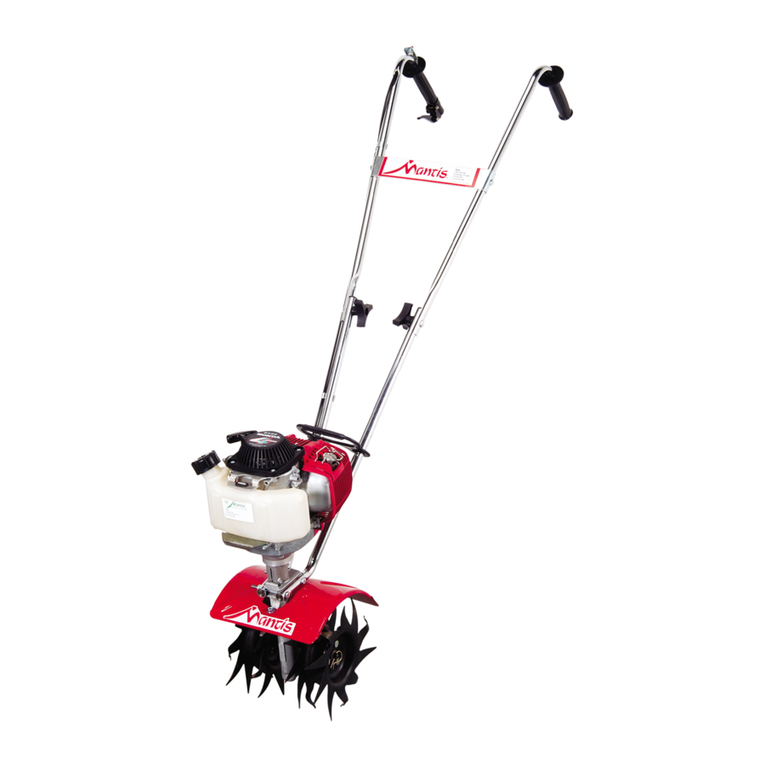
Mantis Tiller/Cultivator User manual

Other manuals for Tiller/Cultivator

6

Other Mantis Tiller manuals

Mantis 8222 User manual

Mantis

Mantis 8222 User manual

Mantis 7265 Programming manual

Mantis

Mantis 7265 Programming manual

Mantis 7263 User manual

Mantis

Mantis 7263 User manual

Mantis SV-5C/2 User manual

Mantis

Mantis SV-5C/2 User manual

Mantis Tiller User manual

Mantis

Mantis Tiller User manual

Mantis 3550 User manual

Mantis

Mantis 3550 User manual

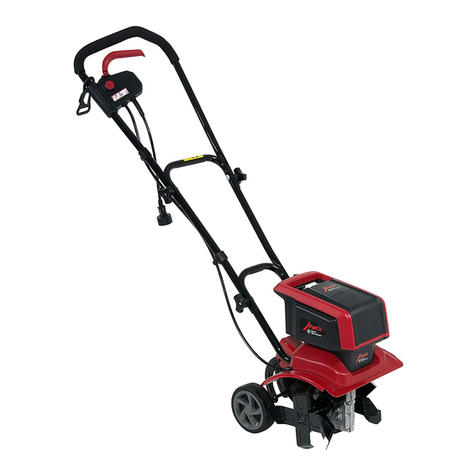
Mantis ElectricTiller User manual

Mantis

Mantis ElectricTiller User manual

Mantis 7252 User manual

Mantis

Mantis 7252 User manual

Mantis ElectricTiller User manual

Mantis

Mantis ElectricTiller User manual

Mantis 7262 Programming manual

Mantis

Mantis 7262 Programming manual

Mantis 7940 Programming manual

Mantis

Mantis 7940 Programming manual

Mantis Tiller/Cultivator User manual

Mantis

Mantis Tiller/Cultivator User manual

Mantis Tiller/Cultivator User manual

Mantis

Mantis Tiller/Cultivator User manual

Mantis 7920 User manual

Mantis

Mantis 7920 User manual

Mantis 3558 User manual

Mantis

Mantis 3558 User manual

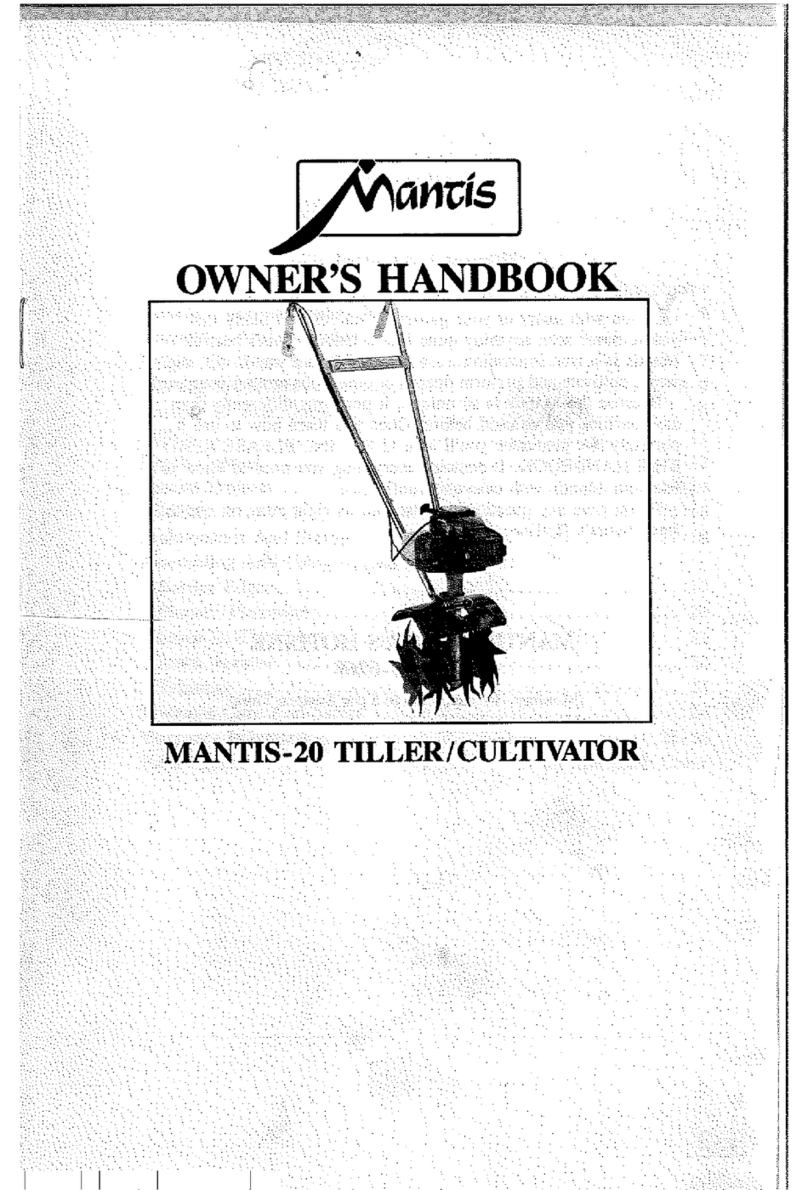
Mantis Mantis-20 User guide

Mantis

Mantis Mantis-20 User guide

Mantis Tiller/Cultivator User manual

Mantis

Mantis Tiller/Cultivator User manual

Mantis 7234 User manual

Mantis

Mantis 7234 User manual

Mantis 7566 Programming manual

Mantis

Mantis 7566 Programming manual

Mantis 7940 User manual

Mantis

Mantis 7940 User manual

Mantis 7250 User manual

Mantis

Mantis 7250 User manual

Mantis 7945 Programming manual

Mantis

Mantis 7945 Programming manual

Mantis 3450-02 User manual

Mantis

Mantis 3450-02 User manual

Mantis Tiller User manual

Mantis

Mantis Tiller User manual

Popular Tiller manuals by other brands

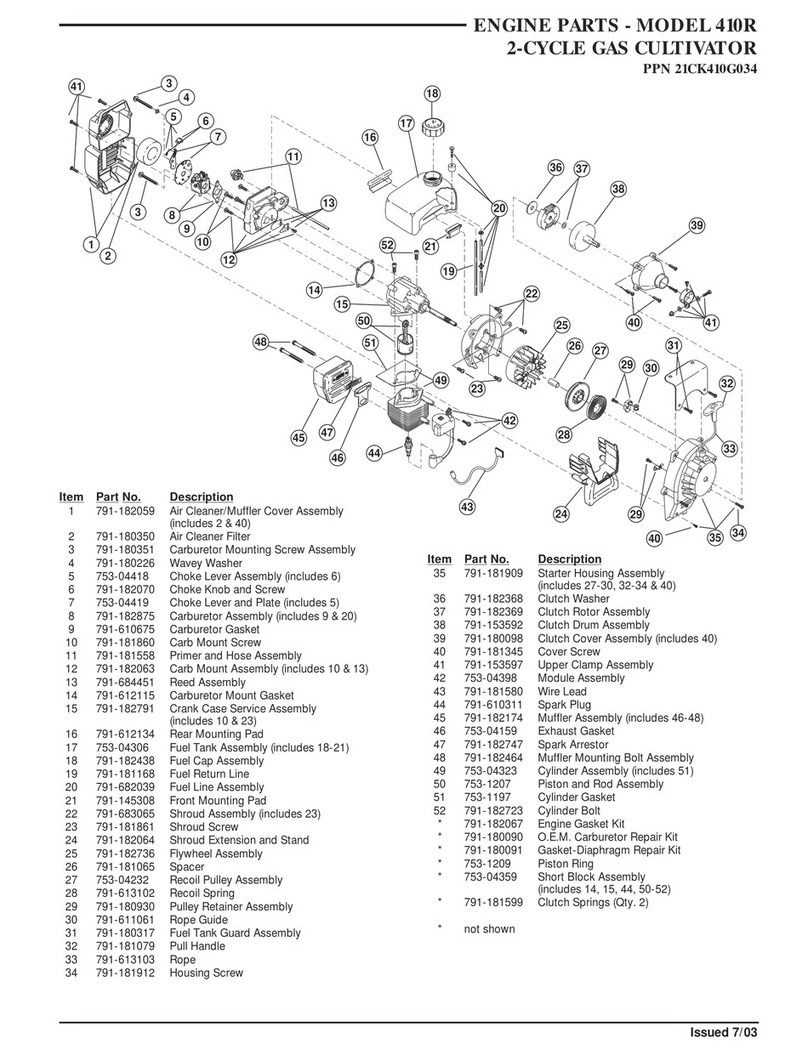
MTD 410R parts list

MTD

MTD 410R parts list

Craftsman 247.29931 Operator's manual

Craftsman

Craftsman 247.29931 Operator's manual

MTD FRT Series Operator's manual

MTD

MTD FRT Series Operator's manual

Craftsman 917.298353 owner's manual

Craftsman

Craftsman 917.298353 owner's manual

Troy-Bilt Colt FT Operator's manual

Troy-Bilt

Troy-Bilt Colt FT Operator's manual

Ryobi 510r Operator's manual

Ryobi

Ryobi 510r Operator's manual

MTD OHV Series Original operating instructions

MTD

MTD OHV Series Original operating instructions

YAT YT5601-01 Assembly, Use, Maintenance Manual

YAT

YAT YT5601-01 Assembly, Use, Maintenance Manual

Craftsman 917.296010 owner's manual

Craftsman

Craftsman 917.296010 owner's manual

Troy-Bilt OEM-290-260 Operator's manual

Troy-Bilt

Troy-Bilt OEM-290-260 Operator's manual

Scheppach MTP560 Translation from the original instruction manual

Scheppach

Scheppach MTP560 Translation from the original instruction manual

GARDEN WAY 12194 owner's manual

GARDEN WAY

GARDEN WAY 12194 owner's manual

Classen STAND-AER SA-25 Operator's manual and parts list

Classen

Classen STAND-AER SA-25 Operator's manual and parts list

Craftsman 850 Series owner's manual

Craftsman

Craftsman 850 Series owner's manual

DR PILOT 2 Safety & Operating Instructions

DR

DR PILOT 2 Safety & Operating Instructions

Altrad ATIKA BH 1400 N Original instructions, safety instructions, spare parts

Altrad

Altrad ATIKA BH 1400 N Original instructions, safety instructions, spare parts

WIL-RICH 2500 Operator's manual

WIL-RICH

WIL-RICH 2500 Operator's manual

Viking HB 685 instruction manual

Viking

Viking HB 685 instruction manual

manuals.online logo
manuals.online logoBrands
  • About & Mission
  • Contact us
  • Privacy Policy
  • Terms and Conditions

Copyright 2025 Manuals.Online. All Rights Reserved.

Tiller/Cultivator
with Fast Start Engine Option
OWNER’S MANUAL
2
TABLE OF CONTENTS
Safety Rules & Warnings
. . . . . . . . . . . . . . . . .
3-4
Safety Decals . . . . . . . . . . . . . . . . . . . . . . . . . . .3
Engine & Fuel Warnings . . . . . . . . . . . . . . . . . .4
Assembly and Mixing Fuel . . . . . . . . . . . . . . .5-7
Starting . . . . . . . . . . . . . . . . . . . . . . . . . . . . . .7-8
Additional Information . . . . . . . . . . . . . . . . . . .8
What to Do Just in Case . . . . . . . . . . . . . . . . . .8
Getting to Your Garden . . . . . . . . . . . . . . . . . . .9
Tilling . . . . . . . . . . . . . . . . . . . . . . . . . . . . . . . . .9
Service Maintenance Guide & Specifications .10
Tine Positioning . . . . . . . . . . . . . . . . . . . . . . . .11
Tilling/Cultivating . . . . . . . . . . . . . . . . . . . . . .11
Maintenance . . . . . . . . . . . . . . . . . . . . . . . .12-13
Storage . . . . . . . . . . . . . . . . . . . . . . . . . . . . . . .14
Trouble Shooting . . . . . . . . . . . . . . . . . . . . . . .15
Using The Border/Edger Attachment . . . . . . . .16
MANTIS Tiller Assembly Layout . . . . . . . . . . .16
Engine Parts Assemblies . . . . . . . . . . . . . . .17-19
EPA Phase 2 Emission . . . . . . . . . . . . . . . . . .19
Control Warranty Statement . . . .19-Back Cover
Limited Warranty Information . . . . .Back Cover
Here’s your new MANTIS Tiller...
the lightweight wonder that “Makes
Gardening Easier.”
Unlike big tillers, your MANTIS Tiller
weighs only 20 pounds. So it lifts easily,
handles smoothly, tills and weeds precisely.
And, unlike other small tillers, it features
serpentine tines that churn soil up to ten
inches deep. It creates a soft, smooth seed
bed, even in problem soil.
Once you know how to use your tiller
correctly, we guarantee you’ll love it. So
first, please read this manual. It shows, step
by step, how to use your tiller safely. Plus,
it shows how the MANTIS Border Edger
can make light work of your edging needs.
If you have questions about any topic in
this Manual, or for the name of your local
dealer, call 1-800-366-6268 toll free,
Monday - Saturday, 8 00 a.m. to 5 00 p.m.,
Eastern Time. Dealers can also be located
online at www.mantisdealer.com.
Attention Mantis Product
Owners! Get maintenance tips for
your Mantis product on our web site
at www.mantis.com
Click on ASK MANTIS,
then TIPS FOR OWNERS.
WELCOME TO THE WORLD
OF MANTIS GARDENING
3
SAFETY RULES & WARNINGS
You will notice throughout this Owners Manual Safety Rules and Important Notes. Make sure you
understand and obey these warnings for your own protection.
I. Special Safety Information
WARNING • DANGER
ATTENTI N: THIS SYMB L P INTS
UT UR IMP RTANT
SAFETY INSTRUCTI NS.
WHEN Y U SEE THIS SYMB L,
HEED IT’S WARNING!! STAY ALERT!!
WARNING • DANGER
T REDUCE THE P TENTIAL F R ACCIDENTS,
C MPLY WITH THE SAFETY INSTRUCTI NS
IN THIS MANUAL.
FAILURE T C MPLY MAY RESULT IN SERI US
PERS NAL INJURY, AND/ R EQUIPMENT
AND PR PERTY DAMAGE.
WARNING • DANGER
IMPR PER USE R CARE F THIS TILLER R FAILURE T WEAR PR PER
PR TECTI N CAN RESULT IN SERI US INJURY.
READ AND UNDERSTAND THE RULES F R SAFE PERATI N
AND ALL INSTRUCTI NS IN THIS MANUAL.
WEAR HEARING AND EYE PR TECTI N.
II. Safety & Warnings
WARNING
The Engine Exh ust from this
product cont ins chemic ls known
to the St te of C liforni to c use
c ncer, birth defects or other
reproductive h rm.
DON’T FUEL, REFUEL,
OR CHECK FUEL WHILE
SMOKING, OR NEAR AN
OPEN FLAME OR
OTHER IGNITION
SOURCE.
MIX UNLEADED GAS
WITH 2 CYCLE 50:1 OIL.
INCORRECT ASSEMBLY.
CAUTION: WHEN ASSEMBLING
THE HANDLES, MAKE SURE
FUEL TANK FACES OPERATOR.
THIS IS THE REAR OF THE
TILLER, REFER TO ASSEMBLY
INSTRUCTION ON PAGE 7.
CUTTING HAZARD; KEEP
FEET AND HANDS AWAY
FROM ROTATING TINES.
WEAR EAR AND EYE
PROTECTION.
READ OWNER’S MANUAL
BEFORE USING TILLER, OR
PERFORMING ANY REPAIR
OR MAINTENANCE. KEEP
OWNERS MANUAL IN A
SAFE PLACE.
DO NOT CARRY THE
TILLER IN THIS
POSITION.
An important part of the safety system incorporated in this tiller are the warning
and information decals found on various parts of the tiller. These decals must be replaced
in time due to abrasion, etc. It is your responsibility to replace these decals when they
become hard to read. The location and part numbers (P/N) of these decals are illustrated on Page 16.
III. Safety Decal Information
P/N 400620
WARNING • DANGER
IF THE TILLER IS USED IMPR PERLY R SAFETY PRECAUTI NS ARE N T F LL WED,
THE USERS RISK SERI US INJURY T THEMSELVES AND THERS. READ AND
UNDERSTAND THIS MANUAL BEF RE ATTEMPTING T PERATE THIS TILLER.
WARNING • DANGER
PERATI N F THIS EQUIPMENT MAY CREATE SPARKS THAT CAN START FIRES
AR UND DRY VEGETATI N. A SPARK ARREST R IS INSTALLED. THE PERAT R
SH ULD C NTACT L CAL FIRE AGENCIES F R LAWS R REGULATI NS RELATING
T FIRE PREVENTI N REQUIREMENTS.
DON’T OPERATE
INDOORS
PRODUCT EMISSION DURABILITY
The 300 hour emission durability compliance
period is the time span selected by the manufacturer
certifying the engine emissions output meets
applicable emissions regulations, provided that
approved maintenance procedures are followed
as listed in the Maintenance Section of this manual.
An Emission
Control Label is
located on the engine
(This is an EXAMPLE
ONLY, in ormation on
label varies by
engine FAMILY.)
EMISSION CONTROL
The emission control system or the engine is EM/TWC (Engine
Modi ication and 3-way Catalyst) and or the uel tank the Control
System is EVAP (Evaporative Emissions) or N ( or nylon tank).
Evaporative emission may be applicable to Cali ornia models only.
P/N 400630
V. Warnings - Don'ts
Don’t use tiller with one hand.
Keep
both hands on handles with
fingers and
thumbs encircling the handles, while tines
are moving, and engine is running.
Don’t overreach. Keep a good footing at
all times.
Don’t run with the machine, walk.
Don’t work on excessively steep slopes.
Don’t attempt to clear tines while they
are moving. Never try to remove jammed
material before switching the engine off
and making sure the tines have stopped
completely.
Don’t allow children or incapable
people to operate this tiller.
Don’t operate while under
the influence of alcohol or drugs.
Don’t attempt to repair this tiller. Have
repairs made by a qualified dealer or
repairman. See that only original MANTIS
parts are used.
WARNING • DANGER
HANDLE FUEL WITH CARE, IT IS HIGHLY FLAMMABLE. FUELING A H T ENGINE R NEAR AN IGNITI N S URCE CAN
CAUSE A FIRE AND RESULT IN SERI US PERS NAL INJURY AND/ R PR PERTY DAMAGE.
Always use fresh gasoline in the fuel
mixture. Stale gasoline can cause damage.
Always store fuel in containers
specifically designed for this purpose.
Always pull starter cord slowly until
resistance is felt. Then pull cord rapidly to
avoid kickback and prevent arm or hand
injury.
Always operate engine with spark
arrestor installed and operating properly.
The use of spark arrestor mufflers is
required by law in the state of California
(Section 4442 of the California Public
Resources Code), as well as in other states
or municipalities. Federal laws apply on
federal lands.
Stop the engine whenever you leave the
machine.
Allow the engine to cool before storing
in any enclosure.
If the fuel tank needs to be drained, this
should be done outdoors.
Don’t
fuel, refuel or check fuel while
smoking, or near an open flame or other
ignition source. Stop engine and be sure it is
cool before refueling.
Don’t
leave the engine running while the
tiller is unattended. Stop engine before
putting the tiller down or while transporting
from one place to another.
Don’t
refuel, start or run this tiller
indoors or in an improperly ventilated area.
Don’t
run engine when electrical system
causes spark outside the cylinder. During
periodical checks of the spark plug, keep
plug a safe distance from cylinder to avoid
burning of evaporated fuel from cylinder.
Don’t
check for spark with spark plug or
plug wire removed. Use an approved tester.
Don’t
crank engine with spark plug
removed unless spark plug wire is
disconnected. Sparks can ignite fumes.
Don’t
run engine when the odor of gas oline
is present or other explosive conditions exist.
Don’t
operate the unit if gasoline is
spilled. Clean up spill completely before
starting engine.
Don’t
operate your tiller if there is an
accumulation of debris around the muffler,
and cooling fins.
Don’t
touch hot mufflers, cylinders
or cooling fins as contact may cause
serious burns.
Don’t change the engine governor
setting or over speed the engine.
VI. Engine/Fuel Warnings - Do’s
VII. Engine/Fuel Warnings - Don’ts
IV. Warnings - Do’s
Read and understand the owner’s
manual. Pay particular attention to all
sections regarding safety.
1. Always keep a firm grip on both
handles while the tines are moving and/or
the engine is running. BE AWARE!! The
tines may coast after throttle trigger is
released. Make sure tines have come to a
complete stop and engine is off before
letting go of the tiller.
2. Always maintain a firm footing and
good balance. Do not overreach while
operating the tiller. Before you start to use
the tiller check the work area for obstacles
that might cause you to lose your footing,
balance or control of the machine.
3. Thoroughly inspect the area where
equipment is to be used and remove all
objects, which can be thrown by the
machine.
4. Always keep area clear of children,
pets, and bystanders.
5. Always stay alert. Watch what you
are doing and use common sense. Do not
operate unit when fatigued.
6. Always dress properly. Do not wear
loose clothing or jewelry, they might get
caught in moving parts. Use sturdy gloves.
Gloves reduce the transmission of vibration
to your hands. Prolonged exposure to
vibration can cause numbness and other
ailments.
7. While working, always wear
substantial footwear and long trousers. Do
not operate the equipment when barefoot
or wearing open sandals.
8. Always wear ear and eye protection.
Eye protection must meet ANSI Z 87.1. To
avoid hearing damage, we recommend
hearing protection be worn whenever using
the equipment.
9. To reduce fire hazard, keep the
engine, and petrol/gas storage area free of
vegetative material and excessive grease.
10. Start the engine carefully, according
to the manufacturer’s instructions and with
feet well away from tool(s).
11. Keep all nuts, bolts and screws tight
to be sure the equipment is in safe working
condition.
12. Use extreme caution when reversing
or pulling the machine towards you.
13. Work only in daylight or good
artificial light.
14. Always be sure of your footing on
slopes.
15. Exercise extreme caution when
changing direction on slopes.
16. Always keep a safe distance
between two or more people when
working together.
17. Always inspect your unit before
each use and ensure that all handles,
guards and fasteners are secure, operating,
and in place.
18. Always maintain and examine your
Tiller with care. Follow mainten ance
instructions given in manual.
19. Always store tiller in a sheltered
area (a dry place), not accessible to
children. The tiller as well as fuel should
not be stored in a house.
4

5
Your MANTIS Tiller comes partially assembled. You must
install only the handlebars, the carrying handle, and the tines.
This will take just a few minutes if you follow the directions.
First, take all items out of the carton. But do not remove
the cardboard from around the Tiller’s base.
The list at the right, shows the parts that come with your
tiller. Check to make sure you have them.
The bag of hardware is in the plastic bag containing the
Owner’s Manual and DVD.
To assemble your MANTIS Tiller, you’ll need two 7/16”
wrenches or two adjustable wrenches. We suggest that you
install all nuts and bolts only “finger tight”
— that is, one-
half to one full turn — until you’ve completed assembly.
The nuts are self locking, but you must use a wrench to
tighten them completely.
ASSEMBLY
WARNING • DANGER
IMPR PER ASSEMBLY F THIS TILLER CAN RESULT IN SERI US
INJURY. MAKE SURE T F LL W ALL INSTRUCTI NS
CAREFULLY.
IF Y U HAVE ANY QUESTI NS C NTACT UR FACT RY AT
1-800-366-6268 R AN AUTH RIZED MANTIS DEALER
Quantity Description *Key #
1 Upper Handle Assembly T2
1 Upper Handle Throttle Side Assembly T1
2 Lower Handles T3
1 Pair Tiller/Cultivator Tines T26/T27
1 Engine Assembly (includes Fender
Guard & Worm Gear Transmission) T8, T7, T42
1 Handle Brace T5
1 Plastic Carrying Handle T29
1 Bag of Hardware Containing
2 Cap Screws T34*
4 Lock Nuts T35

2 Bolts (3” long) T36
2 Tine Retaining Pins T28
2 Handle Clamps T38
1 Throttle Clips T6
2 Bolts T39
2 Knobs T40
*These numbers are the same numbers shown on the Parts Layout on
page 16.
HOW TO ASSEMBLE LOWER HANDLES
To identify part numbers, see page 16.
1. Use the protective cardboard sleeve to stabilize
your tiller. Stand the engine assembly (#T8) up.
2. Lay the handle parts within easy reach. You’ll need
one of the handle clamps (#T38) and one of the lower
handles (#T3). Note that the lower handles have a short leg
on one end. (Picture 1)
3. Fit the handle clamp along the outside of the short
leg. Line up the holes on the clamp and the leg.
4. Choose one of the two 3-inch bolts (#T36). Slide it
through the first set of holes — near the elbow where the
lower handle curves. (Picture 2)
5. Now slide the other lower handle onto the 3-inch
bolt. (Picture 3.) Fit the other clamp onto this other
handle’s short leg. Add a nut and tighten finger tight.
6. Locate the worm gear housing. It starts just above —
and extends down through — the tiller’s red fender guard.
You’ll notice that there’s a recessed channel on either side
of the housing’s top. (Picture 4.)
7. Take the lower handles that you’ve just put together.
Slide them into the two recessed channels.
Make sure you insert them from the rear of the tiller
(gasoline tank faces the operator)... so that the bolt fits
along the back of the housing. (Picture 5)
8. Slide the second 3-inch bolt through the second set of
holes in the short legs. Add a nut and tighten finger tight.
Picture 1 Picture 2 Picture 3
Picture 4 Picture 5

NOTE: THE
LOCK NUTS
ARE STAMPED.
FINGER TIGHT IS
APPROXIMATELY
1/2 TO 1-1/2
TURNS.
T26
T27
T5
T29
T40
T3
T2
T1
T8, T7, T42
T39
6
ASSEMBLY (continued)
WARNING • DANGER
REM VE TINES BEF RE STARTING ENGINE AND MAKING ADJUSTMENTS.
HOW TO ASSEMBLE
UPPER HANDLES &
PLASTIC CARRYING
HANDLE.
1. Lightly squeeze the lower handles
(#T3) toward one another so that they
line up with the two smaller holes on
the carrying handle (#T29). Then slide
the carrying handle over and down the
lower handles. It will rest about four to
six inches above the engine. (Picture 1)
2. Gently pull the lower handles out
to their original position.
3. Attach the upper handle assembly
(#T1) – the handle with the throttle
cable and ground wire – onto the right
handle, and secure with the handle
knob (#T40) and 1 round head bolt
(#T39) (Picture 2). Be sure you have
proper throttle movements and that
the throttle cable is not wrapped or
twisted around the handle bar. Press
lockout button, squeeze trigger and let
go. The triangle must click in both
directions. If there is any doubt,
remove air filter and visually check
that the throttle triangle hits both the
idle screw and the full open stop. THIS
MUST BE DONE BEFORE STARTING
THE ENGINE.
4. Follow the same steps to install
the left upper handle onto the other
lower handle. (Picture 3)
5. Use the clip (#T6) to secure the
throttle cable and wire in place on the
lower handle. (Picture 4)
6. Now install the Handle Brace.
Line it up with the holes on the upper
handles. Then insert a Cap Screw
(#T34) and a Lock Nut (#T35) on
either side (Picture 5)
7. Use a wrench to tighten Cap
Screws and Lock Nuts.
8. Now use wrench to tighten all
nuts and bolts firmly and securely.
IMPORTANT NOTE:
Make sure you have installed the
handles properly. When you stand
behind your tiller, holding the
handles, you should face the
gasoline tank.
Picture 1 Picture 2
Picture 3 Picture 4
Picture 5
WARNING:
Improper throttle
inst ll tion c n
c use tines to
rot te unexpectedly.
Assembling the Tines for
Tilling
1. Remove the cardboard from around
your Tiller’s base.
2. Slide the tines onto the axle shafts.
The “D” hole goes on the outside.
3. Make sure you’ve installed the tines
properly for tilling. Liken the tines to
your fingers. When your palm faces the
ground, your fingers curl down. Stand
behind the Tiller and hold your hand
next to the tines. Do the tine blades curl
down, as your fingers do? If so, they are
in the tilling position. (To switch to the
cult ivating position, see page 11.)
4. To secure each tine to the axle,
insert a tine retaining pin.
IMPORTANT NOTE:
Before you use your MANTIS Tiller,
read the Safety Rules & Warnings on
pages 3-4.
Here’s how to mix the oil with
the gas
1. Pour 1/2 of the gasoline into a safe
container. Do not mix the fuel and oil in
the engine fuel tank.
2. Add 2.6 ounces of two-cycle
engine oil to the gasoline and mix.
Then add the rest of the gasoline.
3. Screw the cap onto the gasoline
can. Then swirl the can to blend the
oil and gas.
4. Carefully pour the fuel mix into
the tiller’s fuel tank. After putting the
fuel tank’s cap back on, wipe up any
spilled fuel from tank and gasoline
can.
IMPORTANT:
Two stroke fuel separates and ages. Do
not mix more than you will use in a
month. Using old uel can cause
di icult starting or engine damage.
Shake fuel container to thoroughly mix
fuel before each use. Do not attempt to
run your engine on gasoline only, use
proper fuel mixture.
Need more pre-measured engine oil?
You can order it directly from Mantis or
your local authorized Mantis dealer.
Just call toll free 1-800-366-6268 and
ask for our Sales Dept.
Remember …
•Always mix two-cycle oil with
gasoline before fueling your tiller.
Never, ever run your tiller on gasoline
alone. This will ruin your engine and
void all warranties.
•Always use a clean gas can and always
use unleaded gas.
•Never try to mix the oil and gasoline
in the engine fuel tank.
•Always mix oil and gas in the proper
proportions 2.6 ounces of two-cycle
engine oil to one gallon of unleaded
gasoline.
IMPORTANT NOTE:
Do Not use old or stale oil/gasoline
mixture. Always use the proper
oil/gasoline mixture. If you do not,
your engine will suffer rapid,
permanent damage. And you will
void the engine warranty.
7
WARNING • DANGER
FUEL IS EXTREMELY FLAMMABLE.
HANDLE IT WITH CARE. KEEP AWAY FR M
IGNITI N S URCES. D N T SM KE
WHILE FUELING Y UR EQUIPMENT.
WARNING • DANGER
ALTERNATIVE FUELS, SUCH AS E-20 (20% ETHAN L), E-85 (85% ETHAN L) R ANY FUELS N T MEETING ECH REQUIREMENTS ARE N T
APPR VED F R USE IN ECH 2-STR KE GAS LINE ENGINES. USE F ALTERNATIVE FUELS MAY CAUSE PERF RMANCE PR BLEMS, L SS F P WER,
VERHEATING, FUEL VAP R L CK, AND UNINTENDED MACHINE PERATI N, INCLUDING, BUT N T LIMITED T , IMPR PER CLUTCH ENGAGEMENT.
ALTERNATIVE FUELS MAY ALS CAUSE PREMATURE DETERI RATI N F FUEL LINES, GASKETS, CARBURET RS AND THER ENGINE C MP NENTS.
Mixing Fuel
Your MANTIS Tiller is
powered by a commercial two
stroke, air cooled engine
which requires a fuel mixture
of gasoline and lubricating oil.
Use a mixture of 50 parts
unleaded regular gasoline and
1 part two-stroke
MANTIS oil (50 1.) Use
branded 89 octane (R+M+2)
unleaded gasoline or gasohol
(maximum 10% ethyl
alcohol, or 15% MTBE, no
methyl alcohol.)
1 gallon
2.6 oz. bottle of
MANTIS 50 1 2-cycle engine oil
Never use starting luids as they will cause permanent engine
damage. Using them will void the warranty. Be ore you use the
tiller, read the Sa ety & Warning rules on pages 3-4.
WARNING
AV ID ACCIDENTAL BLADE ENGAGEMENT
D N T SQUEEZE THE THR TTLE
TRIGGER WHEN STARTING.
MAINTAIN PR PER IDLE SPEED ADJUSTMENT
(2500-3100 RPM)
Picture 1 Picture 2 Picture 3
Picture 4 Picture 5 Picture 6
To Start Your Tiller for the
First Time:
1. Fill the fuel tank with the proper
oil/gasoline mixture.
(See previous section.)
2. Hand tighten the gasoline cap just
until it’s snug.
3. Place the o/Iswitch into the I
“start/on” position. (Picture 1)
4. Pull the choke button all the way
out, to completely close the choke.
(Picture 2)
5. Locate the purge bulb on the
upper right of the engine, in front of
the fuel tank. (See Picture 3) It sends
fuel into the carburetor, for easy
starting. Press the purge bulb until
you see fuel flow through the clear fuel
return line. Since you’re starting
“cold,” you may need to press six to
eight times. As soon as fuel starts
flowing through the clear fuel line, stop
pressing! (Picture 3)
6. Don’t press the throttle trigger
during the starting of the engine.
7. NOTE Energy is stored in the
starter spring each time the handle/rope
is pulled. Generally two to six pulls,
using light pulling forces, will store
enough energy to engage the starter and
spin the engine. Do not pull the rope
out to end stop.
NOTE When the choke is closed,
never pull the cord more than four or
five times. Overpulling may cause
flooding. Also, bear in mind that, when
the engine fires, it only coughs or
sputters, and will not run on choke.
8. Push the choke button in, all the
way, to open the choke. (Picture 5)
9. Gently pull recoil starter
handle/rope (Piture 6) until engine fires
or 2 to 3 engine engagements.
10. Recoil Starter. Pull recoil starter
rope until engine starts. NOTE If
engine does not start with choke in
“Run” position after 5 engine
engagements, repeat Cold Start
instructions.Let the engine warm up two
to three minutes before using.
Follow these steps whenever you are
starting the engine “cold”, or when the
engine has run dry and you have just
added fuel.
Starting a
Warm Engine
1. Push ignition switch to I
“start/on” position.
2. Push choke button in to
the RUN (open) position.
3. If there is no fuel in the
clear return line, push primer
bulb 3-4 times or until fuel is
visible in the line.
4. Pull starter rope using
2 to 6 short pulls.
5. If engine fails to start in 4
pulls, use “First Time” starting
procedure on page this page.
6. With engine running, and
both hands on the handles,
press the throttle lock out
button (Pic. 1), then squeeze the
throttle trigger gradually to
increase the engine speed and
engage the tines.
NOTE: Once the throttle
trigger is squeezed, you can
release the lockout button (Pic. 2).
NOTE: Step #6 must be
repeated each time your tiller
trigger is released.
Picture 1 Picture 2
STARTING
ASSEMBLY (continued)
If you follow the normal
starting procedure, you should
have no problem starting your
tiller. But, just in case you do
have problems, here’s what to do.
Make sure the o/Iswitch is on I
“start.” You’d be surprised how
many people forget to push the
switch into the “I” position.
If the switch was on “o” when
you pulled the cord, you may have
flooded the engine.
•First, examine the spark plug. Use the
special wrench that comes with our
optional MANTIS Handy Item Kit
(Item #8444) or a 3/4 inch spark plug
wrench. (Picture 1)
•Remove the cap over the spark plug.
•Unscrew the spark plug. (Picture 2)
Starting a Flooded Engine
1. If the end of the spark plug is wet,
the engine may be flooded. Make sure
the switch is in the “o” position,
disconnect spark plug wire and
remove plug. Use a paper towel or a
clean rag to dry the spark plug, then,
with the spark plug out of the engine,
pull the starter cord several times.
Next, replace the spark plug.
Use the wrench to tighten it and replace
the cap. Next, put the switch in the “I”
position and pull the choke button out.
Pull the starter cord three or four times
until the engine coughs or sputters.
Open the choke (push the choke button
in) and pull the cord a few times. The
engine should start and run.
2. If the end of the spark plug is dry,
check to see if the fuel line is blocked.
First loosen the fuel cap to relieve the
pressure in the tank. The fuel line runs
from the fuel tank to the carburetor.
Pull it off at the carburetor end. Fuel
should drip slowly from the line. Wipe
off any excess or spilled fuel.
If fuel does not drip from the line,
check the line for any bends or pinches.
(Picture 3). Kinks in the line restrict the
flow of fuel to the engine. Just
straighten out the line. Reconnect. Then
follow the normal starting procedure.
If fuel drips too freely, the line may be
disconnected from the fuel filter. You’ll
find the fuel filter inside the fuel tank.
Just re-attach the line to the filter, and put
the filter back in the tank. Then follow
the normal starting procedure.
Here’s Another Way to
Start your MANTIS Tiller
If you follow the steps above and
your engine still won’t start, try this
1. Push the switch to “I”.
2. Push in the choke button to open
the choke.
3. Press the plastic bubble a few times.
4. Give the starter cord a few short,
quick pulls. The engine should start
and run.
5. If the engine does not start, then
pull out the choke button to close the
choke. Pull the starter cord four to five
times. The engine should sputter or
cough.
6. After the engine sputters, push the
choke button in. Then pull the starter
cord. The engine should start and run.
7. If the engine still does not start,
repeat steps 2 through 6.
8. If the engine still does not start,
call 1-800-366-6268 and ask for
Customer Service or the name of
your local MANTIS dealer.
IMPORTANT NOTE:
Never use starting fluids. Starting fluids
will cause permanent engine damage.
Using them will void the warranty.
IMPORTANT NOTE:
Before you use your MANTIS Tiller,
read the Safety Rules & Warnings on
pages 3-4.
8
How to Stop
the Engine
Simply push the o/I
“stop/start” switch to
“o” (Picture 3). This
will stop the engine
instantly. If it should
ever fail to do so, just
pull out the choke button. The engine
will stop at once.
About the Choke
The choke controls the amount of
air drawn into the engine. Your tiller
will run only if the choke is open —
that is, if the choke is pushed in.
A Special Feature
(with the idle set properly
and the engine running)
Even when the engine is running,
the tines won’t turn unless you press
the throttle lock out button and
squeeze the throttle lever on the
handlebars. And, when you release the
throttle lever, the tines will stop.
A Tip for Extending
Your Engine’s Life
After you start the engine, let your
tiller warm up for two to three minutes
before you use it. Then, before you put
your tiller away, let it idle for a minute to
give the engine a chance to cool down.
WARNING
•
DANGER
I
F ENGINE D ES N T ST P WHEN
SWITCH IS PUT IN THE ST P
P SITI N, RELEASE THE THR TTLE,
ALL W ENGINE T IDLE. PUT THE
TILLER D WN, AND PULL THE
CH KE BUTT N UT T C LD
START (CL SED) P SITI N. CHECK
AND RETURN IGNITI N SWITCH T
N P SITI N BEF RE STARTING
ENGINE AGAIN.
Picture 3
STARTING (continued)
Additional Information
WARNING
MAKE SURE THE START/ST P SWITCH
IS IN THE ST P P SITI N. KEEP PLUG
WIRE AWAY FR M ENGINE T AV ID
UNINTENTI NAL SPARK.
IMPORTANT NOTE:
To avoid possible damage to the
threads, do not try to remove the plug
from a hot aluminum cylinder head.
WHAT TO DO JUST IN CASE
Picture 1 Picture 2 Picture 3
9
GETTING YOUR TILLER TO YOUR GARDEN
Walk it.
Once your tiller is running, you can
“walk” it to your garden. Just press the
throttle lock out button and squeeze
the throttle lever gently and let the
tiller “tip-toe” across your yard on its
tines. It won’t hurt your lawn or
driveway.
Carry It.
Make sure the engine is off. Then
use one hand to grasp the convenient
carrying handle. Use the other hand to
hold the handlebars. (Picture 1) Then
lift your tiller and carry it to your
garden. Since it weighs only 20
pounds, it won’t strain your muscles or
tire you out!
Take It for a Ride.
You can easily transport your
MANTIS Tiller to a friend’s or relative’s
house. Just empty the fuel tank. (This
is crucial.) Then stow your Tiller in
the trunk of your car or truck. It fits
easily. And you can put it in and take it
out without straining your back.
Picture 1 Picture 2
WARNING
NEVER CARRY Y UR TILLER
AS THE PERS N IN PICTURE 2 IS D ING.
IF Y U D , Y U WILL SUFFER
SERI US INJURY.
Now You’re Ready to Use Your
MANTIS Tiller.
If you’ve seen other tillers, your MANTIS
Tiller may surprise you. It tills best when
you pull it backward! You see, when you
pull your MANTIS Tiller backward, you
give extra resistance to the tines, so they dig
deeper. (Picture 1)
What’s more when you go backward, you
erase your footprints. So your soil stays
light and fluffy. With other tillers, by
contrast, you walk right over the soil you’ve
just tilled, packing it down, so it’s less
plantable.
Run Your MANTIS Tiller like
a Vacuum Cleaner.
Place your Tiller at the head of the row
or area you want to till. Start it up. Then
use an easy rocking motion. First, pull your
Tiller backward. Then use an easy rocking
motion. Again, pull your Tiller backward.
Then, let it move forward just a little bit.
Then pull it backward again. This will help
you till deeper.
Keep repeating these steps until you’ve
tilled an entire row. Start again on the next
row. It’s much like running a vacuum
cleaner! (Picture 2)
You Can Even Control Depth.
For Deeper Tilling:
Move your Tiller slowly back and forth,
as you would a vacuum cleaner. Work the
same area over and over until you’ve dug to
your desired depth. (Picture 3)
For Shallow Tilling:
Switch the tines to the cultivating
position. (See page 11 to learn how.) Then
move your Tiller quickly over your soil
surface.
For Big Weeds or Tough Roots:
Let your Tiller rock back and forth over
the tough spot, until the tines slice
through the weed or root.
Your MANTIS Tiller Handles
Special Tilling Projects.
Want to turn part of your lawn into a
colorful flower border? Your MANTIS Tiller
makes it easy! Just run your Tiller back and
forth until the sod begins to break up. Then
continue tilling. Your Tiller will chop the
clumps of sod until they’re fine. Then, it
will work them into the soil. Pretty soon,
you’ll have a soft, fresh planting bed.
WARNING • DANGER
THE PERAT R F THIS TILLER IS RESP NSIBLE F R
ACCIDENTS R HAZARDS CCURRING T HIMSELF, THER
PE PLE R THEIR PR PERTY.
TILLING
Picture 1
Picture 2
Picture 3
10
Dry Weight . . . . . . .2.8kg — 6 lbs., 3 ounces
Type of Engine . . . .Air Cooled, Two stroke, Single-Cylinder,
Gasoline Engine
Rotation . . . . . . . . . .Clockwise, viewed from TOP
Bore . . . . . . . . . . . . .32.2 mm (1.268 in.)
Stroke . . . . . . . . . . .26.0 mm (1.04 in.)
Spark Plug . . . . . . . .NGK BPM8Y
Fuel . . . . . . . . . . . . .Premixed two stroke fuel
Fuel Oil Ratio . . . . .50 1 ratio with MANTIS oil
Gasoline . . . . . . . . .Unleaded (see page 7)
Displacement . . . . .21.2 cc (1.294 cu. in.)
Exhaust System . . . .Spark arrester muffler
Carburetor . . . . . . . .ZAMA diaphragm model C1U type
Ignition System . . . .Flywheel magneto, capacitor discharge
ignition type
Starter . . . . . . . . . . .Automatic rewind with power spring assist
Oil . . . . . . . . . . . . . .Designated, two-stroke, air-cooled
engine oil
Fuel Tank Capacity .0.5 lit. (17.0 oz.)
ENGINE SPECIFICATIONS
SERVICE MAINTENANCE GUIDE
Notes:
COMPONENT/
SYSTEM
Air Filter
Choke Shutter
Fuel Filter
Fuel Cap Gasket
Fuel System
Spark Plug
Cooli g System
Muffler Spark Arrestor
Cyli der Exhaust Port
Gear Housi g
Ti es
Recoil Starter Rope
Screws/Nuts/Bolts
MAINTENANCE
PROCEDURE
I spect/Clea
I spect/Clea
I spect
I spect/Replace
I spect/Replace
I spect/Clea
I spect/Clea
I spect/Clea /Replace
I spect/Clea /Decarbo
Grease
I spect/Clea
I spect/Clea
I spect/Tighte /Replace
REQ’D SKILL
LEVEL
1
1
1
1
1
1
2
2
2
2
1
1
1
DAILY OR
BEFORE USE
I / C *
I / C
I ( 2 ) *
I / C
I / C
I / C *
I *
EVERY
REFUEL
I ( 2 ) *
3 MONTHS
OR 90 HOURS
I *
I *
I / C / R *
I / C / R *
I / C
I ( 1 )
YEARLY 600
HOURS
I / R *
MAINTENANCE PROCEDURE LETTER CODES: I = INSPECT, R = REPLACE, C = CLEAN
IMPORTANT NOTE - Time i tervals show are maximum. Actual use a d your experie ce will determi e
the freque cy of required mai te a ce.
MAINTENANCE PROCEDURE NOTES:
(1) Apply "0" or "00" EP Grease every 25 hours of use.
(2) Low evaporative fuel ta ks DO NOT require regular mai te a ce to mai tai emissio i tegrity.
* Replaceme t is recomme ded based o the fi di g of damage or wear duri g i spectio .