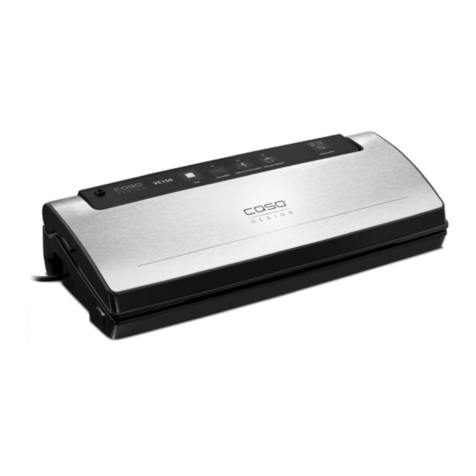
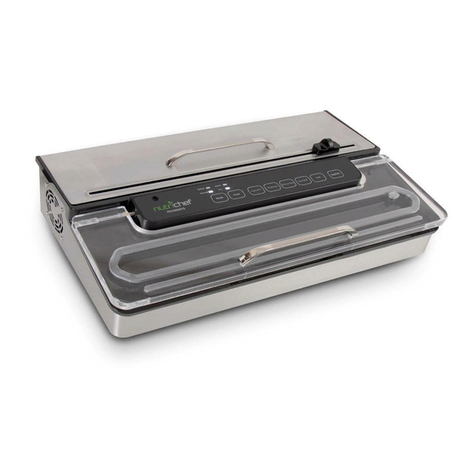
Start Enjoying the Benets of your
Vacuum Sealer System
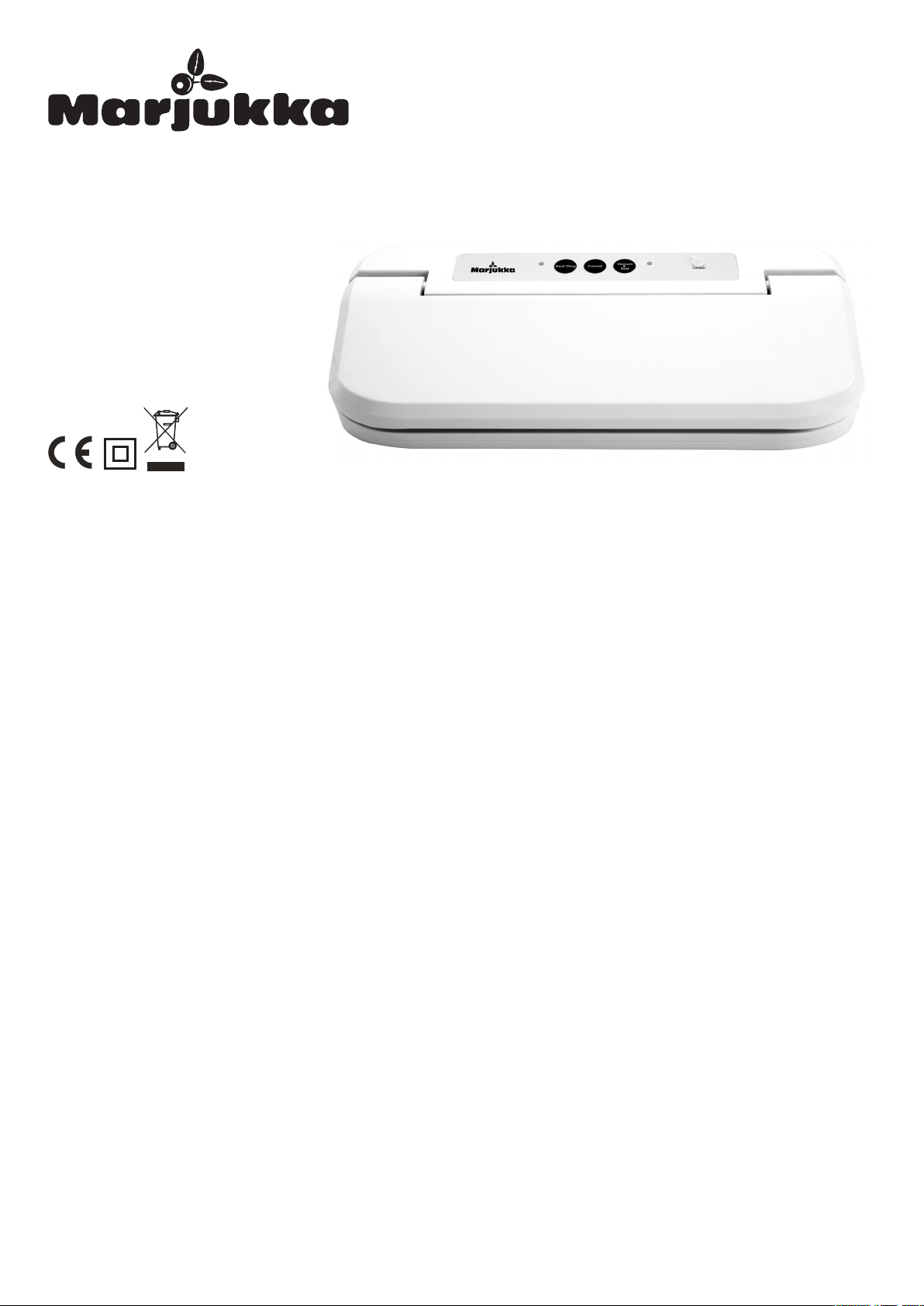
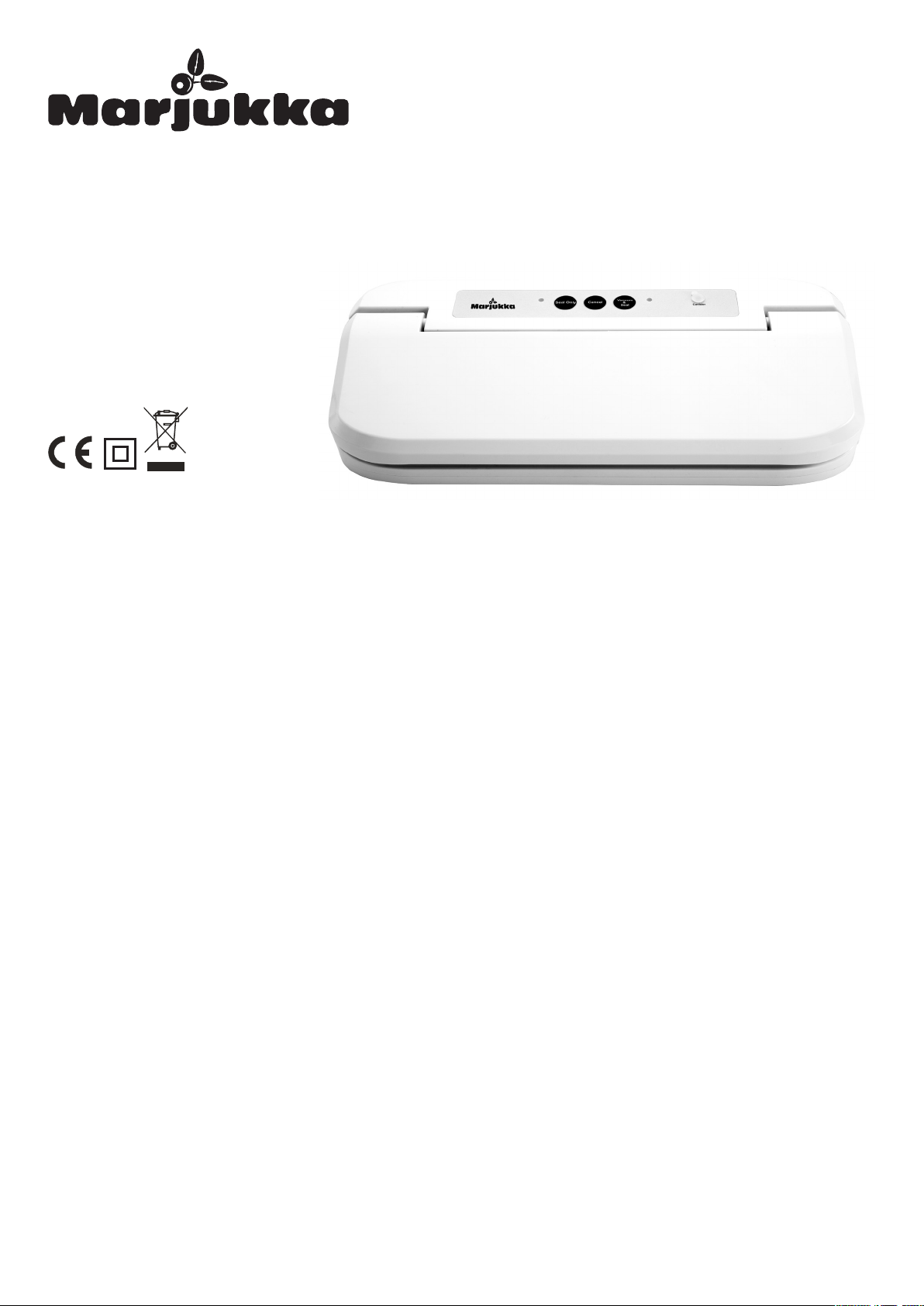
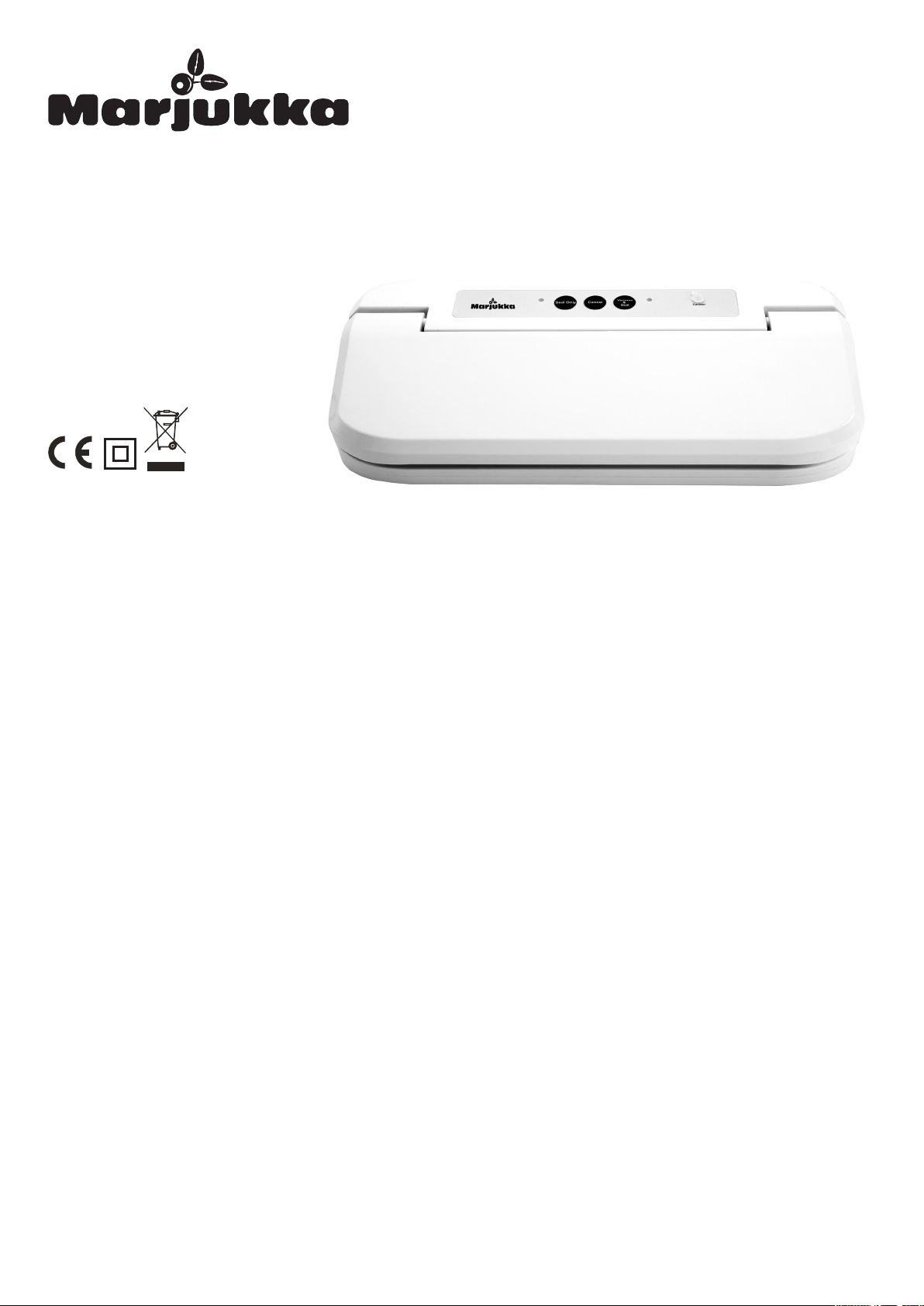
Thank you for purchasing this vacuum sealer.
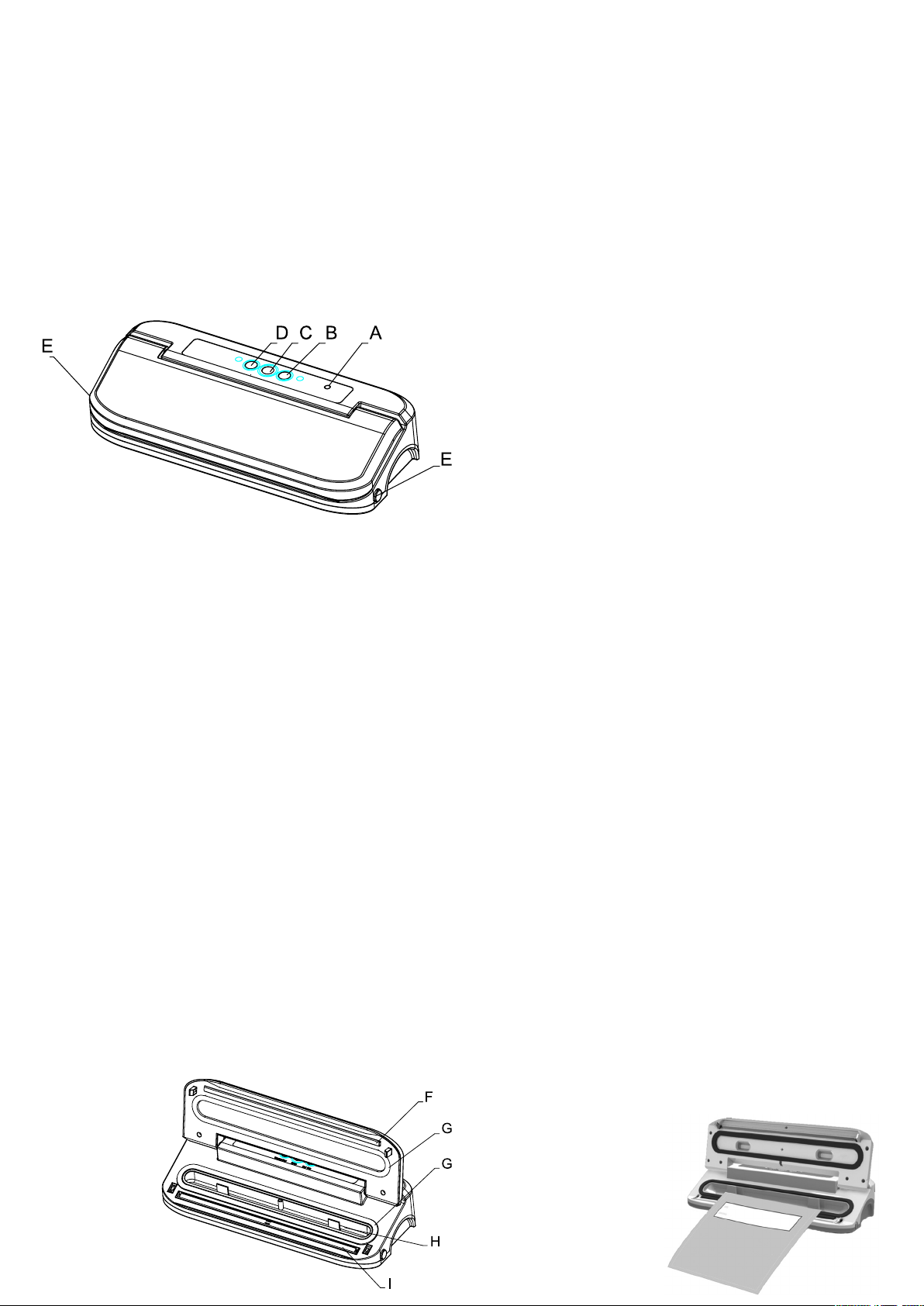
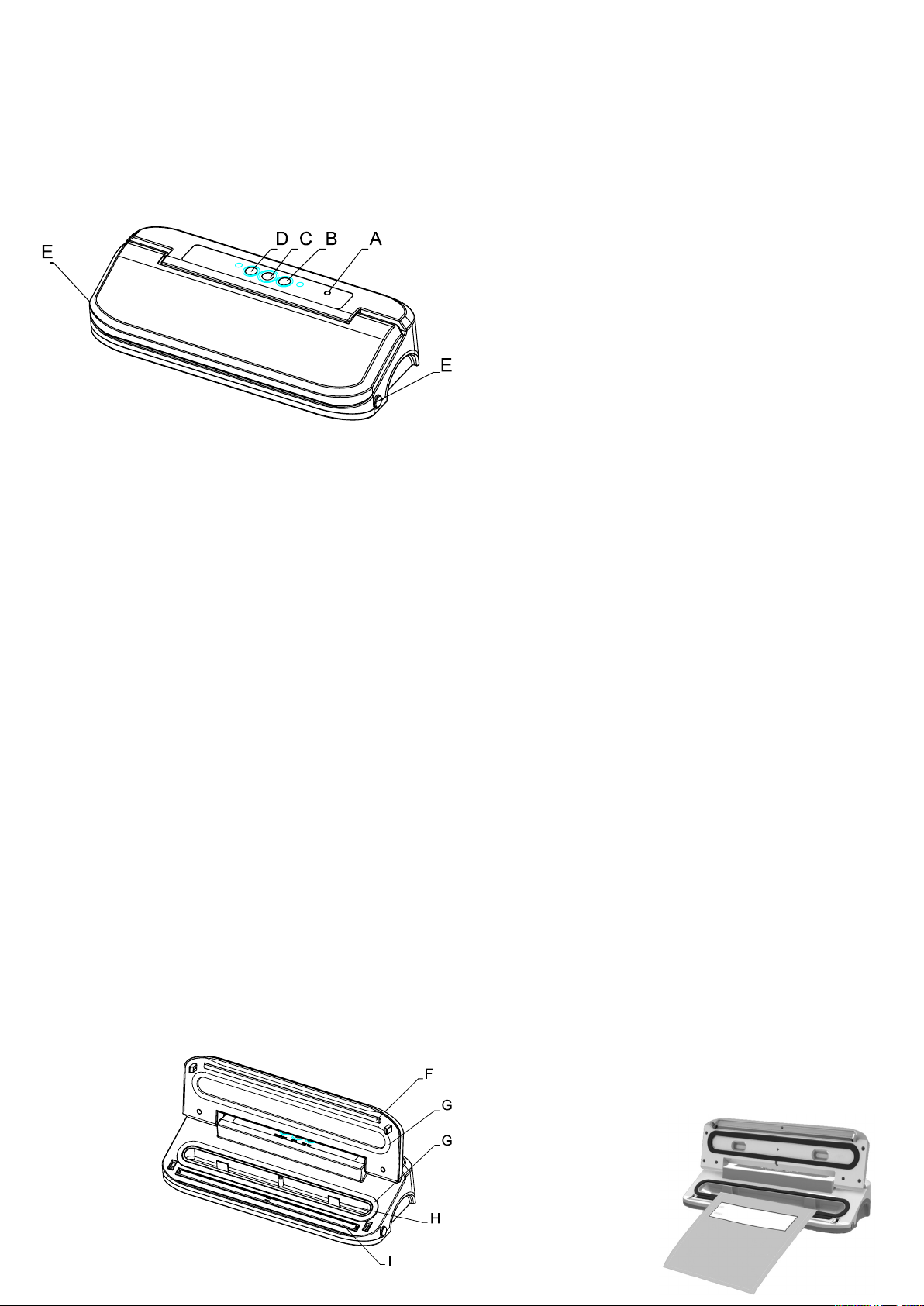
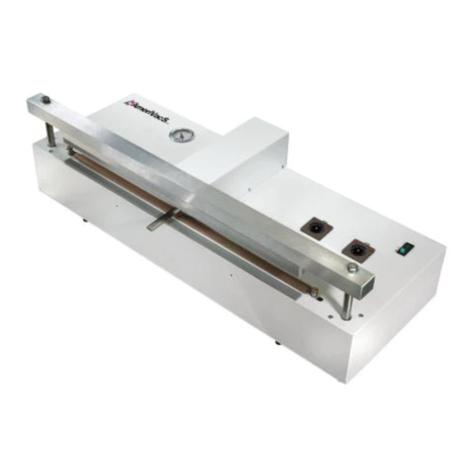
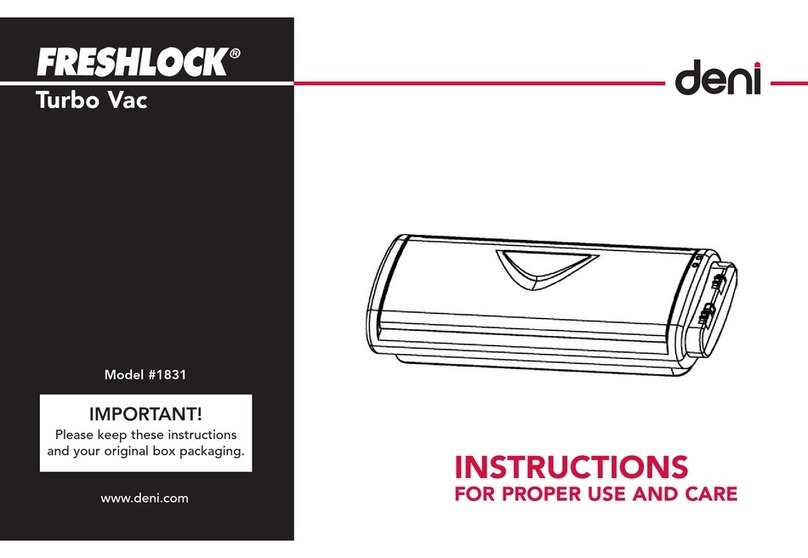
With this new vacuum sealer, just close the lid by
pressing down on both sides. When the lid is locked
in place, press the vacuum button and let the vacu-
um sealer do the rest! The machine will continue to
vacuum out air and then seal the bag; release the lid
by pressing the buttons on both sides of the machi-
ne and your items are now vacuum fresh!
Your new vacuum sealer system includes the fol-
lowing :
• VS150-N Vacuum Sealer
• User Manual
Vacuum Sealing Guidelines
Food Storage & Safety
IMPORTANT: Vacuum packaging is NOT a substitute
for refrigeration or freezing. Any perishable foods
that require refrigeration must still be refrigerated
or frozen after vacuum packaging.
For best result in extending the life of foods, it is
important to vacuum package foods that are fresh.
Once food has begun to deteriorate, vacuum pac-
kaging may only slow the deterioration process.
Vacuum sealing cannot prevent the growth of mold.
Other disease causing microorganisms can still
grow in low oxygen environments and may require
further meansures to be eliminated.
Food Preparation Hints and Tips for Air-tight
Vacuum Sealing
Cooking, Thawing and Reheating – Simmering in a
vacuum bag helps food retain its avor and it helps
with the clean up as well. No dirty saucepans...
When reheating foods in the microwave using your
vacuum bags, always puncture open the bag to
allow hot air to escape. You can also reheat foods in
the vacuum bags by placing them in water at a low
simmer below 170°F (75°C).
IMPORTANT : Always thaw foods in either refrigera-
tor or microwave – do not thaw perishable foods at
room temperature.
Preparation Hints for Meat and Fish:
Try pre-freezing meats and sh for 1-2 hours before
vacuum pakaging. This helps retain the juice and
shape, and provides for a better seal.
If you can’t, place a folded paper towel between the
food and top of the bag, but below seal area. Leave
paper towel in bag to absorb excess moisture and
juices during vacuum packaging process.
Preparation Hints for Cheeses:
Vacuum package cheese after each use. If you make
your bag just a little longer than needed, you can
re-seal the bag after each use.
IMPORTANT : Due to the risk of anaerobic bacteria,
soft cheeses should never be vacuum packaged.
Preparation Guidlines for Vegetables:
Blanching is a process that should be done before
vacuum packaging vegetables. This process stops
the enzyme action that could lead to loss of avor,
color and texture. To blanch vegetables, place them
in Simmering water or in a microwave until they are
cooked, but still crisp. Blanching times can range
from 1 to 2 minutes for leafy greens and peas ; 3 to
4 minutes for snap peas, sliced zucchini or brocco-
li; give your carrots about 5 minutes ; and 7 to 11
minutes for corn on the cob. After blanching, im-
merse vegetables in cold water to stop the cooking
process.
NOTE : All vegetables (including broccoli, Brussels
sprouts, cabbage, cauliower, kale, turnips) natural-
ly emit gases, during storage. Therefore, after blan-
ching, it’s best if they’re stored in the freezer.
More on Vegetables:
Vegetables are a great candidate for portion control
; when storing vegetables, try pre-freezing them for
1 to 2 hours, then separate them into meal portions
within your vacuum bags. After they have been
vacuum packaged, return them to the freezer.
IMPORTANT : Due to the risk of anaerobic bacteria,
fresh mushrooms, onions & garlic should never be
vacuum packaged.
Preparation Hints for Powdery Foods:
When vacuum packaging powdery items like our,
it’s best to use their original packaging inside of the
vacuum bags. The ne powder could get sucked
into the machine and cause enough damage to
shorten the life of the sealer.
Preparation Hints for Liquids:
Before you vacuum package liquid such as soup
stock, pre-freeze in a casserole dish, loaf pan or ice
cube tray until solid. Remove frozen liquid from pan
and vacuum package in the vacuum bags. You can
then stack in the freezer. When you’re ready to use,
just cut corner of bag and place in either a microwa-
ve dish or drop into water at a low simmer, below
170°F (75°C).
EN