7
6. Testing and Maintaining Your Heat Alarm
No maintenance of the Heat Alarm is required for the unit to continue functioning. However,
MasterGuard recommends annual inspection and testing to ensure familiarity with the alarm’s
function and unique sound.
If cleaning of the alarm becomes necessary, use only water with a mild detergent.
DO NOT SUBMERGE the alarm in any liquid. Thoroughly dry the alarm prior to re-hanging.
DO NOT PAINT any surface of the alarm or Heat Sensor.
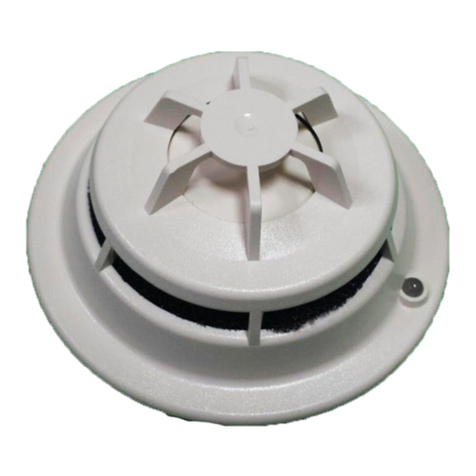
To activate the Heat Alarm as part of a fire drill or annual inspection, simply remove the Heat
Sensor from the center face of the alarm. The alarm will ring for approximately five minutes.
When testing is complete, rewind and reinstall the Heat Sensor to the alarm per sections 4 and 5
of these instructions.
The Heat Alarm can be tested by exposing the Heat Sensor to high temperatures (i.e. hairdryer,
heat gun). However, this will require the replacement of the Heat Sensor upon completion of the
test. Before undertaking this type of test activation, be sure you have a replacement fuse
available. Extreme care should be taken to avoid burns during this type test.
7. Troubleshooting Your Heat Alarm
Problem: The Heat Sensor will not snap on.
Solution: The Heat Sensor will not snap on if the Alarm is not FULLY WOUND. Check that it is
fully wound by ensuring that the steel pin on the front can be depressed to the level of
the chrome snap.
Problem: The alarm in my attic activated even though there was no fire.
Solution: The temperature rating of the Heat Sensor was too low. Try a higher temperature such
as 136
°
or 175
°
F. Check attic alarms periodically to ensure the alarm has not been
triggered.
Problem: How do I know if the alarm has been activated when we were out of the house?
Solution: When the Heat Alarm has been activated, a round, bright orange warning becomes
visible in the center of the Heat Sensor. If the entire Heat Sensor has been removed, a
larger bright orange warning label is visible. If either warning is visible the alarm must
be rewound and a new Heat Sensor installed.
8. Heat Alarm Limitations
• Heat Alarms are only activated by heat; they will not detect smoke. Sufficient amounts of
heat must be present for the Heat Alarm to operate.
• Heat Alarms may not activate from fires that start where heat from the fire cannot reach the
Heat Alarm. Such as in chimneys, in walls, on roofs, on the exterior of the home, on the
other side of closed doors, in unprotected attics, or otherwise beyond the alarm’s space
rating.
• Heat Alarms may not sense a fire on another level of a residence or building. For example:
A first floor alarm may not activate from a second floor or basement fire.
• No type of alarm can sense every kind of fire every time. In general, alarms may not always
warn you about fires caused by carelessness and safety hazards like smoking in bed, violent
explosions, escaping gas, improper storage of flammable materials, overloaded electrical
circuits, or arson.
9. Important Safety Information
Plan Your Escape:
• Draw a floor plan of your home.
• Show two ways out of each room.
• Discuss escape routes with everyone in your home.
• Agree on an outside meeting place in front of your home for everyone to gather after
they’ve escaped.
Be Prepared:
• Teach every member of your household the sound of your Smoke and Heat Alarms.
• Have everyone in your home memorize the fire department’s emergency phone number.