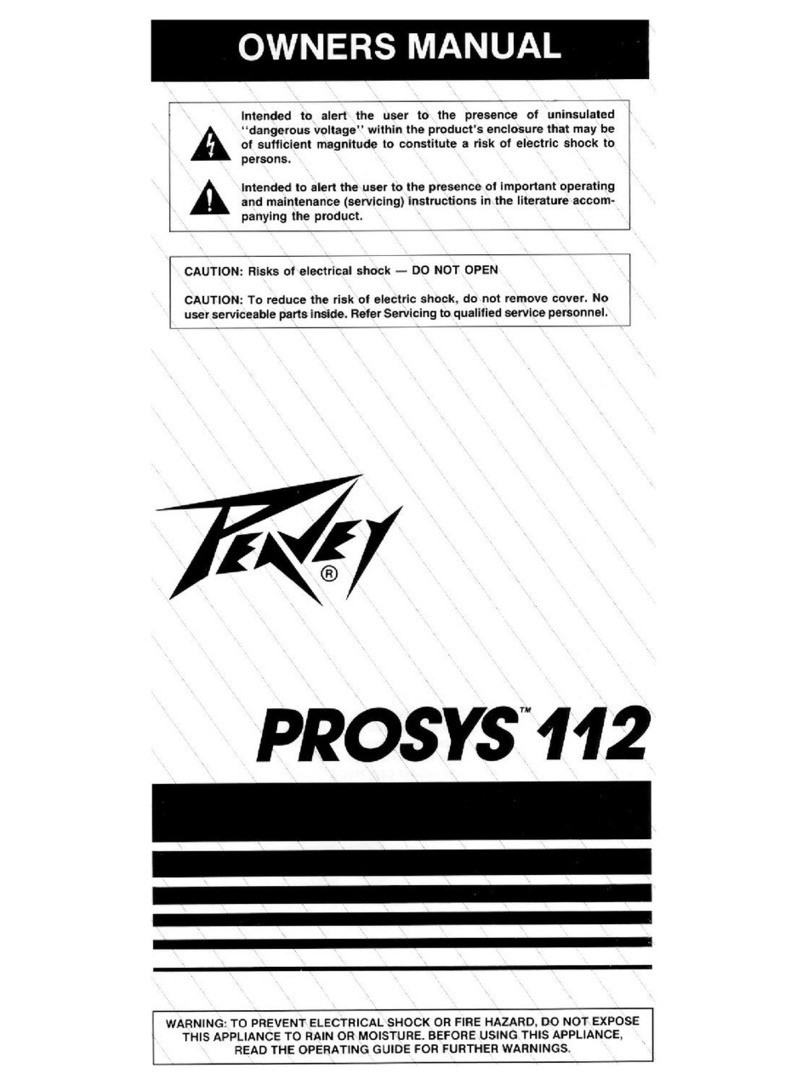
CAUTION:OBSERVE ALL SAFETY AND USAGE INSTRUCTIONS TO AVOID POSSIBLE DAMAGE TO EQUIPMENT AND EXPOSURE TO HAZARDS. THIS SYMBOL UNIVERSALLY FLAGS CAUTION NOTICES LETHAL VOLTAGES PRESENT AT SPEAKER, CABLE AND AMPLIFIER TERMINALS; ENSURE ALL WIRING IS SAFE AND CORRECT BEFORE USE. THIS SYMBOL ALSO UNIVERSALLY FLAGS ELECTRICAL HAZARDS DO NOT OPEN UNIT; LEAVE ALL INTERNAL SERVICE OPERATIONS TO A QUALIFIED TECHNICIAN. THIS PRODUCT IS CAPABLE OF PRODUCING SOUND PRESSURE LEVELS WHICH MAY DAMAGE HEARING. THE USER IS RESPONSIBLE FOR EXPOSURE LEVELS AND USE OF HEARING PROTECTION.OPERATING ENVIRONMENT:This amplified speaker is designed for use in environments which protect it from rain, unusually high air humidity and temperature. Place on a surface where it cannot be easily dislodged, potentially causing damage to the unit or injury to a person. Ensure that the location will not expose the amplifier to spillage of liquids/drinks, sprays/vapours or high humidity. Ensure the amplifier is installed in a place which is not subject to abnormally high temperatures and maintain sufficient ventilation to prevent overheating. For temporary use outside, apply similar caution however, careful to ensure placement accounts for changing weather conditions and that extreme wind/rain/heat will not find its way to the equipment. When taking any equipment from a cold environment (unheated storage, vehicles, etc), into a warm one, allow the equipment time to become acclimatised to the ambient temperature, as condensation is likely to form in the amplifier, potentially causing it to malfunction if put into service too soon.Note: This equipment has been tested and found to comply with the limits for a Class B digital device, pursuant to part 15 of the FCC Rules. These limits are designed to provide reasonable protection against harmful interference in a residential installation. This equipment generates, uses and can radiate radio frequency energy and, if not installed and used in accordance with the instructions, may cause harmful interference to radio communications. However, there is no guarantee that interference will not occur in a particular installation. If this equipment does cause harmful interference to radio or television reception, which can be determined by turning the equipment off and on, the user is encouraged to try to correct the interference by one or more of the following measures:— Reorient or relocate the receiving antenna.— Increase the separation between the equipment and receiver.— Connect the equipment into an outlet on a circuit different from that to which the receiver is connected.— Consult the dealer or an experienced radio/TV technician for help. 2