1728
ORBIT
WAY
-
MINDEN
-
NEVADA
-
89423-4114
-
PHONE:
775-782-1700
-
FAX:
775-782-1701
-
WEB:
maxtonvalve.com
-
EMAIL: [email protected] 6/26/2020
7
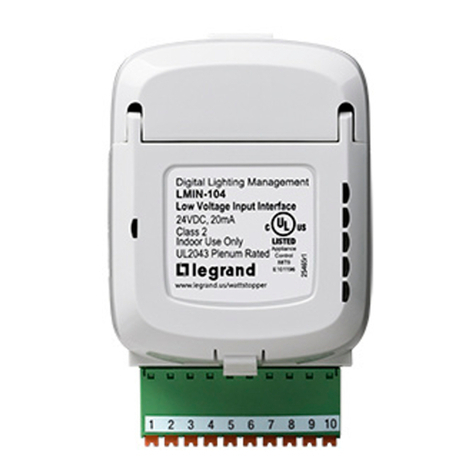
“DV” COIL
LED INDICATOR
Interface
Connector
Solenoid Coil
Connector
Motor & Sensor
Connector
LCD Display
“POWER”
LED INDICATOR
Menu Navigation
Buttons
Programming
Port
VALVE CONTROLLER BOARD FEATURES
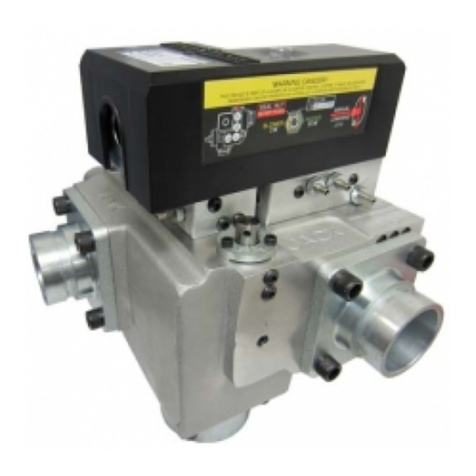
VALVE SET UP
THE INFORMATION PRESENTED HEREIN IS FOR USE BY SKILLED HYDRAULIC ELEVATOR PROFESSIONALS
FACTORY SETTING: All valves are factory tested and set to the job specifications provided. Factory settings should only be changed if accurate car
speed information is available to the technician.
NORMAL OPERATION MODE: Make sure all connectors are plugged in to the VCB (Valve Control Board). The green “POWER” indicator is on and
there is no errors listed on the LCD display. These conditions indicate normal valve operation.
PRESSURE RELIEF ADJUSTMENT:
Land car in pit and install pressure gauge in port “B”.
Register an up call with a fully loaded car, making note of pressure gauge reading.
Cancel the up call.
Close the manual shut off valve to the jack.
Set the relief adjuster to the minimum pressure position. To do this turn the relief adjuster screw fully CW until seated. Then turn CCW 3 full turns.
Register an up call, observe pressure gauge and turn the relief adjuster CW to increase the pressure gage reading. The final setting should be in
accordance with state and local code requirements.
Cancel the up call.
Snugly tighten the relief adjuster nut and seal as required.
Register an up call to verify the pressure relief setting.
Cancel the up call.
Open the manual shut off valve to the jack.
VALVE SET UP:
Register up and down calls to verify FLOW (high speed), leveling speed, acceleration, deceleration and stop rates.
If necessary, use the MENU BUTTONS to navigate to the ride quality setting to select different ride quality (rate). Setting “0” (factory default) pro-
vides the softest ride quality (rate), setting “9” provides the hardest ride quality (rate).
MANUAL LOWERING (ML): Twist Handle or Push Button
ML is either a Twist handle or Push Button located on the right side of the valve.
When it is necessary to lower the car, Twist the handle OUT (CCW) or press the Push Button.
NOTE: Manual lowering speed may vary with system pressure and jack size.
PROCEDURE FOR SETTING OVERSPEED FLOW WITH 11 AND 12 GPM WORKING FLOW:
DO NOT USE OVERSPEED MENU UNDER ADVANCED SETTINGS AT THIS WORKING FLOW.
After completely setting up the valve including the down flow. With car at the bottom floor, turn the Relief (R) adjuster out (CCW) to stop.
Make an up call. Car should not move. Turn the Relief adjuster slowly IN (CW) until the car moves then one more turn IN. Car should make
normal up run and stop at the upper floor.
Turn the Relief adjuster OUT (CCW) one turn. Make a down call. Car should be running down at speed faster than normal down run. Check car
speed if it complies with the Codes, 110 to 140 % of normal down high speed. If not, turn the Relief adjuster OUT (CCW) for faster or IN (CW) for
slower down high speed. Note the number of turns in this step.
If an up run is needed, turn the Relief adjuster IN (CW) the same number of turn in Step 3.
When the down high speed for overspeed condition is obtained, set the overspeed valve (or governor) as required.