4
EN ENGLISH
Do not use lava rock, wood chunks, charcoal, lighter fluid, alcohol or other similar chemicals for lighting or
relighting. Use only firelighters complying to 1860-3. Keep all such substances and liquids well away from
appliance when in use.
20. Operate this appliance using liquefied petroleum only, which is also specified on the rating label on the unit. Do not attempt to
operate your grill on other gases. Do not attempt to convert this LP unit to natural gas. Failure to follow this warning could lead to
fire, bodily harm, and will void your warranty.
DISPOSAL OF ASHES
Ashes should be placed in a metal container with a tight-fitting lid. The closed container of ashes should be placed on a non-combustible
floor or on the ground, well away from all combustible materials, pending final disposal. When ashes are disposed by burial in soil, or
otherwise locally dispersed, they should be retained in a closed container until all cinders have thoroughly cooled.
WOOD PELLET FUEL - HOPPER CAPACITY 16 LBS (7.2 KG)
This pellet cooking appliance is designed and approved for pelletized, all natural, wood fuel only. Any other type of fuel burned in this
appliance will void the warranty and safety listing. You must only use all natural wood pellets, designed for burning in pellet barbecue
grills. Do not use fuel with additives.
Do not use spirit, petrol, gasoline, lighter-fluid or kerosene for lighting or refreshing a fire in your grill. Keep all
such liquids well away from the appliance when in use.
At the time of printing, there is no industry standard for barbecue wood pellets, although most pellet mills use the same standards to
make wood pellets for domestic use. Further information, can be found at
www.pelletheat.org
or the
Pellet Fuel Institute
.
As there is no control over the quality of pellets used with the appliance, Dansons and Genesis International Corporation Pty Ltd. assume
no liability caused by the quality of fuel.
CREOSOTE
Creosote, or soot, is a tar-like substance. When burning, it produces black smoke with a residue which is also black in color. Soot or creosote
is formed when the appliance is operated incorrectly, such as: blockage of the combustion fan, failure to clean and maintain the burn area,
or poor air-to-fuel combustion.
It is dangerous to operate this appliance should the flame become dark, sooty, or if the burn pot is overfilled with pellets. When ignited,
this creosote makes an extremely hot and uncontrolled fire, similar to a grease fire. Should this happen, turn the unit OFF, let it cool
completely, then inspect for maintenance and cleaning. It commonly accumulates along exhaust areas.
If creosote has formed within the unit; allow the unit to warm up at a low temperature, turn off the appliance, then wipe away any
formation with a hand towel. Similar to tar, it is much easier to clean when warm, as it becomes liquid.
PROPANE & UNIVERSAL LP GAS WARNINGS
1. Ensure the gas cylinder is purchased by a reputable supplier. An incorrectly filled or an overfilled LP tank can be dangerous. The
overfilled condition combined with the warming of the LP gas tank (a hot summer day, tank left in the sun, etc.) can cause LP gas to
be released since the temperature increase causes gas to expand. Gas released from the cylinder is flammable and can be explosive.
2. Do not use an LP gas cylinder if it has a damaged valve or shows signs of dents, gouges, bulges, fire damage, corrosion, leakage,
excessive rust, or other forms of visual external damage; it may be hazardous and should be checked immediately by a liquid propane
supplier.
If you see, smell, or hear the hiss of gas escaping from the cylinder, do not attempt to light appliance. Extinguish
any open flame. Disconnect from fuel supply.
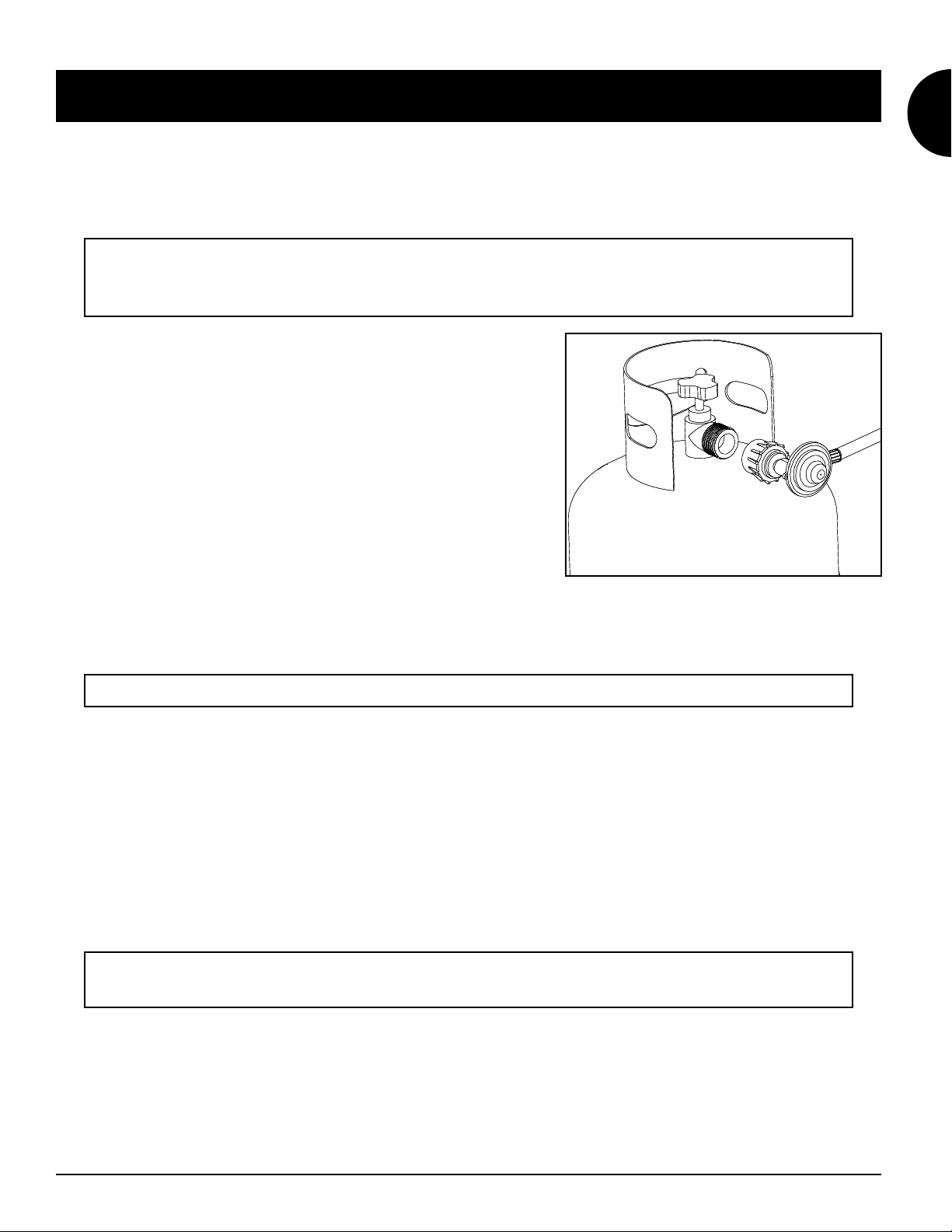
3. Do not connect or disconnect the gas cylinder while the unit is in use or is still hot. When grill is not in use, ensure regulator knob is
turned to OFF and disconnect the gas cylinder. Never move or transport the unit while the gas cylinder is attached. Do not store a
spare LP gas cylinder under or near the appliance.