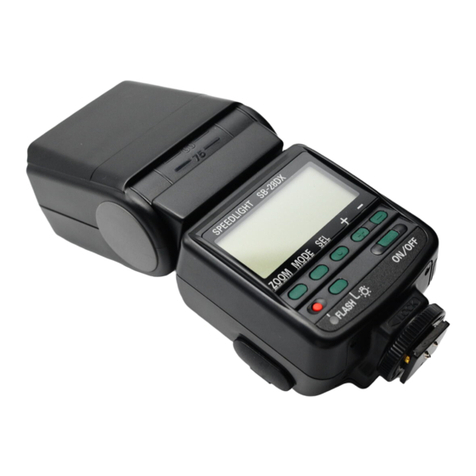
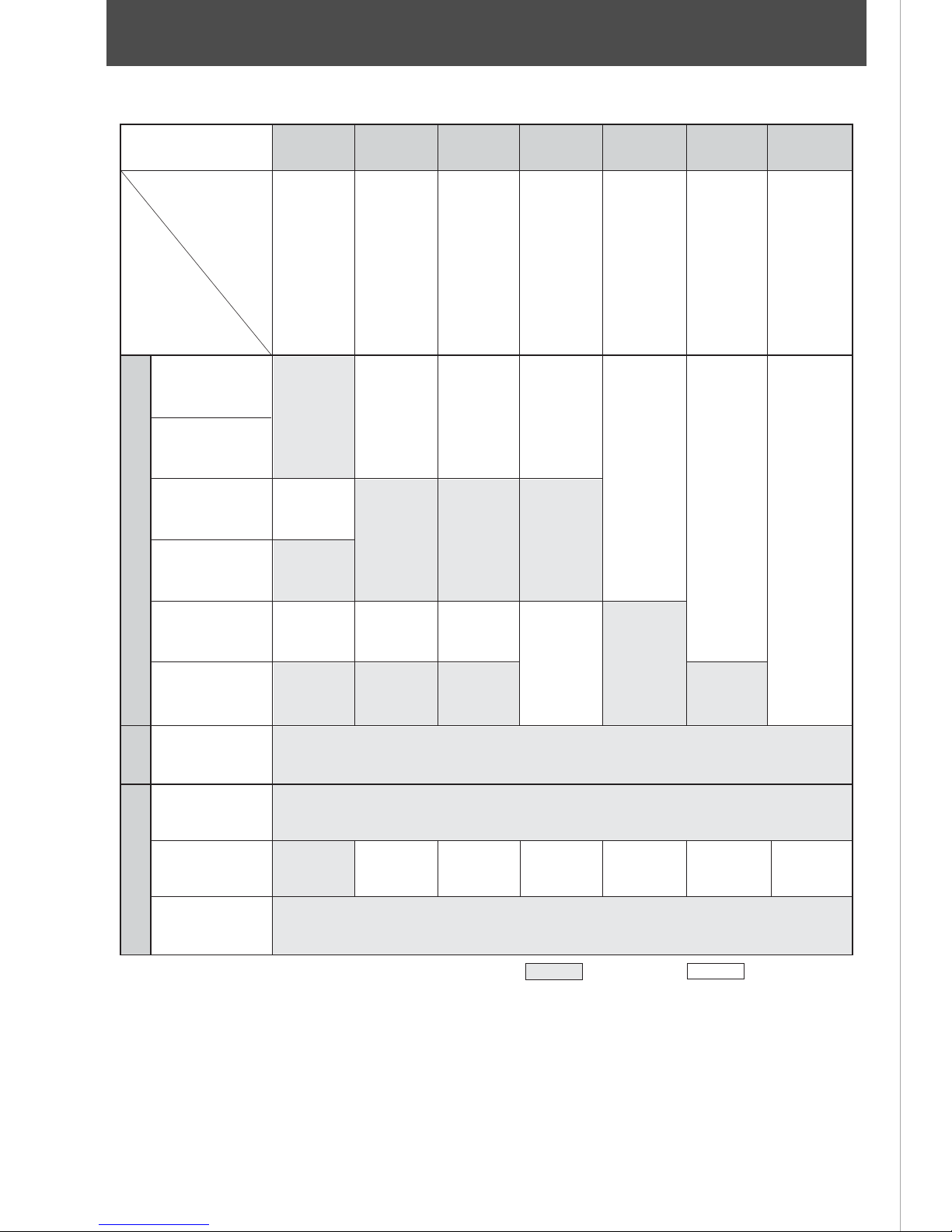
All LCD (liquid crystal display) figures and marks do not appear at
the same time. They are shown together here for ease of explanation.
1Flash mode indicator (P.22)
tØAutomatic Balanced Fill-Flash with TTL
Multi-Sensor
tø Matrix Balanced Fill-Flash,
Center-Weighted/Spot Fill-Flash
tStandard TTL Flash
ƒManual Flash (P.46)
%FP High-Speed Flash sync (P.49)
"Repeating Flash (P.52)
˙Non-TTL Auto Flash (P.42)
2Film speed (ISO)/number of repeating flashes per
frame/frequency indicators (P.18 / P.52)
3Flash shooting range indicator bars (P.13)
Notes on LCDs
• Because LCDs are difficult to read when viewed from the side, you should look at
the LCD panel directly.
• LCDs are temperature sensitive and may turn black at high temperatures (approx.
60°C or 140°F). They clear up when the temperature returns to normal (20°C or
68°F).
• In cold temperatures (approx. 5°C or 41°F and below), the LCDs’ response time
slows down. This is typical of LCDs and no cause for concern. LCDs will function
properly once the temperature returns to normal (20°C or 68°F).
NOTE
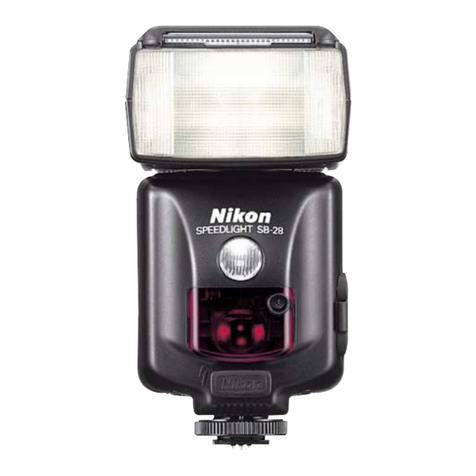
Using the SB-28 in dim light
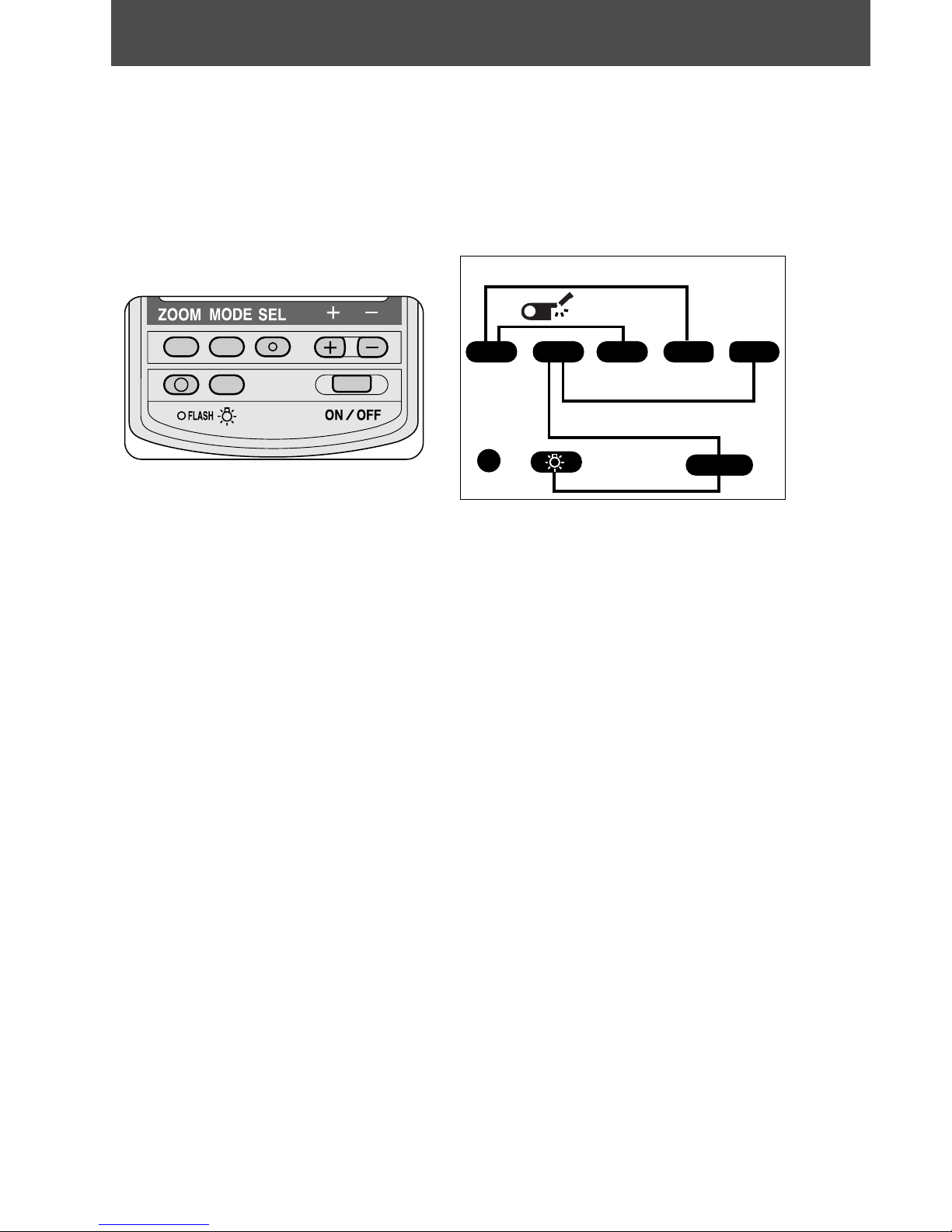
Press the .button to turn the illuminator on. Press the button again to turn it off. The illuminator
turns off automatically after approx. 16 sec. when the SB-28 is not in use.
LCD panel indications
4Red-eye reduction indicator (P.76)
5Zoom-head position indicator (P.19)
6Flash output level indicator (P.50)
7Exposure compensation indicator (P.72)
8Underexposure indicator (P.28)
9Exposure compensation/underexposure value
(P.72 / P.28)
10 Flash shooting distance scale (m: meter) (P.13)
11 Flash shooting distance scale (ft: feet) (P.13)
12 Standby mode indicator (P.15)
13 AF assist illuminator LED canceled indicator (P.82)
14 Aperture indicator (P.42)