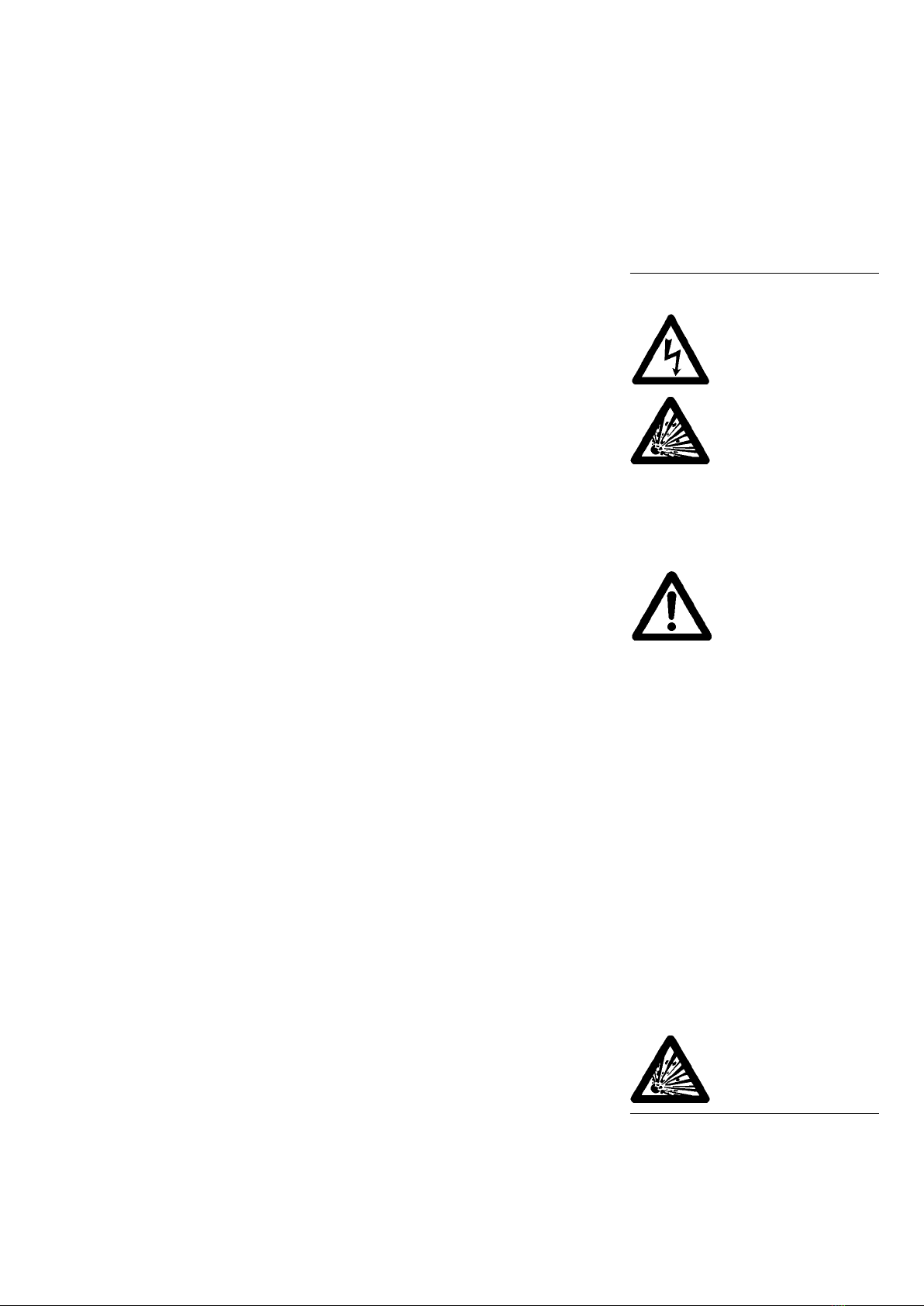
Failure to observe the following precautions could result in damage to
the pump.
■Do not allow the ingestion of small objects (screws, nuts, washers, pieces
of wire, etc.) through the inlet port. Always use the inlet screen which is
supplied with every pump.
■Do n
no
ot
tuse the pump for applications that produce abrasive or adhesive
powders or condensable vapours that can leave adhesive or high viscosi-
ty deposits. Please contact our Sales or Service offices to select a suit-
able separator. Also please contact our Sales or Service when planning to
pump vapours other than water vapour.
■This pump is suited for pumping water vapour within the specified water
vapour tolerance limits.
■Avoid vapours that can condense into liquids upon compression inside
the pump, if these substances exceed the vapour tolerance of the pump.
■Before pumping vapours, the TRIVAC NT should have attained its opera-
ting temperature. The pump will have attained its operating temperature
about 30 minutes after starting the pump. During this time the pump
should be separated from the process, by a valve in the intake line, for
example.
■In the case of wet processes we recommend the installation of liquid
separators upstream and downstream of the pump as well as the use of
the gas ballast.
■The exhaust line should be laid so that it slopes down and away from the
pump so as to prevent condensate from backstreaming into the pump.
■The entry of particles and fluids must be avoided under all circumstances.
■Reactive or aggressive substances in the pump chamber may impair the
operating oil or modify it. In addition, such substances may be incompa-
tible with the materials of the pump (Viton, grey cast iron, aluminium,
steel, resins, glass etc.).
■Corrosion, deposits and cracking of oil within the pump are not allowed.
■Normal amounts of humidity within the range of the pump’s vapour tole-
rance will not significantly affect pump performance (when the gas ballast
is active).
■In the case of custom pumps (with part numbers deviating from those
stated in the EC Declaration of Conformity) please note the information
provided in the supplementary sheets.
■If mineral oil, PFPE and DOT come into contact they will emulsify. That’s
why the pumps must only be run with the type of lubricant specified for
the pump.
■Please note the change as to the ATEX temperature class in the case of
PFPE pumps. Suitability is restricted to T3 (gases and vapours with an
ignition temperature of over 200 °C).
Safety Information
7
130002780_002_A0 - 12/2008 - © Oerlikon Leybold Vacuum
Caution