manuals.online logo
Brands
  1. Home
  2. •
  3. Brands
  4. •
  5. Pambry
  6. •
  7. Measuring Instrument
  8. •
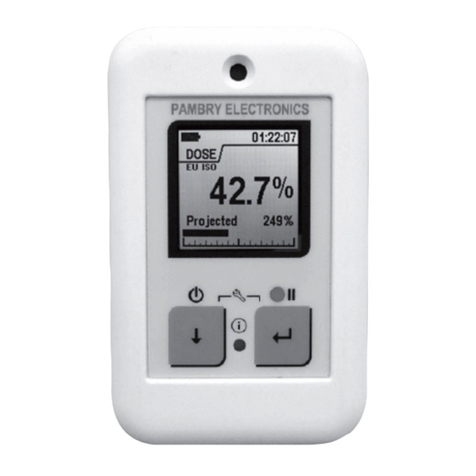
  9. Pambry Listen Ear PED-1704-D User manual

Pambry Listen Ear PED-1704-D User manual

Other Pambry Measuring Instrument manuals

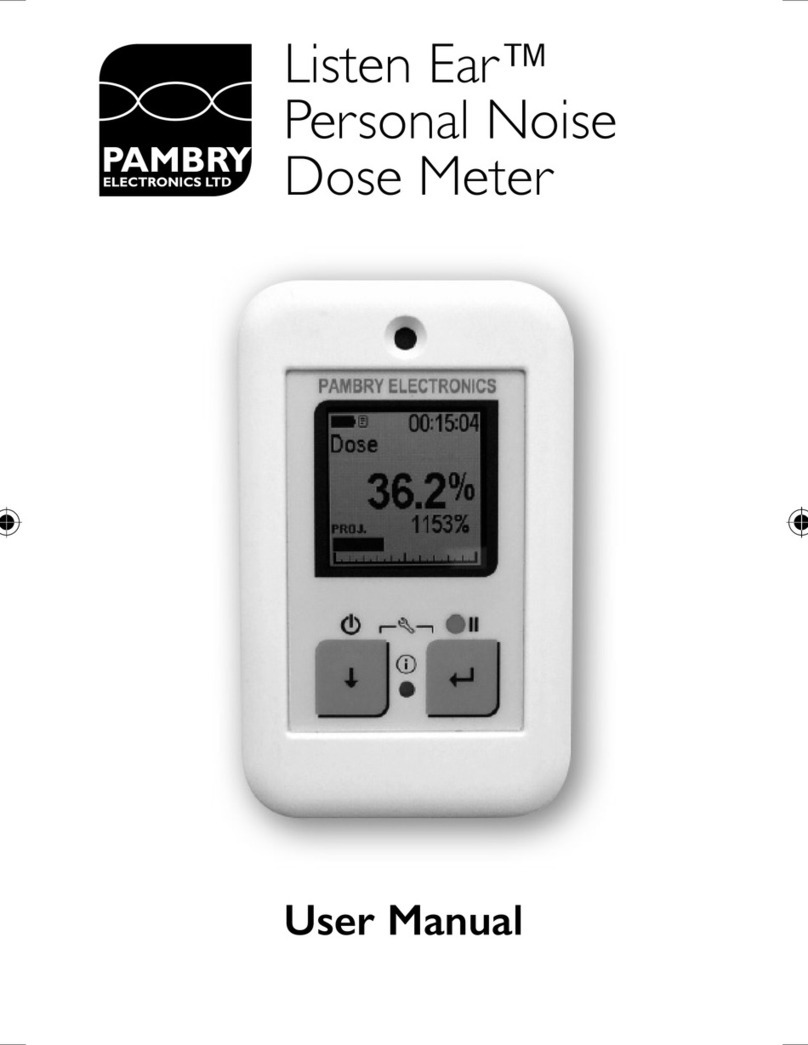
Pambry Listen Ear User manual

Pambry

Pambry Listen Ear User manual

Pambry Listen Ear User manual

Pambry

Pambry Listen Ear User manual

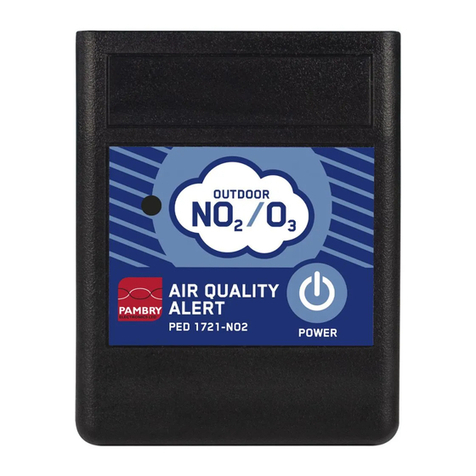
Pambry PED-1721-NO2 User manual

Pambry

Pambry PED-1721-NO2 User manual

Popular Measuring Instrument manuals by other brands

Powerfix Profi 278296 Operation and safety notes

Powerfix Profi

Powerfix Profi 278296 Operation and safety notes

Test Equipment Depot GVT-427B user manual

Test Equipment Depot

Test Equipment Depot GVT-427B user manual

Fieldpiece ACH Operator's manual

Fieldpiece

Fieldpiece ACH Operator's manual

FLYSURFER VIRON3 user manual

FLYSURFER

FLYSURFER VIRON3 user manual

GMW TG uni 1 operating manual

GMW

GMW TG uni 1 operating manual

Downeaster Wind & Weather Medallion Series instruction manual

Downeaster

Downeaster Wind & Weather Medallion Series instruction manual

Hanna Instruments HI96725C instruction manual

Hanna Instruments

Hanna Instruments HI96725C instruction manual

Nokeval KMR260 quick guide

Nokeval

Nokeval KMR260 quick guide

HOKUYO AUTOMATIC UBG-05LN instruction manual

HOKUYO AUTOMATIC

HOKUYO AUTOMATIC UBG-05LN instruction manual

Fluke 96000 Series Operator's manual

Fluke

Fluke 96000 Series Operator's manual

Test Products International SP565 user manual

Test Products International

Test Products International SP565 user manual

General Sleep Zmachine Insight+ DT-200 Service manual

General Sleep

General Sleep Zmachine Insight+ DT-200 Service manual

Sensa Core Lacto Spark user manual

Sensa Core

Sensa Core Lacto Spark user manual

VOLTCRAFT UTS-1980 operating instructions

VOLTCRAFT

VOLTCRAFT UTS-1980 operating instructions

EBCHQ 94915 Operation manual

EBCHQ

EBCHQ 94915 Operation manual

Balluff BIP LD2-T017-01-EP-S4 Series user guide

Balluff

Balluff BIP LD2-T017-01-EP-S4 Series user guide

Pulsar IMP Lite Series instruction manual

Pulsar

Pulsar IMP Lite Series instruction manual

ETCR 6800 user manual

ETCR

ETCR 6800 user manual

manuals.online logo
manuals.online logoBrands
  • About & Mission
  • Contact us
  • Privacy Policy
  • Terms and Conditions

Copyright 2025 Manuals.Online. All Rights Reserved.

How do I use it?
Using the device is simplicity itself. Carefully insert your battery into the battery
compartment (located at the rear of the unit) taking note of the polarity markings.
A quality AA (LR6) alkaline type battery is recommended.
Press the Power button on the front face and wait for ALERT lamp to illuminate and
flash GREEN.
Clip the device onto your clothing and keep it exposed to your environment. Do NOT
place in your pocket as this will adversely affect the readings and block the line of sight of
the ALERT warning lamp.
The device constantly checks the noise levels, calculates your daily (8-hour) exposure and
respond accordingly to the calculated noise dose levels (see section “How does it work?”).
The ALERT lamp should flash GREEN for a normal safe noise environment during the
whole (8 hour) day.
IN CASE THE WARNING STATE CHANGES TO RED, YOU SHOULD REMOVE
YOURSELF FROM THIS NOISE ENVIRONMENT FOR 24 HOURS. IF THE
RED WARNING PERSISTS IN YOUR ENVIRONMENT, IT IS IMPERATIVE YOU
OBTAIN AND USE SUITABLE HEARING PROTECTION.
After use, press and hold the power button until the ALERT lamp goes out.
Noise dose exposure standards
Your Personal Noise Alert Device has 5 different types of noise dose exposure standards
available for selection. As default is set to EU ISO standard and if you are unfamiliar with
those standards, you should NOT change it.
To change the exposure standards, first power your device off and remove the battery.
Press and hold the Power button, and insert the battery whereupon the ALERT lamp
will flash BLUE. Short press the Power button again to change to the exposure standard
required, in accordance with the table below.
Battery
Compartment
Clip
Sensor
Power
Button
Alert
Lamp
How does it work?
The noise dose measurement is performed by the built-in
highly stable MEMS audio noise sensor and processed by the
battery powered internal electronics control unit. The Pambry
patented anti-knock feature is used to minimise the effect of
any mechanical case noise that can affect readings.
When the noise dosage level exceeds the pre-set thresholds,
the ALERT lamp changes from GREEN to AMBER or RED
(see technical specification). NOTE - This may happen before
the 8-hour day is completed.
Each transition of the ALERT lamp to AMBER or RED also
triggers the vibrate alert for approximately 15 seconds. This can
be suspended by a short press of the Power button.
Battery life is in excess of 360h and a Low battery indication
is shown by very short RED flashes of the ALERT lamp.
Welcome to your new Personal Noise Dose Alert warning device which is
one of the family of Personal Alert devices manufactured in the UK by
Pambry Electronics Ltd. The other devices relate to Noise Dose,
Carbon Dioxide (CO2- Indoor) and Nitrogen Dioxide
/Ozone (NO2/O3- Outdoor) measurements.
Key Features
n Self-contained unit
n Simple to use
n Long battery life
n Optical and Vibration alert
n Patented anti-knock feature
(Patent No: GB 2 551 724)
What is it?
Your device is a small battery powered unit that measures the noise dose over an 8 hour
daily period of time from the moment you switch it on, and indicates whether the noise
dose in your environment is acceptably low or too high (ie. safe or not safe). In this latter
case you should take steps to obtain, and use, some hearing protection or relocate to
quieter environment.
Standard Blue Lamp Ex Rate Cr Level Cr Threshold Cr Time Cr Response
Ref. Pattern dB dB dB Hrs.
EU ISO 1 flash 3 85 - 8 -
OSHA-HC 2 flashes 5 90 80 8 slow
OSHA-PEL 3 flashes 5 90 90 8 slow
ACGIH 4 flashes 3 90 - 8 slow
NIOSH 5 flashes 3 85 80 8 slow
Having selected the correct standard, press and hold the Power button until the ALERT
lamp reverts to GREEN. This setting is now stored permanently until the programming
is repeated.

Technical Specification
Measuring range: 40dB to 120dB SPL
Noise dose threshold levels: ALERT Lamp Noise Dose %
Colour (over 8h)
GREEN Below 80%
AMBER Greater than 80%
RED Greater than 85%
Noise dose averaging time: 8 hours
Microphone type: High stability digital MEMS microphone
Calibration: Factory calibrated
Weighting: A weighting IEC 61672:2002 Class 2
Warning lamp: Multi coloured LED, Red, Green, Amber
Warning lamp Lamp Flash
indicator states: Colour Duration
Low battery RED SHORT
Normal (no alert) GREEN SHORT
Amber alert AMBER LONG
Red alert Red LONG
Vibration alert: Rotating type
Vibrate time: 15 sec
Battery: 1x AA LR6 alkaline
Battery life: > 360h
Dimensions: 71mm x 56mm x 18mm (23mm including clip)
Weight: 70g (with a battery)
Life time: 5 years
Environmental:
Temperature operation: -40 °C to +65 °C
Temperature storage: -50 °C to +70 °C (no battery)
Humidity operating: up to 90% RH, non-condensing
Humidity storage: up to 90% RH, non-condensing
PED-1743 - User Manual - v1 - April 2022
Listen EarTM Personal
Noise Dose Alert
User Manual
PED-1704-D
listen
ear
IMPORTANT NOTICE
These devices are sold with the intention
that a wearer can educate themselves about
their environment They are not intended
to make measurements as such but merely
indicate the risk to themselves of being in that
environment.
PAMBRY DISCLAIMER
Pambry Electronics reserve the right to change
specifications or update this user manual at
any time without prior notice.
Pambry Electronics Ltd
Pambry House, Units 7 & 8 Ventura Centre, Ventura Place,
Upton Industrial Estate, Upton, Poole, Dorset BH16 5SW UK
Tel: 01202 624910 Email: [email protected] www.pambry.co.uk
SAFETY INFORMATION
For safe practice only operate in accordance
with the instructions in this manual.
WARNING
To avoid personal injury,
follow the guidelines below:
• Do not remove cover.
• Use this device only as specified in this manual.
• Do not use around explosive gas or vapour.
• It is your responsibility to contribute to a
clean and healthy environment by using the
appropriate local return and collection systems.
• The symbol shown below indicates that
separate collection systems must be used for
any discarded equipment or batteries
marked with the WEEE Symbol.
!