manuals.online logo
Brands
  1. Home
  2. •
  3. Brands
  4. •
  5. Paso
  6. •
  7. Receiver
  8. •
  9. Paso R170 User manual

Paso R170 User manual

Other Paso Receiver manuals

Paso R208-Tx User manual

Paso

Paso R208-Tx User manual

Paso R850A User manual

Paso

Paso R850A User manual

Paso R850 User manual

Paso

Paso R850 User manual

Paso LARX01 User manual

Paso

Paso LARX01 User manual

Popular Receiver manuals by other brands

Televes ZAS HD SAT user manual

Televes

Televes ZAS HD SAT user manual

Realistic DX-75 Operating and service instructions

Realistic

Realistic DX-75 Operating and service instructions

Saris 4620 Assembly instructions

Saris

Saris 4620 Assembly instructions

Mini DTR 206C PVR user manual

Mini

Mini DTR 206C PVR user manual

RF Elements TwistPort manual

RF Elements

RF Elements TwistPort manual

Denon DN-200WS user guide

Denon

Denon DN-200WS user guide

Yamaha RX-V467 owner's manual

Yamaha

Yamaha RX-V467 owner's manual

Russound SaphIR 858 instruction manual

Russound

Russound SaphIR 858 instruction manual

Quasonix RDMS Firmware update procedure

Quasonix

Quasonix RDMS Firmware update procedure

Pioneer XV-HTD1 Service manual

Pioneer

Pioneer XV-HTD1 Service manual

ATZ HDMI-V2-44HE150 manual

ATZ

ATZ HDMI-V2-44HE150 manual

Sony XNV-770BT MyTomTom Specifications

Sony

Sony XNV-770BT MyTomTom Specifications

Grundig STR 7122 TWIN Service manual

Grundig

Grundig STR 7122 TWIN Service manual

Creative Blaster Modem user guide

Creative

Creative Blaster Modem user guide

Panduit ATLONA AT-OME-RX11 installation guide

Panduit

Panduit ATLONA AT-OME-RX11 installation guide

VOLTCRAFT UTPS-40 operating instructions

VOLTCRAFT

VOLTCRAFT UTPS-40 operating instructions

JVC KW-ADV794 instructions

JVC

JVC KW-ADV794 instructions

Litelink VT-1001 operating instructions

Litelink

Litelink VT-1001 operating instructions

manuals.online logo
manuals.online logoBrands
  • About & Mission
  • Contact us
  • Privacy Policy
  • Terms and Conditions

Copyright 2025 Manuals.Online. All Rights Reserved.

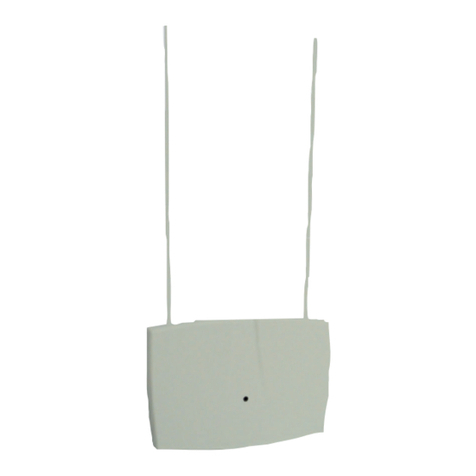
VHF WIRELESS SYSTEMS 1
Ricevitore
Receiver
Récepteur
R170
VHF WIRELESS SYSTEMS
ISTRUZIONI PER LUSO INSTRUCTIONS FOR USE MANUEL DUTILISATION
SOMMARIO
1. Descrizione generale
1.1 Introduzione....................................... 3
1.2 Pannello frontale ................................ 3
1.3 Pannello posteriore............................. 3
1.4 Descrizione ......................................... 3
2. Avvertenze generali
2.1 Note di sicurezza ................................ 4
2.2 Installazione ....................................... 4
2.3 Alimentazione e messa a terra ............ 4
2.4 Montaggio a rack ................................ 4
3. Connessioni
3.1 Uscite................................................. 5
3.2 Antenna ............................................. 5
4. Uso del ricevitore
4.1 Funzionamento ................................... 6
4.2 Suggerimenti ...................................... 6
5. Accessori e parti di ricambio
5.1 Dotazione ........................................... 7
5.2 Accessori opzionali.............................. 7
5.3 Lista delle parti di ricambio .................. 7
6. Caratteristiche tecniche............... 8

Nel ringraziarVi per aver scelto un prodotto
PASO, vogliamo ricordarVi che la nostra
azienda opera con sistema di qualità
certificato UNI EN ISO 9002. I nostri prodotti
vengono pertanto controllati in ogni fase della
produzione per garantire la piena
soddisfazione del Vostro acquisto. Per ogni
evenienza la garanzia coprirà, nellanno di
validità, eventuali difetti di fabbricazione.
Per il corretto utilizzo di questo prodotto e
per sfruttarne appieno le prestazioni vi
raccomandiamo di leggere e seguire
attentamente le istruzioni duso che seguono.
TABLE OF CONTENTS
1. General description
1.1 Introduction ....................................... 3
1.2 Front panel ........................................ 3
1.3 Rear panel ......................................... 3
1.4 Description ......................................... 3
2. General warnings
2.1 Safety notes ...................................... 4
2.2 Installation ......................................... 4
2.3 Power supply and earthing ................. 4
2.4 Rack mounting .................................... 4
3. Connections
3.1 Outputs ............................................. 5
3.2 Antenna ............................................. 5
4. Using the receiver
4.1 Use .................................................... 6
4.2 Suggestions........................................ 6
5. Accessories and spare parts
5.1 Supply ................................................ 7
5.2 Optional accessories ........................... 7
5.3 List of spare parts .............................. 7
6. Technical specifications .............. 8

While thanking you for having chosen a PASO
product, we would like to remind you that our
company works according to a Quality System
certified for compliance with ISO 9002
standards. This means that all our products are
checked during every phase of manufacturing
in order to guarantee that you will be fully
satisfied with your purchase. At all events, the
guarantee will cover any manufacturing flaws
for the whole year for which it is valid. We
recommend that you read the following
instructions for use carefully in order to exploit
in full the performance of this product and to
avoid any problems.
SOMMAIRE
1. Description générale
1.1 Introduction ....................................... 9
1.2 Panneau frontal ................................. 9
1.3 Panneau postérieur ............................ 9
1.4 Description ......................................... 9
2. Précautions générales
2.1 Conseils de securité .......................... 10
2.2 Installation ....................................... 10
2.3 Alimentation et mise à la terre .......... 10
2.4 Montage sur rack ............................. 10
3. Branchements
3.1 Sorties ............................................. 11
3.2 Antenne ........................................... 11
4. Utilisation du recepteur
4.1 Fonctionnement ................................ 12
4.2 Suggestions...................................... 12
5. Accessoires et pièces détachées
5.1 Fournitures ...................................... 13
5.2 Accessoires fournis en option ........... 13
5.3 Liste des pièces détachées ............... 13
6. Caractéristiques techniques ...... 14

Vous remerciant davoir accordé votre
préférence à un produit PASO, nous tenons à
vous rappeler que nous appliquons à notre
production un Système Qualité certifié ISO
9002. Aussi, pour donner entière satisfaction
à notre clientèle, tous nos produits sont
contrôlés à chaque étape de la production. Ils
sont en outre garantis contre tout défaut de
fabrication pendant une période dun an. Nous
vous recommandons de lire attentivement les
instructions dinstallation et dutilisation qui
suivent; elles vous permettront dobtenir le
maximum des prestations offertes par le
produit et en outre déviter tout problème.
11-540.p65 07/03/02, 11.441
VHF WIRELESS SYSTEMS
2
Empfänger
Ontvanger
Receptor
R170
VHF WIRELESS SYSTEMS
GEBRAUCHSANLEITUNG GEBRUIKSAANWIJZING INSTRUCCIONES DE EMPLEO
INHALTSANGABE
1. Allgemeine Beschreibung
1.1 Einleitung ........................................... 9
1.2 Frontpaneel........................................ 9
1.3 Rückpaneel ........................................ 9
1.4 Beschreibung ...................................... 9
2. Allgemeine Hinweise
2.1 Sicherheitsanweisungen ................... 10
2.2 Installation ....................................... 10
2.3 Stromversorgung und Erdung ........... 10
2.4 Montage im Rack .............................. 10
3. Anschlüsse
3.1 Ausgänge ......................................... 11
3.2 Antenne ........................................... 11
4. Gebrauch des Empfängers
4.1 Verwendung ..................................... 12
4.2 Hinweise........................................... 12
5. Zubehör
und Ersatzteile
5.1 Ausrüstung ...................................... 13
5.2 Optionales Zubehör .......................... 13
5.3 Ersaztzeilliste ................................... 13
6. Technische Eigenschaften .......... 14

Wir danken Ihnen für die Wahl eines
PASO-Produkts und möchten Sie daran
erinnern, daß wir mit dem anerkannten
Qualitätssicherungssystem ISO 9002 arbeiten.
D.h., alle unsere Produkte werden in jeder
Fertigungsphase kontrolliert, um Ihre
vollständige Zufriedenheit zu gewährleisten.
Die einjährige Garantie deckt auf jeden Fall
eventuell vorliegende Produktionsmängel ab.
Wir empfehlen Ihnen, die hier vorliegende
Bedienungsanweisung aufmerksam zu lesen,
um das Leistungsangebot des Produktes voll
nutzen zu können und um Probleme beim
Gebrauch zu vermeiden.
INHOUD
1. Algemene beschrijving
1.1 Inleiding ........................................... 15
1.2 Frontpaneel...................................... 15
1.3 Achterpaneel.................................... 15
1.4 Beschrijving ...................................... 15
2. Algemene richtlijnen
2.1 Veiligheidsvoorschriften .................... 16
2.2 Installatie ......................................... 16
2.3 Voeding en aarding ........................... 16
2.4 Montage in rack ................................ 16
3. Aansluitingen
3.1 Uitgangen ........................................ 17
3.2 Antenne ........................................... 17
4. Gebruik van het apparaat
4.1 Werking ........................................... 18
4.2 Tips .................................................. 18
5. Accessoires en
vervangingsonderdelen
5.1 Bijgeleverde onderdelen ................... 19
5.2 Optionele accessoires ....................... 19
5.3 Lijst vervangingsonderdelen ............. 19
6. Technische kenmerken .............. 20

Wij danken u voor uw keuze van een PASO
product en herinneren u eraan dat de
productie van ons bedrijf volgens een
certificeerd kwaliteitssysteem ISO 9002
plaatsvindt. Onze producten worden daarom
in iedere productiefase controleerd zodat u
zeker tevreden zult zijn met uw aankoop.
Eventuele fabrieksfoutjes zijn in het jaar dat
de garantie geldig is, gedekt. Voor een goed
gebruik van dit product en voor een volledige
benutting van de prestaties hiervan, raden
wij u aan onderstaande gebruiksvoorschriften
met aandacht door te lezen.
SUMARIO
1. Descripción general
1.1 Introducción ..................................... 15
1.2 Panel frontal ..................................... 15
1.3 Panel trasero .................................... 15
1.4 Descripción ....................................... 15
2. Advertencias generales
2.1 Notas de seguridad .......................... 16
2.2 Instalación ....................................... 16
2.3 Alimentación y conexión a tierra ....... 16
2.4 Montaje en rack ............................... 16
3. Conexiones
3.1 Salidas ............................................. 17
3.2 Antena............................................. 17
4. Uso del receptor
4.1 Funcionamiento ................................ 18
4.2 Sugerencias...................................... 18
5. Accesorios y
piezas de repuesto
5.1 Equipamiento .................................... 19
5.2 Accesorios en opción ........................ 19
5.3 Lista de las piezas de repuesto ......... 19
6. Características técnicas ............. 20

Les agradecemos que hayan elegido un
producto PASO, y aprovechamos la ocasión
para recordarles que nuestra empresa trabaja
con el sistema de calidad certificado ISO 9002.
Todos nuestros productos son controlados en
cada fase de la producción para garantizarles
una plena satisfacción en su adquisición. Para
cualquier tipo de eventualidad la garantía
cubrirá, durante el año de validez, los posibles
defectos de fabricación. Les aconsejamos que
lean detenidamente las siguientes instrucciones
concernientes a la utilización, para aprovechar
al máximo las prestaciones ofrecidas por este
producto y para evitar eventuales problemas.
11-540.p65 07/03/02, 11.442
VHF WIRELESS SYSTEMS 3
GENERALDESCRIPTION
1
DESCRIZIONEGENERALE
1.2 PANNELLO FRONTALE
[1] Controllo di sensibilità.
[2] Spia di segnalazione dell'intervento del circuito di squelch.
[3] Indicatore luminoso del livello di radiofrequenza.
[4] Controllo di livello del segnale di uscita.
[5] Interruttore di rete.
1.1 INTRODUZIONE
Il ricevitore R170 è stato progettato per assicurare una ricezione di alta
qualità che consenta, in unione ai radiomicrofoni PASO, di sfruttare a
pieno le possibilità offerte dalla banda VHF.
Questo apparecchio è stato costruito nel rispetto delle più severe
normative internazionali di sicurezza ed in ottemperanza ai requisiti della
Comunità Europea. Per un corretto ed efficiente uso del radioricevitore si
consiglia di leggere attentamente le seguenti istruzioni e di seguire le
indicazioni in esse riportate.
1.3 PANNELLO POSTERIORE
[6] Connessione di massa telaio.
[7] Spina di rete.
[8] Fusibile di rete.
[9] Morsetti per il collegamento dellalimentazione esterna.
[10] Presa per il segnale di uscita a livello ausiliario.
[11] Selezione livello.
[12] Presa d'antenna.
1.4 DESCRIZIONE
Caratteristiche essenziali di questo ricevitore sono la selettività, sia
dello stadio di ricezione che dello stadio a frequenza intermedia, e l'alta
qualità del segnale di bassa frequenza.
La stabilità e la selettività del ricevitore sono garantite da un oscillatore
quarzato e da uno stadio di media frequenza comprendente filtri ceramici.
Un apposito circuito, denominato SQUELCH, provvede ad ammutolire
automaticamente il segnale ad audiofrequenza in caso di ricezione debole
e disturbata. Infine, il ricevitore utilizza una particolare circuitazione,
complementare a quella utilizzata su tutti i trasmettitori PASO, che
consente di ottenere un'elevata dinamica ed un miglior rapporto segnale/
disturbo del segnale audio.
1.1 INTRODUCTION
The R170 receiver has been designed to ensure high quality reception
and to get the most out of VHF band when used in conjunction with
PASO wireless microphones.
This unit has been built in accordance with the most stringent
international safety standards and complies with European Community
requirements. To use the receiver correctly and efficiently, please read
and follow the instructions below carefully.
1.2 FRONT PANEL
[1] Sensitivity control.
[2] Squelch circuit ON indicator.
[3] Radio-frequency level indicator.
[4] Output signal level control.
[5] Mains switch.
1.3 REAR PANEL
[6] Frame connection.
[7] Mains plug.
[8] Mains fuse.
[9] Terminals for external DC power supply connections.
[10] AUX signal output.
[11] Level selection.
[12] Antenna socket.
1.4 DESCRIPTION
The main characteristic of this receiver is the reception and intermediate-
frequency stages selectivity as well as the high quality of the audio
frequency signal.
The receivers stability and selectivity are guaranteed by a quartz
oscillator and by a medium-frequency stage which comprises ceramic
filters. A special circuit SQUELCH automatically mutes the audio-
frequency signal in case of weak or disturbed reception.
Finally, the receiver uses a complementary circuitry type to that one
used on all PASO wireless microphones which allows for a broad volume
range whilst enhancing the reception of the audio signal.
Il ricevitore PASO mod. R170 può essere abbinato ad uno dei seguenti
trasmettitori PASO:
 radiomic. ad impugnatura mod. MA155.
 radiomicrofono da tasca mod. MA153.
The PASO R170 receiver may be used together with any of the following
PASO transmitters:
MA155 hand-held microphone.
MA153 pocket microphone.
NB: In alternativa alla scritta MOD. potrebbe esservi lindicazione
LEVEL, mentre in luogo di SIGNAL potrebbe essere riportata la dicitura
MIC. ON.
NB: The word LEVEL could be indicated instead of the letters MOD., or
the wording MIC. ON instead of SIGNAL.
11-540.p65 07/03/02, 11.443
VHF WIRELESS SYSTEMS
4
2.1 NOTE DI SICUREZZA
Allinterno dell'apparecchio non esistono regolazioni per lutente.
La rimozione del coperchio presenta il rischio di scosse elettriche e pertanto
ogni intervento allinterno dellapparecchio, quale la sostituzione di fusibili,
deve essere eseguito da personale specializzato. Accertarsi di avere
staccato il cavo di rete prima della sostituzione dei fusibili; la sostituzione
deve essere effettuata solo con fusibili dello stesso tipo e valore.
Nel caso di accidentale caduta di liquidi sullapparecchio, staccare
immediatamente la spina di rete ed interpellare il centro di assistenza
PASO più vicino. La connessione di massa telaio [6] è di tipo funzionale,
consente cioè di collegarvi altre apparecchiature per la sola funzione di
schermatura dei segnali a basso livello: non utilizzare questa presa per
il collegamento di sicurezza del telaio alla terra.
2.2 INSTALLAZIONE
Per un corretto funzionamento dellapparecchio evitare di posizionarlo in
prossimità di sorgenti di calore e non sottoporlo ad urti violenti,
specialmente in caso di un utilizzo di tipo mobile (ad esempio su
autovetture). Assicurarsi che tutti gli ingressi e le uscite siano
correttamente collegati prima dellaccensione.
2.3 ALIMENTAZIONE E MESSA A TERRA
Lapparecchio é predisposto per il funzionamento con tensione di rete a
230 V ± 10%, 50/60 Hz. Il fusibile di rete è accessibile dal pannello
posteriore dell'apparecchio [8]. In alternativa, è previsto il funzionamento
con una tensione continua esterna di 12V (ad es. batteria per auto)
applicabile ai relativi morsetti [9].
Un fusibile sul circuito di alimentazione protegge l'apparecchio contro le
inversioni di polarità dell'alimentazione esterna in corrente continua; a
lato del portafusibile è riportato il relativo valore.
In accordo con le normative di sicurezza, linterruttore di accensione
[5] agisce solo sulla tensione di rete. Lapparecchio é corredato di cavo
di alimentazione con filo di messa a terra ed il relativo terminale sulla
spina di rete non deve essere rimosso in alcun caso. Assicurarsi che la
presa di corrente sia dotata di collegamento di terra a norme di legge.
2.4 MONTAGGIO A RACK
L'apparecchio può essere montato in un rack standard a 19 utilizzando
lapposito kit adattatore 27/2469 (opzionale). Di seguito è riportata la
procedura da seguire per il montaggio a rack.
1) Accertarsi che l'apparecchio non sia collegato ad alcun tipo di
alimentazione.
2) Rimuovere dal coperchio le due viti laterali che lo fissano al ricevitore.
3) Fissare le due squadrette di sostegno (E) (fig. 2.4.1) utilizzando le
quattro viti autofilettanti (F) fornite a corredo del kit.
4) Fissare le due piastrine di copertura (G) alle squadrette (E) utilizzando
le due viti (H), le rondelle (I) e i dadi (L) in dotazione.
5) Inserire l'apparecchio nel rack e fissarlo ad esso per mezzo delle
quattro viti e delle relative rondelle.
6) Eseguire i collegamenti necessari seguendo le indicazioni del
paragrafo 3.1.
Fig. 2.4.1
GENERALWARNINGS
2
AVVERTENZE GENERALI
2.1 SAFETY NOTES
The user does not need to make any adjustments inside the receiver.
Removal of the enclosure presents the risk of an electric shock and as
a result, any servicing required to the interior of the unit, such as
substituting the fuses, must be only be attempted by qualified
personnel. Before removing the unit cover, make sure that the power
cord is unplugged.
Fuses replacement must be of the same type and rating.
If liquid is accidentally spilt onto the receiver, unplug the power cord and
contact your nearest PASO service centre.
The chassis ground terminal [6] enables connection to other equipment
for the sole purpose of low level signals shielding; do not use this
connection for earthing the unit.
2.2 INSTALLATION
The receiver will only function properly if it is located away from direct
heat sources and not knocked violently, especially in the case of a mobile
unit (e.g. in a motor car).
Check that all inputs and outputs are connected correctly before switching
the power on.
2.3 POWER SUPPLY AND EARTHING
The unit is supplied for 230 V (+/- 10%) supply voltage, 50/60 Hz.
The mains fuse can be accessed via the rear panel [8]. Alternatively,
the unit will also run on a 12 V external DC power source (such as a car
battery) by connecting the source to the relative terminals [9].
A fuse fitted on to the power circuit will protect the unit from reverse
polarity of the external DC power supply; the rating is marked on the
side of the fuseholder.
In compliance with safety regulations, the power switch [5] only acts
on the mains power supply.
The unit comes with an earthed power cord and the corresponding
earth terminal in the mains plug must not be removed under any
circumstances. Ensure that the AC outlet is earthed as required by law.
2.4 RACK MOUNTING
The unit may be installed in a standard 19 rack using the special
27/2469 adapter kit (optional).
The installation should be carried out as follows.
1) Check the unit is not plugged in.
2) Remove the two side screws which secure the lid to the unit.
3) Attach the two supporting brackets (E) (fig. 2.4.1) using the four
self-tapping screws (F) supplied in the kit.
4) Fix the two cover plates (G) to the brackets (E) by means of the two
screws (H), washers (I), and nuts (L) supplied.
5) Fit the receiver into the rack and secure it using the four screws and
relative washers.
6) Make all the necessary connections following the instructions given
in paragraph 3.1.
11-540.p65 07/03/02, 11.444
VHF WIRELESS SYSTEMS 5
3.1 USCITE
Collegare la sorgente di alimentazione desiderata facendo riferimento a
quanto riportato al paragrafo 2.3.
Collegare quindi il ricevitore all'impianto di amplificazione utilizzando l'uscita
AF OUT [10] (in dotazione all'apparecchio è fornito un apposito cavetto).
In figura 3.1.1 è illustrato il collegamento con un amplificatore esterno.
Fig. 3.1.1
Nel caso in cui il ricevitore sia installato in un impianto di amplificazione
fisso in interno, ad esempio in una cabina di regia o nel locale dei quadri
elettrici, mentre il trasmettitore viene utilizzato in esterno (campo
sportivo, cortile, ecc.), è consigliabile utilizzare l'antenna GROUND
PLANE PASO tipo AR2-BNC (opzionale) con relativo sistema di fissaggio
a muro.
CONNECTIONS
3
CONNESSIONI
Se il ricevitore è montato in un rack o se l'antenna deve essere collegata
ad una certa distanza, è consigliabile l'uso della base per antenna PASO
cod. AC29-BNC (opzionale), dotata di cavo di prolunga lungo 5 metri; in
questo caso l'antenna a stilo in dotazione sarà inserita nell'apposita presa
della base.
3.1 OUTPUTS
Connect to the desired power supply as per instructions given in
paragraph 2.3. Next, connect the receiver to the amplifier unit using
AF OUT output [10] (an appropriate cable is supplied with the unit).
Figure 3.1.1 shows the connection to an external amplifier.
If the receiver is installed in a rack or if the antenna is connected at a
certain distance, we recommend using a PASO AC29-BNC base with
5m extension cable (optional); in this case, the antenna should be
plugged into the base.
If the receiver is installed in a permanent indoor amplifier unit (such as
in a control or electrical board room) whilst the transmitter is used
outdoors (sports ground, courtyard, etc.) we recommend using a PASO
AR2-BNC GROUND PLANE antenna (optional) with relative wall
attachments.
3.2 ANTENNA
Una volta collegato lapparecchio secondo quanto descritto al paragrafo
3.1, inserire l'antenna a stilo in dotazione nella relativa presa [12] come
mostrato in figura 3.2.1.
3.2 ANTENNA
Once the connection has been connected as described (see par. 3.1),
insert the antenna supplied in the relative terminal [12] as shown in
figure 3.2.1.
Fig. 3.2.1
11-540.p65 07/03/02, 11.445
VHF WIRELESS SYSTEMS
6
4.1 FUNZIONAMENTO
Effettuare le connessioni del ricevitore come riportato al paragrafo 3.1
ed estrarre l'antenna telescopica. Regolare il controllo del livello di
uscita [4] al minimo e ruotare completamente in senso orario il
potenziometro SQUELCH [1] per ottenere la massima sensibilità del
ricevitore. Accendere il ricevitore premendo il tasto [5] o applicando
una tensione continua di 12 volt alla morsettiera [9]; a trasmettitore
spento, il led verde POWER si illuminerà.
Ridurre, se necessario, la sensibilità del ricevitore per sopprimere
eventuali disturbi a radiofrequenza presenti nell'ambiente.
Accendendo il trasmettitore, il led SIGNAL [2] si accenderà in modo
continuativo e la barra [3] visualizzerà il livello di modulazione del
segnale di radiofrequenza captato dall'antenna. Regolare l'ampiezza
del segnale di uscita agendo sul controllo di livello [4].
USING THE RECEIVER
4
USO DEL RICEVITORE
4.2 SUGGERIMENTI
Diamo ora alcuni suggerimenti per poter utilizzare con piena
soddisfazione il sistema radiomicrofonico:
A) Tenere sempre sotto controllo l'efficienza della batteria inserita
nel trasmettitore.
B) Mantenere sempre al livello più basso possibile il livello di squelch
(massima sensibilità del ricevitore), compatibilmente con le condizioni
dei disturbi a radiofrequenza presenti nella zona in cui è posto il
ricevitore.
C) Effettuare una ricognizione con il trasmettitore nella zona di
interesse per verificare che non vi siano "buchi" di ricezione;
eventualmente, cercare il miglior orientamento dell'antenna e
riposizionare il ricevitore in una zona migliore per la ricezione.
4.1 USE
Connect the receiver as explained in paragraph 3.1 and extract the
telescopic antenna. Turn the output level [4] to the lowest setting
and turn the SQUELCH control [1] clockwise all the way to obtain
maximum sensitivity.
Switch on the receiver by pressing button [5] or by connecting to a
12 V DC power source [9]; with the transmitter switched off, the
POWER led [2] will light up. If necessary, turn down the receivers
sensitivity to silence any radio-frequency disturbances. When turning
on the transmitter, the LED meter [3] will display the radio-frequency
signal modulation level captured by the antenna and the SIGNAL led
[2] will light up continuously. Adjust the amplitude of the output signal
by acting on the level control knob [4].
4.2 SUGGESTIONS
We now give a few suggestions which will enable you to get the most out
of your system:
A) Always keep an eye on the level of the transmitter battery.
B) Always keep the squelch on the lowest setting possible (maximum
sensitivity of the receiver) given the level of radio-frequency
disturbances in the area the receiver operates in.
C) Using the transmitter, check the area for any problems with reception.
If necessary, find the best angle for the antenna and move the
receiver to a position where there is better reception.
Fig. 4.1.1
11-540.p65 07/03/02, 11.446
VHF WIRELESS SYSTEMS 7
5.1 DOTAZIONE
La dotazione dell'apparecchio comprende:
 cavo di rete.
 antenna telescopica.
 cavo di collegamento jack c/doppia RCA.
ACCESSORIES AND SPARE PARTS
5
ACCESSORI E PARTI DI RICAMBIO
5.2 ACCESSORI OPZIONALI
I seguenti accessori sono disponibili opzionalmente per particolari esigenze
d'installazione:
 base per antenna con cavo di prolunga di 5 metri ........... AC29-BNC
 antenna GROUND PLANE ................................................ AR2-BNC
 kit per montaggio in rack 19 ............................................ 27/2469
5.3 LISTA DELLE PARTI DI RICAMBIO
5.1 SUPPLY
The unit is supplied with:
 mains cable.
 telescopic antenna.
 connection jack cable with double RCA.
5.2 OPTIONAL ACCESSORIES
The following accessories are available as optional extras for special
installation requirements:
 antenna base with 5 m. extension cable ........................ AC29-BNC
 GROUND PLANE antenna ................................................ AR2-BNC
 adapter kit for installing the unit in a 19 rack................... 27/2469
5.3 LIST OF SPARE PARTS
ENOIZIRCSED NOITPIRCSED
oihcrepoC ONV-4091/63 revoC
otafargireselatnorfollennaP 1S-1832/63 lenaptnorfdetnirpneercs-kliS
delotiucricemeissA 5704/72 ylbmessatiucricDEL
enoizatnemilaotiucricemeissA 6154/72 ylbmessatiucricylppus-rewoP
erotivecirotiucricemeissA xF-6424/72 ylbmessatiucricrevieceR
erotiveciroludoM xF-3034/72 eludomrevieceR
erotiveciridnamocoludoM 4034/72 eludomlortnocrevieceR
annetnA 4154/72 annetnapihW
eteriderotturretnI 37/91 hctiwssniaM
V004Fn2,2ocimarecerotasnednoC 222010907 roticapaccimareCV004Fn2,2
11-540.p65 07/03/02, 11.447
VHF WIRELESS SYSTEMS
8
TECHNICALSPECIFICATIONS
6
CARATTERISTICHE TECNICHE
enoizeciridammaG FHV dnabgnivieceR
orovalidezneuqerF zHM28.991÷00.571 seicneuqerfgnitarepO
FRàtilibisneS 5 µV ytivitisnesFR
HCLEUQSidolleviL 02÷5 µV levelHCLEUQS
=elangesollevil(N/SotroppaR5µ)V Bd08> =levellangis(oitarN/S5µ)V
azneuqerfniatsopsiR zH00051÷05 esnopserycneuqerF
WOLaznedepmi/aticsuidolleviL 0081/Vm022ΩWOLecnadepmi/leveltuptuO
HGIHaznedepmi/aticsuidolleviL 0081/V2,1ΩHGIHecnadepmi/leveltuptuO
eteradenoizatnemilA %01±zH06/05V032
Am02 ylppusrewopsniaM
CCnianretseenoizatnemilA V21
Am08 ylppusrewoplanretxeCD
inoisnemiD mm54x522x872 snoisnemiD
oseP gk7.1 thgieW
amronodnocesazzeruciS 56006NEIEC otgnidroccaytefaS
11-540.p65 07/03/02, 11.448
VHF WIRELESS SYSTEMS 9
1
DESCRIPTIONGÉNÉRALE
1.1 INTRODUCTION
Le récepteur R170 a été conçu pour garantir une réception de haute
qualité qui permet, en association avec les radiomicrophones PASO,
dexploiter au mieux les possibilités offertes par la bande VHF.
Cet appareil a été fabriqué en respectant les normes internationales de
sécurité les plus sévères et en conformité aux conditions requises par la
communauté européenne. Pour un usage correct et efficace de ce
récepteur de radio il est conseillé de lire attentivement les instructions ci-
après et de suivre les indications qui y sont reportées.
ALLGEMEINEBESCHREIBUNG
1.1 EINLEITUNG
Der Empfänger R170 ist entwickelt worden, um einen qualitativ
hochwertigen Empfang zu gewährleisten, der zusammen mit den
Radiomikrofonen PASO alle Möglichkeiten der Bandbreiten VHF voll
ausschöpft. Das Gerät wurde gemäß den strengsten internationalen
Sicherheitsnormen und unter Beachtung der Anforderungen der
Europäischen Gemeinschaft konstruiert. Zum Zweck eines effektiven und
korrekten Einsatzes des Radioempfängers wird geraten, die folgende
Gebrauchsanweisungen aufmerksam zu lesen und die darin enthaltenen
Anweisungen zu befolgen.
1.2 PANNEAU FRONTAL
[1] Contrôle de sensibilité.
[2] Voyant signalant lintervention du circuit de squelch.
[3] Indicateur lumineux du niveau de radiofréquence.
[4] Contrôle de niveau du signal de sortie.
[5] Interrupteur de réseau.
1.3 PANNEAU POSTÉRIEUR
[6] Connexion de masse châssis.
[7] Fiche de réseau.
[8] Fusible de réseau.
[9] Bornes pour le branchement de lalimentation externe.
[10] Prise pour le signal de sortie au niveau auxiliaire.
[11] Selection niveau.
[12] Prise dantenne.
1.2 FRONTPANEEL
[1] Kontrolle der Ansprechempfindlichkeit.
[2] Funktionskontrolleuchte des Squelch-Kreises.
[3] Leuchtanzeige der Tonfrequenzstufe.
[4] Kontrolle der Ausgangssignalstufe.
[5] Netzschalter.
1.3 RÜCKPANEEL
[6] Masseanschluss des Gehäuses.
[7] Netzstecker.
[8] Netzsicherung.
[9] Klemmen für den Anschluß an die externe Einspeisung.
[10] Anschlußdose für das Hilfsausgangssignal.
[11] Stufe-Auswahl.
[12] Antennenanschlußdose.
NB: à la place de l'indication MOD. l'indication LEVEL peut être
éventuellement présente, et à la place de l'indication SIGNAL l'indication
MIC. ON.
NB: Alternativ zu MOD. kann auch die Anzeige LEVEL vorkommen und
anstelle von SIGNAL der Schriftzug MIC. ON angezeigt werden.
1.4 DESCRIPTION
Les caractéristiques essentielles de ce récepteur sont la sélectivité, aussi
du stade de réception que du stade à fréquence intermédiaire, et la
haute qualité du signal de basse fréquence.
La stabilité et la sélectivité du récepteur sont garanties par un oscillateur
à quartz et par un stade de moyenne fréquence comprenant des filtres
céramique. Un circuit ad hoc, appelé SQUELCH, soccupe dassoudir
automatiquement le signal en audiofréquence en cas de réception faible
et brouillée. Enfin, le récepteur utilise une circuiterie particulière,
complémentaire à celle utilisée sur tous les transmetteurs PASO,
qui permet dobtenir une dynamique élevée et un meilleur rapport
signal/bruit du signal audio.
Le récepteur paso mod. R170 peut être monté avec lun des
transmetteurs paso suivants:
 radiomicrophone main mod. MA155.
 radiomicrophone de poche mod. MA153.
1.4 BESCHREIBUNG
Die Haupteigenschaften dieses Empfängers sind die Selektivität sowohl
beim Empfang als auch im mittleren Frequenzbereich und die hohe
Qualität des Niederfrequenzsignals. Die Stabilität und die Selektivität
des Empfängers werden durch einen quarzkontrollierten Oszillator und
durch eine Stufe für mittlere Frequenzen mit zwei Keramikfiltern
gewährleistet. Ein entsprechender Kreis, genannt SQUELCH, entstört
automatisch das Tonfrequenzsignal bei schwachem oder gestörtem
Empfang. Außerdem benutzt der Empfänger einen speziellen Kreis,
zusätzlich zu dem, der in allen PASO Sendern eingesetzt wird, der eine
besonders hohe Dynamik und einen besseres Signal-Störungverhältnis
des Tonsignals gewährleistet.
Der Empfänger PASO Art. R170 kann zusammen mit den folgenden
Sendern PASO eingesetzt werden:
 Radiomikrofon mit Handgriff mod. MA155.
 Taschenradiomikrofon. MA153.
11-540.p65 07/03/02, 11.449
VHF WIRELESS SYSTEMS
10
2.1 CONSEILS DE SECURITÉ
Le retrait du couvercle présente le risque délectrocution, par conséquent
toute intervention à lintérieur de lappareil, comme par exemple la
substitution des fusibles, doit être effectuée par un personnel spécialisé.
Sassurer davoir débranché le cordon dalimentation avant de procéder
à la substitution des fusibles; les fusibles doivent être substitués
uniquement avec des fusibles de même type et de même valeur.
En cas de chute accidentelle de liquides sur lappareil, débrancher
immédiatement la fiche dalimentation et contacter le centre dassistance
paso le plus proche. La connexion à la masse du châssis [6] est de type
fonctionnel, cest-à-dire quelle permet dy relier dautres appareils
uniquement pour la fonction décrannage des signaux de bas niveau: ne
pas utiliser cette prise pour la connexion de sécurité du châssis à la terre.
2.2 INSTALLATION
Pour un fonctionnement correct de lappareil, ne pas le placer à proximité
de sources de chaleur et éviter les chocs violents, notamment en cas
dutilisation de type mobile (par exemple à bord des automobiles).
Sassurer que toutes les entrées et les sorties sont correctement
branchées avant dallumer lappareil.
2.3 ALIMENTATION ET MISE À LA TERRE
Lappareil est prévu pour fonctionner avec une tension dalimentation à
230V ± 10%, 50/60 Hz. Le fusible de réseau est accessible depuis le
panneau arrière de lappareil [8]. En alternative, il est possible de le faire
fonctionner avec une tension continue extérieure de 12 V (par exemple,
batterie dautomobile) en lappliquant aux bornes correspondantes [9]. le
fusible présent sur le circuit dalimentation protège lappareil contre les
inversions de polarité de lalimentation extérieure en courant continu; la
valeur du fusible est reportée à côté du porte-fusible. Conformément aux
normes de sécurité, linterrupteur dallumage [5] agit uniquement sur la
tension de réseau. Lappareil est fourni avec son cordon dalimentation
muni de fil pour la mise à la terre et de la borne correspondante sur la fiche
dalimentation ne doit être en aucun cas enlevée. sassurer que la prise de
courant présente une ligne de terre conforme aux normes en vigueur.
2.4 MONTAGE SUR RACK
Lappareil peut être monté dans un rack standard 19 en utilisant le kit
adaptateur 27/2469 (optionnel) prévu à cet effet. ci-après, la procédure
à suivre pour le montage sur rack.
1) Sassurer que lappareil nest branché à aucun type dalimentation.
2) Retirer du capot les deux vis latérales de fixation au récepteur.
3) Fixer les deux équerres de support (E) (fig. 2.4.1) en utilisant les
quatre vis-tarauds (F) fournies avec le kit.
4) Fixer les deux plaquettes de couverture (G) aux équerres (E) en se
servant des deux vis (H), des rondelles (I) et des écrous (L) fournis.
5) Introduire lappareil dans le rack et le fixer à ce dernier à laide des
quatre vis et des rondelles prévues à cet effet.
6) Effectuer les branchements nécessaires en suivant les indications
fournies au paragraphe 3.1.
Fig./Abb. 2.4.1
2
PRÉCAUTIONS GÉNÉRALES
2.1 SICHERHEITSANWEISUNGEN
Bei Öffnen des Deckels besteht das Risiko elektrischer Schläge. Aus diesem
Grunde muß jeder Eingriff im Inneren des Geräts, wie das Auswechseln
der Schmelzsicherungen, von Fachpersonal vorgenommen werden.
Sicherstellen, daß das Netzkabel vor Auswechseln der Sicherungen
abgezogen wurde; die Sicherungen dürfen nur mit Sicherungen gleichen
Typs und Werts ersetzt werden. Falls versehentlich Flüssigkeiten auf das
Gerät gegossen werden, muß unverzüglich der Netzstecker entfernt
werden und die nächste PASO-Servicestelle angerufen werden.
Der Masseanschluss des Gehäuses [6] ist funktional, d.h. es ist möglich,
auch andere Geräte zum alleinigen Zweck der Abschirmung von
Niederfrequenzsignalen anzuschließen; Diese Anschlußdose darf nicht
für den Anschluß des Gehäuses an das Erdschutzkabel benutzt werden.
2.2 INSTALLATION
Um einen ordnungsgemäßen Betrieb zu gewährleisten, darf das Gerät
nicht in der Nähe von Wärmequellen aufgestellt werden und keine starken
Erschütterungen erleiden, insbesondere dann, wenn es mobil eingesetzt
wird (beispielsweise im Auto). Vor Einschalten des Geräts sicherstellen,
daß alle Ein- und Ausgänge ordnungsgemäß angeschlossen sind.
2.3 STROMVERSORGUNG UND ERDUNG
Das Gerät ist für den Netzbetrieb mit 230V ± 10% 50/60 Hz angelegt.
Vom Rückpaneel [8] des Geräts aus hat man Zugriff auf die Sicherung.
Als Alternative ist der Betrieb mit externem 12 V Gleichstrom vorgesehen
(z.B. Autobatterie) der auf die entsprechenden Klemmen [9] aufgebracht
wird. Eine Sicherung auf dem Einspeisungskreis schützt das Gerät vor
Umpolungen der externen Einspeisung zur Gleichstromeinspeisung. Seitlich
des Sicherungsträgers ist der entsprechende Wert angegeben.
In Übereinstimmung mit den Sicherheitsnormen funktioniert der An/Aus-
Schalter [5] des Geräts nur bei Netzspannung.
Das Gerät ist mit einem Einspeisungskabel mit Erdleiter ausgestattet und
der entsprechende Anschluß von am Netzstecker darf in keinem Fall
entfernt werden. Es ist sicherzustellen, daß die Steckdose mit einem
gesetzlich zugelassenen Erdschutzleiter ausgerüstet ist.
2.4 MONTAGE IM RACK
Das Gerät kann mit Hilfe des entsprechenden Adaptersets 27/2469
(Optional) in ein Standardrack von 19 eingebaut werden. Im folgenden
werden die Montageschritte für den Einbau im Rack aufgeführt:
1) Sicherstellen, daß das Gerät an keine Einspeisung angeschlossen ist.
2) Entfernen Sie die beiden seitlichen Schrauben vom Deckel, die ihn am
Empfänger befestigen.
3) Die zwei Haltebügel (E) (Abb. 2.4.1) mit Hilfe der vier beiliegenden
selbstschneidenden Schrauben (F) befestigen.
4) Die zwei Abdeckplättchen (G) an den Winkeln (E) mit Hilfe der
mitgelieferten zwei Schrauben (H), der Unterlegscheiben (I) und der
Schraubenmuttern (L) befestigen.
5) Das Gerät in das Rack einsetzen und mit Hilfe der vier Schrauben und
Unterlegscheiben befestigen.
6) Die notwendigen Verbindungen vornehmen und hierbei die
Anweisungen unter Punkt 3.1 befolgen.
ALLGEMEINEHINWEISE
11-540.p65 07/03/02, 11.4410