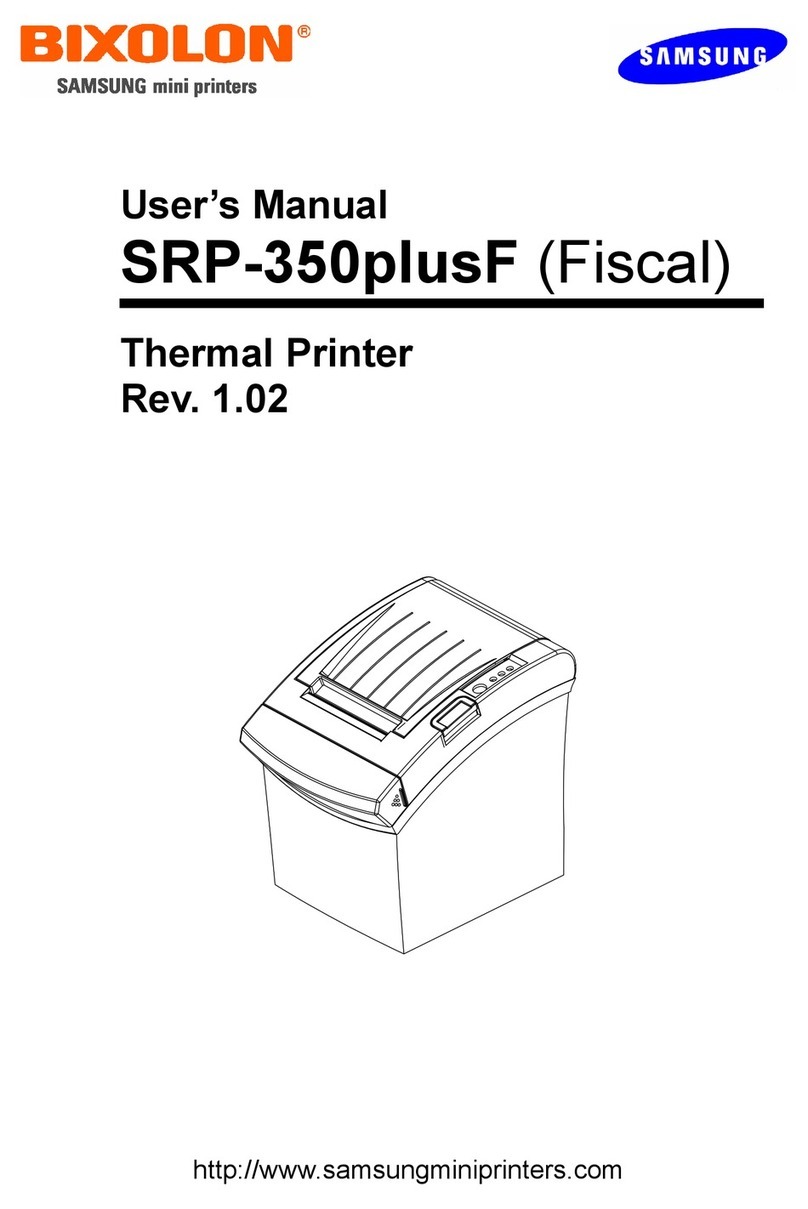
pc/nametag BP500 User manual

1
UPCN: pc/nametag BP500 Thermal Nametag Printer
Contents
Printer Quick Start Guide ............................................................................................................................ 1
Step 1: On your PC, Download and Install the Printer Driver Package ................................................. 1
Step 2: Load the Badge Paper into the Printer and Plug It In ................................................................ 1
Step 3: Configure the Printer Driver Settings ......................................................................................... 2
Step 4: Open Your Word Template and Try Printing a Badge ............................................................... 3
Quick Start Guide for pc/nametag label designer ...................................................................................... 3
Step one: Installing and Setting Up Printer ............................................................................................ 3
Step two: Setting up a new badge size: .................................................................................................. 5
Step three: Setting up Badge: ................................................................................................................. 6
Step four: setting up variables: .............................................................................................................. 7
UPCN Troubleshooting Guide ..................................................................................................................... 8
Printer Quick Start Guide
Step 1: On your PC, Download and Install the Printer Driver Package
• IMPORTANT: Do not connect the printer to your computer until prompted by the driver
installer.
• To do so, either run the CD that came with the printer or visit www.pcnametag.com and search
for “UPCN” in the top search bar. Then select the UPCN printer and navigate to the “Templates
& Downloads” section to download the driver file.
• Download driver file and run the EXE file. The installer program will then walk you through the
steps of installing the driver.
Step 2: Load the Badge Paper into the Printer and Plug It In
• Open the top of the printer by pressing the circular gray buttons on
the left and right sides of the printer. Then, as shown to the right,
press the two green buttons to release the roller module.

2
• Feed the paper through the rear slot of the printer with the black
mark facing down and the “Feed Direction” arrow on the back of
the paper pointing towards the front of the printer, as shown
below. Make sure it fits underneath the tabs which are circled in
red in the image below. These tabs can be adjusted by gently
pushing them in the applicable direction. Then position the edge of
the paper so it lies over the top of the rubber roller, as shown to
the right.
o NOTE: If you are using the UPRINT4X3DRS* (round corner
slotted) stock, please see the addendum below prior to
proceeding.
• Close the roller module and top. Next, we will adjust the driver
settings on your PC.
• If you haven’t already, you can now plug the power cord and USB
cord into the back of the printer.
Step 3: Configure the Printer
Driver Settings
• Windows 7 users: Click the
Start Menu and select
“Devices & Printers”. You
should see the “pc/nametag BP500 PCN” icon in the
window. Right click on the icon and select “Printer
Properties”.
• Windows 10 users: Click the Start Menu and select the
gear icon right above the Start Menu button. Select
“Devices”. Click on the “pc/nametag BP500 PCN” icon and
select “Manage”. Click “Printer Properties” on the left-
hand list.
• Near the bottom of the window, press the “Preferences”
button.
• Under the “Page Setup” tab, select the part number of the
stock you’re using from the “Preset Name” list pictured to
the right. There is no need to change any settings under
the “Stock Name” section!
• Click “Apply” and “OK”
• On the “Printer Properties” window, there is a “Test Print”
button near the bottom. Press that once to print a test
badge and lock in the badge configuration. You are now ready to print from Microsoft Word!
Power Button
Power Port

3
Step 4: Open Your Word Template and Try Printing a Badge
• Download the appropriate template at the following link:
http://www.pcnametag.com/pages/templates
o Select “Badge Printer Stock” on the left hand side of the page and then click “Download
Template” under the “pc/nametag BP500” option.
Addendum for UPRINT4X3DRSB stock:
In order to avoid misreads while using this stock, push the sensor pictured below to the left about a
quarter of an inch, enough so that the lanyard slot does not feed over the sensor. Then proceed with the
steps in Step 3.
Quick Start Guide for pc/nametag label designer
Step one: Installing and Setting Up Printer
1. The Nametag Designer can be downloaded on the website. If needed, here is the link
to download the zip file:
https://www.pcnametag.com/productattachments/index/download?id=291
2. Open the file and run the setup application.
a. It may be necessary to run a Windows update. Some versions of Windows
require an additional VC++ download.
3. Once the software is downloaded, open the application. Two labels will open
automatically each time: 4X3 GAP-NOTCH.EZPX and 4X3 TIMING MARK.EZPX. Their
names will be displayed in the tabs near the top of the screen:

4
4. Next, connect the printer to the Label Designer. There usually will be a prompt that
comes up automatically, confirming whether a printer is connected that can be used
by the software:
5. To connect the printer later, access the Printer setup by clicking on the ‘Printer
Setup’ option under the ‘Generic’ tab at the top of the screen.
6. On the second tab, ‘Printer Interface’, select the desired method to connect the
printer to the computer. If the printer is plugged into a specific port, this will allow
that method to be chosen. If that method is not available, this may indicate that the
connection is being prevented elsewhere. Refresh the application after adjusting the
connection by clicking the search icon on the right of this window:

5
7. Once a printer connects, there should be details available on the “Printer Setup’
screen. This includes the printer model and many of the relevant settings for badges:
Step two: Setting up a new badge size:
1. On the main screen, click ‘New’ in the top left corner.
2. On the page setup screen, select the size of the badges that will be used. Different
units of measurement can be used to determine the proper dimensions. The
different tabs can also determine the shape of the label, and different types of
media. Fill in the relevant information:

6
3. Once the label characteristics are set, either save the badge as a template, or click
OK to open the label.
Step three: Setting up Badge:
1. With the bar on the left of the screen, decide which features to put on the name
badge. The text tab has several different formats for how the text can be displayed
on the label. The text can be printer in different patterns by selecting the desired
format in the tab and then clicking onto the badge.
2. A dialog box will open to adjust the characteristics of the text input that. On the left
will be features of how the text will be displayed, such as width, length, font, and
alignment. On the right side of the page will be a few more options, as well as an
input box under the words “Text Data’, to determine what information is going to be
displayed. This information can be changed here individually for every individual
badge, if desired.

7
a. Note: Later, instructions will detail loading a template onto the printer that
can be used in standalone mode. In that mode, the only text that can be put
in as a variable is ‘Printer Text’. The other items will stay the same if used.
3. Other items that can be inserted are shapes, uploaded graphics, and bar codes.
Note: In the pane to the right of the page called “Tools Pane”, there is an open space that can
show the code that is sent to the printer for the label. Here is an example:
Each of these lines determines different characteristics of the badge that will be printed. If a
badge is set up and then the ‘Export’ button is clicked, the Label Designer can show how the
code changes. As changes are made to the badge, different parts of the code are updated.
Similarly, the code can be adjusted, and then ‘Import’ will update the label according to the
new instructions. This will come up later when discussing the printer’s Standalone mode.
Step four: setting up variables:
1. On the left side, there is a separate tab called ‘Data Source’. Click on this to see the
options that can be inserted into the text field.
2. Under the ‘General’ option, there is an option called ‘Setup Serial, Variables’. Click
on this to set up a variable that can be entered into the badge.
a. To set up a serial number style variable, click ‘edit’ on the top line. It will ask
for the number of digits, what the initial value that will be counting from, and
how much the number should change with each new entry. Once finished,
click ‘Add’ and the new serial number type will appear in the list below. It can
now be added to a badge.
b. For a variable that can be entered, click ‘edit’ on the second line. At this new
screen, determine how long the variable can be, the prompt’s name, and the
alignment to left, right, or center of the given space on the badge. Then, add
that to the list of available variables and add another entry if needed.
3. Once the variables are created, they can be inserted to the data box like below:

8
4. On the main Text Setup page, the variable should now be present in the Text data
box, and in the display, it will show a row of zeros, depending on how long the
variable max is. Click OK and see how the variable will be displayed on the badge.
5. This same process can also be used for adding a type of barcode as well.
a. Barcodes can display both text and the code themselves.
UPCN Troubleshooting Guide
Nothing printing - but tags are feeding out okay:
Is the paper right side up? The black line should be facing down, and the Feed Direction arrow pointing
towards the front of the printer.
After printing, paper doesn’t feed out enough to tear perf easily.

9
Check to see if the badge paper is loaded in backwards.
• Make sure the Feed Direction arrow on the back of the stock is facing toward the front of the
printer.
Printer driver isn’t showing up in Windows.
• Search Windows to see if the Print Management utility is available.
• If it is, try restarting the computer. If the driver still doesn’t appear, try reinstalling it.
• If it isn’t, then it’s most like an issue within Windows. Contact Windows support to correct the
issue.
Partial printing, but not stopping on the perforation lines, or multiple tags coming out at a time:
Double check that the correct paper SKU number is selected in the Printing Preferences Presets list. The
process for configuring this can be found in the Quick State guide. Then, follow these steps to correct
the issue:
• Restart the printer, and close out of Word.
• Make sure printer sensor is in correct position, and that the timing mark is facing downwards.
• Select the correct Preset in Printing Preferences, and then print a Test Page.
• Reopen Word doc and try printing again.
The printer feeds out too many badges with each print job.
If the printer is calibrated correctly (i.e. it feeds out one badge when you press the “Feed” button on the
printer), then it’s most likely a Word template issue.
• Try downloading and printing a fresh template from the pc/nametag website. You can also try
printing a PDF version of the badge template, to see if it’s indeed an issue within Word. If it
prints okay, you most likely need to start over with the fresh template.
Imprint is too light or grainy.
• In Word, go to File and Print. Select the Printer Properties link underneath where you select the
printer.

10
• Go to the Stock tab and reduce the “Print Speed” setting to 3”/second and turn up the Darkness
setting to 16.
• Click OK and then try printing. If it looks good, close out of Word, and make the same changes in
the Printing Preferences as well, so that they stay configured that way.
• If it still looks light/grainy, try cleaning the printhead with a lint-less alcohol wipe.
• If that doesn’t work, it’s possible the paper is either past its shelf-life or is defective. Try testing
another stack of paper if possible. Otherwise contact pc/nametag for replacement.
Text on badges is fine, but the attached image is grainy/pixelated.
• Go into the Printer preferences tab and select “Graphics”. Under the “Dithering” heading, select
“None.” Have the customer try again with this setting. Depending on how much detail they need
for their graphic, they may want to try the other settings as well for comparison.
• If this does not work, adjusting the size of the image can also help clean up the edges of the
images being used.
• You may also consider file formats of the image after that. Instead of using a .jpg or a .png, try
resaving the image as a .bmp.
Table of contents