3E A Know your work environment. Remember that areas behind soffit board,
ceilings, and floors may contain highly flammable materials. Check these areas
before applying heat.
A
4E A Be aware that heat can be conducted to hidden covered materials and may
ignite them.
A
5E A Do not expose heat guns to rain or moisture to reduce the risk of fire or
electric shock. Store indoors. Connect to grounded outlet only.
A
6E A Do not operate or work with the heat gun in areas where there is danger of
explosion.
A
7E A Check the power tool, cord and plug each time before use. Do not use the
heat gun if damage is determined.
Do not breathe or swallow lead based paint in any form. Many
old homes and other buildings contain lead based paint. Dust,
scrapings, residues and vapors of lead based paint are extremely poisonous.
Prevent possible lead poisoning when stripping this type of paint by using
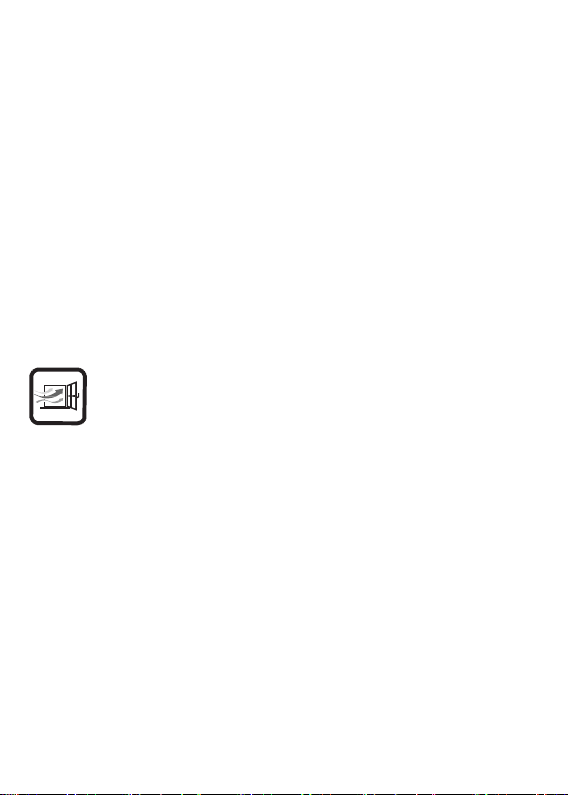
adequate ventilation (such as a window fan in the exhaust mode), and keeping a
clean work area. When dust or vapors are present, use a respirator designed to
filter lead. Move work outside when possible. Failure to follow adequate safety
precautions when working with lead based paint could result in lead poisoning.
A
8E A After using, keep the heat gun standing upward and allow it to cool down
completely before packing it away. Do not lay the heat gun on flammable
surfaces when operating the gun or immediately after shutting it off.
A
9E A Do not leave the switched-on heat gun unattended. Disconnect the plug from
the socket outlet before making any adjustments, changing accessories, or