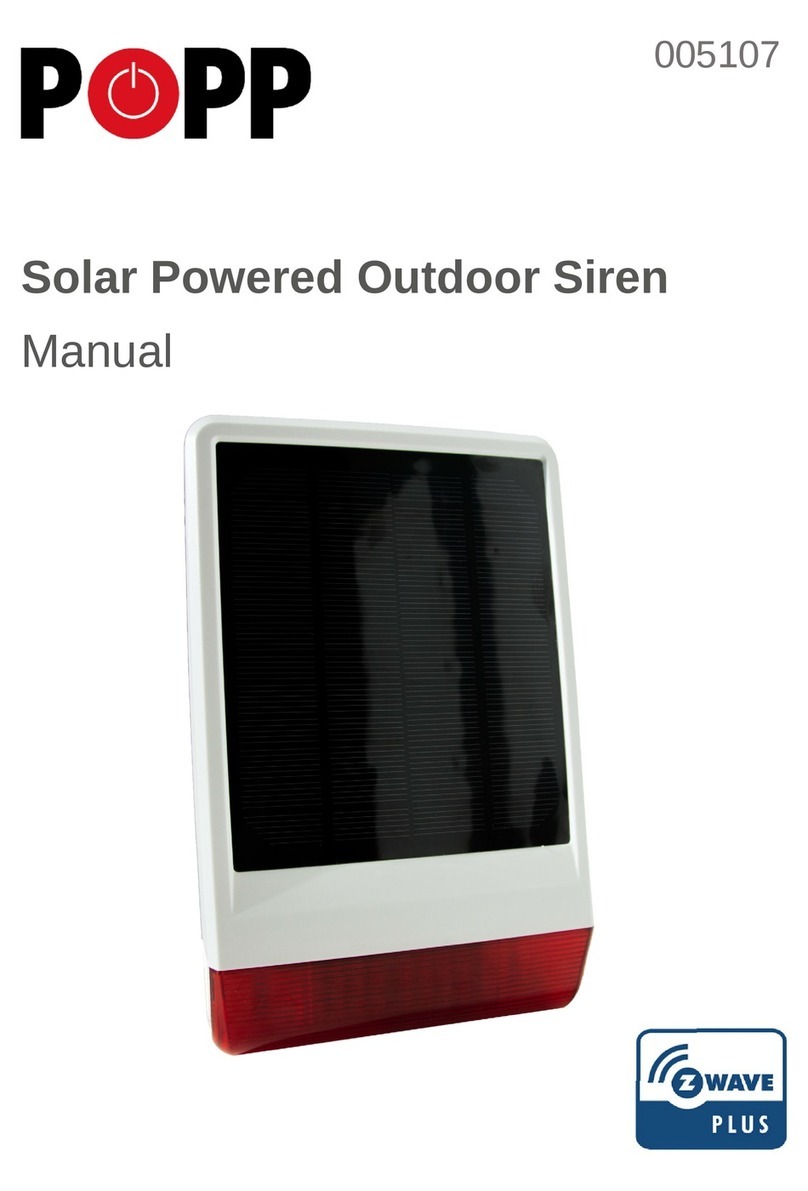
Popp Solar Outdoor Siren 2 User manual

manual.zwave.eu/backend/make.php?lang=en&sku=POPE700854 1/6
Popp
POPP Solar Outdoor Siren 2
SKU: POPE700854
Quickstart
This is a secure Siren for Europe. To run this device please insert fresh 1 * Lithium 2400mAh batteries. Please make sure the internal battery is fully
charged.
The device usually comes pre-charged. In case there is not enough power, please place the device into sun light for 10 minutes.
1. Open the case and turn on the power switch by moving it towards the
Z-Wave button?. All LEDs will shine for a short moment to confirm.
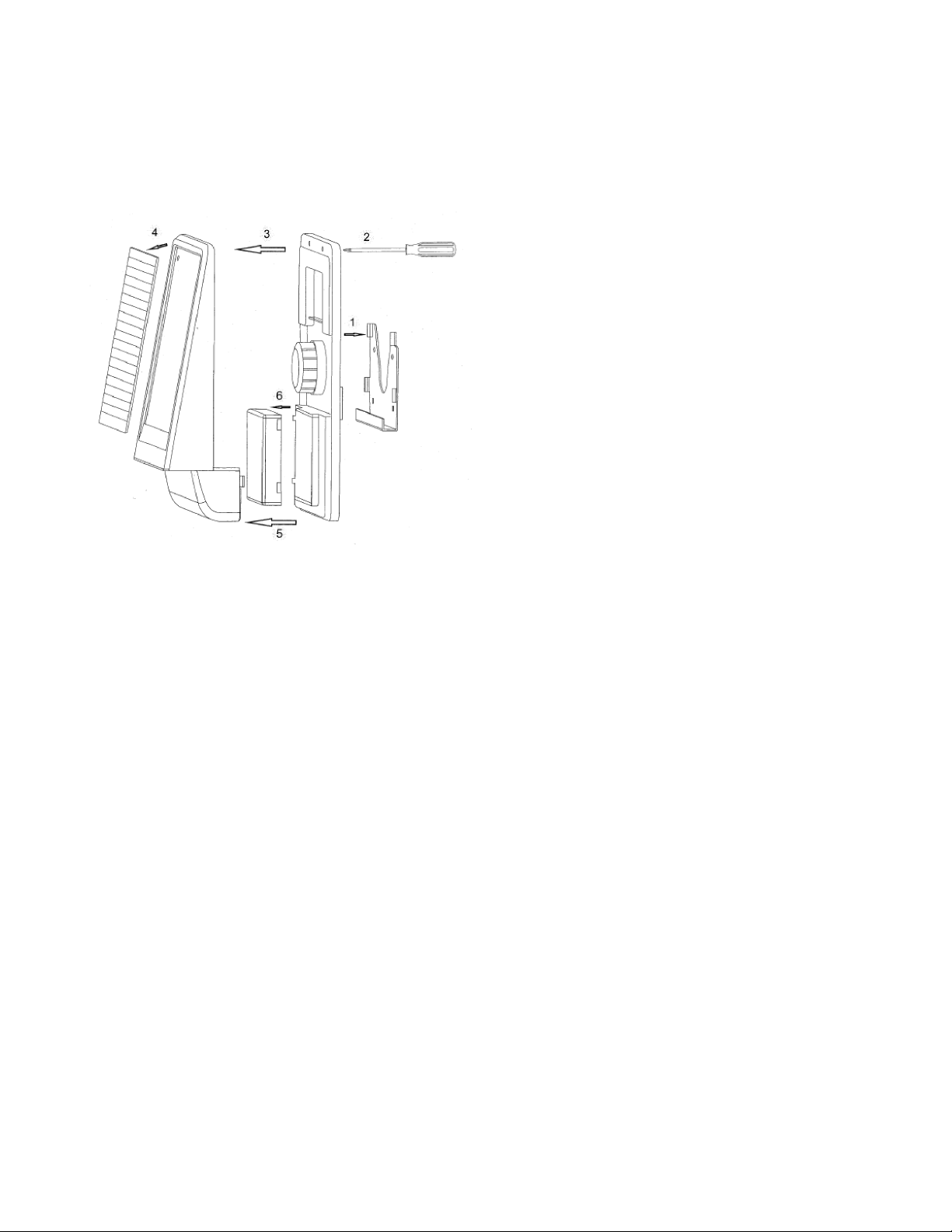
2. Remove the metal mounting plate from the device.
3. Remove all protection foil from the device.
4. Turn your controller into inclusion mode and start the inclusion with a short single click on the siren?s internal
Z-Wave button?.
Once the siren is placed on the metal mounting plate, the tamper protection is activated. Do not remove the siren anymore unless it is deactivated!
Important safety information
Please read this manual carefully. Failure to follow the recommendations in this manual may be dangerous or may violate the law. The manufacturer, importer,
distributor and seller shall not be liable for any loss or damage resulting from failure to comply with the instructions in this manual or any other material. Use this
equipment only for its intended purpose. Follow the disposal instructions. Do not dispose of electronic equipment or batteries in a fire or near open heat sources.
What is Z-Wave?
Z-Wave is the international wireless protocol for communication in the Smart Home. This device is suited for use in the region mentioned in the Quickstart section.
Z-Wave ensures a reliable communication by reconfirming every message (two-way communication) and
every mains powered node can act as a repeater for other nodes (meshed network) in case the receiver is
not in direct wireless range of the transmitter.
This device and every other certified Z-Wave device can be used together with any other certified Z-
Wave device regardless of brand and origin as long as both are suited for the same frequency range.
If a device supports secure communication it will communicate with other devices secure as long as this
device provides the same or a higher level of security. Otherwise it will automatically turn into a lower level
of security to maintain backward compatibility.
For more information about Z-Wave technology, devices, white papers etc. please refer to www.z-wave.info.
Product Description
This solar powered outdoor siren can be used without any additional power supply or batteries. It can be installed on any place on the outside of the house and
can be controlled using Z-Wave. The device will issue a very loud sound (105 dBm) and in parallel some stroboscope light as well. The siren is self-protecting.
Removing the main device from the mounting unit immediately starts the siren and also reports the tamper attempt to the ZWave central controller. All
communication between the Z-Wave controller and the siren is encrypted and secured to protect against manipulation. Thanks to the large solar panel, the siren
can be mounted on nearly every place outside the house where it"s recommended to place it in indirect sun light to prevent strong heating-up the housing. The
siren is maintenance-free and water-proofed (IP56). The average solar energy of one day keeps the device alive for up to 50 days (without using the siren).
The working range of the siren is: -10°C to +50°C
Prepare for Installation / Reset
Please read the user manual before installing the product.
In order to include (add) a Z-Wave device to a network it must be in factory default state. Please make sure to reset the device into factory default. You can do
this by performing an Exclusion operation as described below in the manual. Every Z-Wave controller is able to perform this operation however it is recommended
to use the primary controller of the previous network to make sure the very device is excluded properly from this network.
27-12-2020 manual.zwave.eu/backend/make.php?lang=en&sku=POPE700854
manual.zwave.eu/backend/make.php?lang=en&sku=POPE700854 2/6
Reset to factory default
This device also allows to be reset without any involvement of a Z-Wave controller. This procedure should only be used when the primary controller is inoperable.
To reset the device keep the inclusion button pushed for 10 seconds. After 5 seconds the LED starts flashing and after another 5 seconds there is a short beep
signaling the successful reset back to factory defaults. Use this procedure only when the network primary controller is missing or otherwise inoperable.
Safety Warning for Batteries
The product contains batteries. Please remove the batteries when the device is not used. Do not mix batteries of different charging level or different brands.
Installation
The siren can be placed on every location outside the home. Thanks to rating IP56 the location does not even need to be dry but please make sure it is placed
high enough so that children do not accidently remove it. The device is self-protected against tamper and theft. In a first step the mounting plate (isee illustration
above) is placed on the wall using the 4 screws provided. It is recommended to mount the complete device 5 mm from the wall for better sound.
1. Open the case and turn on the power switch (see illustration below) by moving it towards the Z-Wave button (B). All LEDs will shine for a short moment to
confirm.
2. Remove the metal mounting plate from the device.
3. Remove all protection foil from the device.
4. Turn your controller into inclusion mode with a short single click on the internal Z-Wave button (see illustration below).
Once included the enclosure of the siren is closed using the 6 screws. Finally, the siren is placed on the mounting plate. Attention: As soon as the siren is placed
on the mounting plate the tamper protection is activated. The siren must not be removed from the plate anymore. The behavior in this moment is defined by the
configuration parameter No 1. (A) Power Button (B) Z-Wave Button (C) Battery Con (D) Solar Module Connection (E) Charge Connection (12V DC) (F) Speaker
Connection ill. 1 ill. 2 3 The Siren comes pre-charged and can be used right away outside your home. If ? for whatever reason ? the device gets fully discharged,
you need to charge it again for about 30 minutes before its operational again. During this time of initial charging the siren may issue some minor noise. This is not
a malfunction.

27-12-2020 manual.zwave.eu/backend/make.php?lang=en&sku=POPE700854
manual.zwave.eu/backend/make.php?lang=en&sku=POPE700854 3/6
(A) Power Button
(B) Z-Wave Button
(C) Battery Con
(D) Solar Module Connection
(E) Charge Connection (12V DC)
(F) Speaker Connection
(G) Fuse (Type:5ET 1.6-R; FUSE GLASS 1.6A 250VAC 5X20MM Datasheet)
Inclusion/Exclusion
On factory default the device does not belong to any Z-Wave network. The device needs to be added to an existing wireless network to communicate with the
devices of this network. This process is called Inclusion.
Devices can also be removed from a network. This process is called Exclusion. Both processes are initiated by the primary controller of the Z-Wave network. This
controller is turned into exclusion respective inclusion mode. Inclusion and Exclusion is then performed doing a special manual action right on the device.
Inclusion
1. Remove the metal mounting plate from the device.
2. Open the case and turn on the power switch
3. Press the button once.
Exclusion
1. Deactivate the theft protection via parmeter 1.
2. Remove the siren from its mount.
3. Open the case.
4. Press the button once.
Product Usage
The siren can be turned on and off using wireless commands. To protect this communication from misuse is strongly recommended to operate the siren in secure
communication mode. The secure communication is activated on default during inclusion unless explicitly suppressed. When activated the siren will generate a
105 dB alarm sound and a flash light. This behavior can be configured as well using configuration parameter 5. Make sure to deactivate the tamper protection
before removing an included siren from the mounting plate.
It is possible ot power the Siren from an external power supply. Please use any 12 V DC power with minimum of 1 W output.The terminals marked with E ( see ill1
for more details) allows to connect the power source to the device. its recommended ot detach the cables to the solar cell in this operating mode.
Node Information Frame

27-12-2020 manual.zwave.eu/backend/make.php?lang=en&sku=POPE700854
manual.zwave.eu/backend/make.php?lang=en&sku=POPE700854 4/6
The Node Information Frame (NIF) is the business card of a Z-Wave device. It contains information about the device type and the technical capabilities. The
inclusion and exclusion of the device is confirmed by sending out a Node Information Frame. Beside this it may be needed for certain network operations to send
out a Node Information Frame. To issue a NIF execute the following action: Hit the Z-Wave Button
Quick trouble shooting
Here are a few hints for network installation if things dont work as expected.
1. Make sure a device is in factory reset state before including. In doubt exclude before include.
2. If inclusion still fails, check if both devices use the same frequency.
3. Remove all dead devices from associations. Otherwise you will see severe delays.
4. Never use sleeping battery devices without a central controller.
5. Dont poll FLIRS devices.
6. Make sure to have enough mains powered device to benefit from the meshing
Firmware-Update over the Air
This device is capable of receiving a new firmware 'over the air'. The update function needs to be supported by the central controller. Once the controller starts the
update process, perform the following action to confirm the firmware update: For a firmware update you need to open the siren?s housing first. Now, you can start
the update process with your gateway. Please press the Z-Wave button twice fast, as soon as the single red LED (circuit board under the acrylic glass cover)
blinks. The update will take around 10 minutes.After the update, the Siren will acticate on. Press the button to disable the siren.
Association - one device controls an other device
Z-Wave devices control other Z-Wave devices. The relationship between one device controlling another device is called association. In order to control a different
device, the controlling device needs to maintain a list of devices that will receive controlling commands. These lists are called association groups and they are
always related to certain events (e.g. button pressed, sensor triggers, ...). In case the event happens all devices stored in the respective association group will
receive the same wireless command wireless command, typically a 'Basic Set' Command.
Association Groups:
Group Number Maximum Nodes Description
15 Z-Wave Plus Lifeline
Configuration Parameters
Z-Wave products are supposed to work out of the box after inclusion, however certain configuration can adapt the function better to user needs or unlock further
enhanced features.
IMPORTANT: Controllers may only allow configuring signed values. In order to set values in the range 128 ... 255 the value sent in the application shall be the
desired value minus 256. For example: To set a parameter to 200 it may be needed to set a value of 200 minus 256 = minus 56. In case of a two byte value the
same logic applies: Values greater than 32768 may needed to be given as negative values too.
Parameter 1: Siren Tamper Mode
Sets the tamper triggering mode when removed from the holder
Size: 1 Byte, Default Value: 0
Setting Description
0Triggers automatically when it is removed from the holder. Must be turned off, using the button or from the
controller
1Triggers automatically when it is removed from the holder and turns off, when placed back on the holder
2Does not trigger at all, when removed from the holder. Service Mode
Parameter 5: Siren Mode
Determines how the Siren shall react on alarm
Size: 1 Byte, Default Value: 2
Setting Description
0Siren Only
1Flash Only
2Flash plus Siren
Parameter 6: Auto Off
If the value is set, the siren will be switched off automatically after a defined alarm time in Minutes.
Size: 1 Byte, Default Value: 5
Setting Description
0No Auto Off
1 - 127 after X Minutes

27-12-2020 manual.zwave.eu/backend/make.php?lang=en&sku=POPE700854
manual.zwave.eu/backend/make.php?lang=en&sku=POPE700854 5/6
Technical Data
Dimensions 300x190x68 mm
Weight 893 gr
Hardware Platform ZM5202
EAN 0019962005107
IP Class IP 44
Voltage 12 v
Battery Type 1 * Lithium 2400mAh
Device Type Siren
Generic Device Class Binary Switch
Firmware Version 02.04
Z-Wave Version 06.02
Z-Wave Product Id 0154.0004.0002
Frequency Europe - 868,4 Mhz
Maximum transmission power 5 mW
Supported Command Classes
Basic
Switch Binary
Sensor Binary
Association Grp Info
Device Reset Locally
Zwaveplus Info
Supervision
Configuration
Alarm
Manufacturer Specific
Powerlevel
Firmware Update Md
Battery
Association
Version
Multi Channel Association
Security
Transport Service
Controlled Command Classes
Transport Service
Explanation of Z-Wave specific terms
Controller — is a Z-Wave device with capabilities to manage the network. Controllers are typically Gateways,Remote Controls or battery operated wall
controllers.
Slave — is a Z-Wave device without capabilities to manage the network. Slaves can be sensors, actuators and even remote controls.

27-12-2020 manual.zwave.eu/backend/make.php?lang=en&sku=POPE700854
manual.zwave.eu/backend/make.php?lang=en&sku=POPE700854 6/6
Primary Controller — is the central organizer of the network. It must be a controller. There can be only one primary controller in a Z-Wave network.
Inclusion — is the process of adding new Z-Wave devices into a network.
Exclusion — is the process of removing Z-Wave devices from the network.
Association — is a control relationship between a controlling device and a controlled device.
Wakeup Notification — is a special wireless message issued by a Z-Wave device to announces that is able to communicate.
Node Information Frame — is a special wireless message issued by a Z-Wave device to announce its capabilities and functions.
(c) 2020 Z-Wave Europe GmbH, Antonstr. 3, 09337 Hohenstein-Ernstthal, Germany, All rights reserved, www.zwave.eu. The template is maintained by Z-Wave
Europe GmbH. The product content is maintained by Z-Wave Europe GmbH , Supportteam, [email protected]. Last update of the product data: 2020-02-04
13:24:48
This manual suits for next models
1
Table of contents
Other Popp Security System manuals
Popular Security System manuals by other brands


Secure
Secure USAB-1 operating instructions

B&B
B&B 480 SERIES Operation & maintenance manual
ADEMCO
ADEMCO VISTA-20P Series Installation and setup guide
Inner Range
Inner Range Concept 2000 user manual
Johnson Controls
Johnson Controls PENN Connected PC10 Install and Commissioning Guide
Aeotec
Aeotec Siren Gen5 quick start guide