Page 10 of 17
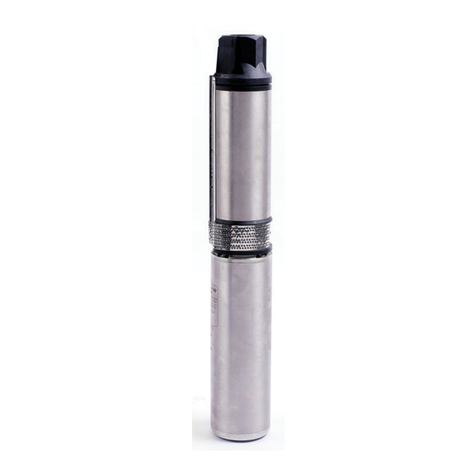
pump into the well, secure the supply wires to discharge the pipe at 10 ft. (3.1 m) intervals with
Scotch® #33 electrical tape. Be sure not to damage the pump wires.
Note: To avoid dropping the pump down the well or damaging wires or splices, NEVER allow the
pump wires to support the weight of the pump.
Pump Installation
1. If a standard air-over-water pressure tank is used, install two bleeder orifices about 2 ft. (0.6 m)
apart as shown in Figure 12. Orifices will automatically charge the tank with air. See Figure 12 to
help determine orifice location.
Note: If a precharged tank is used, DO NOT install bleeder orifices. If a pump and pre-charged
tank are replacing a standard tank system, remove bleeder orifices before installing the pump in
the well.
2. To prevent losing the pump down the well, connect a safety rope strong enough to support the
pump and drop the pipe (minimum 5/16" [8 mm] twisted polypropylene or pronila rope) to the
eyelet on the pump discharge. Tie off the other end of the safety rope securely to the well seal,
the well cap, or the pitless adapter.
3. Install piping based on these guidelines:
For installations up to 100’ (30.5 m) in depth, use a 100 psi (689.5 kPa) rated polyethylene
plastic pipe.
For installations up to 220’ (67.1 m) in depth, use a 160 psi (1103.2 kPa) rated polyethylene
plastic pipe.
For depths beyond 220’ (67.1 m), use a galvanized steel pipe for the entire drop pipe.
Initial Start-Up / New Wells
Note: Never operate the pump with the discharge valve completely closed. This can cause significant
pump damage and will void the warranty.
Note:To prevent sand-locking the pump, follow these procedures when starting pump for the first
time. Do not start the pump with the discharge valve completely open unless you have followed
these procedures first.
1. Connect a pipe elbow, a short length of pipe, and a gate valve to the pump discharge (at the
well head).
2. Mount the motor control box (for a 3-wire pump) or fused disconnect switch (for a 2-wire
pump) in a permanently weatherproof place. Make sure that the controls will not be subjected
to extreme heat or excess moisture.
3. Make sure the controls are in the OFF position.
4. Connect the motor leads and the power supply to the motor control box or magnetic starter.
(See the installation wiring diagrams.) Do not start the pump yet.
5. Open the gate valve on the discharge one-third of the way. Start the pump (see Figure 10).