If the PoolShark tracks in a repetitive pattern:
• Check the pool return line water flow and redirect it as necessary with a return line
eyeball diverter (see No. 4, “To install the eyeball diverter”, under Initial Adjustments and
Operational Checks, Pages 4 and 5).
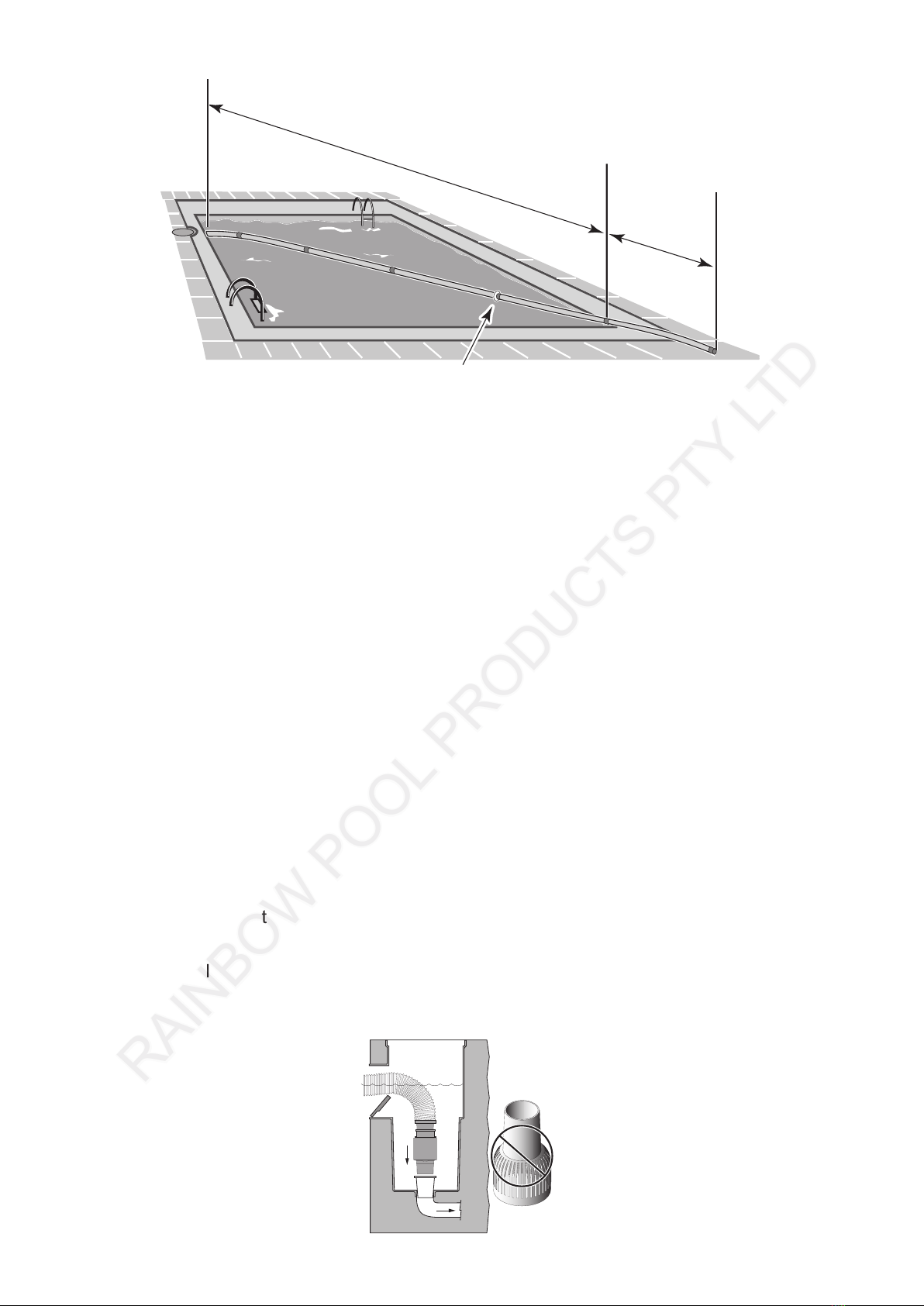
• Check the PoolShark’s hose to be sure that it has not become bent or kinked. Do not coil
the hose, as it will retain the coiled shape and reduce the cleaning coverage. To check the
hose, lay each hose section flat on the pool deck (or another flat surface) and look down
the length of the hose. It should be perfectly flat and straight. Replace any sections which
are bent or kinked.
• Check the oscillator for: damage; lost seals (there should be 4 seals): obstructed seals
(seals should slide freely on the oscillator).
• Be sure that the short, soft leader hose section is the first section in the hose assembly
(next to the cleaner).
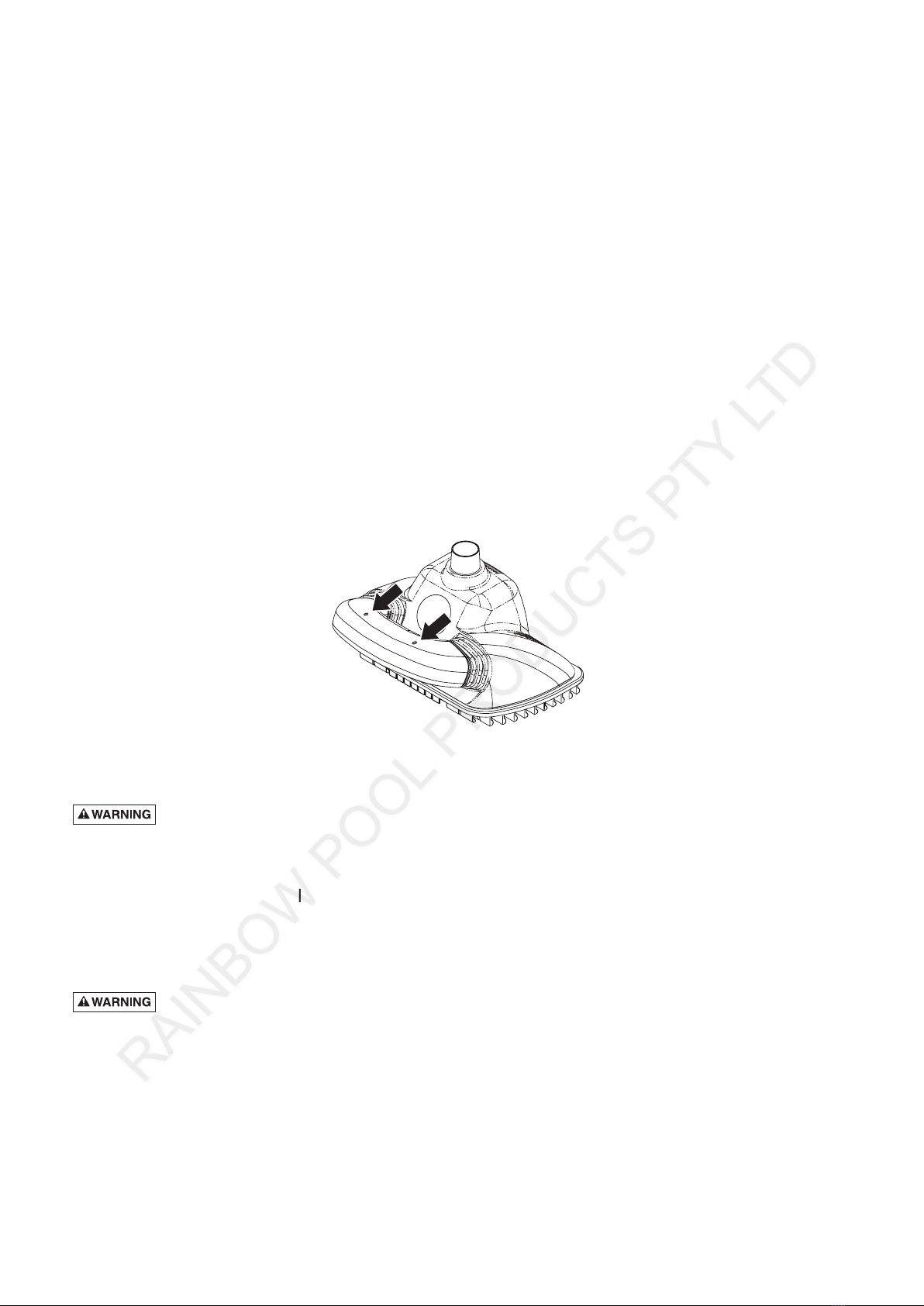
Square Bottom Pools Only: If the transition radius between your pool’s floor and wall is
small and the PoolShark will not climb the pool walls, then you have a square bottom pool. If
so, remove the cleaner from the pool and drill two holes in the indentations in the bumper (see
Figure 7). This will provide an outlet for air which would otherwise accumulate in the hollow
bumper. This air, from microscopic bubbles suspended in the pool water, is normally able to
escape when the PoolShark climbs the pool walls.
Drill Bumper if you have a square-bottom pool.
Notice: DO NOT drill the holes if your PoolShark CAN climb the pool walls!
Pool pump suction is hazardous and can cause entrapment with severe personal
injury or drowning. Use vacuum regulator (see instructions below) in pool cleaner system at all
times.
Notice: Each pool’s hydraulic system and vacuum connections are different. Be sure you
have installed the vacuum regulator valve before you “fine-tune” the system. This not only
regulates vacuum, but also acts as a safety device.
About “Fine-Tuning” Vacuum Adjustments And Connections
Suction entrapment, injury, and drowning hazard. If your pool has a dedicated
suction port (“vac port”) for vacuuming or for an automatic pool cleaner, it must be covered
when not in use. Purchase a spring loaded safety cover from your local pool store and
install it on the suction port to prevent entrapment and injury. For the “Novice Pool Owner”
where vacuuming is a new experience, please read all of the following points, the installation
instructions, and the trouble shooting guide carefully.
Please Note The Following:
“Vacuum” and “suction” are two words meaning the same thing.•
“Dedicated suction line”, “vac port”, and “vac fitting” are different terms for a hole in•
the side wall of pool; this hole is connected to the pump suction and is dedicated to
vacuuming.
RAINBOW POOL PRODUCTS PTY LTD