Operating Instructions
Please read and save these instructions before attempting to assemble, install, operate or maintain
the product. Protect yourself and others by observing all safety information. Failure to comply with
instructions could result in injury and/or damage!
DESCRIPTION
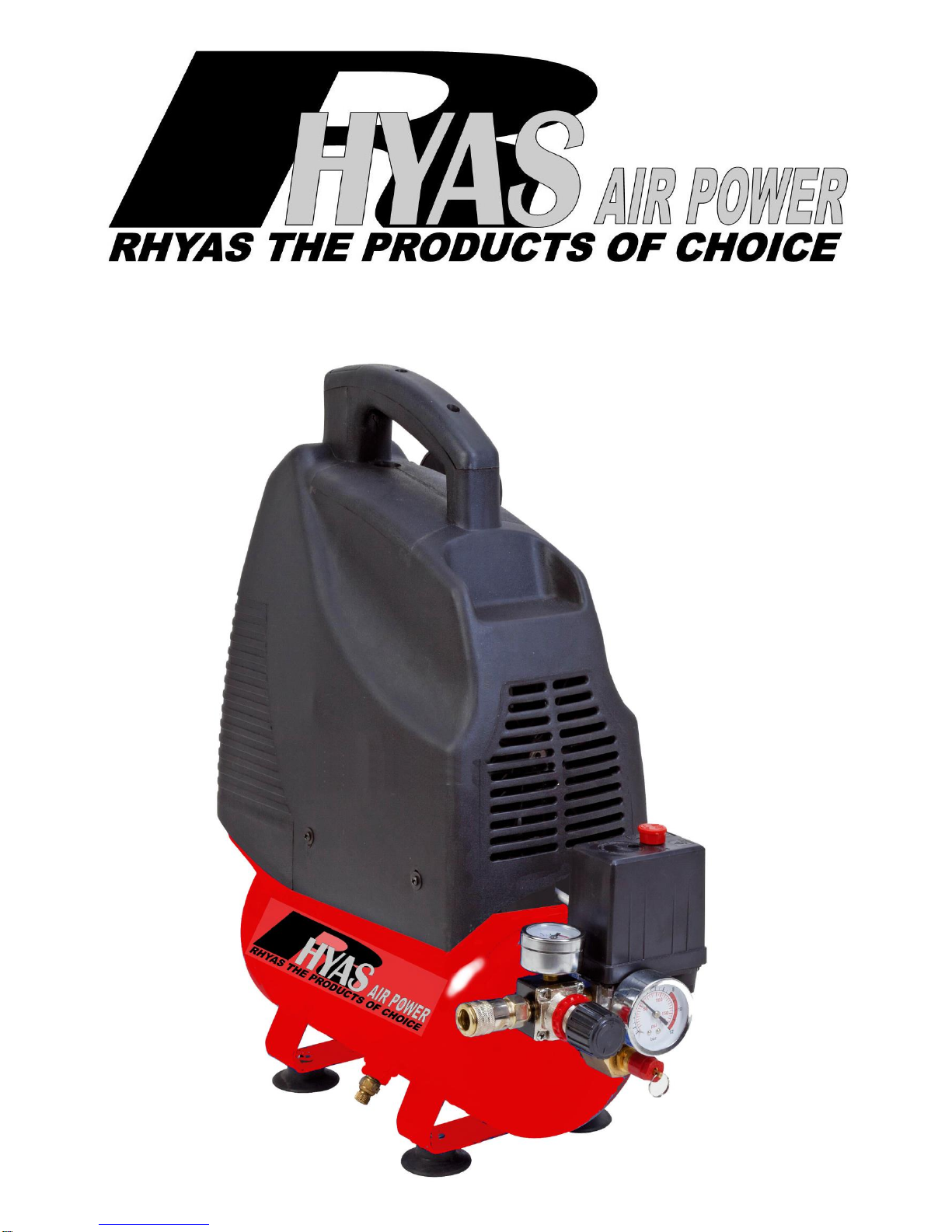
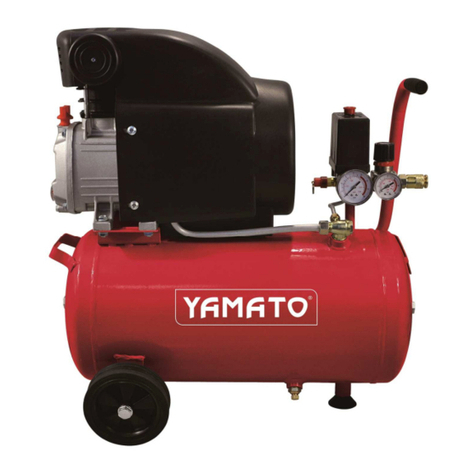
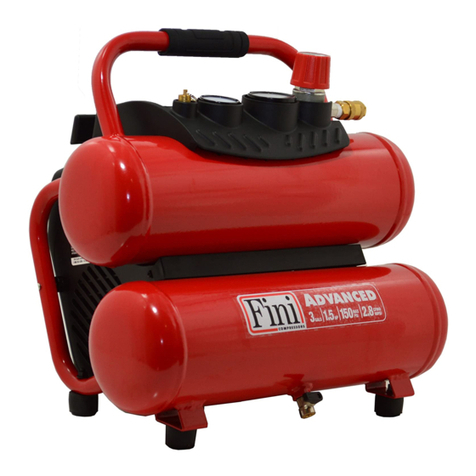
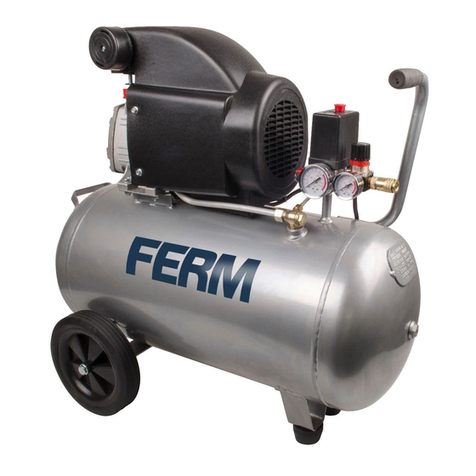
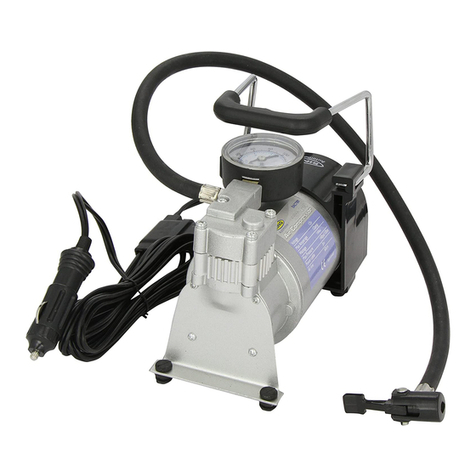
Oil-less compressors are designed for DIY
(do-it-yourselfers) for a variety of home uses
and operate without oil. Compressed air
units contain moisture, therefore ensure you
install a water filter or air dryer if your
application requires dry air.
SAFETY GUIDELINES
This manual contains useful information for
the safe use and maintenance of your
compressor. Please observe any of the
safety recommendations.
UNPACKING
After unpacking the unit, carefully inspect it
for any damage that may have occurred
during transit. If you have any concerns
please contact your supplier prior to use.
GENERAL SAFETY INFO
Air compressors and tools (spray guns,
filters, lubricators, hoses, etc.) produce and
require compressed air for them to operate.
Ensure to:-
1. Read all tool
manuals and be
thoroughly familiar
with the controls and
the proper use of the equipment.
2. Keep visitors away and NEVER allow
children in the work
area.
3. Wear safety glasses
and use ear protection..
4. Do not stand on or
operate the unit whilst handheld from the
handle.
5. Prior to each use inspect the air system
and electrical components for signs of
damage, deterioration, weakness or
leakage, Repair or replace defective items
before using.
6. ▲WARNING!
Never operate or repair
in or near a flammable
gas or vapor. Never store flammable
liquids or gases in the vicinity of the
compressor.
7. ▲CAUTION!
Compressor parts may be
hot even if the unit is
stopped.
8. ▲WARNING!
Never remove or attempt to adjust the
pressure release valve. Ensure it is kept
clean and free from any contamination.
9. ▲DANGER!
Never attempt to repair or
modify a tank! Welding or
any modification may weaken the tank
resulting in damage, rupture or
explosion. Always replace a worn or
damaged tank.
10. ▲WARNING!
Tanks rust from moisture build-up,
which weakens the tank. Make sure to
drain tank regularly and inspect
periodically for unsafe conditions such
as rust formation and corrosion.