EN
7
4. OPERATION
Always observe the safety
instructions and obey the relevant
regulations.
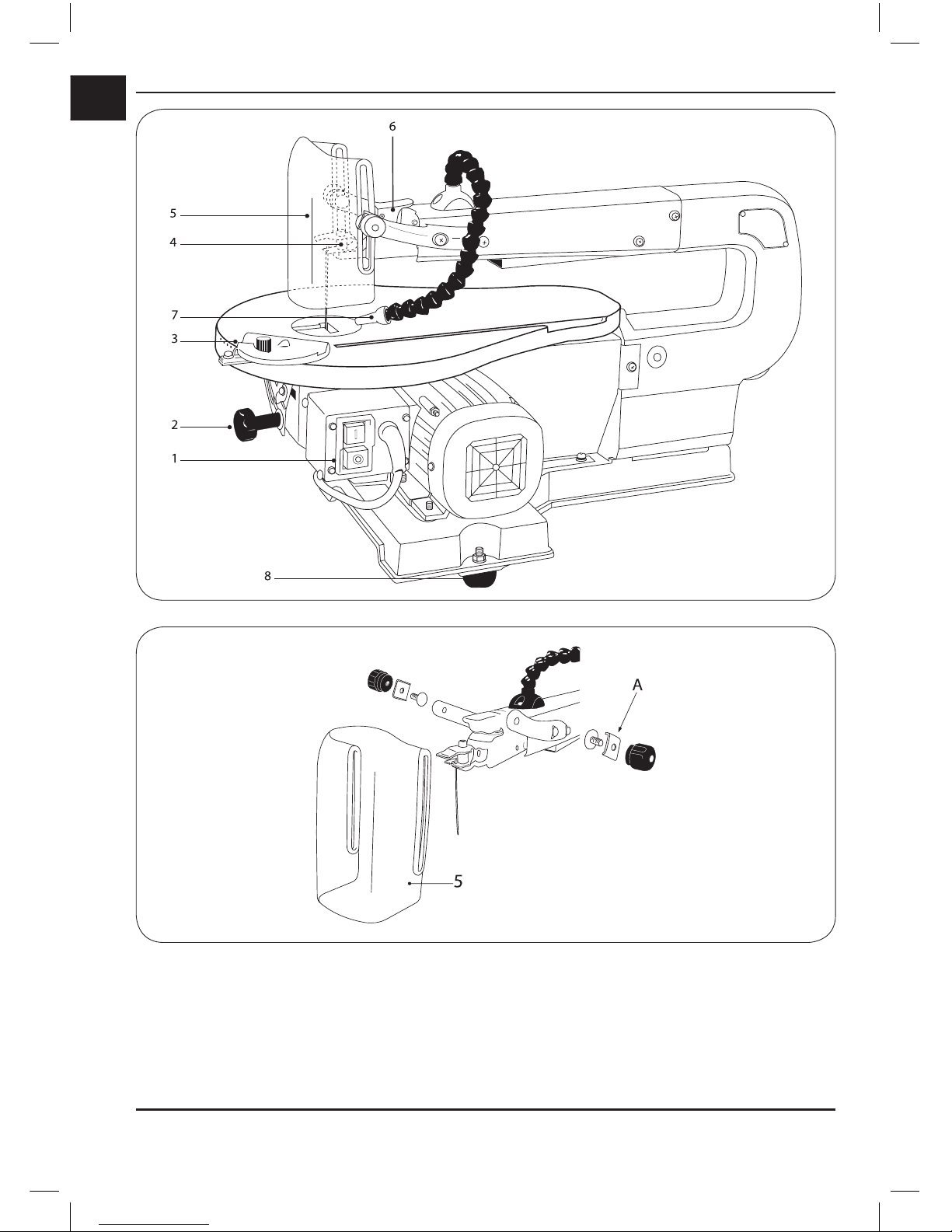
Start - Push the green ON-switch to start the
machine
Stop - Push the red OFF-switch to stop the
machine
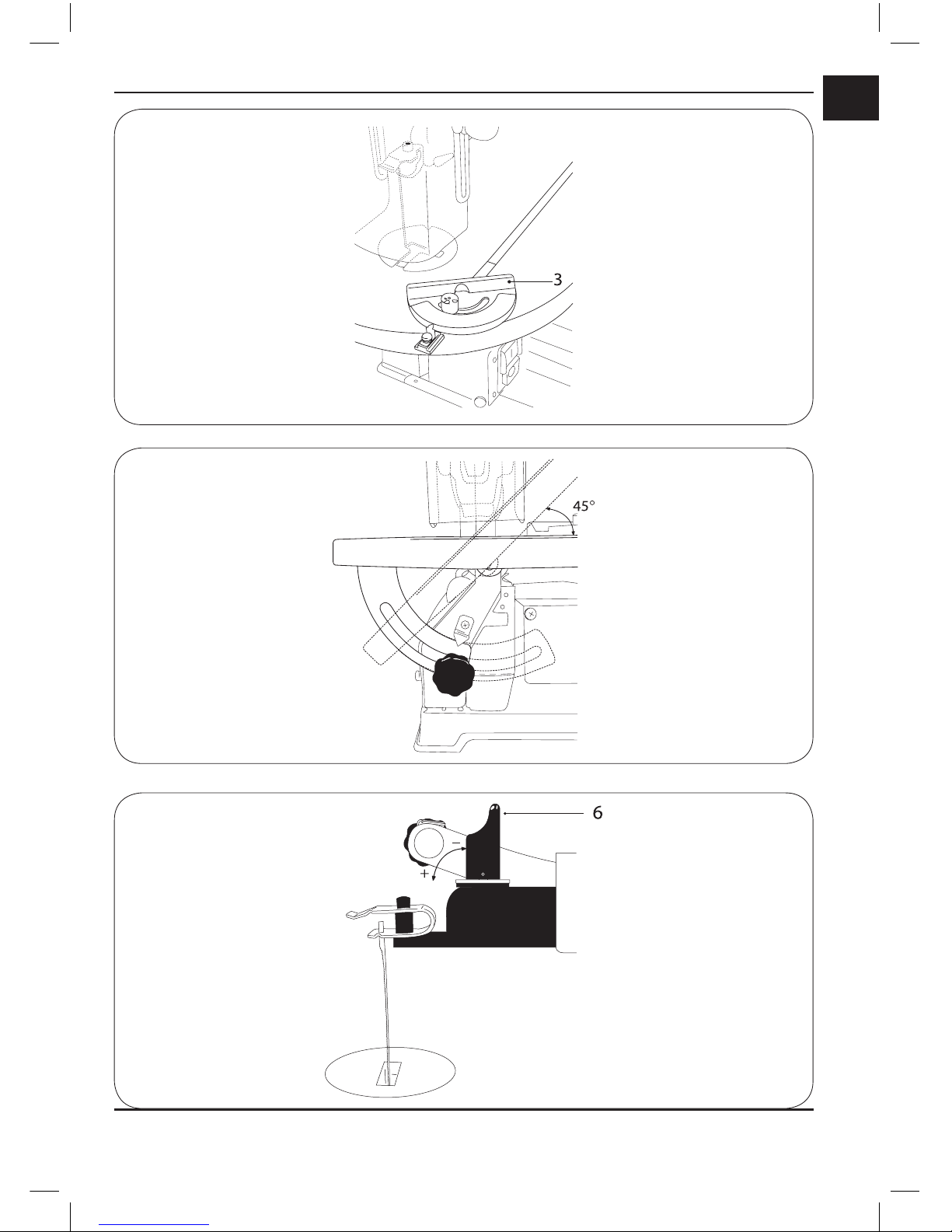
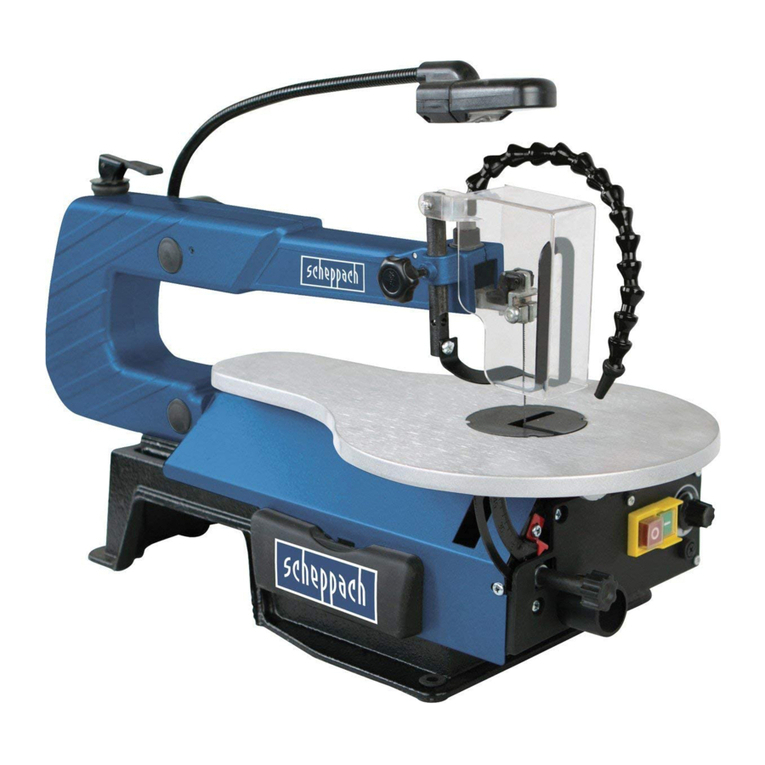
Tilting the table
Fig.D
The scroll saw table can be tilted through 45°. To
do so:
• Lock the locking arm underneath the table.
• Manually tilt the table until the desired angle
has been reached (see the graduated scale on
the machine).
• Retighten the locking arm.
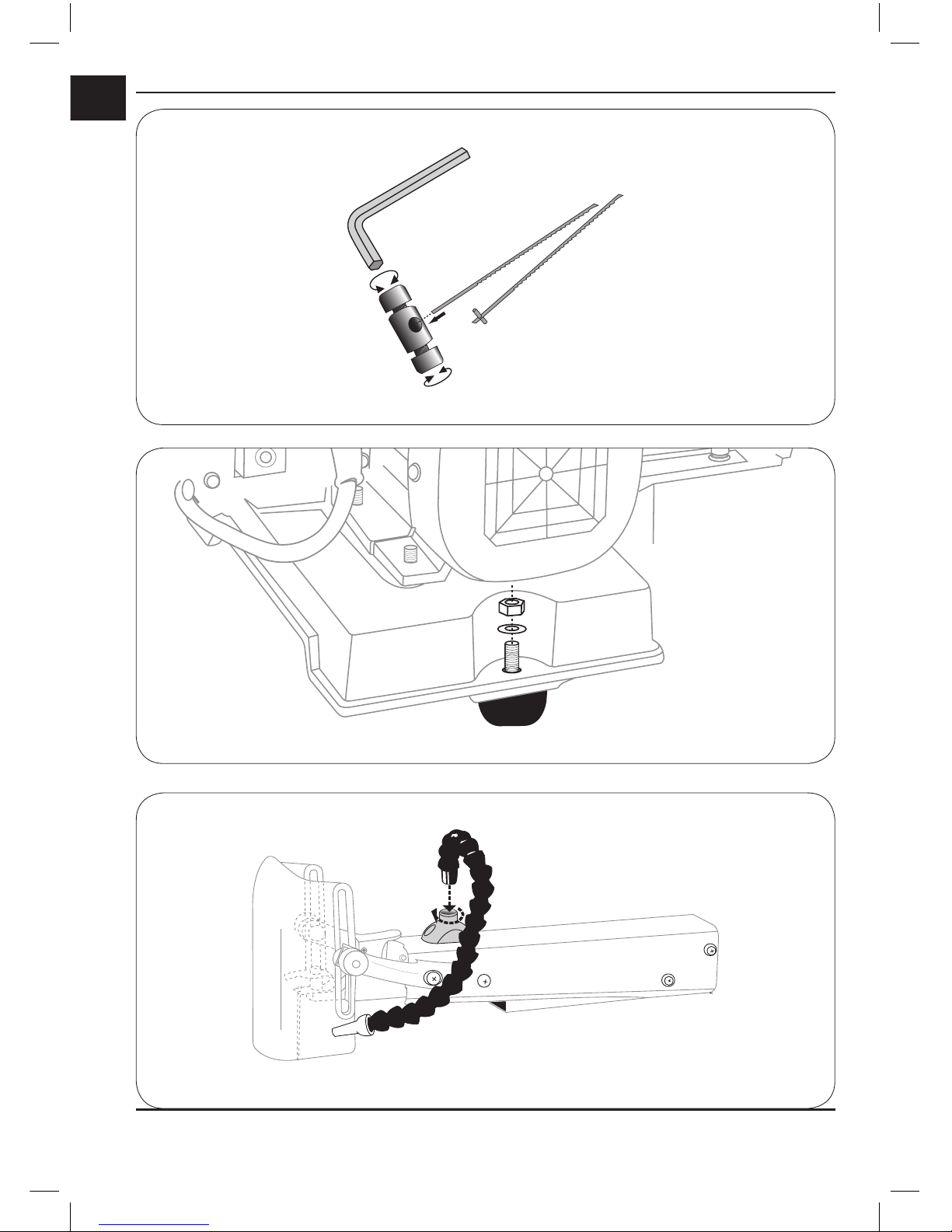
Adapters for universal saw blades
Fig. F
The enclosed adapters should only be used with
universal (= without pins on the end) saw blades
• Unscrew the Allen screws on the adapter
counterclockwise
• Slide the universal saw into the gap between
the Allen screws
• Tighten the Allen screws clockwise so the saw
is clamped
• Install the saw blade (see INSTALLING THE
SAW BLADE)
Installing the saw blade
Fig.E
Always disconnect the machine from
the main power supply before
carrying out any maintenance work
Use universal saw blades from any
better DIY shop or machine shop.
• Select the correct blade for the kind of wood to
be cut.
• Push the spanner upwards. (6).
• Push the saw blade through the slot, with the
teeth pointing downwards. Make sure that the
bolt of the saw blade (or saw-blade adapter)
slides into the lower saw blade holder.
• Pull the saw blade up, so that the upper bolt
(or saw-blade adapter) slides into the upper
holder.
• Tighten the tensioner button until the saw
blade has the required tension.
• Remove all tools and other objects from the
saw table. Activate the current and allow the
saw blade to run before starting to saw. The
saw blade should run quietly.
Removing the saw blade
Always disconnect the machine from
the mains before carrying out any
maintenance work.
• Loosen the spanner until the spring is slack.
• Carefully push down the upper saw-blade
holder and slightly lift the blade in order to
facilitate its removal.
• Allow the blade to drop down slightly and push
it forward, in order to loosen it from the lower
holder.
Basic scroll saw operations and tips
• There is a learning curve for each person who
wants to use this saw. During that period of
time it is expected that some blades will break
until you learn how to use the saw and receive
the greatest benefit from the blades.
• Blades wear faster when:
• cutting plywood, which is very abrasive;
• when sawing wood which is thicker than the
blade stroke;
• when sawing hardwood;
• when side pressure is placed on the blade
The saw blade saws only during the downward
stroke.
• Using both hands, slowly and with minimum
pressure push the workpiece across the table
towards the saw blade. This will prevent the
blade from breaking or twisting.
• For optimal results, the saw blade must be
sharp.
• Use the proper saw blade. The selection of the
saw-blade depends on the thickness of the
wood and the cut you would like to achieve.
Keep the following in mind as a general rule:
The thinner and harder the wood, the finer the
teeth of the saw blade. Use a small blade to
saw sharp curves.