BEDROOM HALL BEDROOM
LIVING ROOM KITCHEN
FINISHED BASEMENT
MULTI-STORY RESIDENCE
2. DO NOT connect this smoke alarm to any other type of smoke alarm or auxiliary device, except those listed this manual.
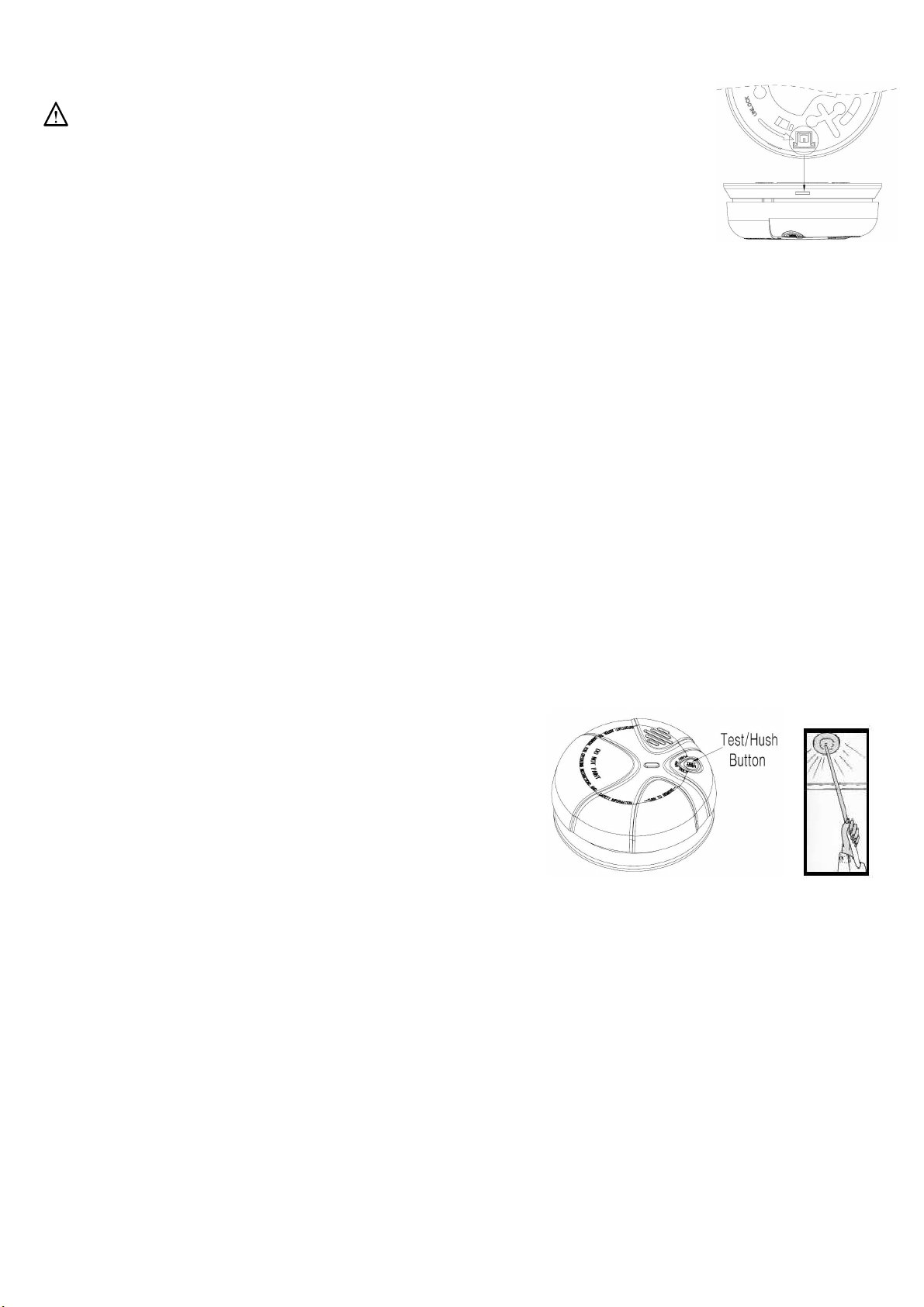
The Test button accurately tests all smoke alarm functions. Do not use any other test method. Test smoke alarm weekly to
ensure proper operation.
3. DO NOT remove or disconnect battery to quiet unwanted alarms. This will remove your protection. Open windows or fan
the air around smoke alarm to silence it.
4. Observe and follow all local and national electrical and building codes for installation.
5. This smoke alarm is designed to be used inside a single room only. In multi-room buildings, each individual living unit
should have its own smoke alarms. Do not install in non-residential buildings. And this smoke alarm is not a substitute for a
complete alarm system.
6. Smoke may not reach the smoke alarm for many reasons. For example, if a fire starts in a remote part of the home, on
another level, in a chimney, wall, roof, or on the other side of a closed door, smoke may not reach the smoke alarm in time to
alert household members. A smoke alarm will not promptly detect a fire except in the area or room in which it is installed.
7. Smoke alarms may not alert every household member every time. The alarm sound is loud in order to alert individuals to a
potential danger. However, there may be limiting circumstances where a household member may not hear the alarm (i.e.
outdoor or indoor noise, sound sleepers, drug or alcohol usage, the hard of hearing, etc.). If you suspect that this smoke alarm
may not alert a household member, install and maintain specialty smoke alarms. Household member must hear the alarm’s
warning sound and quickly respond to it to reduce the risk of damage, injury, or death that may result from fire. If a
household member is hearing impaired, install special smoke alarms with lights or vibrating devices to alert occupants.
8. Smoke alarms can only sound their alarms when they detect smoke. Smoke alarms detect combustion particles in the air.
They do not sense heat, flame, or gas. This smoke alarm is designed to give audible warning of a developing fire. However,
many fires are fast-burning, explosive, or intentional. Others are caused by carelessness or safety hazards. Smoke may not
reach the smoke alarm QUICKLY ENOUGH to ensure safe escape.
9. Smoke alarms have limitations. This smoke alarm is not foolproof and is not warranted to protect lives or property from fire.
Smoke alarms are not a substitute for insurance. Homeowners and renters are responsible for insuring their own lives and
property. In addition, it is possible for the smoke alarm to fail at any time. For this reason, you must test the smoke alarm
weekly and replace every 10 years.
RECOMMENDED LOCATIONS FOR SMOKE ALARMS
Installing Smoke Alarms in Single-Family Residences
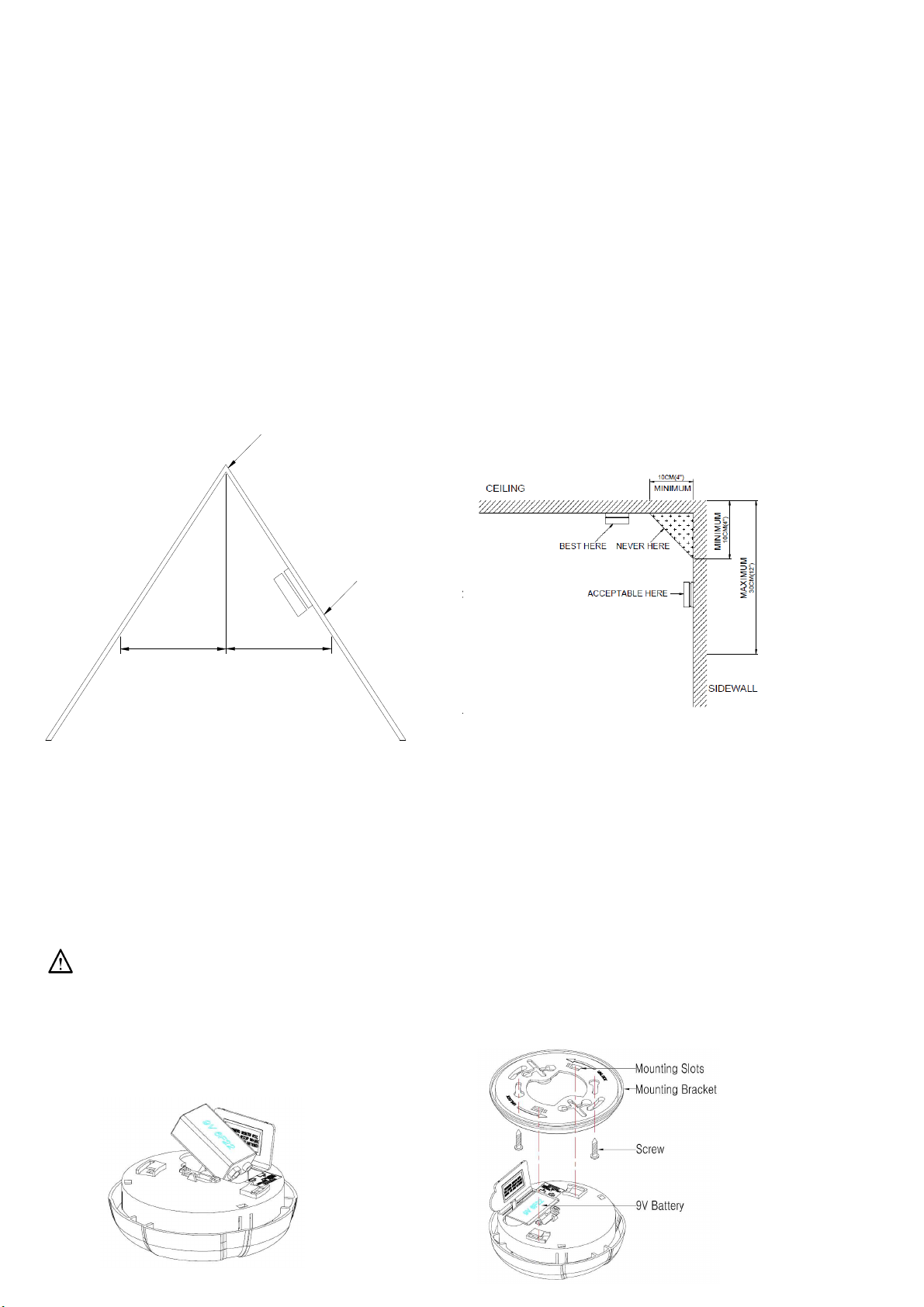
Minimum coverage is one unit on every floor, in every sleeping area, or in every bedroom. For additional coverage, Orientalert
recommends you install units in all rooms, halls, storage areas, and finished attics, where temperatures normally remain
between 5℃ and 45℃.
More specifically, install Smoke Alarms:
On every level of your home, including finished attics.
Inside every bedroom, especially if people sleep with doors closed.
In the hall near every sleeping area. If your home has multiple sleeping areas, install a unit in each. If a hall is over 12 meters
(40feet) long, install an alarm at each end.
At the top of the first-to-second floor stairway.
IMPORTANT!
Specific requirements for Smoke Alarm installation vary from state to state. Check with your local Fire Brigade for current
requirements in your area.
See “Recommended Locations For Smoke Alarm” Diagram following.
DINING ROOM
LIVING ROOM
BEDROOM
BEDROOM
KITCHEN
MOBILE HOME
SINGLE-STORY RESIDENCE,APARTMENT,