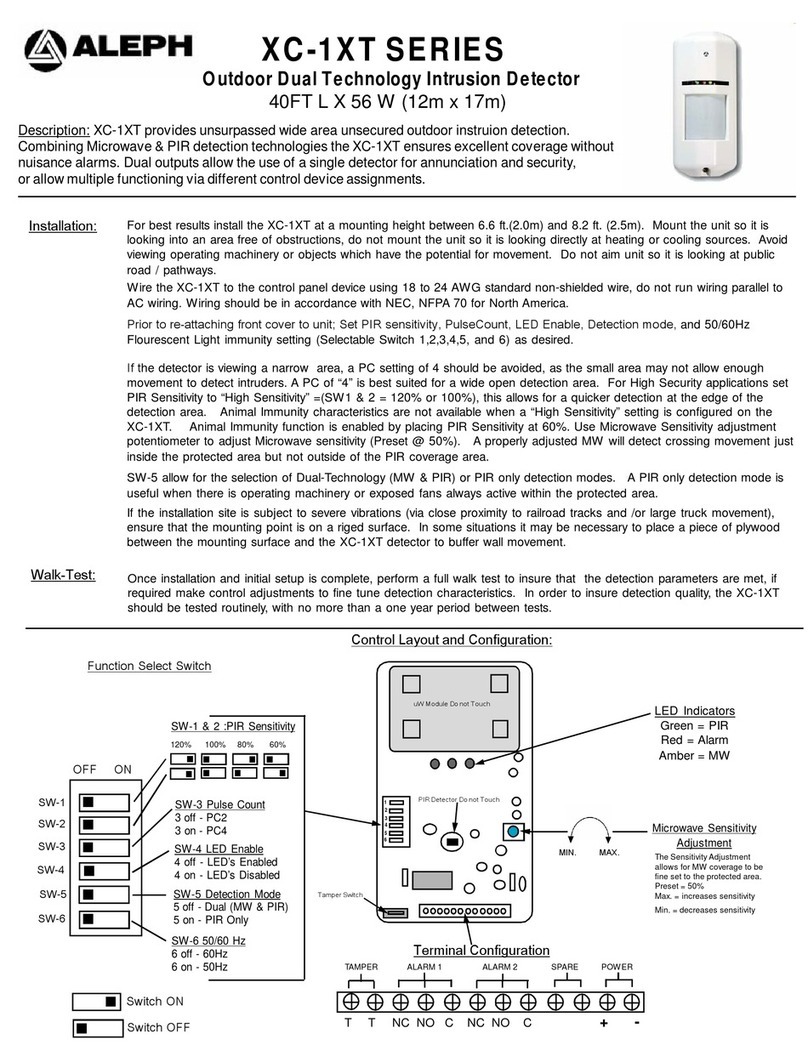
3.2 Assembly information
1. The material construction to which the PSA-Fall
protection anchorage points will be attached
should be of adequate strength to withstand forces
during lifting without deformation (certicate of
static forces).
We recommend engaging assessors from the
respective national standards/regulations during
the design of the installation area. Example:
DIN EN 795 (1 person): 12 kN
OSHA 1926.502(d)(15): 22,2 kN
CENTS16/415 (1 person): 12 kN
AS/NZS 5532:2013
Employer´s insurance association recommends
the following minimum engagement length for the
bolts:
- 1 x M in steel (min. grade S235JR [1.0037])
- 1,5 x M in grey cast iron (f.e. GG 25)
- 2 x M in aluminium alloys
- 2,5 x M for light metals of low strength
(M = size of thread, f.e. M12,
means 12 mm thread diameter)
When used in light metals, nonferrous metals and
grey cast iron or other materials the thread has
to be chosen in such a way that the WLL of the
thread corresponds to the requirements of the
corresponding base material.
HINT
RUD-PSA-Fall protection anchorage
points are standard wise supplied with
a thread lengths of 1,5 x M. Make sure
that the tapped hole is providing enough
depth (see also chapter 3.2 Hints for the
assembly – point 5).
If the PSA fall arrest anchor point will be attached
to a through hole, the bore must be carried out
according to DIN EN 20273 range „m“. When using
a nut please choose a commercially available
lock-nut acc. to DIN EN ISO 7042 with washer or
use an equivalent bolt securing device to avoid
unintentional loosening of screw joint. Should a
disassembly of the lock-nut become necessary, it
is mandatory to use a new lock-nut and the thread
of the bolt must be inspected.
Fixation will dowelled joint technique:
When using RUD-PSA fall arrest anchor points, at
non-metal xation materials (f.e. concrete, stone-
work; brick, etc.), dowelled joints with a DBIT or
an ETA admission must be used.
In preparation please verify a calculation to make
sure that the subgrade is able to absorb the re-
quested forces under the given circumstances
(loading direction, quality grade of concrete etc.).
2. The bolting location for the PSA-Fall protection
anchorage points should be marked with paint.
3. The PSA-Fall protection anchorage point should
be installed as follows:
- Position above the user (this does not
exclude other installation positions) reduces
risk of tripping, the height of fall and swinging
after a tumble.
- the coupling element must be free moveable,
- the coupling element must not be loaded over
edges
4. Make sure that a plane bolting surface is provided
(Ø E, see chart 2). Maximum countersink of the
threaded hole = Nominal diameter of thread.
5. Drill the tapped blind holes deep enough so that
the shoulder of the PSA-VRS and PSA INOX STAR
M12 bolt sits properly on the plane surface. At
through holes please consider also DIN EN 20273
middle
6. Fixing in sectional or hollow prole steel can be
carried out by using a blind-rivet nut type Rivkle in
steel or stainless steel. Here observe the assem-
bly instructions of the manufacturer. When using
a blind-rivet nut from Rivkle please use type
343 66 120 with a small counter sunk (see picture
1).
Blindnietmutter
Pict. 1: Blind-rivet nut
7. PSA-VRS and PSA INOX STAR M12 must be
able to turn by 360° around the bolt axle when it‘s
completely installed.
Temporarily installed PSA-Fall protection anchorage point:
For a temporarily installation/loading at the load
force transmission point, hand tightening of the
bolt with an allen key or a suitable tool, applied
with normal hand force (approx. 50 daN) into the
designed and determined thread is sufcient.
Permanent installed PSA-Fall protection anchorage point:
For an applicable permanent installation/loading
at the force transmission point, the PSA-Fall pro-
tection anchorage points must be bolt in by using
a suitable setscrew and a torque wrench into the
designed thread. The necessary clamping and fa-
stening torque value (+/- 10 %) can be taken out of
chart 1.