5
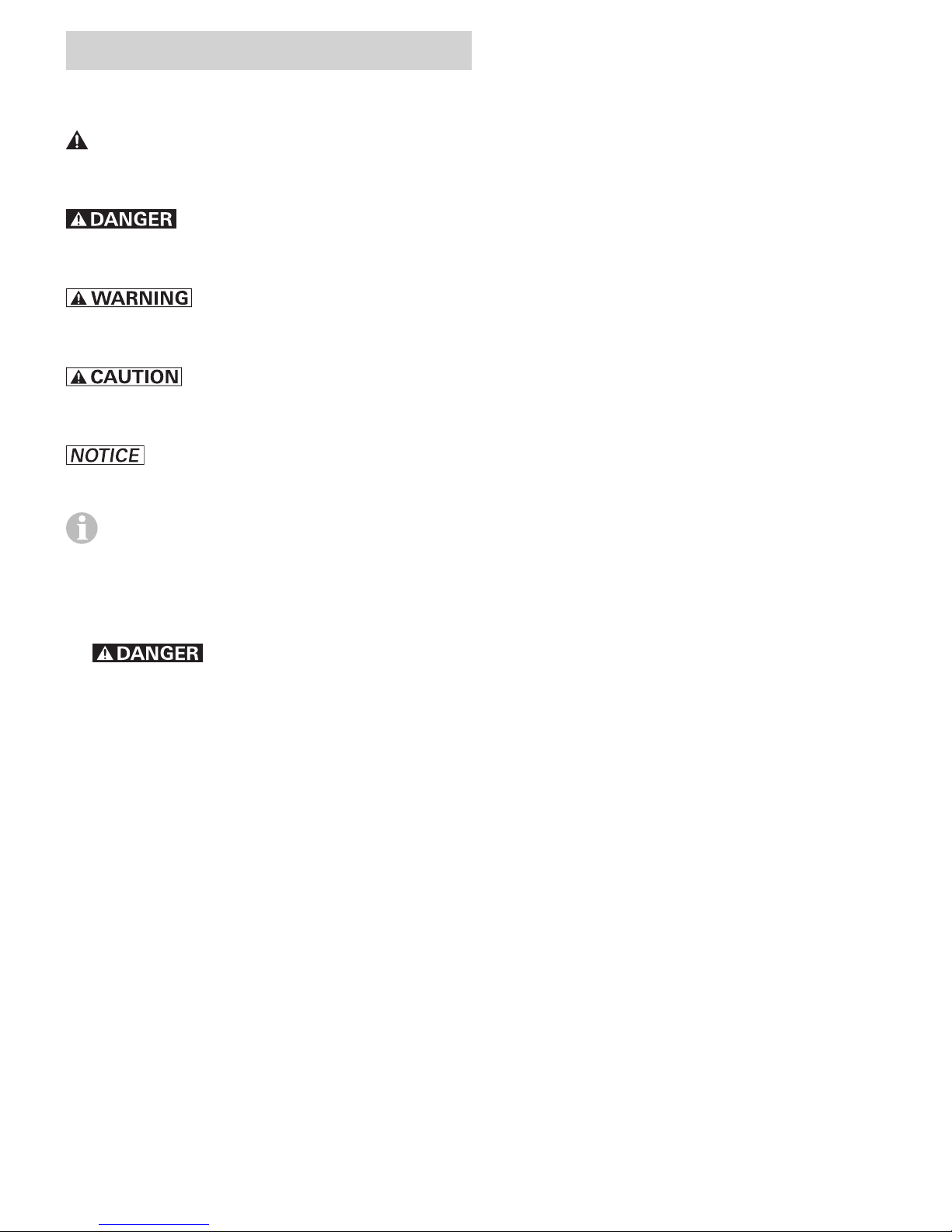
Safety symbols and signal words
This is the safety alert symbol. This symbol
alerts you to potential hazards that can kill or
hurt you and others.
indicates a hazardous situation
which, if not avoided, will result in death or
serious injury.
indicates a hazardous situation
which, if not avoided, could result in death or
serious injury.
indicates a hazardous situation
which, if not avoided, could result in minor or
moderate injury.
is used to address practices not
related to physical injury.
Other important information or tips
Safety behavior and practices
Ensuring a safe operating environment
• Suffocation through exhaust
gases To ensure dissipation of exhaust gas-
es, operate the VarioHeat outdoors only.
– Never use in enclosed spaces or tents or
breathe in the exhaust gases.
– If installing an airtight awning, make sure
that the exhaust system terminates to the
outdoors.
– If the RV is parked in an enclosed space:
– Block the flow of fuel to the VarioHeat.
– Deactivate the time switch.
– Switch off the VarioHeat at the control
panel.
– Ensure that the VarioHeat cannot be
switched on through the Truma App un-
der any circumstances.
• Use the VarioHeat only with a functional
LP gas and carbon monoxide detector installed
in the RV. For installation, operation and func-
tion test follow the manufacturer’s guidelines.
• Keep the area around the VarioHeat free
from combustible materials, gasoline, and
other flammable vapors or liquids such as
pressurized dispensers or wax candles.
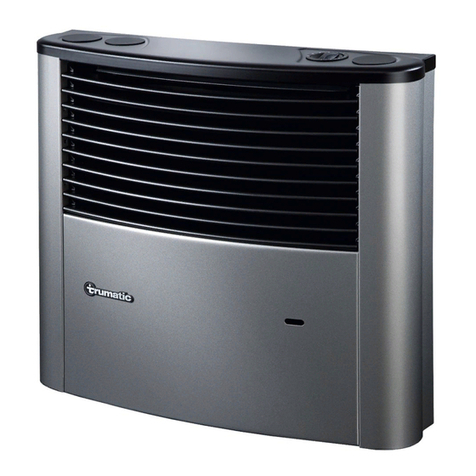
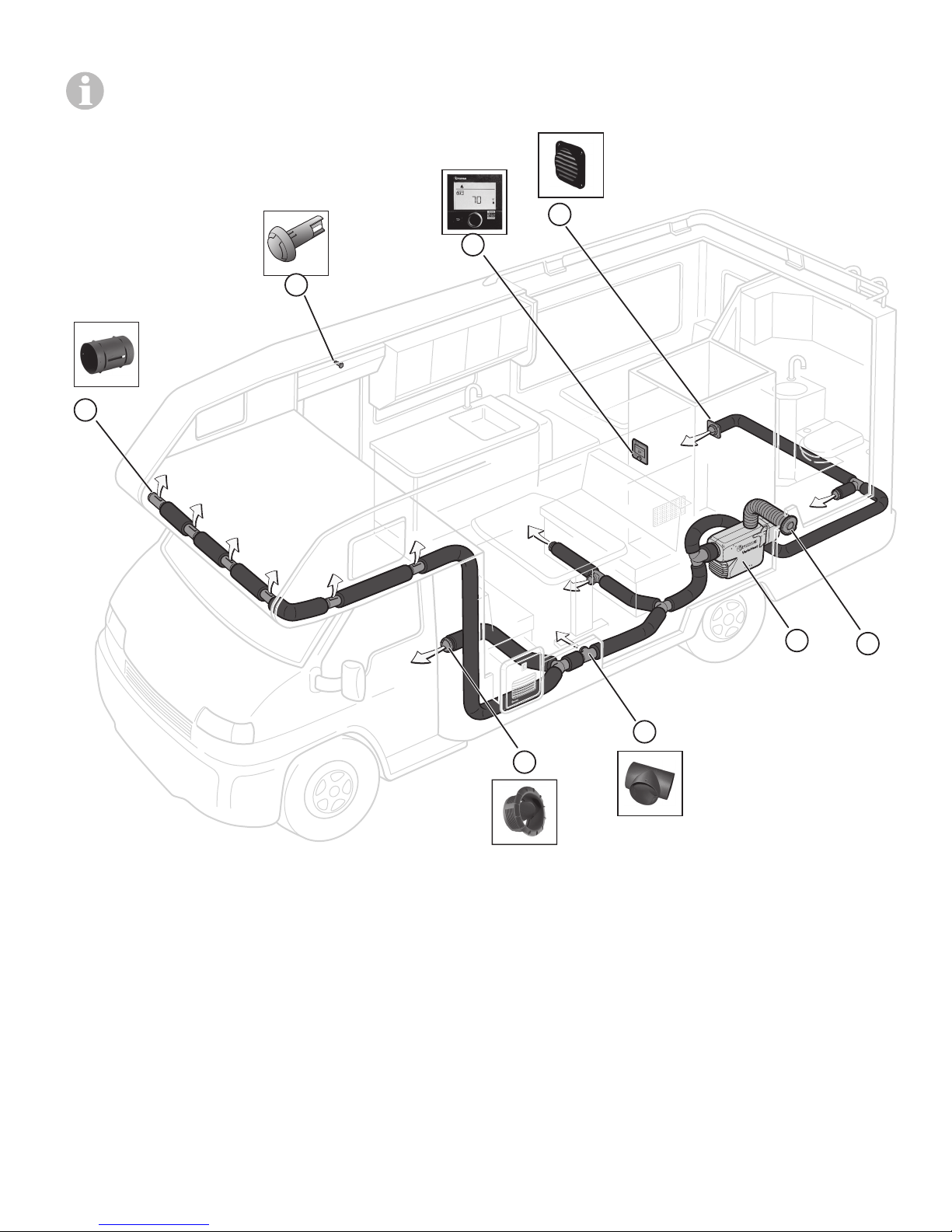
Consumer Safety Information • Keep the area in front of the warm air outlets
(Fig.1 – 6) free of combustible or heat-sen-
sitive materials. Do not put any material into
the warm air outlets.
• In order to avoid overheating of the
VarioHeat, keep the air inlets of the
VarioHeat (Fig.2 – 7), the air openings
to the area in which the VarioHeat is
installed (Fig.1) and the spacing around the
VarioHeat free of obstruction.
• To ensure clean combustion, keep the wall
cowl free of obstruction. Do not lean any ob-
jects against the wall cowl (Fig.1 – D).
• Danger of hot surfaces. The temperature of
the exhaust gases can reach 320°F (160°C).
Do not touch the area around the wall cowl
and do not lean any objects against the wall
cowl or the RV.
Responsibilities of the operator
• The vehicle owner is responsible for ensuring
that the appliance can function properly.
• LPG systems must comply with the technical
and administrative regulations of the country
in which they are used. National rules and
regulations must be observed.
Safe operation
• Use with LP gas (propane) only. Butane or
any mixtures containing more than 10% of
butane must not be used.
• Danger of damage to the gas system! For
the operation of gas pressure regulation sys-
tems, gas-burning devices or gas systems
only gas cylinders that supply gas in the
gaseous phase may be used. Gas cylinders
which supply gas in the liquid phase are
prohibited.
• During the initial start-up of a brand new
appliance, small quantities of fumes and
a slight odor may occur briefly. When the
appliance is started up after a particularly
long period of non-use, there may be some
smoke and/or smell due to dust or dirt. It is
a good idea to allow the appliance to run at
maximum output for a few minutes and to
ensure that the area is well ventilated.
• Hot air can be dangerous, especially for in-
fants, children, the elderly, or infirm. It can
cause burns: