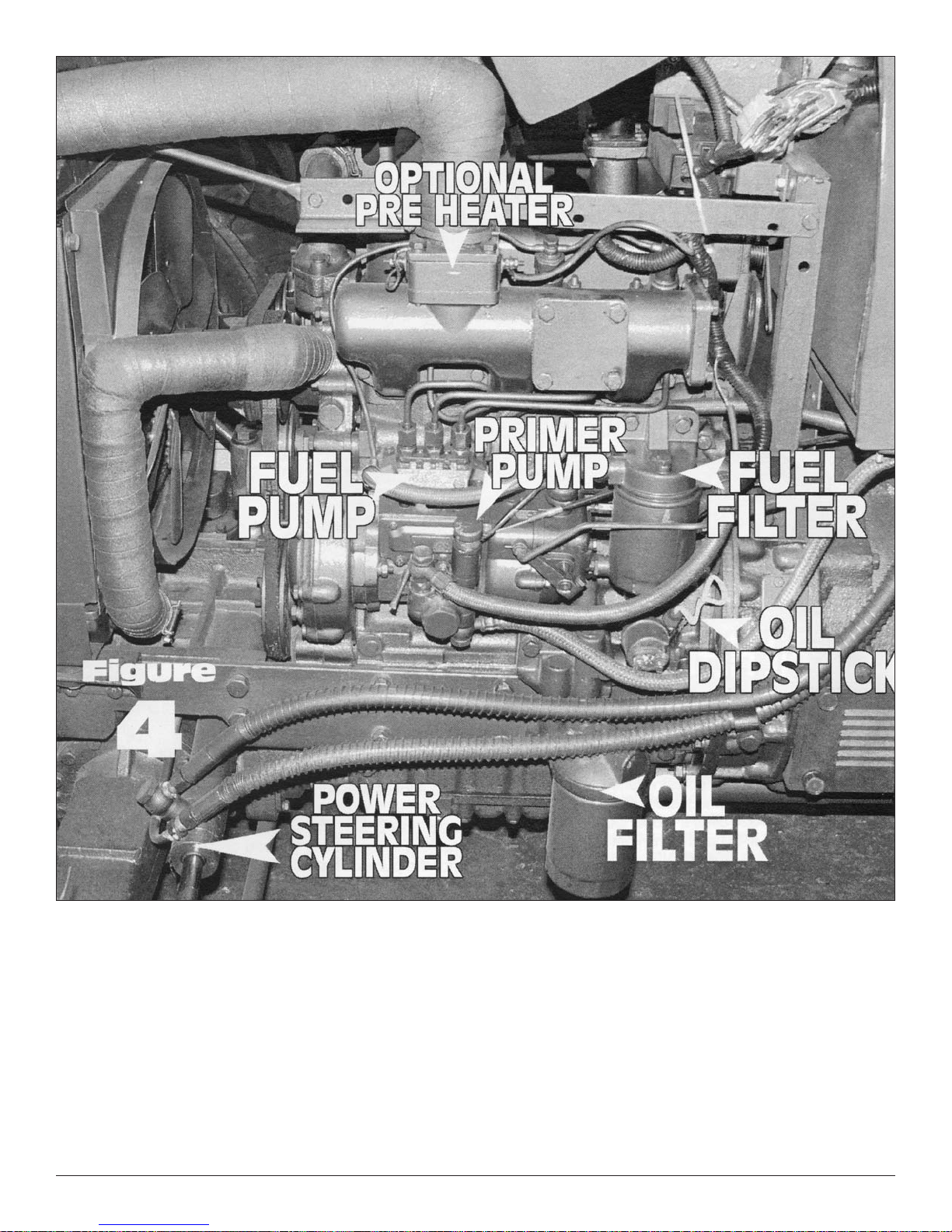
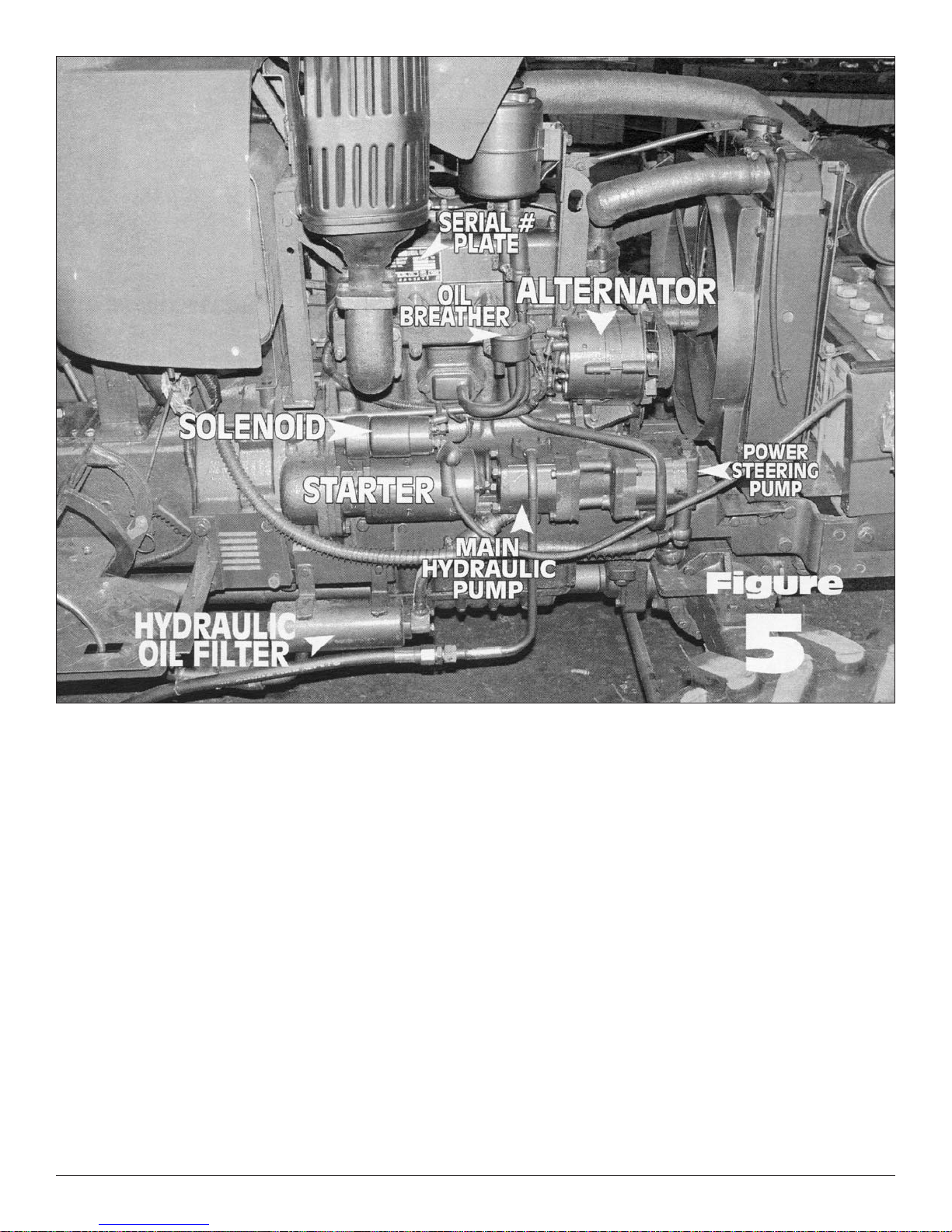
engine is new. Keep your eye on the radiator level if you are
seeing some overflow.
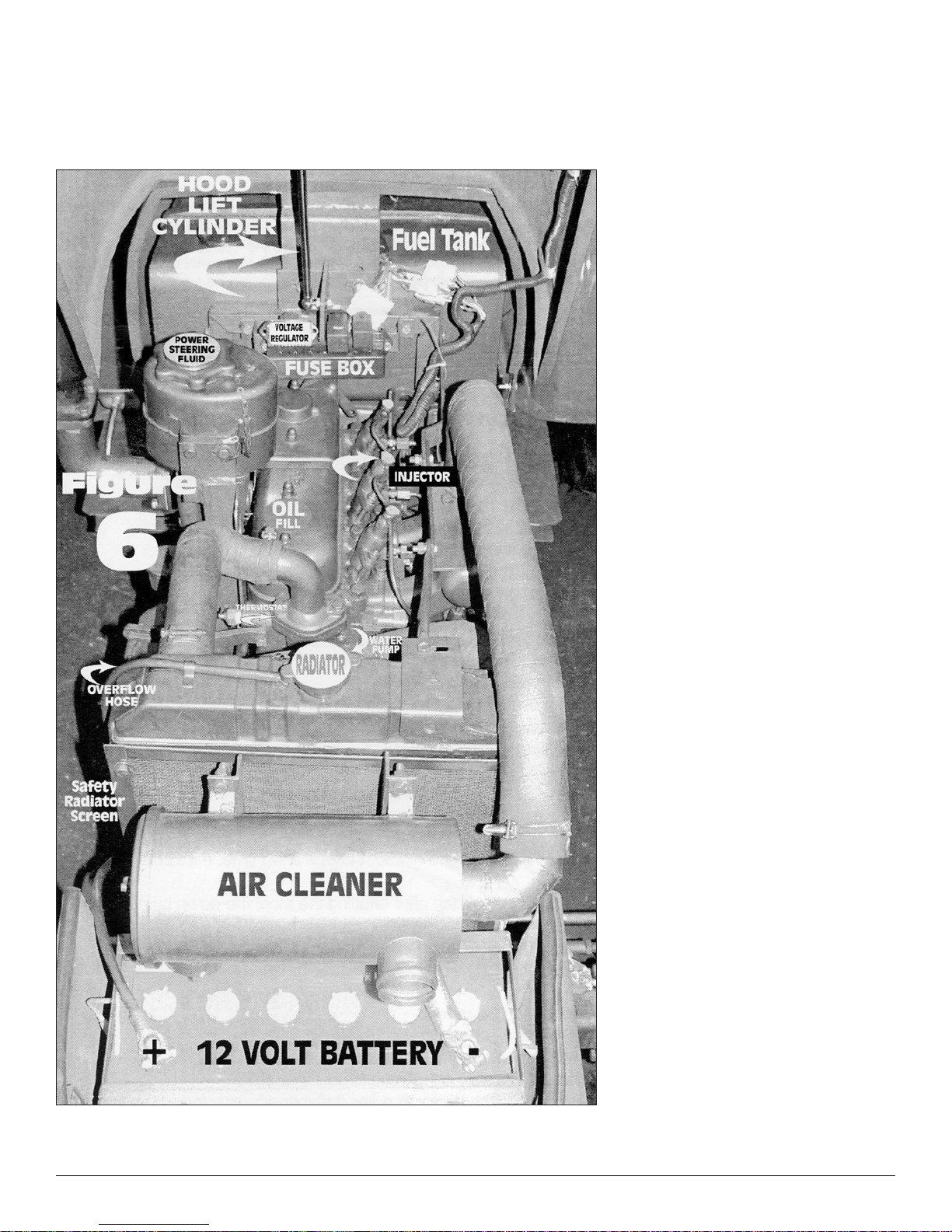
Water pump—This is an important item that is often over
greased. When you pump grease into the openings on the
water pump, make sure you quit when you feel the least
resistance. Pumping the grease too hard will blow the seal
easily. The water pump should be greased
sparingly, about every 25–50 hours,
depending on frequency of use.
Oil fill level—This is the point for filling
engine oil. We suggest using a 15–40
weight oil and use a total of 5.75 quarts.
Injectors—Injectors are what ignite the
diesel. If they are plugged with dirty fuel,
you could experience a rough-firing engine.
Use of a ‘diesel conditioner’ in your fuel
periodically, per the suggested mix, will
help to maintain clean injectors and give
you a clean burn. If it’s a cold winter and
your engine is having trouble firing, it may
be the fuel is jelled up. In some winter areas
using a diesel #1 is suggested. Otherwise
use diesel #2. A smoking or missing cylin-
der is another symptom of a bad injector.
Injectors can cleaned or replaced by a
skilled mechanic. If problems continue, the
lines to and from the injectors should also
be checked for fuel leaks and to ensure that
they are not plugged.
Power Steering Fluid—needs to be
checked via the dip stick at the top of the
tank. This takes power steering fluid only. If
your steering becomes hard, then usually
it’s due to low power steering fluid. Another
possibility could be that the lines going to
and from the power steering tank are loose
or plugged up. Make sure they have no
leaks and are not plugged.
Fuse box—The fuse box is a standard type
such as those used in domestic vehicles
(cars, trucks, etc.). Use only the size of fuse
that is already in each slot. Increasing the
fuse size may void the warranty.
Fuel tank—is approximately 8 gallons in
capacity. You should not allow your tractor
to run out of diesel. This is the most fuel-
efficient tractor on the market for its size.
Clean diesel is crucial for a tractor engine!
Only use fresh diesel.
Voltage regulator is the small box that dis-
tributes the electrical current at exactly the
voltage required by the electrical compo-
nents.
Hood lift cylinder—is a hydraulic cylinder
used to aid in lifting the hood for easy
engine access. Hydraulic cylinders slow
down some in cold weather, so be aware of
that but realize it’s not serious. The cylin-
ders require no oiling except occasionally
to the metal shaft to protect it and to prevent
rust. A very light LPS #1 for example will
do the trick.
Model 334 Operations Manual 9
is suited to your climate needs, especially for winter condi-
tions.
Overflow hose—is located on top of the radiator and comes
down the side of the radiator. It is not uncommon to see a
small amount of water seeping from this when the engine is
worked extremely hard, if you are on an incline, or when the
FIGURE 6: