www.alstor.se | 9
Instruction manual
SAFETY
1.2 MACHINE LABELS
The machine and crane are tted with labels urging
safety and presenting important information. The
following is apresentation of all the labels on the
machine. All labels for the crane are presented in the
separate instruction manual for the crane.
CAB EMERGENCY EXIT. The
cabdoor and side window
double as emergency exits.
EMERGENCY EXIT WINDOW. To exit in case of an
emergency, open the window by turning the handle
and then removing the two red pins.
MANDATORY. Carefully read the instruction manual
and the information about compulsory protective
equipment. For details, please refer to section
1.7“Safety equipment”.
WARNING LABEL/
MAINTENANCE AND DRIVING
ADVICE – INSIDE CAB.
Located inside the cab, model
834 This label warns of
multiple issues as explained
below. Make sure bystanders
remain outside the machine
safety area.
When descending on slippery
ground, the differential lock
must always be engaged.
Before operation – Read the instruction manual,
safety precautions and perform asafety check.
When driving on lakes/waterways covered with ice,
remove the doors and open the windows.
Turn off the main switch when leaving the machine.
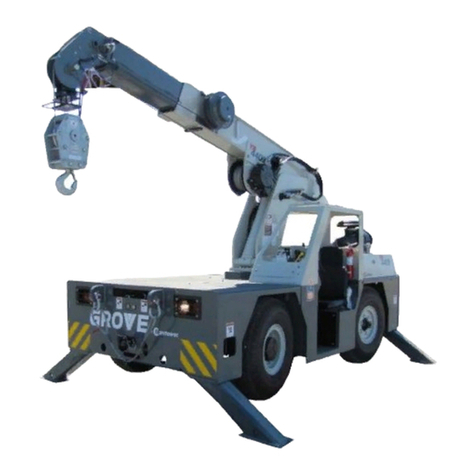
CRANE CHART.
Every crane has achart detailing
the permitted crane movement.
Make sure the crane has this
label and carefully study the
information on the label.
MAX. LOAD. The maximum load of the machine is
3,000kg. Never exceed this load limit. Never position
the load on top of the loading gate since there is arisk
the load can slide off the gate and hit the operator with
arisk of severe consequences.
MACHINE PLATE. Every supplied
machine is equipped with
amachine plate. Make sure
the machine has this plate and
carefully study its data.
Warning! Always wait 4seconds
when engaging and disengaging
the differential lock and driving
the machine again.
Only operators with the correct training and
experience are allowed to operate the machine.
Carefully observe the lubrication chart in this
instruction manual.
Warning of contact with high-tension power lines.
When working in close proximity to high-tension
power lines, pay special attention so the crane does
not come into contact with the power lines.