SETUP & OPERATING INSTRUCTIONS
AMERICAN BEAUTY
®
RESISTANCE SOLDERING SYSTEMS
First Plug the Power Unit into the plug receptacle of the Footswitch. Next Plug the Footswitch into any properly grounded 120 V
light will come on, indicating that the unit and Footswitch are working. When the Footswitch is released there is no longer any
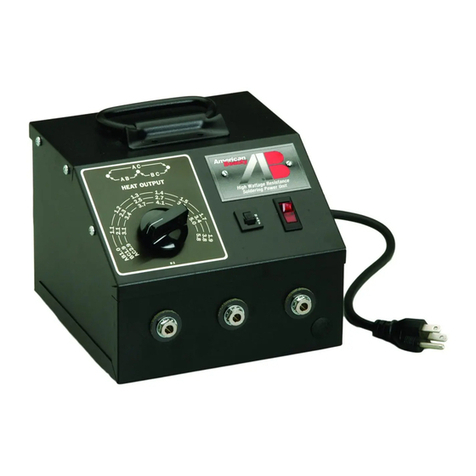
Properly connect the Handpiece to the receptacles or threaded posts that are located on the front or top of the Power Unit. The
receptacles that are employed on the lower output Power Units (push in turning clockwise until snug). The high range and more He
are used on the higher output Power Units. The Power Units produce a safe low voltage (AC) alternating current so there’s no con
A Handpieces’ metal electrodes can be notched, milled, slotted, bent or flattened to improve the soldering process. Carbon elec
of heat is brittle and cannot be bent or flattened without breaking. Only the core material of the electrodes should touch the w
contact with the work.
The actual process using resistance soldering equipment is simple. A safe (low voltage/high amperage) AC current is passed thro
passed through the resistive part of the electrodes an intense heat is generated where they contact the work. A path for current
handling a wide variety of applications. It is very important to determine the most efficient output to use for each individual
you will be able to predict dwell times and efficient output settings with a far greater level of accuracy and consistency.
In the beginning it may be helpful to use scrap pieces of similar si e and material for establishing the most efficient output
Less than one second dwell times are not recommended. Lower outputs can produce long dwell times that will allow time for the he
being used.
The goal should be producing the fastest cycle time at which you are comfortably able to create good quality solder oints
First establish good contact with both of the electrodes and the base metals (close to the intended joint area) then activate t
Because there is no longer any current in the handpiece you can hold the component in place and allow the joint to cool down und
order to achieve the most efficient and economical process possible for the application that is currently being performed. Whe
joining them together by re-flowing the solder, adding just enough new solder to complete the joint.
The Power Units all have recommended 50% maximum duty-
cycles. This means that when Power Units are being operated above 50% of t
measure. It is important for the idle (or cooling) time to be equal to, or greater than the dwell (or heating) time that is requ
seconds of cooling time before proceeding to the next solder joint.
To prevent damage to the equipment you must never operate the Power Units for longer than 20 seconds on any settings.
If you have reached the maximum available output of the Power Unit and cannot get the solder to flow in that amount of time the
use of a larger Power Unit. Always ensure that the appropriate Power Unit and Handpiece have been selected for the application t
assistance.
MAXIMUM OPERATING PARAMETERS
The maximum wattage information presented on the other side of this sheet is established in accordance with the maximum allowab
shorter dwell (heating) time. If you have questions regarding any of this information please contact our technical support team
OPTIONAL SINGLE ELECTRODE HANDPIECE
Plug your Single Electrode Handpiece into one socket on the Power Unit and the return lead with clip into one of the other sock
joint area and depress the Footswitch. Begin feeding solder as soon as enough heat is present for it to flow. Keep the Footswitc
If you are experiencing any problems:
1. Check your power outlet to insure supply voltage is available.
2. Check the circuit breaker on the Power Unit, if necessary reset it.
3. Check the Handpiece, Power Unit and Electrode connections.
4. Check the Electrodes for physical contact with the base metals.
5. Check the electrodes for any contamination or oxidation build up.
6. Check the work piece for any contamination or oxidation build up.
Follow all safe operating guidelines and ordnances that may apply
If you are having any difficulty with the systems setup or operation, please contact us directly for assistance.
Our Technical Support and Customer Service departments are available M
Most problems can be solved with a visit to our website, a quick e
We look forward to hearing from you.
Web: www.americanbeautytools.com Email:
info@americanbeautytools.com
Assembly Technologies International, Inc. 1177 West Maple Road, Clawson, MI 48017
SETUP & OPERATING INSTRUCTIONS
FOR
RESISTANCE SOLDERING SYSTEMS
-UP
First Plug the Power Unit into the plug receptacle of the Footswitch. Next Plug the Footswitch into any properly grounded 120 V
AC outlet. With the Power Unit at the lowest setting and turned on, activate the Footswitch. The Power Unit
light will come on, indicating that the unit and Footswitch are working. When the Footswitch is released there is no longer any
current being supplied to the Power Unit.
Properly connect the Handpiece to the receptacles or threaded posts that are located on the front or top of the Power Unit. The
low range Handpieces are manufactured with custom taper pin terminals for quick connection to the special
receptacles that are employed on the lower output Power Units (push in turning clockwise until snug). The high range and more He
avy Duty Handpieces are manufactured with 3/8” ring terminals for connection to the threaded posts that
are used on the higher output Power Units. The Power Units produce a safe low voltage (AC) alternating current so there’s no con
cern for polarity.
A Handpieces’ metal electrodes can be notched, milled, slotted, bent or flattened to improve the soldering process. Carbon elec
trodes can also be notched, milled or slotted, however the material used in them to create a more intense level
of heat is brittle and cannot be bent or flattened without breaking. Only the core material of the electrodes should touch the w
ork piece while soldering. Remove some of their copper jacket if necessary to insure that it does not come in
The actual process using resistance soldering equipment is simple. A safe (low voltage/high amperage) AC current is passed thro
ugh the electrodes and base metals to generate heat. Because of the special high amperage current that is
passed through the resistive part of the electrodes an intense heat is generated where they contact the work. A path for current
flow must be established for this process to work. Power Units have either variable or selectable outputs for
handling a wide variety of applications. It is very important to determine the most efficient output to use for each individual
application. This is primarily done by trial and error at first, but as you become more accustomed to the equipment
In the beginning it may be helpful to use scrap pieces of similar si e and material for establishing the most efficient output
power to use. Higher outputs may produce dwell times so short that you have little measure of controllability.
Less than one second dwell times are not recommended. Lower outputs can produce long dwell times that will allow time for the he
at to travel into unwanted areas possibly causing damage to thermally sensitive materials or components
The goal should be producing the fastest cycle time at which you are comfortably able to create good quality solder oints
.
First establish good contact with both of the electrodes and the base metals (close to the intended joint area) then activate t
he Footswitch. Apply solder to the joint as it heats, then release the Footswitch once the solder is properly flowed.
Because there is no longer any current in the handpiece you can hold the component in place and allow the joint to cool down und
isturbed until the solder has finished setting. Evaluate your results and make the necessary adjustments in
order to achieve the most efficient and economical process possible for the application that is currently being performed. Whe
n soldering two pieces of vast si e differences you may want to consider pre-tinning the pieces separately and
cycles. This means that when Power Units are being operated above 50% of t
heir available outputs the dwell (heating) and idle (cooling) time must be regulated in equal
measure. It is important for the idle (or cooling) time to be equal to, or greater than the dwell (or heating) time that is requ
ired for soldering. If it takes 10 seconds for the solder to flow on the application, you must allow a minimum of 10
To prevent damage to the equipment you must never operate the Power Units for longer than 20 seconds on any settings.
If you have reached the maximum available output of the Power Unit and cannot get the solder to flow in that amount of time the
re may be a problem with the equipment setup or the specific application being attempted may require the
use of a larger Power Unit. Always ensure that the appropriate Power Unit and Handpiece have been selected for the application t
hat you are trying to perform. It is a good idea to go over the basic trouble shooting instructions below for
The maximum wattage information presented on the other side of this sheet is established in accordance with the maximum allowab
le dwell (heating) time being 20 seconds. A higher wattage may only be used when incorporating a
shorter dwell (heating) time. If you have questions regarding any of this information please contact our technical support team
at the factory.
Plug your Single Electrode Handpiece into one socket on the Power Unit and the return lead with clip into one of the other sock
ets. Attach the clip as close to the intended solder joint as possible. Apply the tip of the electrode directly to the
joint area and depress the Footswitch. Begin feeding solder as soon as enough heat is present for it to flow. Keep the Footswitc
h depressed until the solder has properly flowed.
Follow all safe operating guidelines and ordnances that may apply
.
If you are having any difficulty with the systems setup or operation, please contact us directly for assistance.
Our Technical Support and Customer Service departments are available M
-F 8:00am to 4:00pm eastern standard time.
Most problems can be solved with a visit to our website, a quick e
-mail or a simple phone call to us.
We look forward to hearing from you.
info@americanbeautytools.com
phone: 800 550-2510 fax: 248 280-2878
Assembly Technologies International, Inc. 1177 West Maple Road, Clawson, MI 48017