manuals.online logo
Brands
  1. Home
  2. •
  3. Brands
  4. •
  5. Audio Technica
  6. •
  7. Microphone
  8. •
  9. Audio Technica 20 Series User manual

Audio Technica 20 Series User manual

This manual suits for next models

1

Other Audio Technica Microphone manuals

Audio Technica ATR2100x-USB User manual

Audio Technica

Audio Technica ATR2100x-USB User manual

Audio Technica ATND1061LK User manual

Audio Technica

Audio Technica ATND1061LK User manual

Audio Technica AT808G User manual

Audio Technica

Audio Technica AT808G User manual

Audio Technica MT830R User manual

Audio Technica

Audio Technica MT830R User manual

Audio Technica Artist Elite AE5100 User manual

Audio Technica

Audio Technica Artist Elite AE5100 User manual

Audio Technica AT933PM User manual

Audio Technica

Audio Technica AT933PM User manual

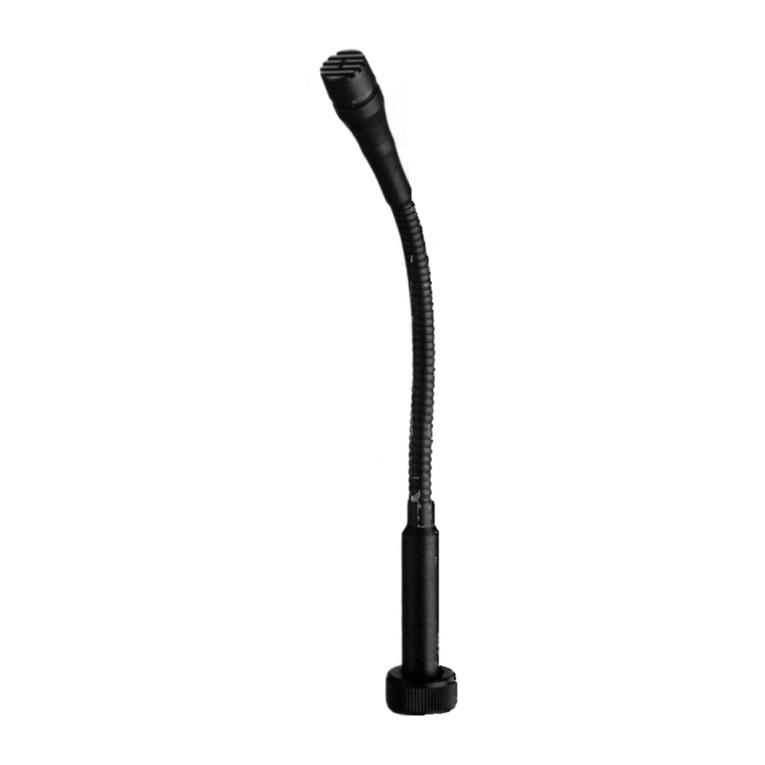
Audio Technica UniPoint AT857QMa User manual

Audio Technica

Audio Technica UniPoint AT857QMa User manual

Audio Technica ATR1500 User manual

Audio Technica

Audio Technica ATR1500 User manual

Audio Technica AT803 User manual

Audio Technica

Audio Technica AT803 User manual

Audio Technica AT813a User manual

Audio Technica

Audio Technica AT813a User manual

Audio Technica ATR Series User manual

Audio Technica

Audio Technica ATR Series User manual

Audio Technica Propoint PRO 44 User manual

Audio Technica

Audio Technica Propoint PRO 44 User manual

Audio Technica ATR2500x-USB User manual

Audio Technica

Audio Technica ATR2500x-USB User manual

Audio Technica AT2010 User manual

Audio Technica

Audio Technica AT2010 User manual

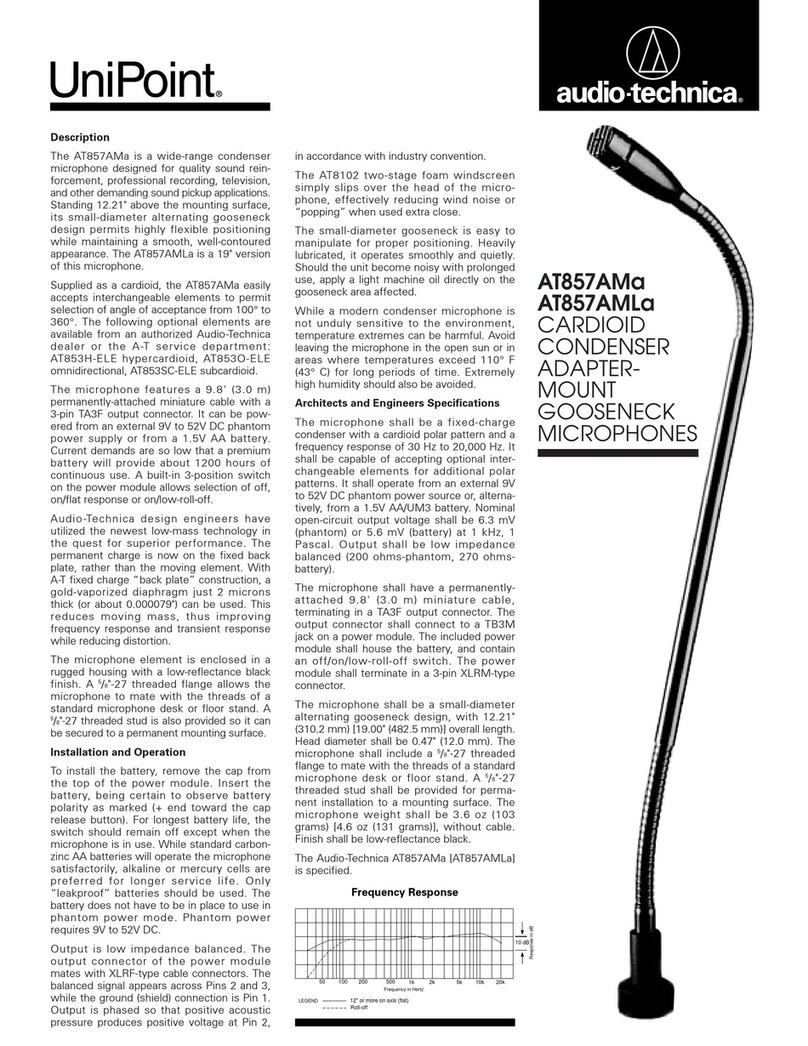
Audio Technica UniPoint AT857AMa User manual

Audio Technica

Audio Technica UniPoint AT857AMa User manual

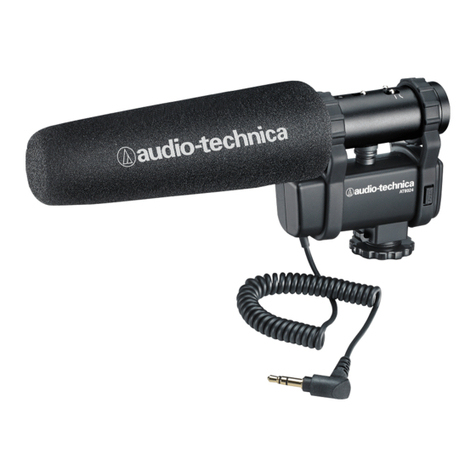
Audio Technica AT8024 User manual

Audio Technica

Audio Technica AT8024 User manual

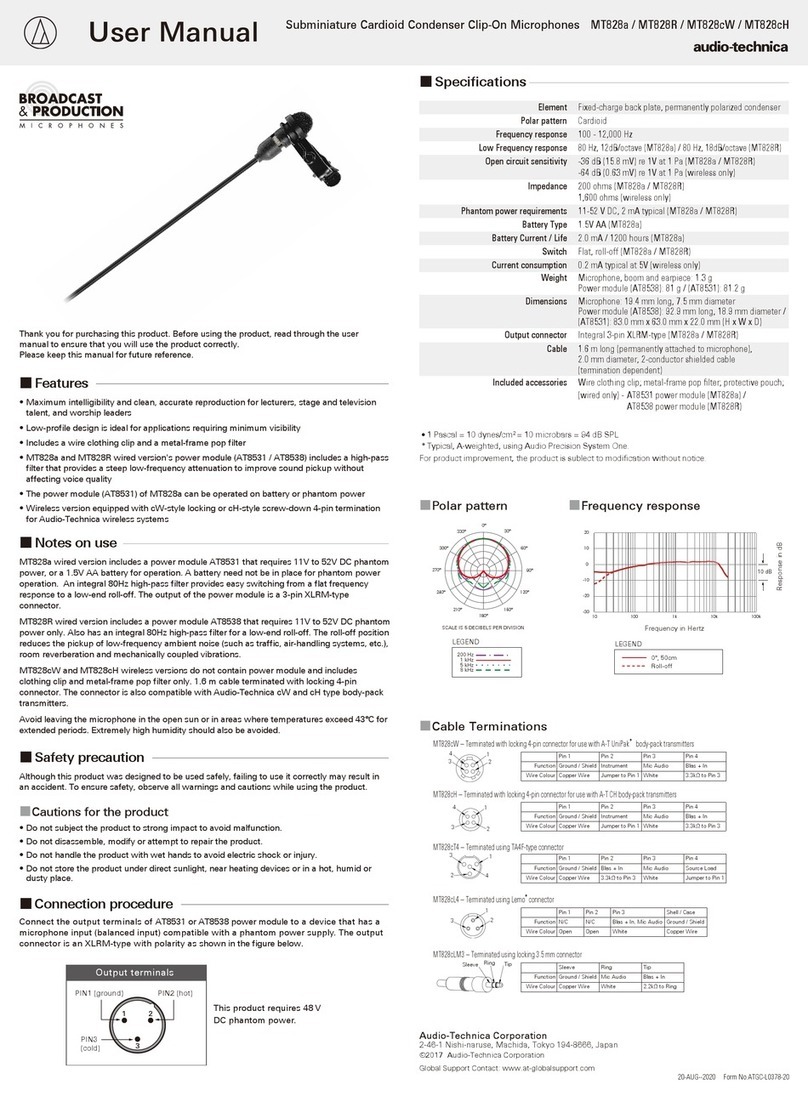
Audio Technica BROADCAST & PRODUCTION MT828a User manual

Audio Technica

Audio Technica BROADCAST & PRODUCTION MT828a User manual

Audio Technica unipoint U857Q User manual

Audio Technica

Audio Technica unipoint U857Q User manual

Audio Technica Engineered Sound AT935AMRx/C Owner's manual

Audio Technica

Audio Technica Engineered Sound AT935AMRx/C Owner's manual

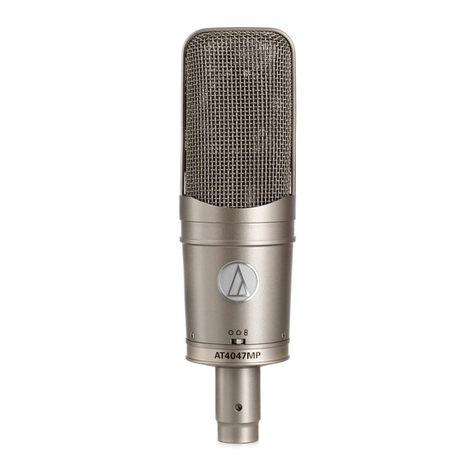
Audio Technica AT4047MP User manual

Audio Technica

Audio Technica AT4047MP User manual

Audio Technica UniPoint AT853a User manual

Audio Technica

Audio Technica UniPoint AT853a User manual

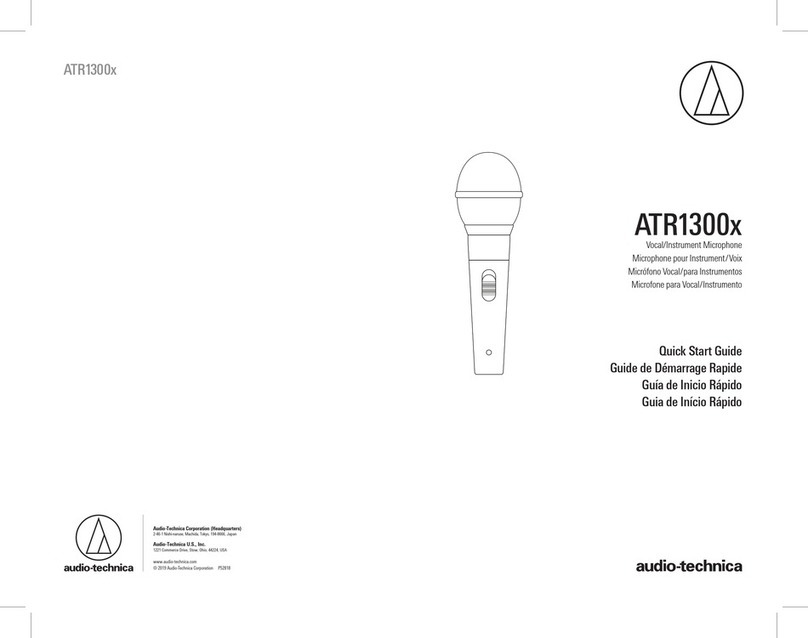
Audio Technica ATR1300x User manual

Audio Technica

Audio Technica ATR1300x User manual

Audio Technica Engineered Sound AT961R User manual

Audio Technica

Audio Technica Engineered Sound AT961R User manual

Audio Technica ES935 User manual

Audio Technica

Audio Technica ES935 User manual

Popular Microphone manuals by other brands

Betzold 760932 operating instructions

Betzold

Betzold 760932 operating instructions

Shure A88SM user guide

Shure

Shure A88SM user guide

JTS UF-10TH/12 instruction manual

JTS

JTS UF-10TH/12 instruction manual

Shure BETA 58A User giude

Shure

Shure BETA 58A User giude

Shure SM7 user guide

Shure

Shure SM7 user guide

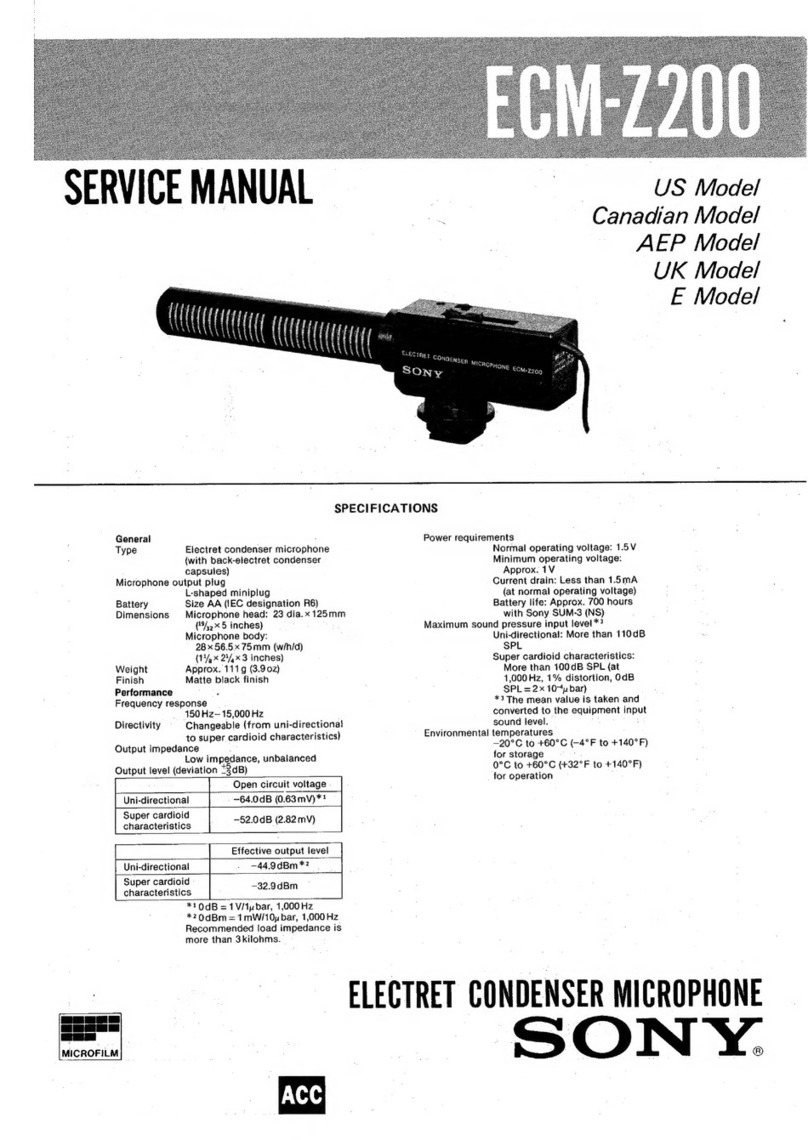
Sony ECM-Z200 Service manual

Sony

Sony ECM-Z200 Service manual

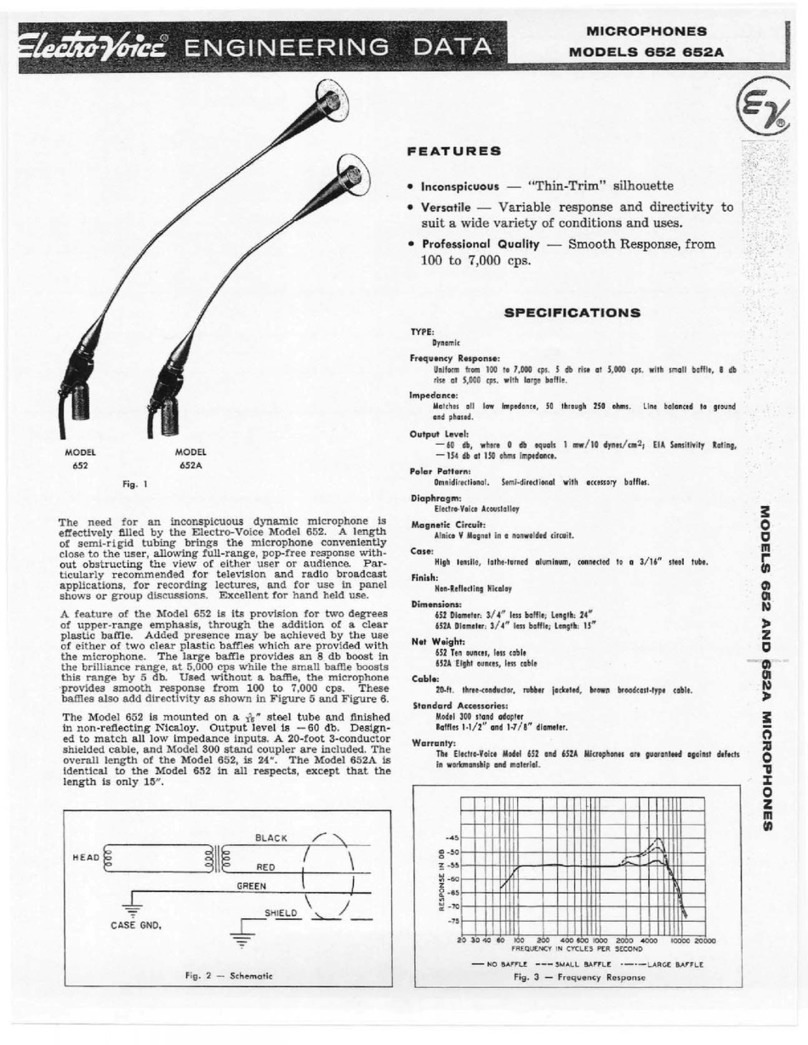
Electro-Voice 652 engineering data

Electro-Voice

Electro-Voice 652 engineering data

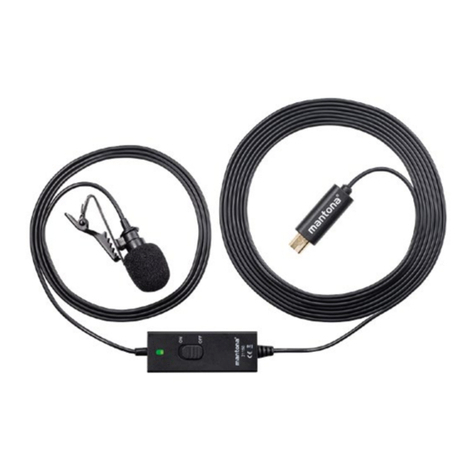
mantona 21150 instruction manual

mantona

mantona 21150 instruction manual

Loewe We. SEE 55 user manual

Loewe

Loewe We. SEE 55 user manual

IK Multimedia iRig Stream MIC PRO user manual

IK Multimedia

IK Multimedia iRig Stream MIC PRO user manual

DAPAudio RM-101 user manual

DAPAudio

DAPAudio RM-101 user manual

AKG CHM 21 User instructions

AKG

AKG CHM 21 User instructions

Sennheiser evolution wireless series EM 100 instruction manual

Sennheiser

Sennheiser evolution wireless series EM 100 instruction manual

Sony C-48 operating instructions

Sony

Sony C-48 operating instructions

GIGAMEDIA GGM PAMICUHFG user manual

GIGAMEDIA

GIGAMEDIA GGM PAMICUHFG user manual

Shure WH30TQG user guide

Shure

Shure WH30TQG user guide

auna PRO MIC-900 manual

auna PRO

auna PRO MIC-900 manual

Shure MV51 manual

Shure

Shure MV51 manual

manuals.online logo
manuals.online logoBrands
  • About & Mission
  • Contact us
  • Privacy Policy
  • Terms and Conditions

Copyright 2025 Manuals.Online. All Rights Reserved.
20 series studio microphones
AT2020 USB
USB Cardioid Condenser Side-Address Microphone
Features
• Side-address studio condenser with USB digital output (Windows
and Mac compatible)
• Ideal for podcasting, home studio recording, eld recording and
voiceover use
• Custom-engineered low-mass diaphragm provides extended
frequency response and superior transient response
• Low self-noise—perfectly suited for sophisticated digital
recording equipment
• Cardioid polar pattern reduces pickup of sounds from the sides
and rear, improving isolation of desired sound source
• Rugged design and construction for reliable performance
• Pivoting, threaded stand mount attaches securely for easy and
precise placement of the microphone
• Tripod desk stand with folding legs for secure and easily portable
tabletop use
Description
The AT2020 USB is a side-address xed-charge condenser microphone
with USB digital output (Windows and Mac compatible) and a cardioid
polar pattern. Designed to plug directly into a computer’s USB port, the
microphone is ideal for digitally capturing music or any audio source using
your favorite recording software. The microphone offers studio-quality
articulation and intelligibility perfect for home studio recording, eld
recording, podcasting and voiceover use.
The microphone requires USB Power (5V DC) for operation; this is
supplied through the computer’s USB port via the included USB cable.
The cardioid polar pattern of the microphone is more sensitive to sound
originating directly in front of the element, making it useful in controlling
feedback, reducing pickup of unwanted sounds and providing isolation
between performers.
The output of the microphone is a USB-type connector. The microphone
has a bit depth of 16 bits and a sample rate of 44.1 kHz.
The microphone includes a 3.1 m (10') USB cable that connects the
microphone to any computer with a USB port.
The microphone is enclosed in a rugged housing. The included pivoting
stand mount permits mounting on any microphone stand with 5/8"-27
threads. A tripod desk stand and a soft protective pouch are also included.

Operation and Maintenance
The AT2020 USB is designed to plug into a computer’s USB port.
Detailed instructions for setting up the microphone with Mac OS X,
Windows XP, and Windows Vista are included with the product and
available online at www.audio-technica.com.
It is important to position the microphone directly in line (on axis) with
the person speaking/ singing or instrument (or other sound source) to
achieve the best frequency response of the microphone. For use in
speaking/singing applications, the ideal placement for the microphone is
directly in front of the person speaking/singing. The same placement is
optimal when miking an instrument such as an acoustic guitar, drums or
piano. Experiment with different mic placements to nd the best sound
for your particular setup.
Set up the microphone with included pivot mount and tripod desk stand
as follows: First, screw the pivot mount onto the top of the tripod desk
stand. Next, place the tripod desk stand on a at surface. (The tripod
legs will extend to provide a wide, secure base.) Install the AT2020 USB
microphone into the threaded collar of the pivot mount and tighten collar
while holding the microphone in place. The front of the microphone
should be facing the sound source. (A USB icon and blue LED indicate
the front of the microphone; the product model number is displayed on
the rear of the microphone.) If necessary, adjust the microphone’s angle
with the pivot mount’s thumbscrew. Plug the provided USB cable into the
USB digital output at the base of the microphone.
Avoid leaving your microphone in the open sun or in areas where
temperatures exceed 110° F (43° C) for extended periods. Extremely high
humidity should also be avoided.
Architect’s and Engineer’s Specications
The microphone shall be a side-address xed-charge condenser with
USB output, designed to plug into a computer’s USB port. It shall have
a cardioid polar pattern with a uniform 120° angle of acceptance and a
frequency response of 20 Hz to 16,000 Hz. The microphone shall operate
from USB Power (5V DC) supplied through a computer’s USB port.
Output shall be of the USB type at 16 bit, 44.1 kHz.
The microphone shall be 162.0 mm (6.38") long and have a maximum
body diameter of 52.0 mm (2.05"). Weight shall be 374 grams (13.2 oz).
The microphone shall include a pivoting stand mount, a tripod desk stand
and a 3.1 m (10') USB cable.
The Audio-Technica AT2020 USB is specied.
AT2020 USB
Audio-Technica U.S., Inc., 1221 Commerce Drive, Stow, Ohio 44224
Audio-Technica Limited, Old Lane, Leeds LS11 8AG England
©2010 Audio-Technica U.S., Inc. audio-technica.com 0001-0205-01
Specications
polar pattern
frequency response: 20 –16,000 Hz
LEGEND
200 Hz
1 kHz
5 kHz
8 kHz
SCALE IS 5 DECIBELS PER DIVISION
240˚
180˚
210˚
270˚
300˚
330˚ 0˚
150˚
120˚
90˚
30˚
60˚
12" or more on axis
LEGEND
Frequency in Hertz
Response in dB
10 dB
100
50 200 10k
5k
1k
500 2k 20k
Fixed-charge back plate, permanently
polarized condenser
Cardioid
20-16,000 Hz
USB Power (5V DC)
16 bit
44.1 kHz
374 g (13.2 oz)
162.0 mm (6.38") long,
52.0 mm (2.05") maximum body diameter
USB-type
Pivoting stand mount for 5/8"-27 threaded
stands; 5/8"-27 to 3/8"-16 threaded
adapter; soft protective pouch; tripod
desk stand; 3.1 m (10') USB cable
Element
Polar pattern
Frequency response
Phantom power requirements
Bit depth
Sample rate
Weight
Dimensions
Output connector
Accessories furnished
In the interest of standards development, A.T.U.S.
offers full details on its test methods to other industry
professionals on request.
1 Pascal = 10 dynes/cm2 = 10 microbars = 94 dB SPL
Specications are subject to change without notice.
Federal Communications Commission Statement
Note: This equipment has been tested and found to comply with the limits for
a Class B digital device, pursuant to part 15 of the FCC Rules. These limits are
designed to provide reasonable protection against harmful interference in a resi-
dential installation. This equipment generates, uses and can radiate radio frequency
energy and, if not installed and used in accordance with the instructions, may cause
harmful interference to radio communications. However, there is no guarantee that
interference will not occur in a particular installation. If this equipment does cause
harmful interference to radio or television reception, which can be determined
by turning the equipment off and on, the user is encouraged to try to correct the
interference by one or more of the following measures:
— Reorient or relocate the receiving antenna.
— Increase the separation between the equipment and receiver.
— Connect the equipment into an outlet on a circuit different from that to
which the receiver is connected.
— Consult the dealer or an experienced radio/TV technician for help.
467