Model 110112 Page 3
Personal and Work Area Safety (continued)
F. While assembling and using the Carri-
er keep work area clean and well lighted.
Keep spectators and children out of the
work area.
3. Use of the Carrier
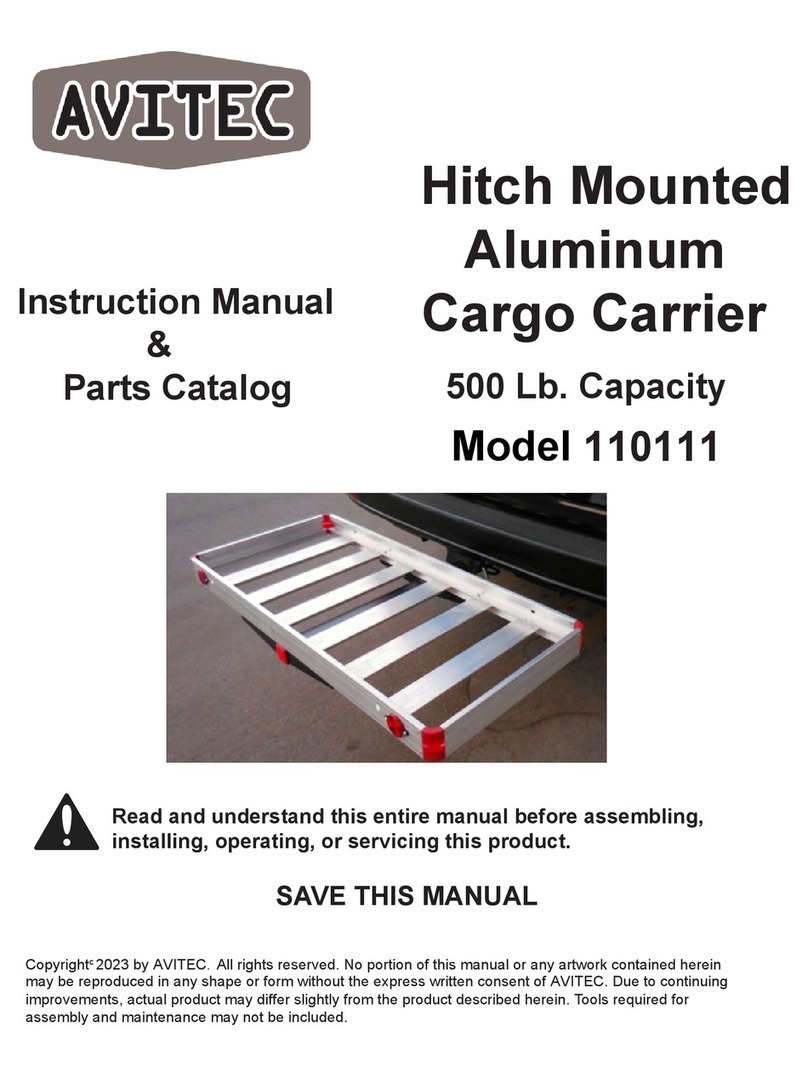
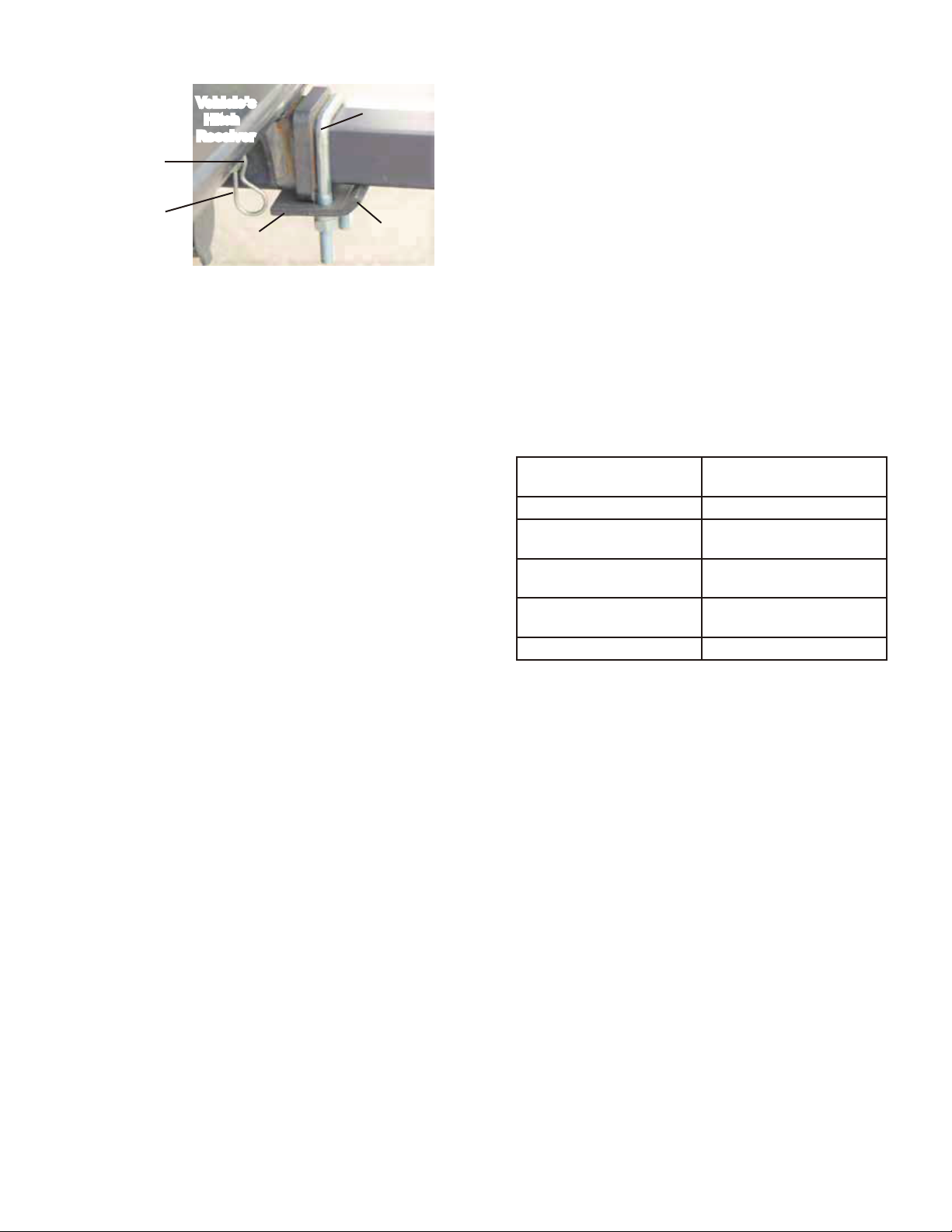
A. The Carrier must be attached to a 2”
x 2” Class III or Class IV hitch receiver.
The hitch must be properly installed by a
qualified service technician and be certified
to support the weight of this Carrier and its
contents (500 Lbs. capacity).
B. This Carrier is designed to transport mo-
bility wheelchairs and scooters, snow blow-
ers, lawn and garden equipment and similar
cargo. Do not modify the Carrier and do
not use this product for purposes that it
was not designed for.
C. Never exceed the maximum weight
capacity of 500 Lbs.
D. Be aware of the danger of “dynamic
loading”. This situation arises when a load
is dropped onto the Carrier, resulting in a
short term excessive load. Dynamic loading
can result in damage and failure of the Car-
rier and/or hitch receiver, and personal injury
to the person loading the Carrier.
E. Never load people or animals into the
Carrier. Keep children and spectators well
clear when loading and using this product.
F. Adhere to all Department of Transpor-
tation (D.O.T.) requirements when us-
ing this product. Use ropes and straps to
securely hold all cargo in place.
G. For the vehicle that will support the Car-
rier, read all pertinent vehicle instructions
and warnings provided in the owner’s manu-
al. Make sure the vehicle’s engine is OFF,
with parking brake set, before loading or
unloading the Carrier.
H. Note the position of the vehicle’s ex-
haust pipes before setting up the Carrier.
Make sure exhaust pipes are not in close
proximity of the Carrier; flammable goods
in the Carrier could catch on fire due to heat
from exhaust. If this risk exists on your ve-
hicle, do not use the Carrier.
I. Never ride on the equipment being
loaded or unloaded into the Carrier.
Slowly roll the equipment into and out of the
Carrier per the equipment manufacturer’s
instructions. Maneuvering a heavy wheel-
chair or other piece of equipment up and
down the Ramp can be strenuous and
dangerous. This should only be done by
individuals who are physically able to
handle the demands of this task.
J. Make sure that both legs of Ramp rest
solidly on a flat solid surface before at-
tempting to load and unload the Carrier.
K. The horizontal bottom side of Carrier
should not be higher than 14” from the
bottom of Ramp. Any attempt to use the
Ramp to load an object more than this 14”
vertical height is not safe.
L. Once Carrier is loaded, Ramp must be
in upright position and locked in place
with Pins and Lock Pins. The Ramp must
always be locked in the upright position
when the Carrier is being transported.
M. With Carrier attached to vehicle, never
exceed 55 MPH vehicle speed. Adhere to
all state and local vehicle regulations per-
taining to the use of carrier devices.