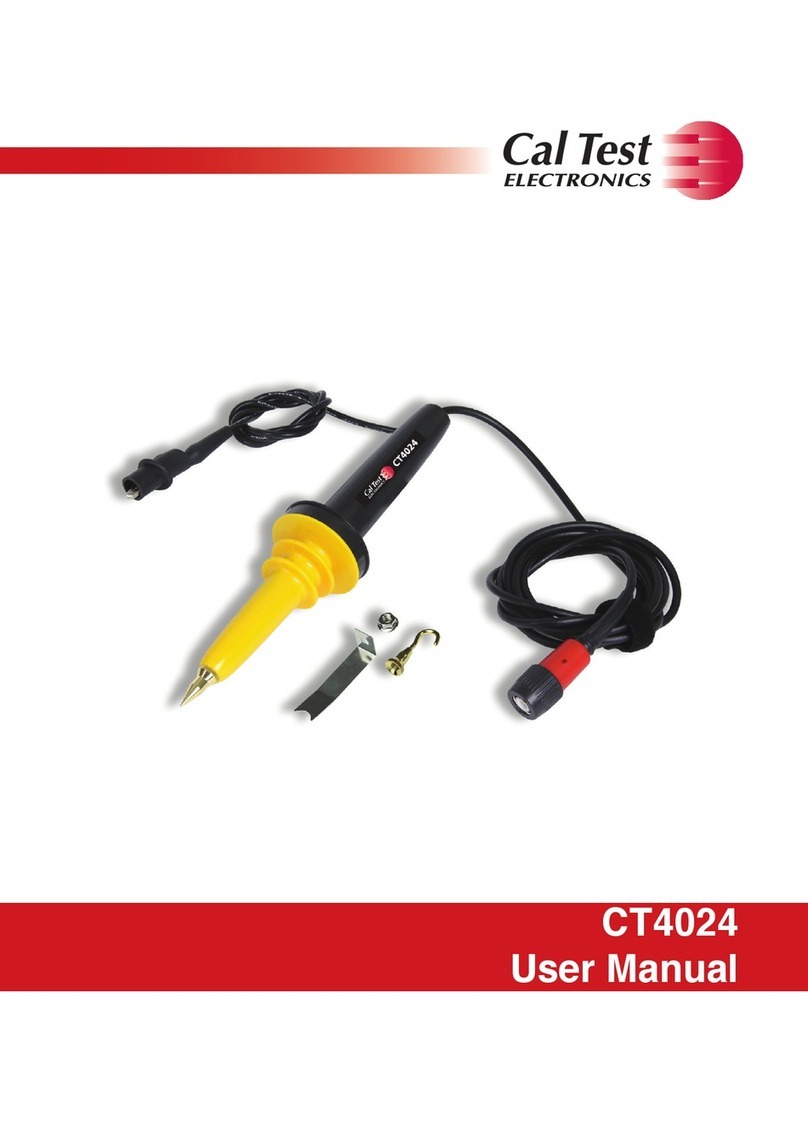
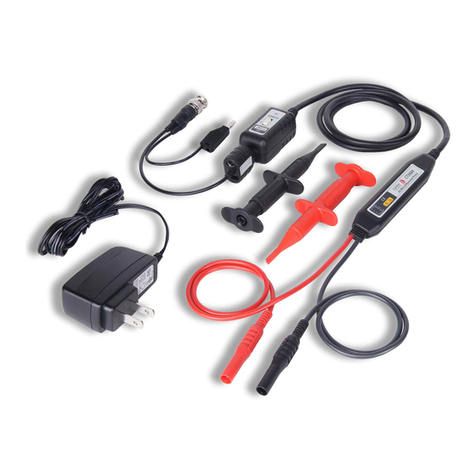
6CT2700A 40 kV High-Voltage DMM Probe User Manual
Safety Information
Usage Precautions
The high-voltage probe is designed to prevent accidental shock to the operator when
properly used. This operating note must be read and understood prior to using the
probe. Improper procedure or incorrect analysis of the measurement situation can result
in serious shock.
This high-voltage probe must only be used by personnel who are trained, experienced,
or otherwise qualified to recognize hazardous situations and who are trained to the safe-
ty precautions that are necessary to avoid possible injury when using such a device.
This high-voltage probe is designed for use with Measurement Category other than II, III
and IV only (formally CAT I). Do not use the probe for measurements performed on cir-
cuits defined by any other measurement category or transient overvoltages of more than
1500 V. Refer to IEC Measurement Category Definitions on page 7 for a definition of
measurement categories.
The ground lead is critical to the safe operation of the probe. Failure to make this
connection when making high-voltage measurements may result in personal injury or
damage to the probe or oscilloscope. This connection must always be made BEFORE
the probe tip comes in contact with the high voltage and must not be removed until the
probe tip has been removed from the high-voltage source.
Hands, shoes, floor, and work bench must be dry. Avoid making measurements under
humidity, dampness, or other environmental conditions that might affect safety.
To avoid injury, remove jewelry such as rings, watches, and other metallic objects. Do
not touch exposed connections and components when power is present.
Do not work alone when working with high-Voltage Circuits.
The probe is designed to be used in office-type indoor environments.
• Do not operate in the presence of noxious, corrosive, flammable fumes, gases, vapors,
chemicals, or finely-divided particulates.
• Hands, shoes, floor, and workbench must be dry. Avoid making measurements under
humid, damp, or other environmental conditions that might effect the safety of the
measurement situation.
• The probe body should be kept clean and free of any conductive contamination. Refer
to the section on cleaning.
To reduce the risk of shock or fire:
• Connect the probe to the oscilloscope before connecting probe to the circuit under
test. Disconnect the probe input from the circuit before disconnecting the probe from
the oscilloscope.
• Do not exceed the voltage rating category rating of the probe. Use only accessories
provided with probe.
WARNING
WARNING
WARNING
WARNING
WARNING
WARNING
WARNING
WARNING
WARNING