manuals.online logo
Brands
  1. Home
  2. •
  3. Brands
  4. •
  5. CanadianSolar
  6. •
  7. Solar Panel
  8. •
  9. CanadianSolar CS6P-245M User manual

CanadianSolar CS6P-245M User manual

This manual suits for next models

216

Other CanadianSolar Solar Panel manuals

CanadianSolar CS5AH-180M User manual

CanadianSolar

CanadianSolar CS5AH-180M User manual

CanadianSolar CS6P-PE User manual

CanadianSolar

CanadianSolar CS6P-PE User manual

CanadianSolar CS6P-P Series User manual

CanadianSolar

CanadianSolar CS6P-P Series User manual

CanadianSolar CS Series User manual

CanadianSolar

CanadianSolar CS Series User manual

CanadianSolar CS Series User manual

CanadianSolar

CanadianSolar CS Series User manual

CanadianSolar CS5AH User manual

CanadianSolar

CanadianSolar CS5AH User manual

CanadianSolar Standard CS1VMS User manual

CanadianSolar

CanadianSolar Standard CS1VMS User manual

CanadianSolar CSFDC-20-1218A1 User manual

CanadianSolar

CanadianSolar CSFDC-20-1218A1 User manual

CanadianSolar CS6K-275P User manual

CanadianSolar

CanadianSolar CS6K-275P User manual

CanadianSolar CS Series User manual

CanadianSolar

CanadianSolar CS Series User manual

CanadianSolar HiKu7 User manual

CanadianSolar

CanadianSolar HiKu7 User manual

CanadianSolar CS6A-P User manual

CanadianSolar

CanadianSolar CS6A-P User manual

CanadianSolar CS3U-MB-FG User manual

CanadianSolar

CanadianSolar CS3U-MB-FG User manual

CanadianSolar CS6K-245P-AG User manual

CanadianSolar

CanadianSolar CS6K-245P-AG User manual

CanadianSolar CS1V-MS User manual

CanadianSolar

CanadianSolar CS1V-MS User manual

CanadianSolar Standard CS3U-P User manual

CanadianSolar

CanadianSolar Standard CS3U-P User manual

CanadianSolar CS3W-PB-AG Series User manual

CanadianSolar

CanadianSolar CS3W-PB-AG Series User manual

CanadianSolar CS3U-MS-FG User manual

CanadianSolar

CanadianSolar CS3U-MS-FG User manual

CanadianSolar CS3U-350MB-AG User manual

CanadianSolar

CanadianSolar CS3U-350MB-AG User manual

CanadianSolar CS6R-MB-AG User manual

CanadianSolar

CanadianSolar CS6R-MB-AG User manual

CanadianSolar CS1V-MS User manual

CanadianSolar

CanadianSolar CS1V-MS User manual

CanadianSolar CS3U-P User manual

CanadianSolar

CanadianSolar CS3U-P User manual

CanadianSolar CS3U-MB-FG User manual

CanadianSolar

CanadianSolar CS3U-MB-FG User manual

CanadianSolar CS3W-PB-AG Series User manual

CanadianSolar

CanadianSolar CS3W-PB-AG Series User manual

Popular Solar Panel manuals by other brands

O.N 23.8757.15 user manual

O.N

O.N 23.8757.15 user manual

PV-ezRack DFendr installation guide

PV-ezRack

PV-ezRack DFendr installation guide

Navitron HFC-2 installation instructions

Navitron

Navitron HFC-2 installation instructions

AXITEC 60-CELL installation manual

AXITEC

AXITEC 60-CELL installation manual

thermital TSOL 20 N BLU installation instructions

thermital

thermital TSOL 20 N BLU installation instructions

moovo KSM001 Installation and use instructions and warnings

moovo

moovo KSM001 Installation and use instructions and warnings

AZO Digital MPPT-3000 operating manual

AZO Digital

AZO Digital MPPT-3000 operating manual

Clenergy PV-ezRack SolarTripod installation guide

Clenergy

Clenergy PV-ezRack SolarTripod installation guide

Beretta SCF-20N installation manual

Beretta

Beretta SCF-20N installation manual

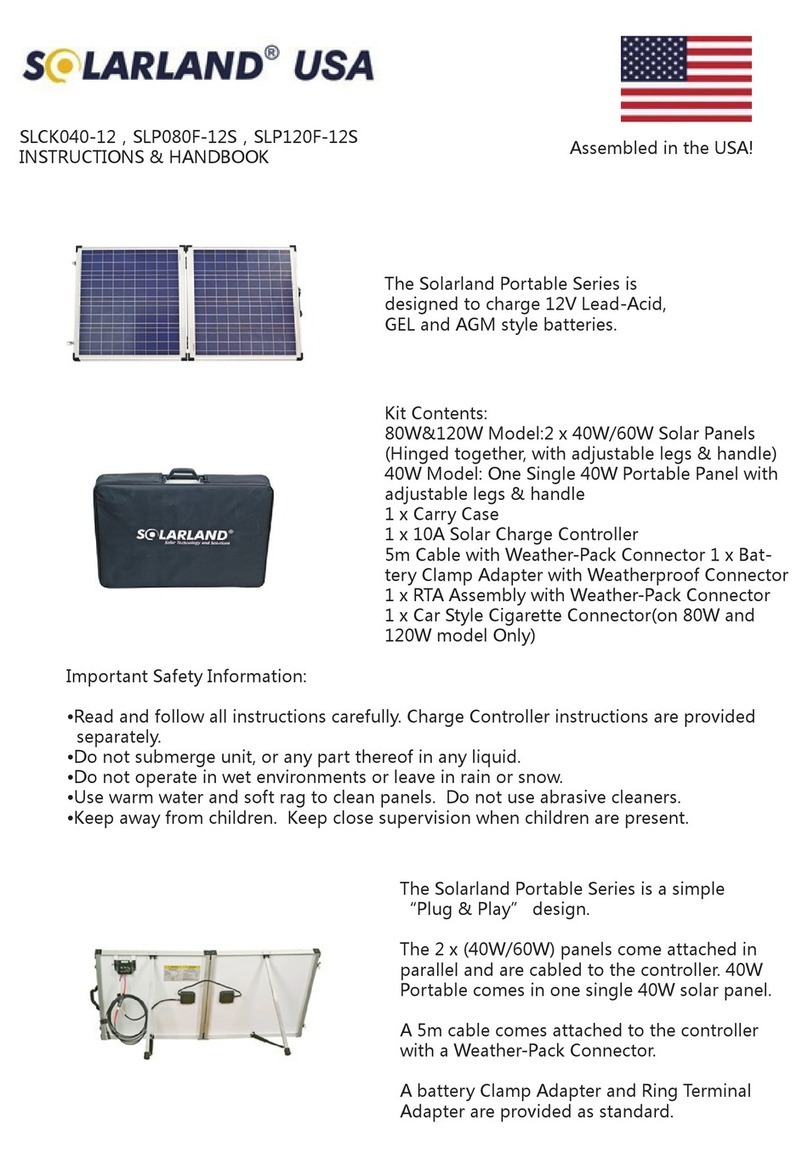
Solarland Portable Series Instruction handbook

Solarland

Solarland Portable Series Instruction handbook

Ubiquiti sunMAX user guide

Ubiquiti

Ubiquiti sunMAX user guide

Sonnenkraft GK5-HP manual

Sonnenkraft

Sonnenkraft GK5-HP manual

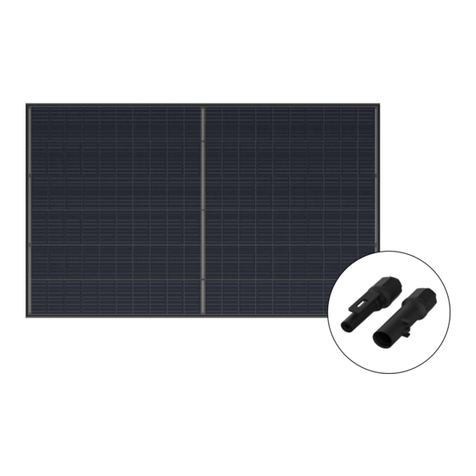
REC TwinPeak 2S Mono 72 Series installation instructions

REC

REC TwinPeak 2S Mono 72 Series installation instructions

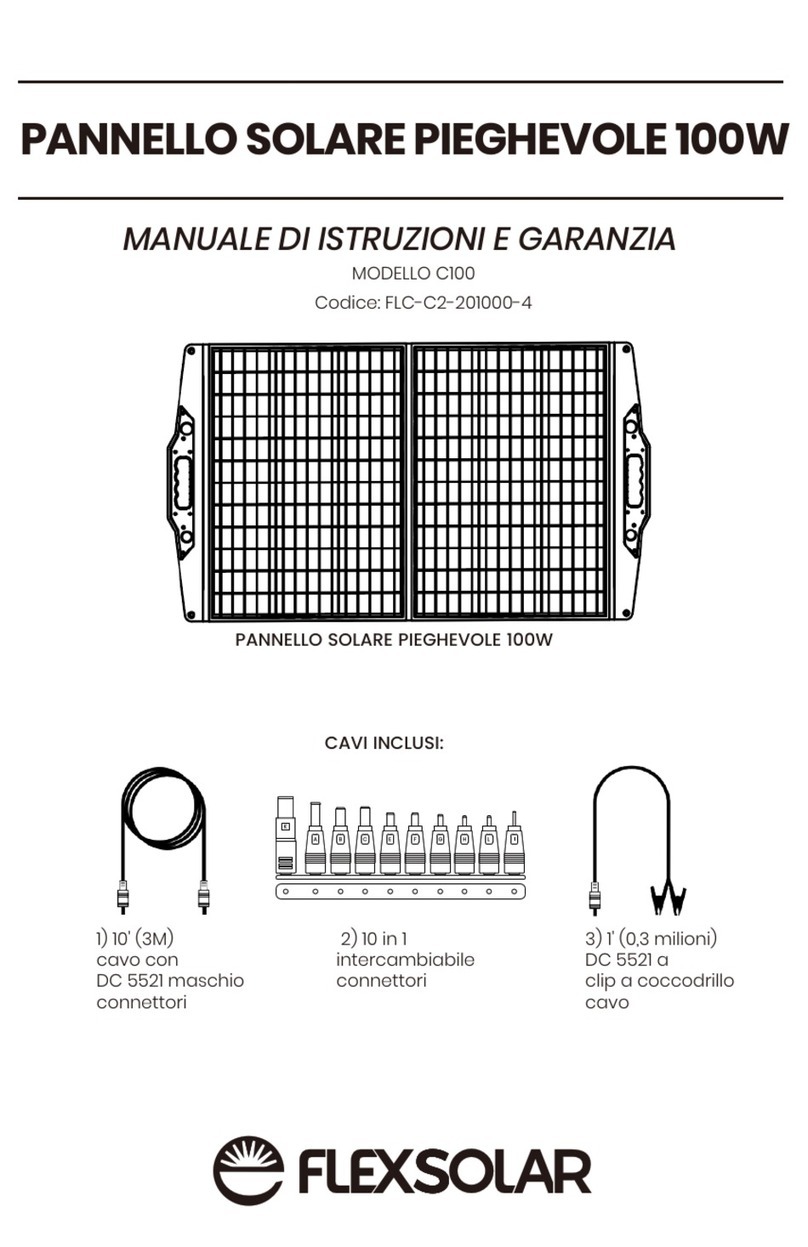
Flexsolar C100 Instruction manual & warranty

Flexsolar

Flexsolar C100 Instruction manual & warranty

Energizer HardCase Sunpack 120W user guide

Energizer

Energizer HardCase Sunpack 120W user guide

solarwatt EasyIn 60M Series installation instructions

solarwatt

solarwatt EasyIn 60M Series installation instructions

Mission Solar Energy MONO Series Installation and user manual

Mission Solar Energy

Mission Solar Energy MONO Series Installation and user manual

Wiedenmann Favorit XP Translation of original operating instructions

Wiedenmann

Wiedenmann Favorit XP Translation of original operating instructions

manuals.online logo
manuals.online logoBrands
  • About & Mission
  • Contact us
  • Privacy Policy
  • Terms and Conditions

Copyright 2025 Manuals.Online. All Rights Reserved.

INSTALLATION MANUAL
OF STANDARD SOLAR
MODULES
For professional use only
EN-Rev IM/GN-AM-EN/1.1 Copyright © October 2017. Canadian Solar Inc.
2
|
1.0 GENERAL INFORMATION
1.1 INSTALLATION MANUAL DISCLAIMER
1.2 LIMITATION OF LIABILITY
2.0 SAFETY PRECAUTIONS
3.0 MECHANICAL / ELECTRICAL SPECIFICATIONS
4.0 UNPACKING AND STORAGE
5.0 MODULE INSTALLATION
5.1 MODULE WIRING
5.2 GROUNDING
6.0 MOUNTING INSTRUCTIONS
6.1 MOUNTING METHOD: BOLTING
7.0 MAINTENANCE
AMENDED EDITIONS AND DATES
1.0 GENERAL INFORMATION |3
|3
|3
|3
|3
|4
|5
|6
|7
|9
|10
|11
|13
|13
www.canadiansolar.com
|
3
1.0
GENERAL INFORMATION
This general manual provides important safety
information relating to the installation, maintenance
and handling of CS-series solar modules.
Professional installer must read these guidelines
carefully and strictly follow these instructions.
Failure to follow these instructions may result in
death, injury or property damage. The installation
and handling of PV modules requires professional
skills and should only be performed by qualied
professionals. The installers must inform end–users
(consumers) the aforesaid information accordingly.
The word "module" or "PV module" used in this
manual refers to one or more CS-series solar
modules.
This manual is only valid for the module types
CS1V-MS, CS1K-MS, CS3U-P, CS3U-MS, CS3K-P, CS3K-
MS, CS6A-P, CS6A-M, CS6V-P, CS6V-M, CS6P-P, and
CS6P-M, CS6K-P, CS6K-M, CS6X-P, CS6X-M, CS6K-MS,
CS6V-MS, CS6A-MS, CS6U-P and CS6U-M.
Please retain this manual for future reference.
We recommend checking www.canadiansolar.com
regularly for the most updated version.
1.1
INSTALLATION MANUAL DISCLAIMER
The information contained in this manual is subject
to change by Canadian Solar Inc. without prior
notice. Canadian Solar Inc. gives no warranty of any
kind whatsoever, either explicitly or implicitly,
with respect to the information contained herein.
In the event of any inconsistency among different
language versions of this document, the English
version shall prevail. Please refer to our product lists
and documents published on our website at: http://
www.canadiansolar.com as these lists are updated
on a regular basis.
1.2
LIMITATION OF LIABILITY
Canadian Solar Inc. shall not be held responsible for
damages of any kind, including – without limitation
– bodily harm, injury or damage to property, in
connection with handling PV modules, system
installation, or compliance or non-compliance with
the instructions set forth in this manual.
2.0
SAFETY PRECAUTIONS
Warning
Before attempting to install, wire, operate
and / or service the module and other
electrical equipment, all instructions should be
read and understood. PV module connectors pass
direct current (DC) when exposed to sunlight or
other light sources. Contact with electrically active
parts of the module, such as terminals, can result in
injury or death, irrespective of whether or not the
module and the other electrical equipment have
been connected.
AVERTISSEMENT:
Toutes les instructions devront être lues
et comprises avant de procéder à
l’installation, le câblage, l’exploitation et/ou l’entretien
des panneaux. Les interconnexions des panneaux
conduisent du courant continu (CC) lorsque le
panneau est exposé à la lumière du soleil ou à
d’autres sources lumineuses. Tout contact avec des
éléments sous tension du panneau tels que ses
bornes de sortie peut entraîner des blessures ou la
mort, que le panneau soit connecté ou non.
GENERAL SAFETY
· All modules must be installed by licensed
electricians in accordance to the applicable
electrical codes such as, the latest National
Electrical Code (USA) or Canadian Electric Code
(Canada) or other national or international
applicable electrical codes.
Protective clothing (non-slip gloves,
clothes, etc.) must be worn during
installation to prevent direct contact with
30 V DC or greater, and to protect hands
from sharp edges.
Prior to installation, remove all metallic
jewelry to prevent accidental exposure to
live circuits.
When installing modules in light rain,

EN-Rev IM/GN-AM-EN/1.1 Copyright © October 2017. Canadian Solar Inc.
4
|
morning dew, take appropriate measures
to prevent water ingress into the
connector.
Do not allow children or unauthorized
persons near the installation site or
storage area of modules.
· Do not install modules in strong wind.
· Use electrically insulated tools to reduce the risk
of electric shock.
· If the disconnects and Over Current Protection
Device (OCPD)'s cannot be opened or the inverter
cannot be powered down, cover the fronts of the
modules in the PV array with an opaque material
to stop the production of electricity when installing
or working on a module or wiring.
· Do not use or install damaged modules.
· Contact with module surfaces or frames may cause
electric shock if the front glass is broken or the
backsheet is torn.
· The PV module does not contain any serviceable parts.
Do not attempt to repair any part of the module.
· Keep the junction box cover closed at all times.
· Do not disassemble a module or remove any
module part.
· Do not articially concentrate sunlight on a module.
· Do not connect or disconnect modules when current
from the modules or an external source is present.
3.0
MECHANICAL / ELECTRICAL
SPECIFICATIONS
Module electrical ratings are measured under
Standard Test Conditions (STC) of 1000 W/m2
irradiance, with an AM1.5 spectrum, and a cell
temperature of 25°C. Detailed electrical and
mechanical characteristics of Canadian Solar Inc.
crystalline silicon PV modules can be found in
our Installation Manual Annex ( Section Annex C:
Module Specications) on www.canadiansolar.com.
Main electrical characteristics at STC are also stated
on each module label. Please refer to the datasheet
or the product nameplate for the maximum system
voltage.
Under certain conditions, a module may produce
more current or voltage than under its Standard Test
Condition's rated power. As a result, the module
short-circuit current under STC should be multiplied
by 1.25, and a correction factor should be applied to
the open-circuit voltage (see Table 1 below), when
determining component ratings and capacities.
Depending on your local regulations, an additional
1.25 multiplier for the short-circuit current (giving
a total multiplier of 1.56) may be applicable when
sizing conductors and fuses.
Lowest Expected Ambient Temperature (°C/°F) Correction Factor
24 to 20 / 76 to 68 1.02
19 to 15 / 67 to 59 1.04
14 to 10 / 58 to 50 1.06
9 to 5 / 49 to 41 1.08
4 to 0 / 40 to 32
-1 to -5 / 31 to 23
1.10
1.12
-6 to -10 / 22 to 14 1.14
-11 to -15 / 13 to 5 1.16
-16 to -20 / 4 to -4 1.18
-21 to -25 / -5 to -13 1.20
-26 to -30 / -14 to -22 1.21
-31 to -35 / -23 to -31 1.23
-36 to -40 / -32 to -40 1.25
Table 1: Low temperature correction factors for open-circuit voltage
www.canadiansolar.com
|
5
Alternatively, a more accurate correction factor for
the open-circuit voltage can be calculated using the
following formula:
Tis the lowest expected ambient temperature at the
system installation site
αVoc (%/ºC) is the voltage temperature coecient
of the selected module (refer to corresponding
datasheet)
Electrical calculations and design must be performed
by competent engineer or consultant.
4.0
UNPACKING AND STORAGE
PRECAUTIONS
· Modulesshould be stored in a dry and ventilated
environment to avoid direct sunlight and
moisture. If modules are stored in an uncontrolled
environment, the storage time should be less than
3 months and extra precautions should be taken
to prevent connectors from being exposed to
moisture or sunlight.
· Unpack module pallets carefully, following the
steps shown on the pallet. Unpack, transport and
store the modules with care.
· Modules must always be unpacked and installed by
two people. Always use both hands when handling
modules.
· Do not stand, step, walk and / or jump on
modules under any circumstances. Localized heavy
loads may cause severe micro-cracks at cell level,
which in turn may compromise module reliability
and void Canadian Solar Inc’s warranty.
· Do not support the backsheet when handling or
installing the module.
· Do not carry modules on your head.
· Do not drop or place objects (such as tools) on the
modules.
· Do not lift modules by their wires or junction box,
lift them by the frame.
· Stacks of modules should contain no more than 12
modules, and the frames should be aligned.
· Do not place excessive loads on the module or
twist the module frame.
· Do not use sharp instruments on the modules.
Particular care should be taken to avoid module
backsheets being damaged by sharp objects, as
scratches may directly affect product safety.
· Do not leave modules unsupported or unsecured.
· Do not change the wiring of bypass diodes.
· Keep all electrical contacts clean and dry at all
times.
PRODUCT IDENTIFICATION
· Each module has three identical barcodes (one in
the laminate under the front glass, the second on
the rear side of the module and the third on the
frame) that act as a unique identier. Each module
has a unique serial number containing 13 (pre
March 2013) or 14 (post March 2013) digits.
CVOC = 1-αVoc ˣ (25 - T)
EN-Rev IM/GN-AM-EN/1.1 Copyright © October 2017. Canadian Solar Inc.
6
|
· A nameplate is also axed to the rear of each mo-
dule. This nameplate species the model type, as
well as the main electrical and safety characteristics
of the module.
5.0
MODULE INSTALLATION
PRECAUTIONARY MEASURES AND
GENERAL SAFETY
· Prior to installing modules please obtain
information about any requirements and
necessary approvals for the site, installation and
inspection from the relevant authorities.
· Check applicable building codes to ensure that the
construction or structure (roof, facade, support,
etc.) can bear the module system load.
· CS-series solar modules have been qualied for
Application Class A (equivalent to Safety Class II
requirements). Modules rated under this class
should be used in systems operating at voltage
above 50 V or power above 240 W, where general
contact access is anticipated.
· Canadian Solar Inc. modules have been certified
as Type 1 or Type 4 according to UL 1703 and
Class C according to IEC 61730-2, please refer to
the datasheet or the product nameplate for the
detailed types.
· Consult your local authority for guidelines and
requirements for building or structural fire safety.
UL 1703 SYSTEM FIRE RATING REQUIREMENTS
· A photovoltaic systems composed of UL 1703
certified modules mounted on a UL 2703
certified mounting system should be evaluated
in combination with roof coverings in accordance
with UL 1703 standard, with respect to meeting the
same fire classification as the roof assembly.
· Mounting systems with a System Fire Class Rating
(Class A, B or C), tested in conjunction with fire
rated “Type 1” or “Type 4” rated modules, are
considered acceptable for use with Canadian Solar
Inc. modules, provides the mounting system does
not violate any other requirements of this manual.
· Any mounting system limitations on inclination or
accessories required to maintain a specific System
Fire Class Rating should be clearly specified in the
installation instructions and UL 2703 certification
of the mounting system supplier.
· When installing modules, ensure the supporting
roof has a re resistant roof covering rated for the
application.
· The re rating for this module is only valid
when the product is installed as specied in the
mechanical mounting instructions.
ENVIRONMENTAL CONDITIONS
· The module is intended for use in general
open-air climates, as dened in IEC 60721-2-1:
Classication of environmental conditions Part-2-1:
Environmental conditions appearing in nature -
Temperature and humidity.
· Please consult the Canadian Solar Inc. technical
support department for more information on the
use of modules in special climates.
Do not install modules near open
ames or ammable materials.
Do not immerse modules in water or
constantly expose modules to water
(either fresh or salt) (i.e. from fountains,
sea spray).
· Exposing modules to salt (i.e. marine environments)
or sulfur (i.e. sulfur sources, volcanoes) incurs the
risk of module corrosion.
· Failure to comply with these instructions will void
Canadian Solar Inc. warranty.
INSTALLATION REQUIREMENTS
· Ensure that the module meets the general technical
system requirements.
· Ensure that other system components do not
damage the module mechanically or electrically.
www.canadiansolar.com
|
7
· Modules can be wired in series to increase voltage
or in parallel to increase current. To connect modules
in series, connect the cables from the positive
terminal of one module to the negative terminal
of the next module. To connect in parallel,
connect the cables from the positive terminal of
one module to the positive terminal on the next
module.
· The quantity of bypass diodes in the module's
junction box may vary depending on the model
series.
· Only connect the quantity of modules that corres-
ponds to the voltage specications of the inverters
used in the system. In addition modules should not
be connected together to create a voltage higher
than the maximum permitted system voltage
stated on the module nameplate, even under the
worst local temperature conditions (see Table 1
for the correction coecients that apply to open-
circuit voltage).
· A maximum of two strings can be connected in
parallel without the need to incorporate an over-
current protection device (fuses, etc.) in series
within each string. Three or more strings can be
connected in parallel if an appropriate, certied
over-current protection device is installed in series
within each string.
· Only modules with similar electrical outputs
should be connected in the same string to avoid or
minimize mismatch effects in arrays.
· To minimize risk in the event of an indirect
lightning strike, avoid forming loops with the
wiring when designing the system.
· The recommended maximum series fuse rating is
stated in a table in the Annex C.
· Modules should be safely xed to bear all expected
loads, including wind and snow loads.
· A minimum clearance of 6.5 mm (0.25 in) between
modules is required to allow for thermal expansion
of the frames.
· The small drainage holes on the underside of the
module must not be blocked.
OPTIMUM ORIENTATION AND TILT
· To maximize your annual yield, nd out the
optimum orientation and tilt for PV modules
in your region. The highest yields are achieved
when sunlight shines perpendicularly onto the PV
modules.
AVOID SHADING
· Even minor partial shading (e.g. from dirt deposits)
reduces yields. A module can be considered to be
unshaded if its entire surface is free from shading
all year round. Sunlight should be able to reach the
module even on the shortest day of the year.
· Constant shading conditions can affect module
service lifetime, due to accelerated ageing of the
encapsulation material and thermal stress on the
bypass diodes.
RELIABLE VENTILATION
· Sucient clearance (at least 10 cm (3.94 in))
between the module frame and the mounting
surface is required to allow cooling air to circulate
around the back of the module. This also enables
condensation or moisture to dissipate.
· According to UL 1703, any other specic clearance
required for maintaining a system re rating
should prevail. Detailed clearance requirements
pertaining to system re ratings must be provided
by your racking supplier.
5.1
MODULE WIRING
CORRECT WIRING SCHEME
· Ensure that the wiring is correct before starting up the
system. If the measured open circuit voltage (Voc) and
short-circuit current (Isc) differ substantially from the
specifications, this indicates that there is a wiring fault.
· When modules have been pre-installed but the system
has not been connected to the grid yet, each module
string should be kept under open-circuit conditions
and proper actions should be taken to avoid dust and
EN-Rev IM/GN-AM-EN/1.1 Copyright © October 2017. Canadian Solar Inc.
8
|
Module types Standard cables Optional cables
CS3U-P, CS3U-MS, CS3K-P, CS3K-MS
Leap-frog
Table 2: System Cable Scheme for CS3U and CS3K modules
The maximum distance between two adjacent module frames should be within 50 mm (1.96in) for side with
mounting clamps, and within 25 mm (0.98in) for side without mounting clamps, in order to meet system cable
scheme.
moisture penetration inside the connectors.
· For CS3U and CS3K series modules, Canadian Solar Inc.
offers optional cable specifications to match various
system configurations. Recommended system cable
schemes are shown in Table 2 below:
· For CS1V and CS1K series modules, recommended
system cable schemes are shown in Table 3:
Table 3: System Cable Scheme for CS1V and CS1K modules
Module types Standard cables
CS1V-MS, CS1K-MS
www.canadiansolar.com
|
9
CORRECT CONNECTION OF PLUG CONNECTORS
· Make sure that all connections are safe and
properly mated. The PV connector should not be
subjected to stress from the exterior. Connectors
should only be used to connect the circuit. They
should never be used to turn the circuit on and off.
· Connectors are not waterproof when unmated.
When installing modules, connector should be
connected to each other as soon as possible or
appropriate measures should be taken to avoid
moisture and dust penetrating into the connector.
USE OF SUITABLE MATERIALS
· Only use dedicated solar cable and suitable
connectors (wiring should be sheathed in a
sunlight-resistant conduit or, if exposed, should be
sunlight-resistant itself) that meet local fire, building
and electrical regulations. Please ensure that
all wiring is in perfect electrical and mechanical
condition.
· Installers may only use single-conductor cable
listed and labeled as USE-2 or PV wire which
is 90°C wet rated in North America, and single
conductor cable, 2.5-16 mm² (5-14 AWG ), 90°C wet
rated in other areas (i.e. TUV 2PfG1169 or EN50618
approved), with proper insulation which is able to
withstand the maximum possible system open-
circuit voltage.
· Only copper conductor material should be used.
Select a suitable conductor gauge to minimize
voltage drop and ensure that the conductor
ampacity complies with local regulations (i.e. NEC
690.8(D)).
CABLE AND CONNECTOR PROTECTION
· Secure the cables to the mounting system using
UV-resistant cable ties. Protect exposed cables
from damage by taking appropriate precautions
(e.g. placing them inside a metallic raceway like
EMT conduit). Avoid exposure to direct sunlight.
· A minimum bending radius of 60 mm (2.36 in) is
required when securing the junction box cables to
the racking system.
· Do not place connectors in locations where water
could easily accumulate.
5.2
GROUNDING
· For grounding requirements in North America,
a module with exposed conductive parts is
considered to comply with UL 1703 only when
it is electrically grounded in accordance with
both the instructions presented below and the
requirements of the National Electrical Code. Any
grounding means used with Canadian Solar Inc.
modules should be NRTL certied to UL 467 and
UL 2703 standards. Please consult our technical
service team for the formal approval process.
· For grounding requirements in other areas,
although the modules are certied to Safety Class
II, we recommend them to be grounded and
that module installation should comply with all
applicable local electrical codes and regulations.
· Grounding connections should be installed by a
qualied electrician.
· Connect module frames together using adequate
grounding cables: we recommend using 4-14 mm²
(AWG 6-12) copper wire. Holes provided for this
purpose are identied with a grounding symbol
(IEC 61730-1). All conductive connection
junctions must be rmly xed.
· Do not drill any extra ground holes for
convenience this will void the modules warranty.
· All bolts, nuts, at washers, lock washers and other
relevant hardware should be made of stainless
steel, unless otherwise specied.
· Canadian Solar Inc. does not provide grounding
hardware.
· One grounding method is recommended for
Canadian Solar Inc. standard modules, as
described below. For alternative grounding
methods, please refer to Annex B (Alternative
Grounding Methods) on the website (www.
canadiansolar.com). It is not possible to use
standard grounding methods for certain module
ranges. Please refer to Annex B for more details.
EN-Rev IM/GN-AM-EN/1.1 Copyright © October 2017. Canadian Solar Inc.
10
|
1. To x the wire between
the at washer and
cup washer, place the
cup washer (concave
side up) between the
frame and the wire.
2. Then tighten the bolt
using the toothed nut.
· A grounding kit containing an M5 (3/16") SS cap
bolt, an M5 (3/16") SS at washer, an M5 (3/16") SS
cup washer, and an M5 (3/16") SS nut (with teeth)
is used to attach copper grounding wire to a pre-
drilled grounding hole on the frame (see image
below).
· Place the wire between the at washer and the cup
washer. Ensure that the cup washer is positioned
between the frame and the wire with the concave
side up to prevent galvanic corrosion. Tighten the
bolt securely using the SS toothed nut. A wrench may
be used to do this. The tightening torque is 3-7 Nm
(2.2-5.2 ft-lbs).
6.0
MOUNTING INSTRUCTIONS
· The mounting design must be certied by a
registered professional engineer. The mounting
design and procedures must comply with all
applicable local codes and requirements from all
relevant authorities.
· The module is considered to be in compliance with
UL 1703 and IEC 61215 only when the module is
mounted in the manner specied by the mounting
instructions included in this installation manual.
· Any module without a frame (laminate) shall not be
considered to comply with the requirements of UL
1703 unless the module is mounted with hardware
that has been tested and evaluated with the
module under this standard or by a eld inspection
certifying that the installed module complies with
the requirements of UL 1703.
· Canadian Solar Inc. does not provide mounting
hardware.
· Standard modules can be mounted onto a
support structure using one of several approved
methods. One of such methods is described below.
For details of other mounting methods and the
methods recommended by Canadian Solar Inc. for
special module ranges, please refer to the Annex
A (Alternative Mounting Methods) on our website
(www.canadiansolar.com). For information about
other installation methods, please contact your
local representative. Failure to use a recognized
installation method will void the Canadian Solar Inc.
warranty.
· Use appropriate corrosion-proof fastening
materials. All mounting hardware (bolts, spring
washers, at washers, nuts) should be hot dip
galvanized or stainless steel.
· Use a torque wrench for installation.
· Do not drill additional holes or modify the module
frame. Doing so will void the warranty.
· Standard modules can be installed in either
landscape or portrait orientations. Refer to the
detailed instructions for further guidance. Please
note that in areas with heavy snowfall (> 2400 Pa)
further countermeasures such the use of additional
support bars should be considered to avoid snow
loads damaging the lowest row of modules.
· In cases where an additional support bar is
recommended to improve both mechanical
stability and long-term module performance, we
recommend selecting a suciently resistant
material. Canadian Solar Inc. recommends bars
with a minimum thickness of 50 mm (1.97 in).
The support bar centerline should be positioned
within 100 mm (3.94 in) of the side frame centerline
GROUNDING METHOD:
BOLT + TOOTHED NUT + CUP WASHER.