EN - 7AQUACIATPOWER
4.1 Control boards
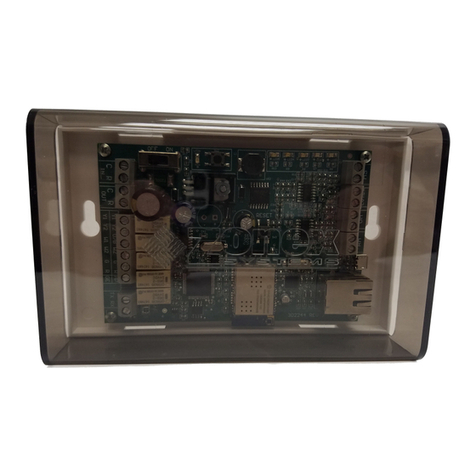
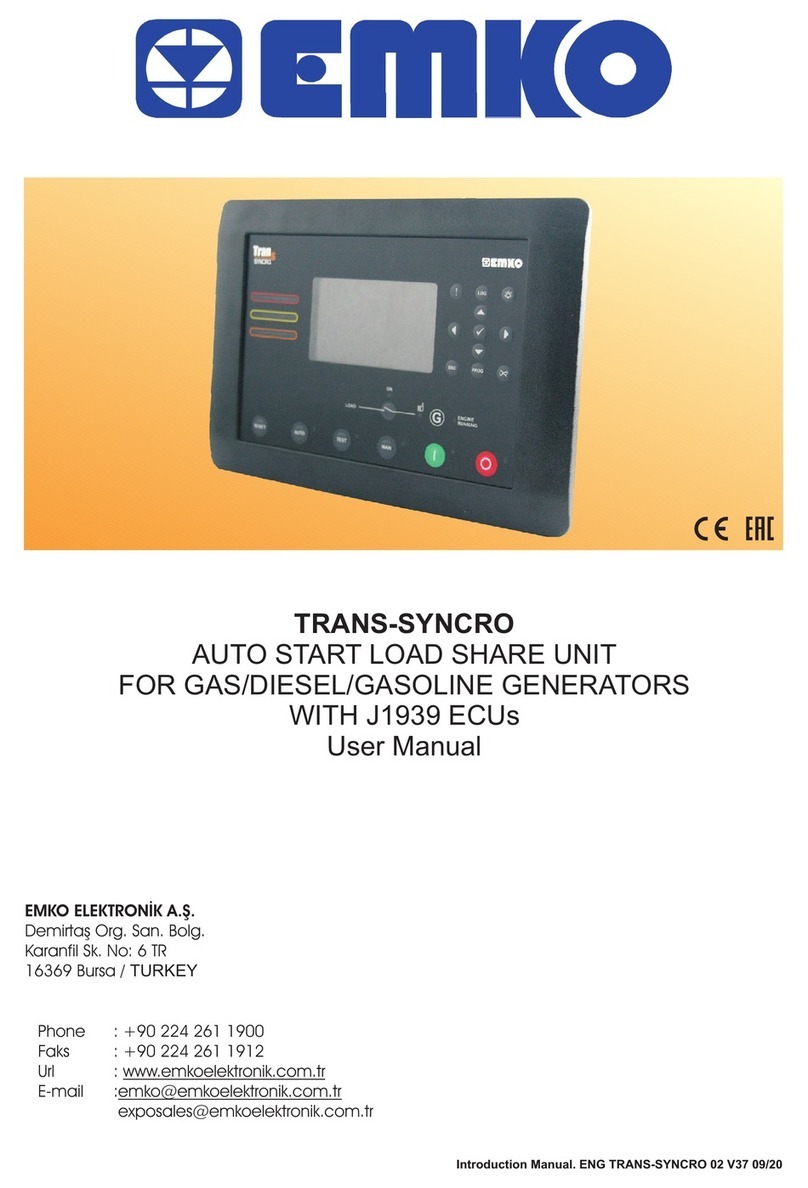
The electrical box includes all boards controlling the unit as well
as the CONNECT TOUCH user interface.
Each circuit is by default fitted with one SIOB board used to
manage all major inputs and outputs of the controller.
Options such as energy management module or free cooling
(dry cooler management) require the installation of additional
boards, i.e. EMM SIOB board for energy management module
and FC dry cooler board for free cooling. Additionally, units with
seven or eight fixed speed fans are fitted with an additional
auxiliary 2 board “AUX2 board”.
All boards communicate via an internal bus.
4.2 Power supply to boards
All boards are supplied from a common 24 VAC supply referred
to earth.
CAUTION
Maintain correct polarity (and grounded 0V) when
connecting the power supply to the boards, otherwise the
boards may be damaged.
In the event of a power supply interrupt, the unit restarts
automatically without the need for an external command.
However, any faults active when the supply is interrupted are
saved and may in certain cases prevent a given circuit or the
unit from restarting.
The main board continuously monitors the information received
from various pressure and temperature probes and accordingly
starts the program that controls the unit.
The number of boards available in the electrical box depends
on the number of selected options.
4.3 Light Emitting Diodes on boards
All boards continuously check and indicate the proper operation
of their electronic circuits. A light emitting diode (LED) lights on
each board when it is operating properly.
●The red LED flashing for a two-second period indicates
correct operation. A different rate indicates a board or a
software failure.
●The green LED flashes continuously on all boards to show
that the board is communicating correctly over its internal
bus. If the green LED is not flashing, this indicates the
internal bus wiring problem or a configuration issue.
4.4 Pressure transducers
Three types of transducers (high pressure, low pressure,
water pressure) are used to measure various pressures in
each circuit. These transducers deliver 0 to 5 VDC. They are
connected to SIOB boards (circuit A and circuit B).
Discharge pressure transducers (high pressure type)
These transducers measure the discharge pressure in each
circuit. They are used to control condensing pressure or high
pressure load shedding. Discharge pressure sensors are
mounted on the discharge line piping of each circuit.
Suction pressure transducers (low pressure type)
These transducers measure the suction pressure in each circuit.
They are used to control EXV, evaporating pressure (in heating
mode) and monitor suction pressure safeties related to the
compressor operating envelope. Suction pressure sensors are
located on the common suction piping of each circuit.
Pump inlet/outlet water pressure transducers (water
pressure type, hydronic kit option)
These transducers measure the hydronic kit pump inlet/outlet
water pressure and monitor the water flow. Pump inlet/outlet
water pressure sensors are mounted on the optional hydronic kit.
4.5 Temperature sensors
Temperature sensors constantly measure the temperature of
various components of the unit, ensuring the correct operation
of the system.
Water heat exchanger entering and leaving water
temperature sensors
The water heat exchanger entering and leaving water
temperature sensors are used for capacity control and safety
purposes.
Outdoor air temperature sensor
This sensor measuring the outdoor air temperature is used for
start-up, setpoint temperature reset and frost control.
Suction gas temperature sensors
These sensors measure the suction gas temperature. They are
used for the EXV control. Suction gas temperature sensors are
located at the suction side of each circuit.
Master/slave water sensor (optional)
This sensor measures the common water temperature in the
master/slave system capacity control. It is installed only in the
case of master/slave units.
Defrost temperature sensors (heat pumps)
These sensors are used to determine the end of the defrost
cycle for a given circuit.
Temperature setpoint reset sensor (Energy Management
Module)
This sensor measures the space (room) temperature for the
purpose of setpoint reset.
4 - HARDWARE