manuals.online logo
Brands
  1. Home
  2. •
  3. Brands
  4. •
  5. ElectrIQ
  6. •
  7. Kitchen Appliance
  8. •
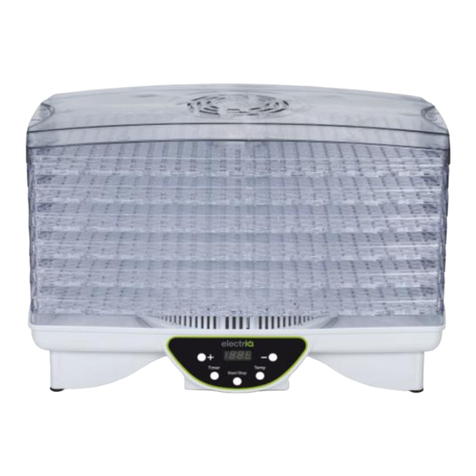
  9. ElectrIQ EDFD04 User manual

ElectrIQ EDFD04 User manual

Other manuals for EDFD04

1

Other ElectrIQ Kitchen Appliance manuals

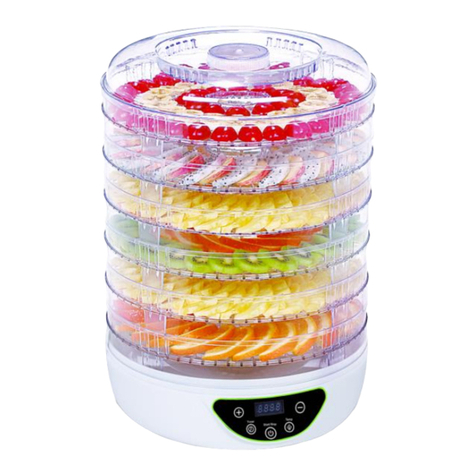
ElectrIQ EDFD06 User manual

ElectrIQ

ElectrIQ EDFD06 User manual

ElectrIQ EDFD04 User manual

ElectrIQ

ElectrIQ EDFD04 User manual

ElectrIQ EIQSOUSVIDE User manual

ElectrIQ

ElectrIQ EIQSOUSVIDE User manual

Popular Kitchen Appliance manuals by other brands

Tayama TYG-35AF instruction manual

Tayama

Tayama TYG-35AF instruction manual

AEG 43172V-MN user manual

AEG

AEG 43172V-MN user manual

REBER Professional 40 Use and maintenance

REBER

REBER Professional 40 Use and maintenance

North American BB12482G / TR-F-04-B-NCT-1 Assembly and operating instructions

North American

North American BB12482G / TR-F-04-B-NCT-1 Assembly and operating instructions

Presto fountain popper instruction manual

Presto

Presto fountain popper instruction manual

Westmark 1035 2260 operating instructions

Westmark

Westmark 1035 2260 operating instructions

Zanussi ZCG64396XA user manual

Zanussi

Zanussi ZCG64396XA user manual

HOFFEN SM-9302M instruction manual

HOFFEN

HOFFEN SM-9302M instruction manual

Philips HD3133 user manual

Philips

Philips HD3133 user manual

Ronco Beef Jerky User guide and recipes

Ronco

Ronco Beef Jerky User guide and recipes

Hendi 470411 user manual

Hendi

Hendi 470411 user manual

Livoo MEN386 user manual

Livoo

Livoo MEN386 user manual

croydon WR-10313-700 instruction manual

croydon

croydon WR-10313-700 instruction manual

Chefman RJ43-SQ Series user guide

Chefman

Chefman RJ43-SQ Series user guide

Vacmaster VP680 user guide

Vacmaster

Vacmaster VP680 user guide

Jetmaster 900HG operating instructions

Jetmaster

Jetmaster 900HG operating instructions

Küppersbusch EEH 610.0 Instructions for use and installation instructions

Küppersbusch

Küppersbusch EEH 610.0 Instructions for use and installation instructions

HURAKAN HKN-F10 manual

HURAKAN

HURAKAN HKN-F10 manual

manuals.online logo
manuals.online logoBrands
  • About & Mission
  • Contact us
  • Privacy Policy
  • Terms and Conditions

Copyright 2025 Manuals.Online. All Rights Reserved.

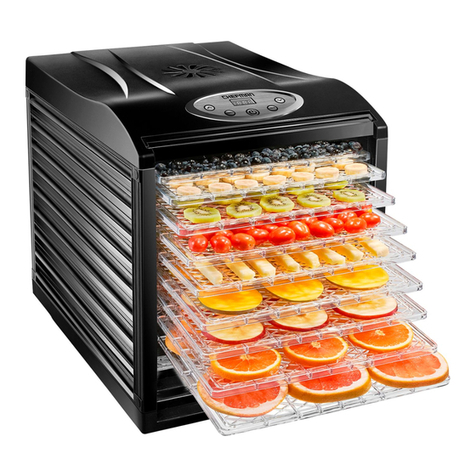
Digital Dehydrator with Timer
EDFD04
USER MANUAL
Thank you for hoosing ElectrIQ
Please read this user manual before using the dessert maker
and keep it safe for future referen e.
Visit our page www.ele trIQ. o.uk for our entire range of Intelligent Ele tri als
2
Contents
Features 3
Safety Instru tions 4
Parts and Assembly 5
Operation and Dehydrating Guidelines 6
Drying Fruits 9
Drying Vegetables 12
Drying Herbs 15
Drying Meat 18
Re ipes 20
Cleaning and Maintenan e 22
Troubleshooting 22
3
FEATURES
This advan ed digital dehydrator was spe ially designed for easy use, onvenien e and easy storage.
Ele trIQ re ognizes the limited kit hen spa e in modern households hen e the nesting design allowing
the applian e to be stored inside the upboard with a small footprint. The Ele trIQ dehydrator has
adjustable trays allowing a large variety of foods to be dehydrated.
Turbo vortex te hnology: fan ir ulates the hot air produ ing evenly dried foods in less than half the
time of standard dehydrators.
Digital Temperature ontrol with 4 settings (38℃, 48℃, 58℃, 68℃) allows a urate temperature
ontrol to mat h the food, providing onsistent results every time. Digital Timer removes the need of
manual intervention and ensure that your food will be dried a ording to the re ommended time.
Digital LED temperature and timer displays makes the operation of this applian e very easy.
Your Ele trIQ Food dehydrator brings a new dimension to an ient food preservation pro esses. It
allows you to enjoy a simpler and more rapid drying pro ess in the onvenien e of you own home.
Now you an have the satisfa tion of preparing healthful and deli ious treats in the omfort and
onvenien e of your own home and save money and have fun at the same time.
Dehydrated food was always part of the human diet and is a better way to preserve food than adding
hemi al additives. Our an estors sustained themselves on natural dehydrated foods and later used
heat from the sun or their fires to preserve food harvested between seasons.
Why Dehydrate…?
Your dehydrator is a tool that uses relatively low temperatures and a turbo fan to dry food. It
essentially removes the water from food, but it keeps the enzymes of your food inta t.
You an now reate foods that will have same texture as ooked or fried dishes while keeping all the
goodness of raw food.
Dehydrated foods are a great way to transition to raw food, and even as a great gluten-free treat
maker. Most of the dehydrated foods an repla e the textures and tastes of the most addi tive foods
like bread, ookies, and hips. Who would not want that?
If you are dehydrating to below 50℃ your food an still be onsidered raw. Note that meat or fish
should always be dehydrated at maximum dehydrator temperature to prevent ba terial growth.
You an also use a dehydrator to preserve ex ess produ e. If you are lu ky enough to have an abundant
garden (or just a great deal of fresh lo al produ e) then you an use a dehydrator to preserve your
pi k.
Simply lean and ut your fruits or vegetables and pla e on your dehydrator trays. Depending on water
ontent you might need to dehydrate for a longer time.
Dehydrated fruits and veggies make great sna ks, or an be used to top salads, sau es and soups.
You may also onsider that many of the supermarket dried food will still ontain preservatives like
sulfites or other substan es, so is better to dehydrate yourself knowing that nothing else was added.
Dried food is easily stored, popular with ba kpa kers, hikers, ampers, boaters, ooks, gardeners,
dieters, and health food enthusiasts. Also a great way to make tasty sna ks for kids.
Dehydration is one of the easiest and most effi ient methods of food preservation. Food is exposed to
gentle heat and ir ulated air in order to remove moisture. La king moisture, ba teria and mi ro-
organisms are inhibited so dehydrated foods an be preserved for long periods without refrigeration
and they have far less weight and bulk.
You an also use a food dehydrator to dry flowers, herbs and grains.
4
SAFETY INSTRUCTIONS
Im ortant
• Carefully read the instru tions before operating the unit
• This applian e is for indoor use only.
• Rating: This unit must be only onne ted to a 220-240 V / 50 Hz earthed outlet. Always he k
the rating label against your ele tri al supply. If you are in any doubt about the suitability of your
ele tri al supply have it he ked and, if ne essary, retested by a qualified ele tri ian.
• This dehydrator has been tested and is safe to use. However, as with any ele tri al applian es
- use it with are.
• Dis onne t the power plug from so ket before dismantling, assembling or leaning.
• Do not lean the base of unit by spraying it or immersing it in water.
• Never operate this applian e if the ord or plug is damaged. Ensure the power ord is not
stret hed or exposed to sharp obje t/edges.
• Do not pull the mains able to dis onne t the mains plug from the mains.
• Do not use the applian e if any part or any a essory is damaged or defe tive.
• A damaged supply ord or plug should be repla ed by the manufa turer or a qualified
ele tri ian in order to avoid a hazard.
• Avoid tou hing any moving parts of the applian e. Avoid tou hing any hot parts of the
applian e.
• Make sure unit is assembled orre tly before use.
• Never insert fingers, or any other obje ts in the applian e while is in operation.
• This applian e is not intended for use by persons (in luding hildren) with redu ed physi al,
sensory or mental apabilities. It is also not intended for use by those with a la k of experien e and
knowledge, unless they have been given supervision or instru tion on erning the use of the applian e
by a person responsible for their safety.
• Do not leave hildren unsupervised with this applian e.
• Any servi e other than regular leaning should be only performed by an authorized servi e
representative. Failure to omply ould result in a voided warranty.
• Do not use the applian e for any other purposes than its intended use.
• Always pla e the unit on a dry and stable surfa e.
• Do not use the applian e in pla es with high humidity (>80%RH)
• Do not immerse the applian e in water or other liquids. If the applian e is immersed in water
or other liquids by mistake, do not tou h the applian e with your hands. Immediately remove the
mains plug from the wall so ket. If the applian e was immersed in water or other liquids, dis ard it.
Unit Safety Protection and Performance Ti s
• Make sure the unit is orre tly assembled before using it
• The maximum ontinuous operation of the dehydrator must not ex eed 40 hours. After this
period you must turn off the ma hine and unplug the power ord.
• Please unplug the unit before you remove the food from the dehydrator.
• Do not over the dehydrator while in operation.
• Always lean the dehydrator immediately after use. Trays are only designed to work in your
Ele trIQ dehydrator. Never use them in any other applian e.
• In orre t usage will damage the ma hine.
• The Food Dehydrator should be ex lusively used for drying food, herbs or plants. Do not use
this food dehydrator for any other domesti or ommer ial drying pro ess.
• Always unplug the power ord after use and store safely away from rea h of hildren.
5
Parts and Assembly
Open the pa kage and a ount for all parts before disposing pa king. Safely dispose of all plasti bags
and other pa kaging omponents. They may be potentially dangerous to hildren.
Before use please lean the lid and trays. Please lean with warm water mixed with a small quantity of
mild detergent. Clean the base of the unit a wet loth or a sponge. Never immerse the base in water.
The drying trays are nested for easy storage. Please lift them and turn them to full height before use
so the hot air an freely flow among ea h tray.
Load ea h tray individually and make sure they are not overloaded, allowing air to move around.
If you want to dehydrate more liquid type like fruit leather we re ommend to ut par hment paper
rounds or Teflon sheet (you an reuse them) and lay them on the tray or half tray.
All the trays must be put onto the food dehydrator when the food dehydrator is working even if some
trays are empty. Always put the tray with food onto the bottom of the food dehydrator first and ad
empty trays above. Always have the lid on when the dehydrator is in operation.
Notes:
Never put water in the dehydrator. Size the food to mat h the dehydrator trays. The size and
thi kness of the food will influen e the length of the drying pro ess.
Control Panel
Air outlet
Handle
Cover
Trays
6
Adjustable Trays
Trays are adjustable offering maximum flexibility in drying different food. For drying thi k food, you
an adjust trays to 36mm height. For drying fast thin food, you an adjust trays to 25.5mm height.
See pi ture bellow.
OPERATION
Start on the food dehydrator by pressing the “ON” button. Sele t the timer and the desired food
temperature. There are four sele table temperature settings 38℃, 48℃, 58℃, 68℃ and the timer is
sele table with one hour in rement. After the food is dried turn off the ma hine, unplug it and store it
in a safe and dry pla e.
General Dehydrating Guidelines
Certain varieties of produ e, the humidity in the air, and even methods of food handling make quite a
differen e in the drying time and quality of the dried produ t.
Experiment with different drying temperatures, thi kness of produ e, pre-treatment versus no pre-
treatment and different re-hydration methods. You will determine what works best for your parti ular
needs and preferen es.
Loading Trays and Selecting Produce
To save nutrients and produ e a quality produ t, it is ne essary to work fast preparing foods to dry.
When pla ed in your dehydrator, they need to dry ontinuously at the re ommended temperatures
and times. Do not turn off your dehydrator or leave partially dried food on the trays as it may spoil or
develop ba terial growth.
Spread all foods evenly to dry in single layers. If sli es overlap, the areas that are overt will not dry
properly.
when stored in use
7
Do not add fresh produ e to a partially dried bat h. It will slow the rate of drying for both produ ts. It
is possible, however, to ombine partially dried foods.
Sele t the best fresh produ e at the peak of ripeness and flavour. Wash arefully to remove debris,
dust and inse ts. Cut away bruised or damaged se tions.
Lay food pie es evenly on trays. Do not overlap food pie es, as this will inhibit drying time. As ea h tray
is loaded, pla e it on the dehydrator to begin drying. Please hange the position of the trays during
drying pro ess if you find that ertain trays are dried uneven..
Be ause of the unique design of your Ele trIQ vortex system dehydrator, you will be surprised at how
qui k is the drying pro ess.
Drying Times
Drying times indi ated in this user instru tions are for referen e only and they may vary a lot,
depending on the type and amount of food, thi kness and evenness of the sli es, per entage of water
in the food, humidity, temperature of air, altitude. Drying times may also vary greatly from one area
to another and from day to day, depending on the limati onditions. Keep re ords to help you predi t
drying times for spe ifi foods.
Drying Tem erature
Fruits, fruit rolls (fruit leather) and vegetables should be dried at 48 - 58℃. By drying foods in this
temperature range you will minimize the loss of heat-sensitive vitamins A and C. All foods sweat when
they begin to dry, the temperature may be set higher at 58℃ or 68℃ during the first ouple of hours
of drying. The a tual temperature of the food will remain to around 5o to 6o℃, lower than the air
temperature for the first ouple of hours.
Meats and fish should be dried on the highest temperature setting of your dehydrator at 68℃. These
temperatures also keep ba teria and other spoilage mi ro-organisms, ommon to meat and fish, to a
minimum during the first stages of drying.
Nuts and seeds are high in oil, and if higher temperatures are used, they will tend to be ome ran id,
developing unpleasant flavours. The best temperature is from 38 to 48℃.
Herbs and spi es are most flavourful when they first open and should be harvested while very fresh,
before they begin to blossom. Be ause the aromati oils are very sensitive, temperature should be set
to 38℃.
Flowers, herbs and spi es used for potpourri should be dried at 38℃ to maintain aroma and olour.
Take are not to load trays too heavily as this will prolong the drying time.
Packaging
Some pie es may dry in a shorter time than others. The dried food should be removed and pla ed in
an airtight ontainer while allowing the rest of the pie es to remain in the dehydrator until suffi iently
dry.
8
Pa kage all dried foods promptly to prevent ontamination and to prevent sti kiness and re-hydration
aused by humidity. Store dried foods in airtight, moisture proof ontainers.
Home va uum pa kaging devi es are ideal for pa kaging dried foods as eliminating the air will extend
the shelf life of dried foods 3 to 4 times.
Sin e most pa kaging materials are transparent, store pa kaged dried foods in a plasti or metal
ontainer that will not allow the light to penetrate. Do not store fruits and vegetables together in the
same storage ontainer be ause flavour and moisture may transfer.
Fruit rolls are best if removed while still warm. Wrap in plasti wrap and pla e in airtight moisture-
proof ontainers for storage.
Onions and tomatoes are espe ially prone to absorb moisture from the air and should be pa kaged
immediately after removing from the dehydrator.
Testing for Dryness
Food must be monitored during the final stages of dehydrating to prevent over-drying. Over-dried
foods lose quality in texture, nutrition and taste. To test for dryness, remove a pie e of food, let it ool
and feel with your fingers for dryness.
• Fruits are pliable and leathery with no spots of moisture. Tear in half, pin h and wat h for
moisture drops along tear. If no moisture then it is suffi iently dry for long term storage.
• Fruit rolls should be leathery with no sti ky spots.
• Jerky should be tough, but not brittle.
• Dried fish should be tough, but not brittle. If the fish is high in fat it may appear moist due to
the high oil ontent.
• Vegetables should be tough or risp.
If foods are insuffi iently dried, or are exposed to moisture from faulty pa kaging, they an lose quality,
nutrition value and an even develop mould during storage.
Storage
The storage area should be ool, dry and as dark as possible. The darker and ooler the storage area,
the longer the dried foods will last with good quality and nutritive value.
9
Drying Fruits
Fruits pi ked at their prime have the highest natural sugar ontent and the best nutritional value. For
the best quality produ t, hoose only fresh and ripe.
Wash fruit thoroughly and remove any blemishes. Remove skins (if desired), stems and seeds. Halve
or sli e in 1/4” to 1/2” ir les or sli es (a food pro essor or sli er will speed the sli ing and ensure
uniform sli es, whi h will allow fruits to dry at the same rate.) Some fruits have a natural prote tive
wax oating su h as figs, prunes, grapes, blueberries, ranberries, et . If you want to dry these fruits
whole, dip into boiling water for 1 to 2 minutes (the amount of time needed depends on the thi kness
and toughness of the skin) to speed dehydration. This makes the skin more porous by removing the
natural wax oating and thereby speeds up the drying time. Small lines appear on the fruit skin allowing
moisture to es ape but may be too fine to be visible.
Many fruits an be dried in halves with the pits removed. If they are dried with the skins on, be sure to
pla e them skin-side down to prevent fruit and pulp from dripping down through the trays. Che k
frequently near the end of the drying pro ess and remove pie es as they be ome dry. To peel or not
to peel is a de ision only you an make (if the fruit has been artifi ially waxed, it should definitely be
peeled to remove the wax). The skin has nutritional value, but skins tend to be very tough when dried
and fruits take longer to dry with the skins on. Try fruits both ways – peeled and unpeeled – then de ide
for yourself what works best for you.
Pre-treat if desired and pla e the fruit into the dehydrator to dry at 48-58
o
C.
Pre-Treatment
Pre-treatment minimizes oxidation, and gives you a superior quality, better tasting produ t with less
vitamin loss. Apples, pears, pea hes and apri ots are better when pre-treated. They are more
appetizing, have a longer shelf life and higher nutritional value. Pla e ut fruits that tend to brown in a
holding solution of as orbi a id to redu e browning during preparation. Do not keep ut fruit in a
holding solution for more than one hour.
Pre-treatment an vary from soaking in fruit jui e, as orbi a id mixtures, syrup blan hing, steaming.
The results of these methods also vary. Experiment and de ide for yourself whi h one you like best.
Use one of the following methods of pre-treatment:
Natural Pre-Treatment
Fruit jui es ontaining as orbi a id may be used as a natural pre-treatment to redu e browning.
Although if there will be some loss of olour, pineapple, orange, lemon, or lime jui e an be used.
As orbi a id mixtures, available from your supermarket, an also be used. Follow the dire tions on
the pa kage. Sli e fruit dire tly into jui e or as orbi a id mixture. Soak 5 minutes and pla e on trays.
Fruits an also be dipped in honey or a honey / jui e mixture.
Hints and Suggestions
- Pla e a up of dried apple sli es in the blender with a up of water for instant apple sau e.
- Strawberries are perfe t for malts, shakes and sundaes.
- Cantaloupe and watermelon sli es be ome andy-like when dried.
- Dehydrate lemon and orange sli es and powder for use in re ipes for grated rind.
- Dehydrate grapes to make raisins that taste better and plump up in re ipes better than store-bought
raisins.
- Dry bananas 1/4” thi k and dip into a glaze of 1/2 up honey mixed with 1/4 up water. Drain. Pla e
on trays and dry. For variety add 1/8 teaspoon innamon to the glaze before dipping bananas.

10
Drying Fruit Rolls (Fruit Leather)
Fruit leathers are a favourite kids sna k. It is a hewy fruit produ t made from puréed fresh fruit, whi h
has been dried and rolled into sna k sized pie es. Fruit rolls are easy to make and ost less than those
bought at the store. Any fruit high in pe tin will make an ex ellent fruit roll. Most fruits an also be
ombined.
Some fruits, su h as apples, are high in pe tin and fibre, and have an ex ellent texture when dried. The
ombinations are limitless, use your imagination.
Certain fruits, su h as itrus, should be used in ombination with other fruits be ause they have so
mu h liquid and very little pulp. If you find that a fruit is too runny, ombine it with apple, applesau e
or a similar fruit that will give it texture.
When fresh fruits are not available, anned fruits (either sweetened or un-sweetened) an be used.
Simply drain the liquid, and pour the fruit into the blender. Applesau e an be taken dire tly from the
ontainer for wonderful fruit rolls. Frozen fruits an also be used, although they tend to be a bit runnier.
Simply thaw and follow dire tions for using fresh fruits.
Wash fruits and ut away any blemished portions. Purée fruit in a blender until it is very smooth. In
some blenders with some fruits, you may want to add a little jui e or water to start the blending
pro ess. You an also add fruit pulp left from jui ing.
Fruits generally need no added sweetening, but if fruits are under ripe or parti ularly tart, you may add
light orn syrup or honey. Add one or more tablespoons sweetening for ea h quart of purée, depending
on your preferen e.
Drying
Pla e a trimmed baking par hment or Teflon sheet on the dehydrator tray and wipe lightly with a
vegetable oil to prevent sti king. Purée should be about 1/4” to 3/8” thi k and evenly spread. Dry at
58℃ until fruit feels leather-like and is pliable, about 4 to 8 hours.
Storage
Remove the fruit roll while it is still warm, roll, ut into smaller size pie es (if desired) and wrap in
plasti wrap. Individually wrapped pie es of fruit leather should be stored in larger airtight and
moisture proof ontainers.
Fruit Drying Chart
Expe t a varian e in the time needed to dry different fruits. Drying times are affe ted by the size of the
load, fruit thi kness and the moisture ontent of the food itself. The guidelines are general. For more
a urate drying times, keep re ords of your own drying experien es.