manuals.online logo
Brands
  1. Home
  2. •
  3. Brands
  4. •
  5. Esse
  6. •
  7. Wood Stove
  8. •
  9. Esse 150SE Assembly Instructions

Esse 150SE Assembly Instructions

Other Esse Wood Stove manuals

Esse 125SE Assembly Instructions

Esse

Esse 125SE Assembly Instructions

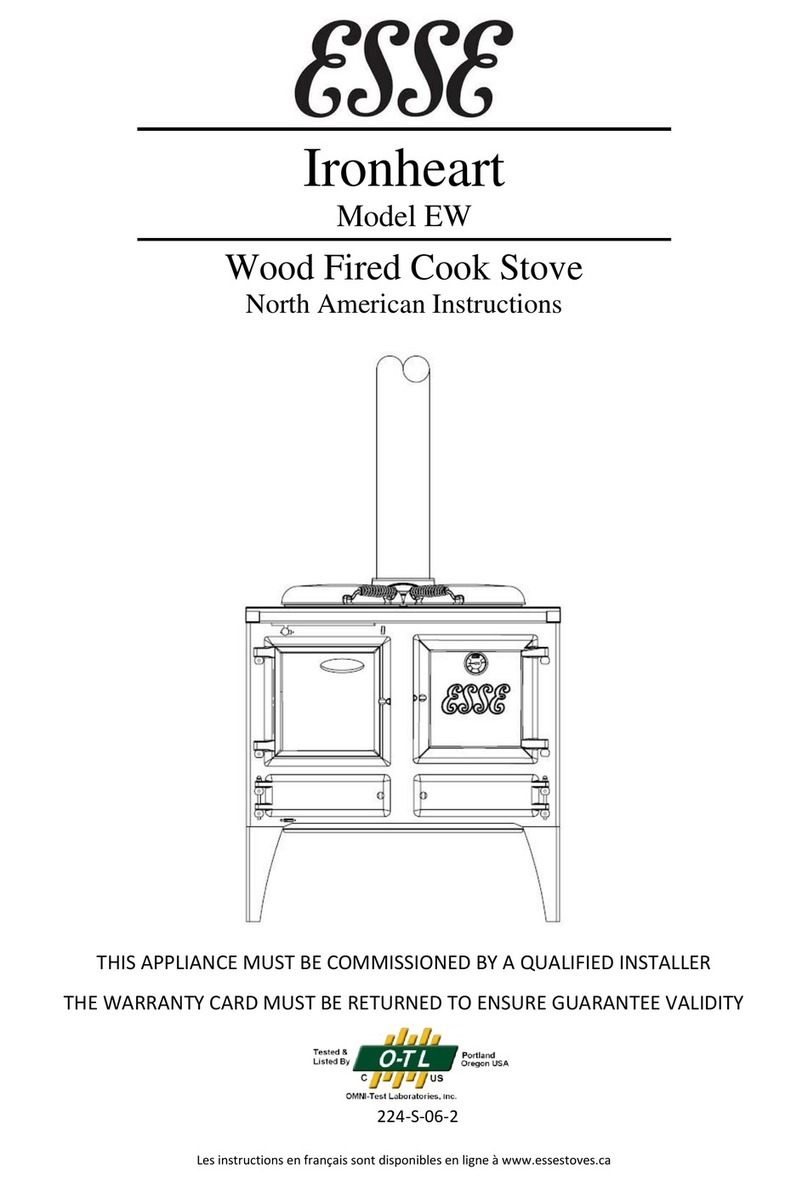
Esse Ironheart EW User manual

Esse

Esse Ironheart EW User manual

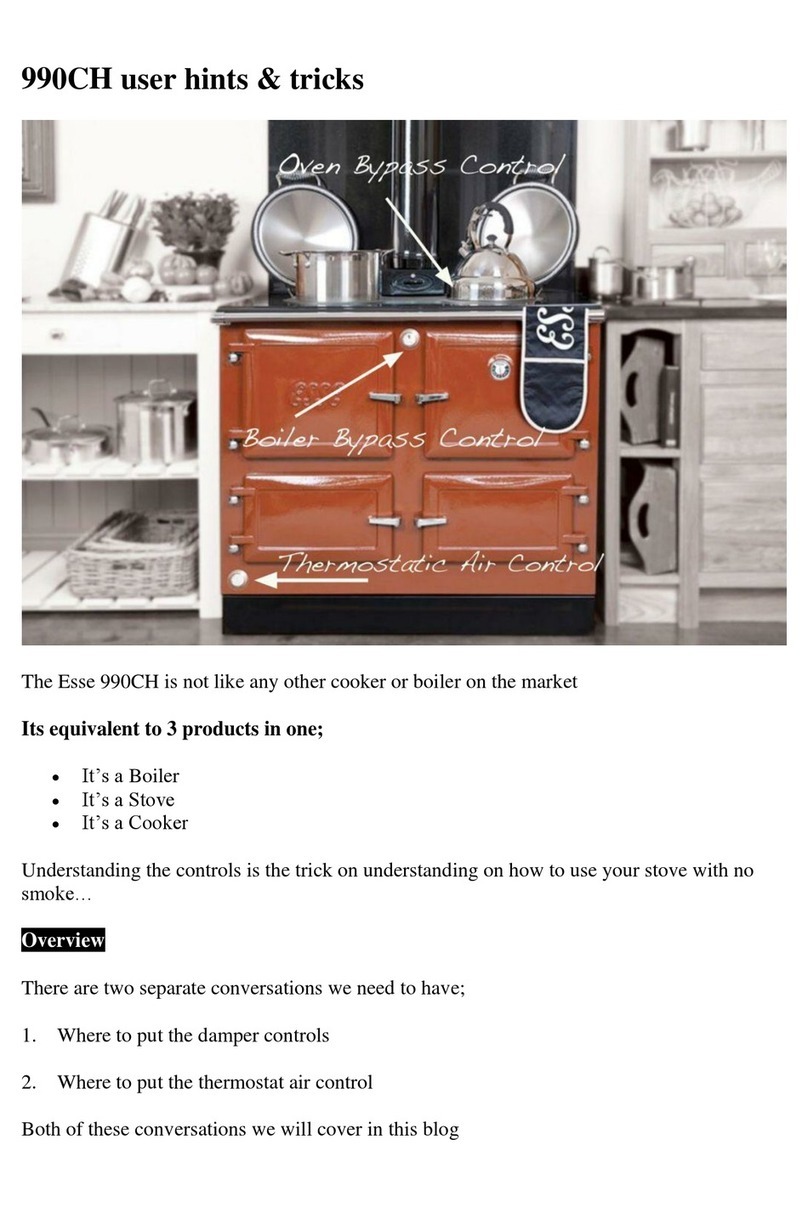
Esse 990 CH Service manual

Esse

Esse 990 CH Service manual

Esse Bakeheart User manual

Esse

Esse Bakeheart User manual

Esse Bakeheart Quick start guide

Esse

Esse Bakeheart Quick start guide

Esse 105 User manual

Esse

Esse 105 User manual

Esse Bakeheart User manual

Esse

Esse Bakeheart User manual

Esse 200XK Assembly Instructions

Esse

Esse 200XK Assembly Instructions

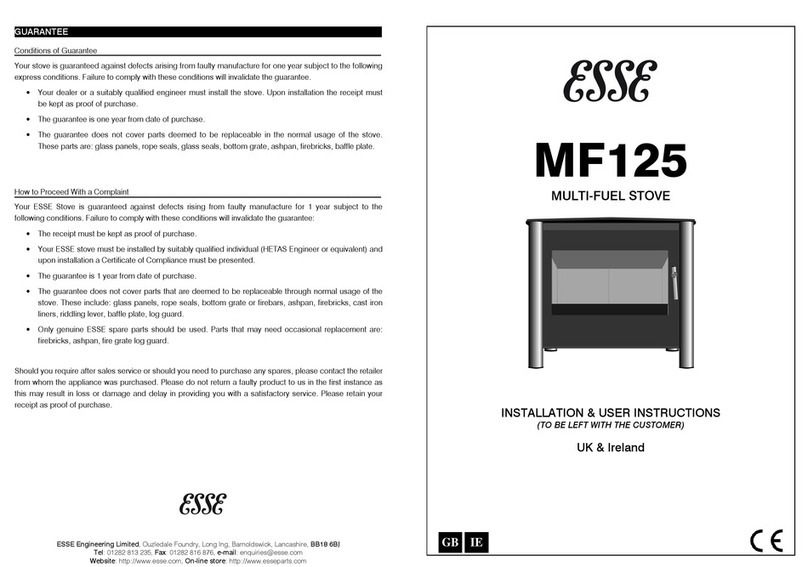
Esse MF125 Assembly Instructions

Esse

Esse MF125 Assembly Instructions

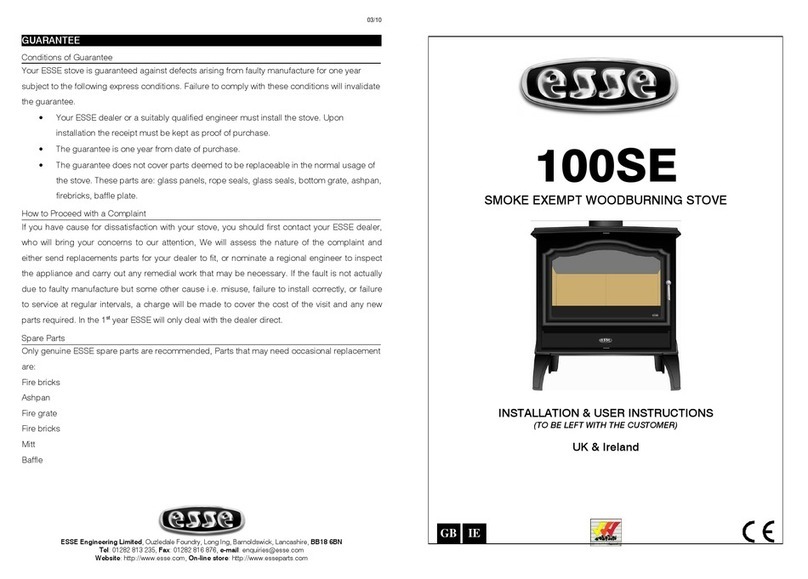
Esse 100SE Assembly Instructions

Esse

Esse 100SE Assembly Instructions

Esse 100KC Assembly Instructions

Esse

Esse 100KC Assembly Instructions

Esse Ironheart User manual

Esse

Esse Ironheart User manual

Esse Lightheart User manual

Esse

Esse Lightheart User manual

Popular Wood Stove manuals by other brands

Kozi 1200 owner's manual

Kozi

Kozi 1200 owner's manual

Drolet 45283 owner's manual

Drolet

Drolet 45283 owner's manual

RIKA LOOK RIKATRONIC 3 operating manual

RIKA

RIKA LOOK RIKATRONIC 3 operating manual

pleasant hearth HWS-224172MH Series user manual

pleasant hearth

pleasant hearth HWS-224172MH Series user manual

Mi-Fires Loughrigg User & installation manual

Mi-Fires

Mi-Fires Loughrigg User & installation manual

Mendip Stoves Woodland Large SE Operation and installation manual

Mendip Stoves

Mendip Stoves Woodland Large SE Operation and installation manual

Plamen ECO MINIMAL 50 Technical manual

Plamen

Plamen ECO MINIMAL 50 Technical manual

Henley Arklow Installation and operating instructions

Henley

Henley Arklow Installation and operating instructions

RAIS 800 user manual

RAIS

RAIS 800 user manual

Jøtul F 500 Installation and operating instructions

Jøtul

Jøtul F 500 Installation and operating instructions

RAIS RONDO 92 user manual

RAIS

RAIS RONDO 92 user manual

Englander BLUE RIDGE 100 owner's manual

Englander

Englander BLUE RIDGE 100 owner's manual

RAIS attika NEXO 100 GAS installation guide

RAIS

RAIS attika NEXO 100 GAS installation guide

WoodPro WS-TS-1500 owner's manual

WoodPro

WoodPro WS-TS-1500 owner's manual

Contura C 586W installation instructions

Contura

Contura C 586W installation instructions

Palazzetti EVA GENERAL INFORMATION - WARNINGS - INSTALLATION - MAINTENANCE

Palazzetti

Palazzetti EVA GENERAL INFORMATION - WARNINGS - INSTALLATION - MAINTENANCE

Lopi 1250 Republic owner's manual

Lopi

Lopi 1250 Republic owner's manual

Panadero CAPRI 3V Usage and maintenance instructions

Panadero

Panadero CAPRI 3V Usage and maintenance instructions

manuals.online logo
manuals.online logoBrands
  • About & Mission
  • Contact us
  • Privacy Policy
  • Terms and Conditions

Copyright 2025 Manuals.Online. All Rights Reserved.

150SE
SMOKE EXEMPT WOODBURNING STOVE
INSTALLATION & USER INSTRUCTIONS
(TO BE LEFT WITH THE CUSTOMER)
UK & Ireland
GB
IE
Page 2
125/150-SE-I01-210318
CONTENTS
General Safety Notes
Page 2
Operating Instructions
Page 8
Chimney & Flue
Page 3
Woodburning
Page 8
Flue Draught
Page 5
Maintenance
Page 10
Dimensions & Clearances
Page 6
Guarantee
Page 12
Installing the Stove
Page 6
GENERAL SAFETY NOTES
Properly installed, operated and maintained, this appliance will not emit fumes into
the dwelling. However occasional fumes from de-ashing and re-fuelling may occur.
Persistent fume emissions are potentially dangerous and must not be tolerated. If
fume emission does persist, open doors and windows to ventilate the room. Let the
fire burn out or eject and safely dispose of fuel from the appliance. Once the fire is
cold, check the flue and chimney for blockages and clean if required. Do not
attempt to relight the fire until the cause of the fume emission has been identified
and corrected. Seek expert advice if necessary.
Do not fit an extractor fan in the same room as the appliance.
An adequate air supply for combustion and ventilation is required. As this stove
does not exceed 5.0 kW nominal heat output (Refer to Building Regulations
Document J) a purpose provided air vent is not normally required. However, in
certain circumstances a purpose provided air vent may be necessary –for example,
small or tightly sealed rooms. Air openings provided for this purpose must not be
restricted.
It is important that flue ways are cleaned frequently and the chimney swept
regularly. Also the stove must be maintained in good mechanical order. Regular
sweeping means at least once per year for smokeless fuel and a minimum of twice
per year for other fuels.
If the chimney was previously used for an open fire, it is possible that the higher
flue gas temperatures generated by the stove may loosen deposits that were firmly
adhering to the inner surface of the chimney and cause blockage of the fluepipe.
We recommend that in such a situation a second sweeping of the chimney should
be carried out within one month of regular use of the stove after installation. Also,
lock or remove any existing dampers in the flueway.
Should it be likely that children, aged or infirm people approach the fire, then a
fireguard should be fitted.
Page 3
125/150-SE-I01-210318
Avoid the use of aerosol sprays in the vicinity of the stove when it is in operation.
This appliance must be installed as per these instructions and regulations complied
with. No modifications or alterations of any kind are permitted.
CLEAN AIR ACT 1993 AND SMOKE CONTROL AREAS
Under the Clean Air Act local authorities may declare the whole or part of the district of
the authority to be a smoke control area. It is an offence to emit smoke from a chimney
of a building, from a furnace or from any fixed boiler if located in a designated smoke
control area. It is also an offence to acquire an "unauthorised fuel" for use within a
smoke control area unless it is used in an "exempt" appliance ("exempted" from the
controls which generally apply in the smoke control area).
The Secretary of State for Environment, Food and Rural Affairs has powers under the Act
to authorise smokeless fuels or exempt appliances for use in smoke control areas in
England. In Scotland and Wales this power rests with Ministers in the devolved
administrations for those countries. Separate legislation, the Clean Air (Northern
Ireland) Order 1981, applies in Northern Ireland. Therefore it is a requirement that fuels
burnt or obtained for use in smoke control areas have been "authorised" in Regulations
and that appliances used to burn solid fuel in those areas (other than "authorised" fuels)
have been exempted by an Order made and signed by the Secretary of State or Minister
in the devolved administrations.
The ESSE 100SE Series has been recommended as suitable for use in smoke control
areas when burning dry wood logs in accordance with these instructions. Peat and other
unauthorised fuels must not be burnt in this appliance in smoke control areas.
Further information on the requirements of the Clean Air Act can be found here :
http://smokecontrol.defra.gov.uk/
Your local authority is responsible for implementing the Clean Air Act 1993 including
designation and supervision of smoke.
INSTALLATION INSTRUCTIONS
The installer has a responsibility under the Health and Safety at Work Act 1974 to
provide for the safety of persons carrying out the installation. Attention is drawn to the
fact that fire cement is caustic and hands must be washed thoroughly after use. The
appliance is heavy and care must be taken during handling. Although the appliance does
not contain asbestos products, it is possible that asbestos may be disturbed in existing
installations and every precaution must be taken.
These instructions give a guide for the installation of the appliance but in no way
absolves the installer from responsibilities to confirm to British Standards, in particular
BS9303 and BS6461, relating to the installation of solid fuel appliances. All local

Page 4
125/150-SE-I01-210318
regulations, including those referring to National and European standards need to be
complied with when installing the appliance.
Warning: Parts of the appliance, especially the external surfaces, will be hot to touch
when in operation and due care will need to be taken.
CHIMNEY& FLUE
The successful operation of this appliance relies on the adequate performance of the
Chimney to which it is connected.
This Appliance is not suitable for installations in a shared flue system.
The chimney must:
Have an internal cross section of no less than 320cm2(200mm dia). If a flue
liner is used it should be 5’’ diameter (125mm) and suitable for solid fuel.
Be a minimum 4.6m high from hearth level to pot.
Be terminated at least 1m above roof level so that the chimney does not
terminate in a pressure zone (see Fig.2).
Be free from cracks, severe bends, voids and obstructions.
Be connected to this one appliance only.
New chimneys must be tested in accordance with HETAS requirements.
If this stove is installed as a freestanding appliance, it should not support any
part of the chimney.
Voids in the chimney should be avoided, as these will prevent a steady flue
draught.
The stove flue pipe should pass beyond the narrowing of the chimney (see Fig.
1).
Consideration should be given to falling soot. For rear outlet stoves it may be
necessary to provide a soot catchment area in the flue pipe so that soot does
not settle in the path of the flue gases. The optional rear flue box attachment
available from ESSE has a detachable base that allows for fallen soot to be
removed (See Fig.1).
A flue/chimney access point may also be required so that the state of the
chimney can be checked and any fallen soot removed.
External flue must be insulated to prevent heat loss.
Page 5
125/150-SE-I01-210318
Fig.1 –Ideal Flue Connections (Flue box available from www.esseparts.com)
Fig.2 –Chimney and Flue Performance
Page 6
125/150-SE-I01-210318
FLUE DRAUGHT
The chimney can be checked, before the stove is installed, with a smoke match. If the
chimney doesn't pull the smoke it may suggest the chimney needs attention (see the
Flue Diagnosis Table, below).
This test is only a guide as an apparently poor flue may improve once the
stove is installed, lit and the flue is warmed. If, once the stove is installed,
there is any doubt that the chimney is providing an adequate draught; a
flue draught reading can be taken with the stove lit. Two flue draught
readings should be taken, one with the stove at minimum rate and one at
maximum rate.
MEASUREMENTS
The flue draught test hole is located on the right hand side of the stove at the back near
the top. Remove the screw to allow reading to be taken, replace the screw once
readings are complete.
MINIMUM
The stove should be lit and allowed to warm the flue thoroughly. The air control can
then be set so that the stove burns on a low setting. Allow the burning rate to become
steady. The flue draught reading should now be taken.
MAXIMUM
The air intake can now be opened to allow the stove to burn at maximum rate. Give the
stove some time for the burning rate to become steady and then close the air intake,
and take a flue draught reading immediately. Ideally, the flue draught reading should
range between 1mm wg (10 Pa) and 2.5mm wg (25 Pa). Any readings significantly
outside this range may indicate the need for remedial action.
Low flue draught symptoms: difficult to light and smoke coming into the room.
CAUSE
REMEDY
Cold chimney
Line the chimney
Chimney too short
Extend the chimney
Down draught
Relocate/extend chimney terminal. Fit an anti-down draught
cowl
Chimney diameter too large
Line the chimney
Chimney obstruction
Clear/sweep the chimney
Restricted air supply
Check for competing draughts (other chimneys, extractor
hoods/fans). Fit an air vent if the room is sealed.
High flue draught symptoms: fire difficult to control, fuel will not last, stove too hot, stove damage, chimney fire.
CAUSE
REMEDY
External wind conditions combined with
chimney terminal
Fit stabiliser cowl.
Fit flue draught stabiliser.
Page 7
125/150-SE-I01-210318
FLUE STABILISER
A flue stabiliser can be fitted to reduce the draught through the stove if the flue draught
is too high. The flue stabiliser should be:
Fitted in the same room as the stove.
The same size as the flue pipe.
Fitted no closer than 700mm to the flue outlet of the appliance.
DIMENSIONS & CLEARANCES
Fig.3–150 SE Stove Dimensions
Distance from Combustables
Sides
600mm
Top
450mm
Rear
600mm
Front
305mm
Page 8
125/150-SE-I01-210318
INSTALLING THE STOVE
INSTALLER’S NAME
INSTALLER’S TELEPHONE NUMBER
INSTALLER’S COMPANY
APPLIANCE SERIAL NUMBER
The overall dimensions of the stove are shown in Fig. 3. The table above indicates
recommended distances between the stove and surrounding combustible materials. As
a rule, any surrounding combustible material should not exceed 80 ºC. There should be
sufficient space around the stove for service work.
HEARTH
The construction of the hearth must conform to Building Regulations, must be firm, non-
combustible and capable of supporting the stove. (Refer to Building Regulations
Document J).
FLUE CONNECTION
The flue pipe used to connect the stove to the chimney is 5’’ (125mm) in diameter. The
stove is supplied ready for top flue connection. To change to rear connection the flue
collar must be moved from the top flue outlet to the rear outlet. To do this the following
instructions must be followed:
1. Remove the firebricks from the stove.
2. Remove the fixing nuts from inside the top of the stove using a 13mm spanner
(#1 Fig 4)
3. The top plate can be lifted off
4. The cast flue collar can be removed from the stove top by removing the 3 x
T30 Torx screws
5. Remove the blanking plate using a 10mm spanner
6. Place the blanking plate over the top flue outlet and fix in place using the bolts
which held it to the back
7. Fix the cast collar to the rear flue exit using the 3 x Torx screws
8. Refit the top plate and fix in place
9. Fit the top flue blanking panel and set the legs to give a flush fit.
10. Replace the fire bricks.
A rear flue box attachment is also available from ESSE that allows the stove to be
installed further out of any building recess. Fig.1 shows suitable flue connections.
Page 9
125/150-SE-I01-210318
IMPORTANT INSTALLTION NOTES:
1. The installation must allow for adequate chimney sweeping.
2. Avoid using bends greater than 45 ºC to the vertical. All flue pipe sections
should be as close to vertical as possible.
3. All joints in the flue system must be effectively sealed.
4. All flue sockets must face upwards.
5. Check the appliance for sound of seals between castings and main
components and that all supplied parts and fitting are correctly fitted.
On completing the installation, check that all the internal components of the stove are
positioned correctly.
Check –Baffle, side and back bricks.
Leave the appliance operational and explain the operation of the stove to
the customer. Leave all instructions and operating tools with the customer.
Fig. 4 –Arranging the Flue for Top or Rear Outlet.
1
Top Fixing Points
2
Cast Flue Collar
3
Flue Blanking Plate
Page 10
125/150-SE-I01-210318
Fig. 5 –Using the stove mitt
OPERATING INSTRUCTIONS
YOUR STOVE
Fig. 5 shows stove and its controls.
Additional loose parts supplied inside your stove include:
A stove mitt –for adjusting the primary air controls, adjusting the air wash
control, and operating the door handle. Fig.5 shows how the stove mitt is
used.
A flue blanking plug to blank the top flue outlet if the rear flue outlet is to be
used.
WOOD BURNING
LIGHTING & CONTROLLING THE FIRE
Before lighting the fire for the first time ensure that the baffle, side and back bricks and
all the internal components are in position. Burning without either will result in the
stove overheating and being damaged. Open the air control and place some tightly
rolled paper on top of some crumpled paper on the base towards the back of the stove.
On top of this, place some small pieces of wood. Light the crumpled paper and close the
door. Once the fire becomes established add some larger pieces of wood. As the stove
comes up to temperature close the air control using the stove mitt. The burning rate of