CALIBRATION
When and How to Calibrate the Scale
Calibration may be required when it is initially installed, if the scale is moved to a
substantial distance.
This is necessary because the weight of a mass in one location is not necessarily the
same in another location. Also, with time and use, mechanical deviations may
occur.
How to calibrate
Press and hold the [MODE] key, then press and hold [ON/OFF] key. The display
will then show [CAL] then show five digits.
Press [MODE] and the display will then flash [500g].
Place the calibrating weight on to the pan. Wait for the stable indicator to display,
then press [MODE]. The display will show ‘-----‘ and then return to showing five
numbers. Calibration is complete.
Press [ON/OFF] to turn the power off, Press [ON/OFF ] to turn the power on
again, Place the full weight (500g) on the pan to check calibration. If it is not
correct, repeat the calibration procedure.
6
PREPARATION
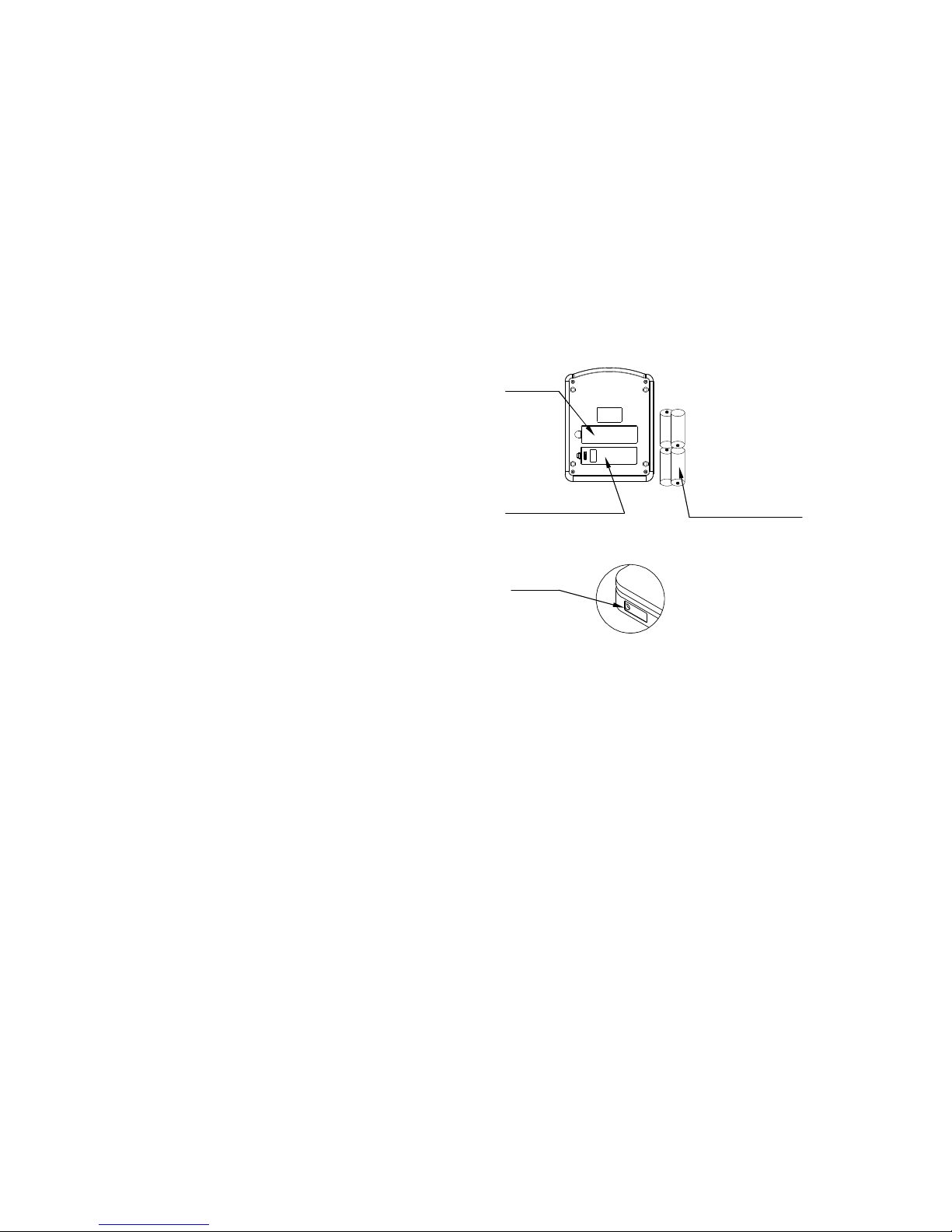
Installing Batteries/Connecting the AC/DC Adaptor
Batteries
Battery Remove the battery compartment
compartment cover and insert four batteries(R6P/LR6
/AAA) into the battery compartment,
taking extreme care that the polarities
plus and minus is observed.
4 x LR6/AAAsize
Dry batteries.
Battery compartment cover
AC/DC 300mA Power Adapter (optional)
Plug theAC/DC Adapter to the
AC/DC Adaptor adapter socket on the side.
socket The AC input requirement could
be 110,120,220,230 or 240Volts
(50/60Hz) depending on the area
where used, so please verify that
the adaptor is correct
2.Setting up the scale/balance
△
! CAUTION
Avoid installing the scale/balance in direct sunlight that may cause discoloration or
malfunctions. Place your scale/balance on a firm weighing table so that the
scale/balance is level. (The scale/balance will not perform accurately when it is not
level.)
Place the scale/balance on the firm surface that is flat and level for an accurate
weighing.
3
Before weighing
Whenever possible, please allow the balance to warm up for 10 minutes after first