Operating Instructions
11157675
4
Do not overload the hook.
Do not reattach the hook to the hoist after overloading the hook.
Do not modify the device.
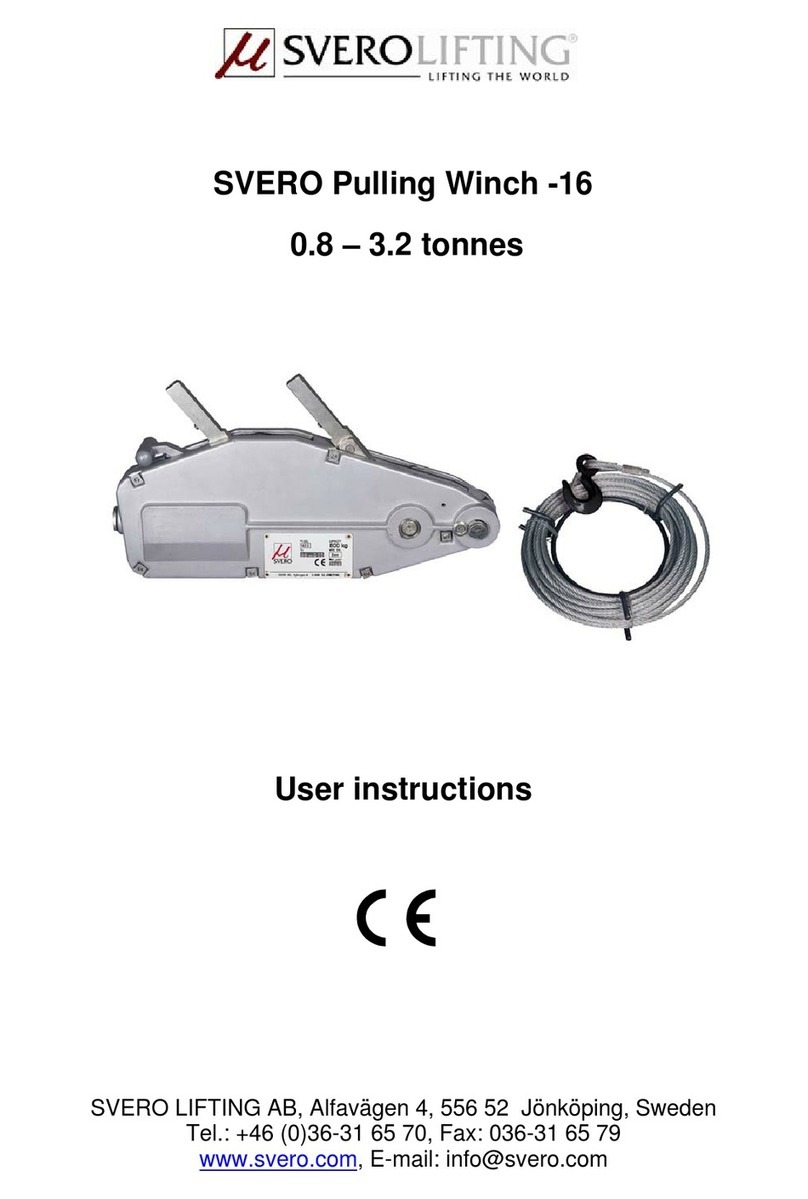
Operation of the cable winch with ratchet
3.1 Visual inspection before and after use
Check your cable winch with ratchet before and after each use to ensure trouble-free and
safe use of the cable winch. Perform a visual inspection of the following items:
All moving parts are free of foreign bodies and malfunctions.
All hooks, gears and latches are free from deformation, chemical corrosion, rust,
cracks or wear.
The safety gates of the hooks are intact and not bent.
The wire rope is not frayed, kinked or rusted.
The levers are not bent, cracked or otherwise damaged.
The frame is square and has no cracks or damage.
All moving parts are properly lubricated.
All screws, nuts and rivets are securely and tightly fastened.
Cams, gears and pawls are undamaged.
Lubricate all moving parts regularly.
3.2 Use of the cable winch with ratchet
3.2.1 Unrolling wire cable
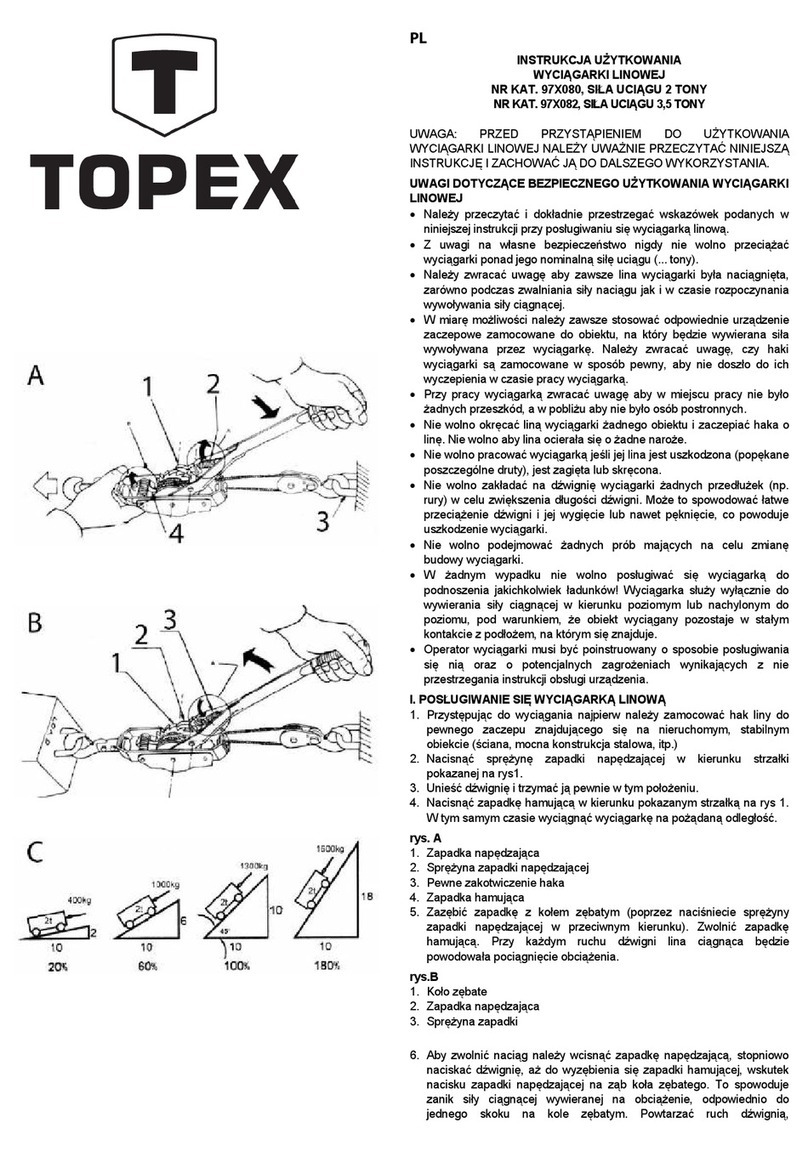
1. Attach the end hook of the ratchet hoist to a load-bearing and solid abutment in
order to be able to absorb the tensile forces. Make sure that the safety catch of the
hook is fully closed.
An insufficiently stable abutment can start moving uncontrollably due
to the tensile forces and lead to serious or even fatal injuries to
persons and damage to property.
2. The release spring is located in the lower area of the handle unit, place your thumb
on the tab there and release the spear pawl by pressing the tab.
3. Place the index finger of the other hand on the second pawl lever located on the
swivelling end hook.
4. While holding down the pawl release, unwind the cable/strap in the pulling direction
until you have reached the desired length.
3.2.2 Lifting or pulling a load
1. Attach the pulley to the object. Make sure that all hook safety gates are fully closed.
2. Attach the hook on the wire/tape end to the load.
3. Move the handle and release the pawl to secure it on the ratchet wheel.
4. Grip the handle firmly and move it back and forth; visually check the load and hooks
to make sure everything is secure. Keep fingers, clothing, hair, etc. away from
moving parts. Grip the handle firmly. If the support object shows signs that it can no
longer support the load, stop immediately and release the tension on the load
according to step 3.2.3 Release the hoist and move to a stronger, alternative support
object and start from step #1.