7
b The physical layout of pickup switches
will vary from one instrument to anoth-
er, although their electrical function will
always be similar. The switch fitted to
most three pickup instruments will nor-
mally be a two pole, three way type,
with the two poles being connected to-
gether as shown in fig 4. The only con-
nection you will need to make to this
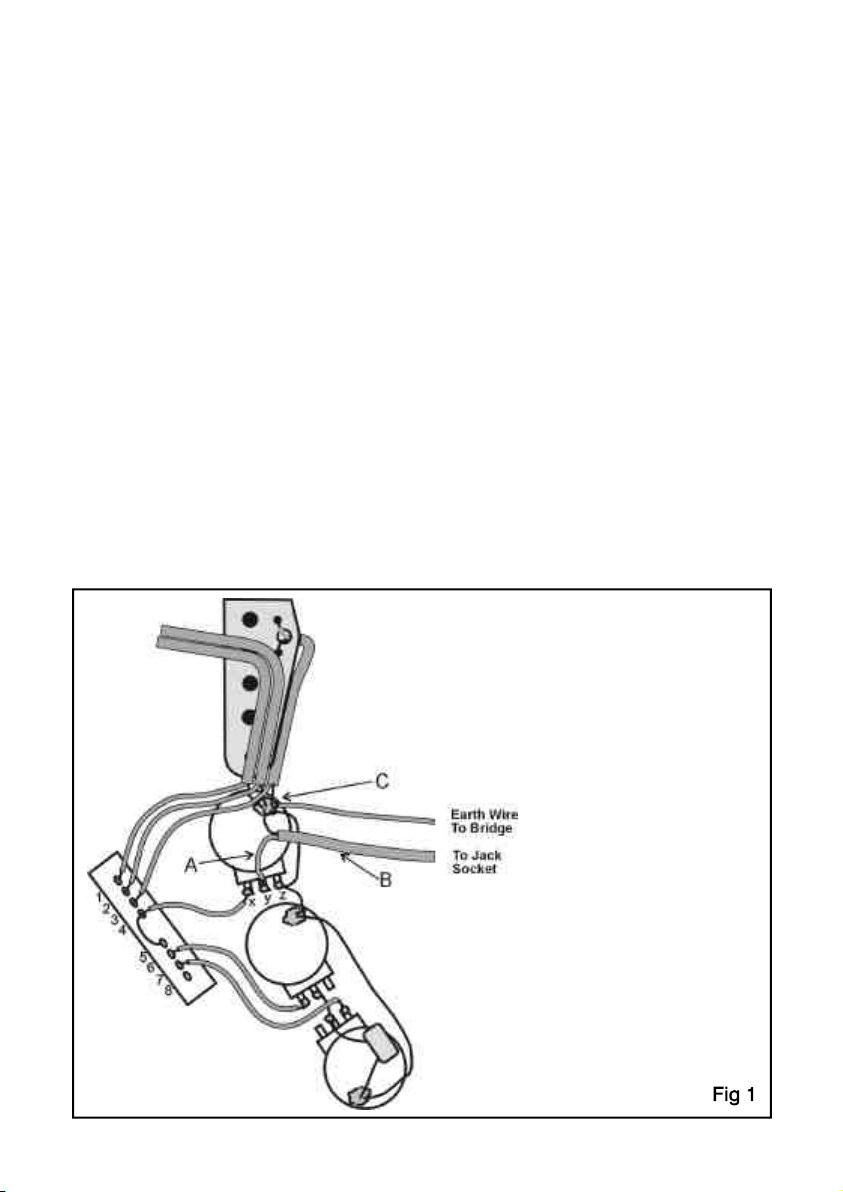
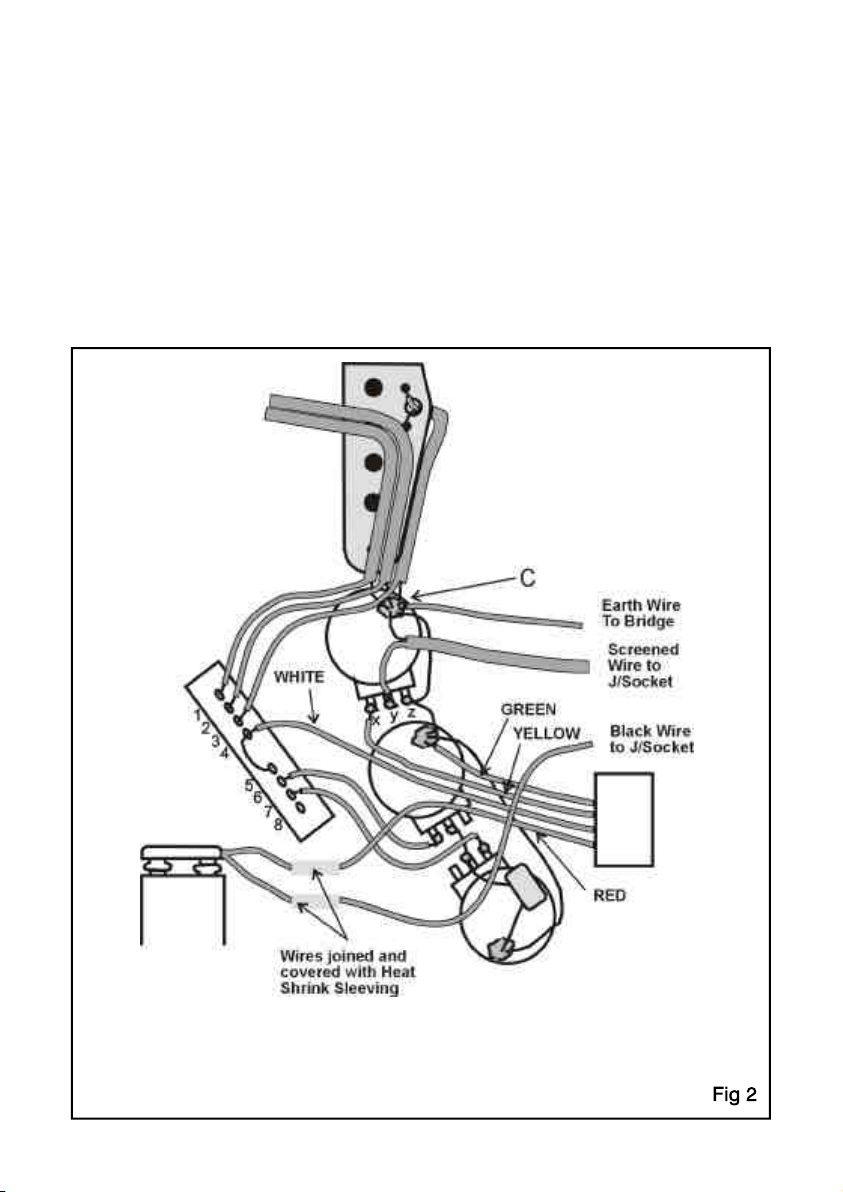
switch is to the poles - if you spend a few minutes following the wiring in your instru-
ment and comparing it to figures 1 and 4, all should become clear.
c On a typical instrument, there are a few possible posi-
tions for the battery, the most obvious being in the
bottom of the control cavity. This does however make
battery replacement a chore if all the strings have to
be removed for access!
d On instruments with a fulcrum trem system, if the trem
springs are mounted as shown in Fig 5, the battery
will fit neatly under the backplate as shown - a small
piece of foam will prevent any movement.
e If the sound of the instrument is felt to have too much
high frequency content (ie a “glassy” or “brittle” sound),
this can be “tamed” by connecting a 1M resistor
(supplied) between the input of the Activator module (The
white wire) and earth as shown in fig 6. This will partially
restore the loading effect of the guitar’s controls, intro-
ducing a gentle high-frequency “roll-off”.
f Check that all earth connections to bridge, tone pots etc
are sound, and if there is no screening foil or finish in the
control cavity or under the pickups, it strongly recommended that you fit some - Sin-
gle coil pickups will always be liable to hum and noise, but screening will greatly
reduce the level of this.
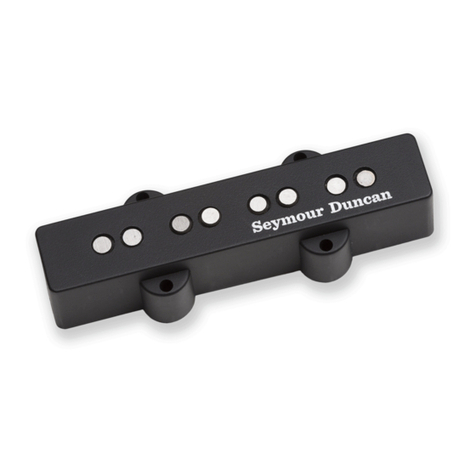
g To obtain the best performance from your instrument, always ensure that the pickup
pole pieces are as adjusted close to the strings as possible without rattles or "string
pull" (A warbling sound usually heard on the G string, with "vintage" pickups with
staggered magnets)
h It is recommended that you always use an alkaline battery to ensure best perform-
ance from your Activator system. With normal usage, the battery life should be
around 1000 hours. Please remember that the battery is switched on by inserting a
plug into the jack socket, so always unplug the instrument when it is not in use.
iAlways turn down the volume on your amplifier when plugging in or unplugging the
instrument, to avoid loud pops.