manuals.online logo
Brands
  1. Home
  2. •
  3. Brands
  4. •
  5. Hotpoint
  6. •
  7. Dishwasher
  8. •
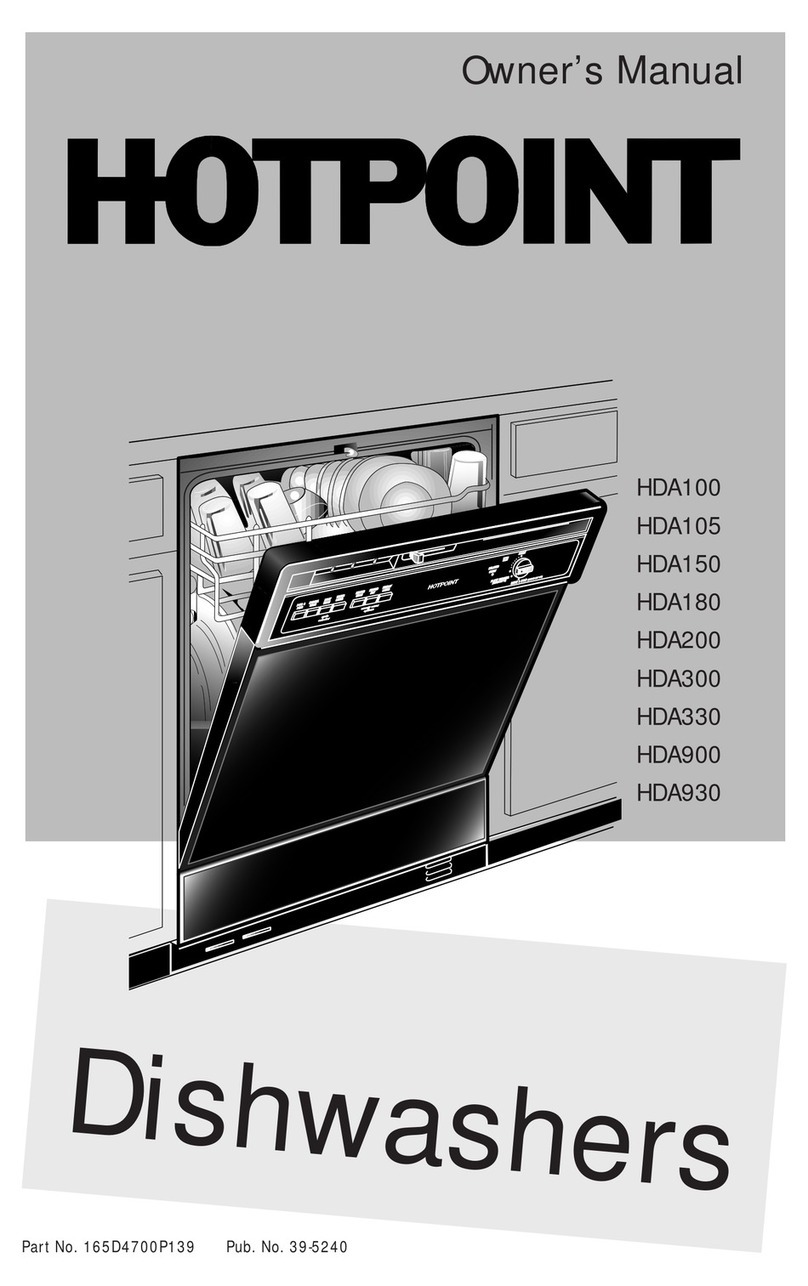
  9. Hotpoint HDA400 Installation instructions

Hotpoint HDA400 Installation instructions

Other manuals for HDA400

2

This manual suits for next models

1

Other Hotpoint Dishwasher manuals

Hotpoint FDUD 51110 ULTIMA User manual

Hotpoint

Hotpoint FDUD 51110 ULTIMA User manual

Hotpoint HDA1000 series User manual

Hotpoint

Hotpoint HDA1000 series User manual

Hotpoint LST 114 User manual

Hotpoint

Hotpoint LST 114 User manual

Hotpoint HFC3C26WCUK Installation and operation manual

Hotpoint

Hotpoint HFC3C26WCUK Installation and operation manual

Hotpoint LFT 114 User manual

Hotpoint

Hotpoint LFT 114 User manual

Hotpoint SISML 21011Smart Tech User manual

Hotpoint

Hotpoint SISML 21011Smart Tech User manual

Hotpoint LSTF 9H117 User manual

Hotpoint

Hotpoint LSTF 9H117 User manual

Hotpoint LTF 11S112 User manual

Hotpoint

Hotpoint LTF 11S112 User manual

Hotpoint HDA1OOOK Installation instructions

Hotpoint

Hotpoint HDA1OOOK Installation instructions

Hotpoint SDL 510 User manual

Hotpoint

Hotpoint SDL 510 User manual

Hotpoint HDA2000FBB Service manual

Hotpoint

Hotpoint HDA2000FBB Service manual

Hotpoint HDA750 Installation instructions

Hotpoint

Hotpoint HDA750 Installation instructions

Hotpoint H2F HL626 UK Installation and operation manual

Hotpoint

Hotpoint H2F HL626 UK Installation and operation manual

Hotpoint HDA489M Installation instructions

Hotpoint

Hotpoint HDA489M Installation instructions

Hotpoint PFK 724 User manual

Hotpoint

Hotpoint PFK 724 User manual

Hotpoint LSTF 9H126 User manual

Hotpoint

Hotpoint LSTF 9H126 User manual

Hotpoint FDEB 31010 EXPERIENCE User manual

Hotpoint

Hotpoint FDEB 31010 EXPERIENCE User manual

Hotpoint HDA3600VBB User guide

Hotpoint

Hotpoint HDA3600VBB User guide

Hotpoint FDYF 11011 STYLE User manual

Hotpoint

Hotpoint FDYF 11011 STYLE User manual

Hotpoint HDA430 User manual

Hotpoint

Hotpoint HDA430 User manual

Hotpoint FDD 912 User manual

Hotpoint

Hotpoint FDD 912 User manual

Hotpoint DF51 User manual

Hotpoint

Hotpoint DF51 User manual

Hotpoint LFTA+ 2174 User manual

Hotpoint

Hotpoint LFTA+ 2174 User manual

Hotpoint LFTA+ 3214 User manual

Hotpoint

Hotpoint LFTA+ 3214 User manual

Popular Dishwasher manuals by other brands

Electrolux ESI5211LOX user manual

Electrolux

Electrolux ESI5211LOX user manual

KitchenAid KUDB230B Use and care guide

KitchenAid

KitchenAid KUDB230B Use and care guide

Brandt BDJ424DB instruction manual

Brandt

Brandt BDJ424DB instruction manual

Asko DSD767UXXL.AU user manual

Asko

Asko DSD767UXXL.AU user manual

Beko DFN26210W instruction manual

Beko

Beko DFN26210W instruction manual

NEFF S153ITX00E INFORMATION FOR USE

NEFF

NEFF S153ITX00E INFORMATION FOR USE

Midea SV 4.45 wi manual

Midea

Midea SV 4.45 wi manual

LG LDF7932 Specifications

LG

LG LDF7932 Specifications

Gorenje GV63214 instruction manual

Gorenje

Gorenje GV63214 instruction manual

Blomberg LDFN2240W instruction manual

Blomberg

Blomberg LDFN2240W instruction manual

AEG FFB83836PM user manual

AEG

AEG FFB83836PM user manual

Cylinda DM3220RFD user manual

Cylinda

Cylinda DM3220RFD user manual

Atag DW8214MB manual

Atag

Atag DW8214MB manual

GE GLD8000 Series owner's manual

GE

GE GLD8000 Series owner's manual

Siemens SN23HI02KE INFORMATION FOR USE

Siemens

Siemens SN23HI02KE INFORMATION FOR USE

Omega ODW717X instruction manual

Omega

Omega ODW717X instruction manual

BORETTI BVW-683 operating instructions

BORETTI

BORETTI BVW-683 operating instructions

Siemens SN 56N591 operating instructions

Siemens

Siemens SN 56N591 operating instructions

manuals.online logo
manuals.online logoBrands
  • About & Mission
  • Contact us
  • Privacy Policy
  • Terms and Conditions

Copyright 2025 Manuals.Online. All Rights Reserved.

‘O
thebestfrom
Dishwashe
Contents
Air Gap 11 Drying Options 4,5
Appliance Registration 2Problem Solver 13-15
Care and Cleaning 11 Rinse Agent 6
China, Crystal, Sterling 10 Safety Instructions 3
Consumer Services 19 User Maintenance Instructions 11
Cycle Features 4,5 warranty Back Cover
Detergent, Detergent Guide 7Water Temperature 6
Dispenser Cups 7Winter Storage 11
Front Panel Color Change 12
Important Phone Numbers 15, 19
Loading 8,9
Model and Serial Numbers 2
Operating Guide 4,5 GE Answer Cente@
Cycle Selection 4,5 800.626.2000
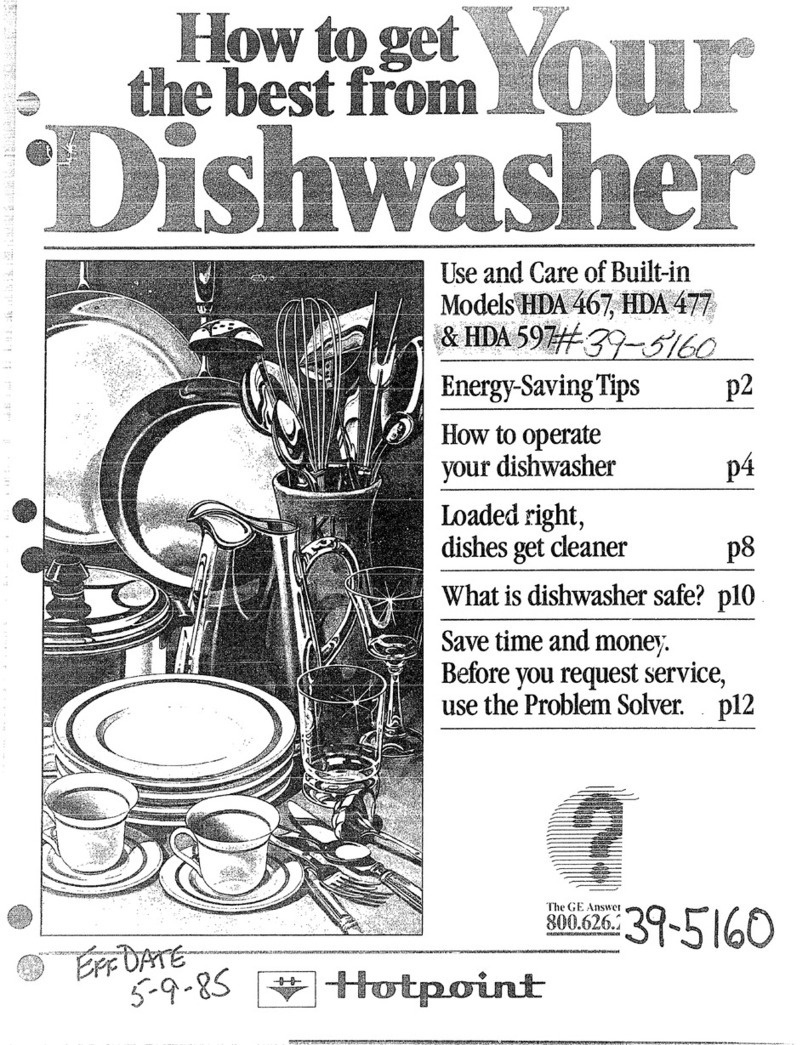
UseandCareof
built-inmodels
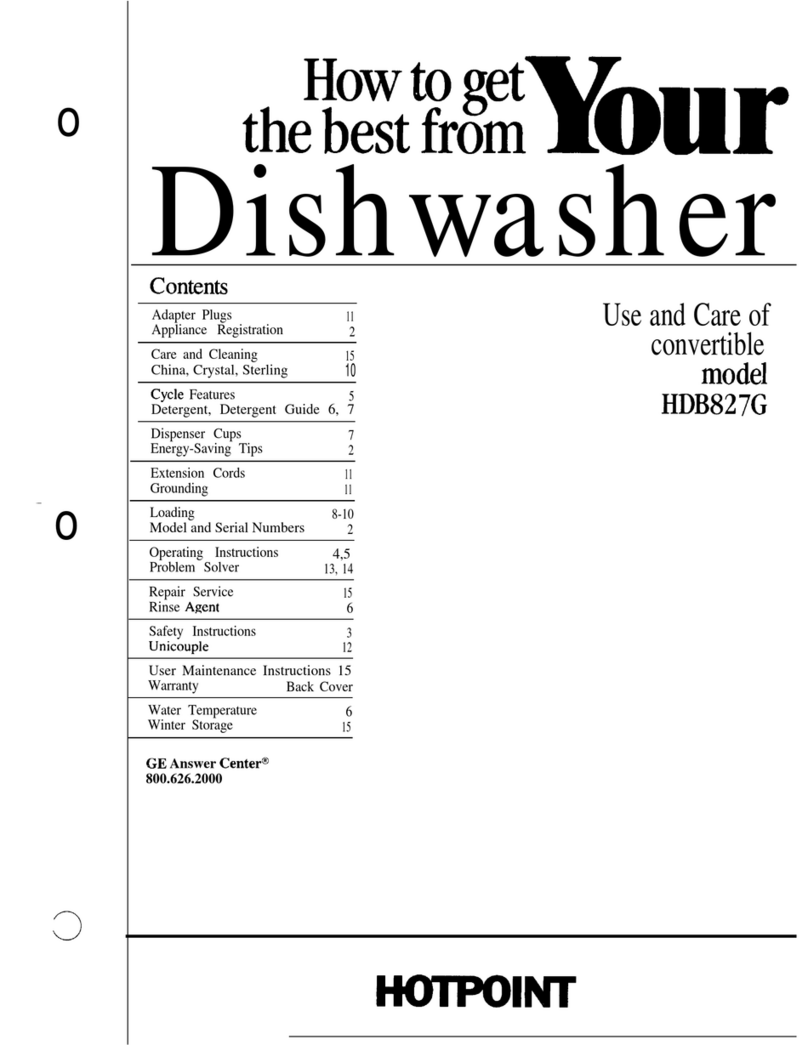
HDA400
HDA430
Anotetoconsuiner—
We’d like to thank you ~d congratulateyou for making the wise decision in purchasing your dishwasher.
This User Guide is designed to be kept near your dishwasher at all times for quick and easy reference. Features
may vary on some dishwasher models. Please read the following tips to insure your dishwasher is operating at its
best performance.
We care about you and your appliance and we want your dishwasher todo tisjobfor you.
●HOT WATER—Your dishwasher
*
needs hot water for best results. Water
entering the dishwasher should be at
least 120”F.but your dishwasher
performs BETTER with HIGHER
water temperatures not to exceed 150°F.
●WATER HARDNESS-The hardness
of thewaterplaysan importantpartin
how wellyourdishwashercleans.In
areaswherewateris very hard (12 grains
or more),itmaybe necessaryto install
awatersoftener.If you do notknow the
hardnessof yourwatersupply,contact
yourlocalwaterdepartment.
●DETERGENTS-Only usedetergents
o
labeledfor usein automaticdishwashers.
Irsm
mANeveruselaundrydetergentsor
liquidsoaps..that willcauseoversudsing
P
>.
0and leaks.The amountof detergentyou
... use dependson the waterhardnessand the
amountof soilon yourdishes.In most
cases,detergentamountsshouldbe
increasedfor hard waterand heavysoil.
&●RINSE AGENT—should alwaysbe used:
—to reduce water spotting.
Q—to improve drying.
‘b Always check and refill the rinse agent
when necessary.
cFOR BEST RESULTS-The cycles
@
and the options you choose have an
effect on the results you get. The
following are examples. (Please, see the
/Operating Instructions, Tips for more
information.)
“HEATED WASH OPTION—
e
—use with heavily soiled loads.
—adds heat to water for best washing
and drying.
“POTS &PANS CYCLE-
—use with dried or baked-on heavily
soiled loads.
oBeforeusingyourdishwasher,
‘Q“;~readthisguidecarefully.
+ + ..
.It is intended to help you operate and
maintain your new dishwasher properly.
Keep it handy for answers to your questions.
If you don’t understand somethingor need more help, call:
GE Answer Center@
800.626.2000
24 hours aday, 7days aweek.
%
If you receiveda
damageddishwasher...
I
L~ /’ Immediatelycontactthe dealer(or
builder)thatsoldyou thedishwasher.
Savetimeandmoney.
Beforeyou requestservice...
Check the Problem Solver in the back of this guide. It lists
causes of minor operating problems that you can correct
yourseIf.
Writedownthemodel
andserialnumbers.
You’llfindthemon alabelfastenedto the
tub walljust insidethedishwasherdoor.
These numbers are also on the Consumer Product
Ownership Registration Card that came with your
dishwasher. Before sending in this card, please write
these numbers here:
Model Number
Serial Number
Use these numbers in any correspondence or service calls
concerning your dishwasher.
We’11be there...
No matter what major appliance you buy from us, you
always get more than aquality product. You receive the
added assurance that, should you ever need our help, we’11
be there.
We ask that you please be sure to read all the Important
Safety Instructions before operating your new appliance
to insure your safety.
2
AWARNING-Whenusingthis appliance,
always exercise basic safety precautions,
including the following:
Usethisapplianceonlyforitsintendedpurpose,
asyouwillfinddescribedinthisUseamd
Care
Guide.
This
dishwasher must be properly installed and located
in accordance with the Installation Instructions before
itisused.IfyoudidnotreceiveanInstallation
Instructionssheetwithyourdishwasher,youcan
obtainonebycalling,tollfree,theGEAnswer
Center?800.626.2000.
GROUNDINGINSTRUCTIONS
---Connecttoaproperlyrated,protectedandsized
powersupplycircuittoavoidelectricaloverload.
—Thisappliancemustbeconnectedtoagrounded
metal,permanentwiringsystem;oranequipment-
groundingconductormustberunwiththecircuit
conductorsandconnectedtotheequipment-
groundingterminalorleadoftheappliance.
AWARNING-Theimproperconnectionofthe
equipment-groundingconductorcanresultina
riskofelectricshock.Checkwithaqualified
electricianorservicerepresentativeifyouarein
doubtwhethertheapplianceisproperlygrounded.
●Donotstoreoruse combustiblematerials,
gasolineor otherflammablevaporsandliquids
in the vicinityof this or any otherappliance.
●Useonlypowderorliquiddetergentsorwetting
agentsrecommendedforuseinadishwasher.
●Donotwashplasticitemsunlessmarked
“dishwashersafe”ortheequivalent.Forplastic
itemsnotsomarked,checkthemanufacturer’s
recommendations.
●Loadlightplasticitemssotheywillnotbecome
dislodgedanddroptothebottomofthe
dishwasher—theymightcomeintocontactwiththe
heatingelementandbedamaged.
Tominimize the possibility of injury.
●Whenloadingitemstobewashed:
A.Locatesharpitemssothattheyarenotlikely
todamagethedoorseal,and
B.Loadsharpkniveswiththehandlesupto
reducetheriskofcut-typeinjuries.
●Donottamperwithcontrols.
●Donottouchtheheatingelementduringor
immediatelyafteruse.
*Donotoperateyourdishwasherunlessallenclosure
panelsareproperlyinplace.
*Donotabuse,siton,orstandonthedoorordish
rackofthedishwasher.
●Closesupervisionisnecessaryifthisapplianceis
usedbyornearchildren,Donotallowchildrento
playinside,onorwiththisapplianceorany
discardedappliance.Disposeofdiscarded
applimcesandshippingorpackingmaterial
properly.Beforediscardingadishwasher,remove
thedoorofthewashingcompartment.
●Keepallwashingdetergentsandwettingagents
outofthereachofchildren,preferablyinalocked
cabinet.Observeallwarningsoncontainerlabels
toavoidpersonalinjury.
●Tominimizethepossibilityofelectricshock,
disconnectthisappliancefromthepowersupply
beforeattemptinganymaintenance.NOTE:
TurningthecontroldialtotheOFFpositiondoes
notdisconnecttheappliancefromthepower
supply.Werecommendhavingaqualified
technicianserviceyourappliance.
●Donot attemptto repairor replaceany part
of yourdishwasherunlessit is specifically
recommendedin this guide.Allotherservicing
shouldbereferredtoaqualifiedtechnician.
AWARNING-HYDROGENGASisproduced
bythechemicalactionwithinyourwater
heater,Itcanaccumulateinthewaterheater
and/orwaterpipesifhotwaterhasnotbeenusedfor
aperiodoftwoweeksorlonger.HYDROGENGAS
ISEXPLOSIVE.Topreventthepossibilityof
damageorinjury,ifyouhavenotusedhotwaterfor
twoweeksormore,ormovedintoaresidencein
whichthehotwatersystemmaynothavebeenused
forsometime,turnonallhotwaterfaucetsand
allowthemtorunforseveralminutesbeforeusing
anyelectricalappliancewhichisconnectedtothe
hotwatersystem,Thiswillallowanyhydrogengas
toescape.Also,sincethegasisflammable,donot
smokeoruseanopenflameorapplianceduringthis
process.
SAVETHESE
INSTRUCTIONS 3

HOWTOOPERA~ YOURDISHWASHER
Yourdishwasher is designed to give maximum
performance on loads with normal and heavy soils.
Youmay find that many of your dishes have lighter
soilsthan normal; if this is the case you can save
water and energy by selecting acycle other than
NORMAL WASH.
NOTE: If dishwasher drains into afood waste
disposal, operate the disposal until it is empty before
starting dishwasher.
Step 1.Load your dishwasher. (SeeLoading
section.)
Step z. Make sure the Cycle Indicator Dial is at
the OFF position and the door is unlatched. Add
detergent to the detergent dispenser. (See Detergent
Guide.) Use arinse aid agent to help prevent
spotting. (See How to Use aRinse Agent section.)
Step3. Latch the door.
Step 4. Select desired wash cycle.
“POTS &PANS-For items such as pots, pans and
casseroles with dried-on or baked-on soils.
Everyday dishes may be included. This cycle will
get heavily soiled dishes cleaner than the normal
cycle. It will not remove burned-on foods.
●NORMAL WASH—For most loads of everyday
dishes, glasses and cookware with medium soils.
Designed to yield high performance on normal soils.
●WATER SAVER—For dishes with light soils. This
cycle uses less water than the other cycles.
r
~~T$ NORMAL WATER HwMA:fiO HEAAfD E~fj&Y
WASH SAVER
mmm [rnllrnllrnl
.% =“
Featuresand appearancemay vary slightly.
Step 5. Select the desired Energy Options.
●HEATED WASH—Use this option for best
performance with heavily-soiled dishes. When
selected, the wash cycle adds extra heat to the
water for the best washing and drying. (See Cycle
Selection Chart.)
●HEATED DRY—Turns the drying heater on for
fast drying.
●ENERGY SAVER—Shuts off the heating unit,
thus saving energy.Dishes air-dry naturally. It takes
longer but saves energy. Youcan open the door after
the motor stops to speed drying. Excellent for
overnight drying.
Step6. ~rn the Cycle Indicator Dial to ON.
●Turning the dial to ON will begin the cycle
immediately. To obtain the benefits of acomplete
cycle, be careful that you do not turn the dial any
farther than is necessary to start the dishwasher.
There is atime delay between start-up and water
fill so you will not hear any wash action right away.
4
OFF ON
●*
PLATE WARMER ●
IWno DRYOrl) (u)
Dial Cycles
The RINSE &HOLD cycle is for rinsing
partial loads which will be washed later.
Do not use detergent.
a. Make sure ENERGY SAVER is selected.
b. Be sure the door is unlatched.
c. Slowly turn the Cycle Indicator Dial to
RINSE &HOLD.
d. Latch the door to start the cycle.
The PLATE WARMER cycleis for warmingclean
dishesand servingplatesfor the servingof hotfoods.
The cyclewilltake approximately32 minutesif selected.
a. Load clean plates and dishes to be warmed,
b. Select HEATED DRY.
c. Be sure the door is unlatched.
d. Slowly turn the Cycle Indicator Dial to
PLATE WARMER.
e. Latch the door to start the cycle.
CycleSelectionChart
WashCycle
Water Use Time
Gallons Minutes
Wash Cycles (approx.) (approx.) Cycle Sequence
POTS &PANS 10.2 62 mmmmmmm
NORMAL WASH 8.6 62 mmmmmm
WATERSAVER 7.0 62 WFIFIWFI
RINSE &HOLD 4.2 12 mmm
DryingOptions:
HEATEDDRY,AvailableonallwashcyclesexceptRINSE& HOLD.
ENERGYSAVER.Dryingheateristurnedoff.Dishesdrynaturally.
5
GoodDishwashingStark withHOTWater
Toget dishes clean and dry,you need hot water.For good washing and
drying,the entering water must beat least 120”F.To preventdish damage,
inlet water shodd not exceed 150”F.
Howto TestWaterTemperature
Check your water temperaturewith acandy or meat
thermometer.Turn on the hot water faucet nearest
the dishwasher.Put the thermometerin aglass and
let the water run continuouslyinto the glass untilthe
temperaturestopsrising. If the water temperature is
below 120°F.,adjustyour water heater.
Helpfulhints: If outsidetemperaturesare unusually
low,or if yourwater travelsalong distancefrom water
heater to dishwasher,you may need to setyour water
heater’sthermostatup. If you have not used hot water
for sometime, the waterin the pipes willbe cold.Turn
on the hotwater faucet at the sink and allow it to run
untilthe water is hot. Then startthe dishwasher.If
you’ve recentlydone laundryor run hot water for
showers,give your water heater time to recover before
operatingthe dishwasher.
To improve washabilityif the water is less than
120”F.and you cannot adjustyour water heater: Select
alongercycle or the HEATEDWASHoption and fill
both detergentcups at least half-fullwith detergent.
How to UseaRinseAgent
The rinse agent makes water flow off dishes
quicker than usual. This lessens water spotting
and makes drying faster, too.
For best dishwashing performance, use of arinse
agent such as JET-DRY brand is recommended.
Rinse agents come in either liquid or solid form.
Yourdishwasher uses the liquid form.
How to fill the rinse agent dispenser.
Unscrew the cap.
Add liquid rinse agent
until itjust reaches the
bottom of lip inside the
o
4L
/“
dispenser opening. p;
Replace cap. The D
dispenser automatically
releases rinse agent into
final rinse water.
Youmay check to see if you need to add rinse agent by
removing the fill cap and looking into the container.
Youmay also check the rinse agent, on some models,
by pressing the clear center of the fill cap 2or 3times.
If rinse agent is drawn into the center of the fill cap,
you have enough. If the center area remains clear add
rinse agent.
Yourdishwasher’s rinse agent container holds
approximately 4fi ounces. This should last about
3months. Fill as needed.
If you accidentally spill: Wipe up the rinse
agent with adamp cloth. Don’t leave the spill in the
dishwasher. It can keep your detergent from working.
If you can’t find any rinse agent, write:
BENCKISER CONSUMER PRODUCTS, INC.
(“JET-DRY”)
Corporate Centre 1
55 Federal Road
P.O. Box 1991
Danbury, CT 06813-1991
6
Howto ChooseandUsethe RightDetergent
Use onlypowderorliquiddetergentspecifically
madeforuseindishwashers.Other&peswillcause
oversudsing.
How muchdetergentshouldyouuse?That depends.
Is yourwater “hard” or “soft”? Withhard water,you
needextradetergentto get dishesclean.Withsoftwater,
you need lessdetergent.
Yourwater departmentcantell youhowhardyour
wateris. Socan yourcountyextensionagentor your
area’swatersoftenercompany.Justcall and ask them
howmany “grains” of hardnessthereare in yourwater.
Toomuch detergentwith soft water not only wastes
money,it can be harmful.It can cause apermanent
cloudinessof glassware,called “etching.” An outside
layerof glass is etched away! Of course, this takes
some time.But why take achance when it’seasy to
find outthe hardnessof your water.
Keepyourdetergentfreshand dry. Underthe sink
isn’tagoodplaceto storedetergentbecausethere is too
muchmoisture.Don’tputpowderdetergentintothe
dispenseruntilyou’rereadyto washdishes,either.(It
won’tbefresh OR dry.)
If yourpowderdetergentgetsold or lumpy,throwit
away.Old detergentoftenwon’tdissolve.If you use a
liquiddishwasherdetergent,theseprecautionsare not
necessarybecauseliquiddetergentsdon’t “lump” as
they ageor come in contactwith moisture.
Detergent Dispensers
You’llfind two detergent dispensers on the inside Closethemain cup.
NOTE: Toopendetergentcupafterit
hasbeenclosed,unlatchthedoorand
rotatetheCycleIndicatorDialajidl turn
to theOFFposition.Whentheclosedcup Grasp handle,
rotate and
containssoapit isbestthatthedoorbe in close tightly
apartiallyopenpositionbeforerotatingthe
CycleIndicatorDial.Thiswillhelpreducetheamount
ofdetergentandrinseaidagentspillageintothetub.
DetergentUsageGuide(powderor liquid)
SO~ WATER(O-3grains hardness) MEDIUM WATER(3-7 grains) HARD WATER(7-12grain~*)
CYCLES Main Cup Open Cup Main Cup Open Cup Main Cup~ Open Cup*
I1I
POTS &PANS Half Fu1l +Half Full Completely +Half Full Completely
NORMAL WASH +Completely
Full Full Full
WATERSAVER Half Full None Half Full None Completely None
Full
RINSE &HOLD Use no detergent Use no detergent Use nodetergent
*12grains and up is extremely hard water. Awater softener is recommended. Whhout it, lime +Filled Main Cup holds 3tablespoons;
can build up in the water valve. The water valve may stick while open and cause flooding. filled Open Cup holds 2tablespoons.
How to Prepare the Dishes for Washing
If thisis your first dishwasher,or if you’re replacing NOTE: You may also want to consider removing
amuch oldermodel, you may wonder how much foods such as mustard, mayonnaise, vinegar, lemon
preparationyour dishesneed. Actually very little. juice and other foods that can cause discoloration of
Scrapeoffbones, seeds, skins, toothpicksand other stainless steel if allowed to remain on dishes for along
hardsolids.Removeexcessivequantitiesof oil or grease. period of time.
The POTS &PANS cycle can wash heavily soiled
dishes and remove dried-on and baked-on soils from
pots, pans and casseroles. Items with burned-on
soils need extra preparation. 7
HOWTOLOADYOURDISWASHER
NOTE: Do not load large platters or trays in front right corner of lower
rack. They may prevent detergent from circulating in the wash cycle.
The upper rack is handy for all kinds of odd shapes.
Sauce pans, mixing bowls and other items should
be placed face down. When loading dishwasher safe
plastics make sure each plastic item is secured over
two fingers. This will insure good washing results.
The upper rack is best for glasses, cups and
saucers. Cups and glasses fit best along the sides.
This is also the place for dishwasher-safe plastics.
Make sure small plastic items are lodged in tightly so
they can’t fall onto the heating unit. Arrange stemware
so that it cannot move easily.‘Don’tlet the-glasses
touch each other.
Keep center area clear in the lower rack.
The wash tower rises through the center of the lower
rack during the wash and rinse portions of the cycle.
Don’t block it or load tall things next to it. Also, be
careful not to let aportion of an item such as apot or
dish handle extend through the bottom rack. This could
block the wash arm and cause poor washing results.
8
Put flatware in the removable basket with fork and knife
handles up to protect your hands. Place spoonsin the
basket with handles down. Mix knives, forks and
spoonsso they don’t nest together.Distribute evenly.
Small plastic items, such as measuring spoons and
lids from small containers are not recommended for
automatic dishwashing. If placed in dishwasher, they
should go in bottom of silverware basket with
silverware on top.
The lower rack is best used for plates, saucers, and
cookware. Large items such as broiler pans and racks
should go in the lower rack along the edge. Load
platters, pots and bowls along the sides, in corners,
or in the back. For best washing results, all items
should be positioned with the soiled side of the dish
facing the center of the rack.
Precaution!
Take out anything that may fall or extend through the
bottom of the basket.
9
WHATYOUCANUSUALLYWASHSAFELY
INYOURDIS~ASHER
Material
Aluminum
China/
Stoneware
Crystal
Non-dishwasher
items—such
as electronic
air cleaner
filters, furnace
filters, paint
brushes, etc.
Glass
Iron
Pewter
Plastics
Stainless steel
Sterling silver
and silver plate
Non-stick
coatings
Tin
Wood
Usually
Safe
YES
YES
YES
NO
YES
NO
NO
YES
YES
YES
YES
NO
NO
Exceptions (not safe)
Some colored anodized
aluminum can fade.
Antique, metal-trimmed,
hand-painted or over-the-glaze
patterns fade. Gold leaf
will discolor.
Antique, metal-trimmed or
hand-painted patterns fade.
Gold leaf will discolor,
Iron will rust.
Pewter tarnishes.
Don’t put in same silverware
basket with stainless steel.
Contact between metals can
damage silver,
Don’t wash copper utensils in
the same load. Silver may get a
brown film.
Adhesive used to attach some
hollow-handle knives can loosen,
T]n can rust.
Woodcan warp, crack or lose
its finish with any type of washing.
Special Instructions
Some darkening or spotting possible. Remove by
scouring with soap-filled steel wool pads.
If in doubt, check with the manufacturer. Or test wash
one piece daily for at kast amonth. Compare with the
rest of the set,
Load securely to prevent movement. Check your
manufacturer’s instructions for your crystal.
Do not wash in dishwasher. Damage to dishwasher
and discoloration or staining of dishwasher may result.
If it doesn’t say DISHWASHERSAFE, test one piece in
the top rack before dishwashing an entire set.
Rinse if not washing imediately. Salty or acidic foods
can stain il left on.
Rinse if not washing immediately. Salty or acidic foods can
stain if left on. Dry detergent can cause difficult-to-remove
black spots. Place in hack section of silverware basket to
avoid exposure to detergent from the detergent cup.
After washing, wipe the non-stick coating area with
vegetable oil to keep it from losing its non-stick quality.
Forgetadish?Here’swhenyoucan addit:
Add dishes any time during the RINSE &HOLD Here’s how to add aforgotten dish:
cycle. With other wash cycles, you can add dishes 1. Push the door latch to the left. ~dshing will stop.
at any time BEFORE the main detergent wash portion
of the cycle. 2. Waitafew seconds until the water calms. Then
However, opening the door during any cycle open the door. WARNING: Hot vapor may rise
lessens cleaning power. So try to load everything from opened door.
at the beginning. 3. Add dishes you’ve forgotten.
4. Close the door and push the latch to the far right.
When the door is locked, washing will continue.
10