manuals.online logo
Brands
  1. Home
  2. •
  3. Brands
  4. •
  5. Hypertherm
  6. •
  7. Welding System
  8. •
  9. Hypertherm HT4400 Specification sheet

Hypertherm HT4400 Specification sheet

Other manuals for HT4400

1

Other Hypertherm Welding System manuals
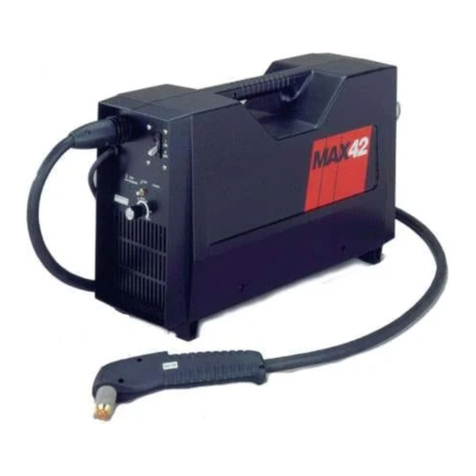
Hypertherm Powermax45 XP Reference manual

Hypertherm

Hypertherm Powermax45 XP Reference manual

Hypertherm powermax65 Reference manual

Hypertherm

Hypertherm powermax65 Reference manual

Hypertherm XPR300 User manual

Hypertherm

Hypertherm XPR300 User manual

Hypertherm Powermax105 User manual

Hypertherm

Hypertherm Powermax105 User manual

Hypertherm MAX42 User manual

Hypertherm

Hypertherm MAX42 User manual

Hypertherm HPRXD Series Guide

Hypertherm

Hypertherm HPRXD Series Guide

Hypertherm Powermax1100 User manual

Hypertherm

Hypertherm Powermax1100 User manual

Hypertherm Powermax45 XP Reference manual

Hypertherm

Hypertherm Powermax45 XP Reference manual

Hypertherm H65 User manual

Hypertherm

Hypertherm H65 User manual

Hypertherm Powermax30 AIR User manual

Hypertherm

Hypertherm Powermax30 AIR User manual

Hypertherm Powermax45 XP Reference manual

Hypertherm

Hypertherm Powermax45 XP Reference manual

Hypertherm Powermax45 XP Reference manual

Hypertherm

Hypertherm Powermax45 XP Reference manual

Hypertherm powermax800 User manual

Hypertherm

Hypertherm powermax800 User manual
Hypertherm HPR130 User manual

Hypertherm

Hypertherm HPR130 User manual

Hypertherm powermax65 User manual

Hypertherm

Hypertherm powermax65 User manual

Hypertherm powermax900 User manual

Hypertherm

Hypertherm powermax900 User manual

Hypertherm Powermax45 XP User manual

Hypertherm

Hypertherm Powermax45 XP User manual
Hypertherm HyDefinition HD4070 Instruction sheet

Hypertherm

Hypertherm HyDefinition HD4070 Instruction sheet

Hypertherm Powermax30 AIR User manual

Hypertherm

Hypertherm Powermax30 AIR User manual

Hypertherm Powermax 65 User manual

Hypertherm

Hypertherm Powermax 65 User manual

Hypertherm POWERMAX 800 User manual

Hypertherm

Hypertherm POWERMAX 800 User manual

Hypertherm powermax1000 User manual

Hypertherm

Hypertherm powermax1000 User manual
Hypertherm Powermax 125 User manual

Hypertherm

Hypertherm Powermax 125 User manual

Hypertherm XPR170 Manual

Hypertherm

Hypertherm XPR170 Manual

Popular Welding System manuals by other brands

Razorweld RAZORCUT45 instruction manual

Razorweld

Razorweld RAZORCUT45 instruction manual

Lincoln Electric Fleet 500 Operator's manual

Lincoln Electric

Lincoln Electric Fleet 500 Operator's manual

Migatronic OMEGA 220 quick guide

Migatronic

Migatronic OMEGA 220 quick guide

Magmaweld ID 300T DC user manual

Magmaweld

Magmaweld ID 300T DC user manual

Sealey POWERMIG Series instructions

Sealey

Sealey POWERMIG Series instructions

Defort 98291254 user manual

Defort

Defort 98291254 user manual

Hobart Welding Products AirForce 375 owner's manual

Hobart Welding Products

Hobart Welding Products AirForce 375 owner's manual

GF MSA 330 instruction manual

GF

GF MSA 330 instruction manual

Hakko Electronics FX-888D instruction manual

Hakko Electronics

Hakko Electronics FX-888D instruction manual

Abicor Binzel ABIPLAS WELD 100 W operating instructions

Abicor Binzel

Abicor Binzel ABIPLAS WELD 100 W operating instructions

EWM Taurus 355 Basic TDM operating instructions

EWM

EWM Taurus 355 Basic TDM operating instructions

Thermal Dynamics PakMaster 100 XL plus operating manual

Thermal Dynamics

Thermal Dynamics PakMaster 100 XL plus operating manual

Berner PLASMACUT 54 instruction manual

Berner

Berner PLASMACUT 54 instruction manual

Pro Spot PR-155 Assembly instructions

Pro Spot

Pro Spot PR-155 Assembly instructions

Forney 210 operating manual

Forney

Forney 210 operating manual

Thermal Arc 400S operating manual

Thermal Arc

Thermal Arc 400S operating manual

Lincoln Electric HANDYMIG 170I Operator's manual

Lincoln Electric

Lincoln Electric HANDYMIG 170I Operator's manual

GYS PROTIG 201 AC/DC Original instructions

GYS

GYS PROTIG 201 AC/DC Original instructions

manuals.online logo
manuals.online logoBrands
  • About & Mission
  • Contact us
  • Privacy Policy
  • Terms and Conditions

Copyright 2025 Manuals.Online. All Rights Reserved.

To achieve maximum nozzle life
With careful use, the standard 300-amp or 400-amp
nozzle will last as long as the new SilverPlus electrode.
Pierce at correct height: Piercing too low causes
molten metal (spatter) to build up on the nozzle,
causing damage to the orifice. This is the most
common cause of premature nozzle failure. Piercing
too high can cause slow arc transfer and misfires. In
most applications, a pierce height of 1/4" (6 mm) –
3/8" (10 mm) works well.
Adjust gas flows: Preflow gas protects the nozzle
from damage, especially during piercing. Make sure
the preflow settings are adjusted according to the
cut chart.
Adjust arc voltage: As parts wear, increase arc
voltage in 5-volt increments to keep the nozzle from
dragging on the plate. Damage to the nozzle may
occur if the torch contacts the plate during cutting.
To achieve maximum SilverPlus electrode life
A fully used SilverPlus electrode will have a pit depth of
.080" (2 mm), versus the recommended .040" (1 mm)
pit depth for standard parts.
Purge torch: After each consumable part change, purge
the torch for at least 30 seconds to remove residual
moisture, which will damage the silver electrode.
Adjust gas flows: Plasma gas flow rate is critical.
High flow will cause rapid electrode wear and hard
starting. Low flow will cause uncontrolled arcing.
(See charts below)
Adjust arc voltage: As the electrode wears, the torch
will get closer to the plate. To compensate for this,
increase arc voltage in 3 to 5-volt increments, up to
15 volts higher than the initial setting.
Avoid ramp-down errors: Ramp-down errors can
occur when ending cuts off the plate or when leading
out of dropped parts as the arc stretches. These
“blowouts” shorten electrode life by 10 or more
starts per occurrence.
Part
number Description
1. 220412 Electrode, 300/400-amp oxygen
2. 120939 Swirl ring, 400-amp oxygen
3. 120940 Swirl ring (ccw), 400-amp oxygen
4. 120913 Swirl ring, 300-amp oxygen
5. 120914 Swirl ring (ccw), 300-amp oxygen
6. 120934 Nozzle, 400-amp oxygen
7. 120935 Nozzle (ccw), 400-amp oxygen
8. 120794 Nozzle, 300-amp oxygen
9. 120795 Nozzle (ccw), 300-amp oxygen
10. 120786 Retaining cap
11. 120907 Retaining cap, with IHS tab
12. 120984 Retaining cap, underwater
SilverPlus is a proven technology that dramatically
extends electrode life and significantly reduces operating
cost. This remarkable technological advance is now
available on the HT4400 HySpeed®plasma system
cutting with 300-amp and 400-amp oxygen process.
1.
2, 3, 4, 5.
6, 7, 8, 9.
10, 11.
12.
HT4400, 300-amp cut chart
MV1 MV2 MV3 MV4 MV5 MV6 MV7 PG1 PG2 PG1 PG2 (in) (mm) volts (in) (mm) ipm mm/m in. mm seconds
1/4** 6** 120 0.062 2 190 4830 0.13 3 0.3
3/8** 10** 125 0.125 3 160 4060 0.25 6 0.5
1/2 12 130 0.157 4 120 3050 0.31 8 0.7
5/8 15 135 0.188 5 100 2540 0.38 10 0.9
3/4 20 140 0.188 5 80 2030 0.38 10 1.1
7/8 22 145 0.188 5 70 1780 0.38 10 1.3
1 25 145 0.188 5 55 1400 0.38 10 1.5
1-1/8 30 150 0.188 5 50 1270 * * *
1-1/4 32 155 0.25 6 45 1140 * * *
1-1/2 35 155 0.25 6 35 890 * * *
20 42 46 3524 35 3546 0 0 10
Pierce
delay
time
Plasma Shield Plasma Shield Arc
voltage
Torch-to-
work
distance
Cutting
speed
Initial
pierce
height
Test preflow and cutflow adjust (psi) Test
preflow
verify (psi)
Test
cutflow
verify (psi)
Material
thickness
HT4400®SilverPlusTM
Quick Set-up
Hypertherm, HySpeed, HT and SilverPlus
are trademarks
of Hypertherm Inc., and may be registered in the United
States and/or other countries.
© Copyright 4/05 Hypertherm, Inc. Revision 0
891690
Hypertherm, Inc.
Hanover, NH 03755 USA
603-643-3441 Tel
Hypertherm (S) Pte Ltd.
417847, Republic of Singapore
65 6 841 2489 Tel
Hypertherm (Shanghai)
Consulting Co.
Shanghai 200120
86-21-5835-5362 /3 Tel
Hypertherm Europe B.V.
4704 SE Roosendaal, Nederland
31 165 59 69 07 Tel
HYPERTHERM BRASIL LTDA.
Guarulhos, SP - Brasil
55 11 6482 1087 Tel
www.hypertherm.com
HT4400, 400-amp cut chart
MV1 MV2 MV3 MV4 MV5 MV6 MV7 PG1 PG2 PG1 PG2 (in) (mm) volts (in) (mm) ipm mm/m in. mm seconds
3/8** 10** 135 0.125 3 195 4950 0.25 6 0.4
1/2** 12** 138 0.157 4 160 4060 0.31 8 0.5
5/8 15 140 0.157 4 120 3050 0.31 8 0.6
3/4 20 142 0.157 4 95 2413 0.31 8 0.7
7/8 22 145 0.188 5 80 2032 0.38 10 0.8
1 25 145 0.188 5 70 1778 0.38 10 1
1-1/8 30 145 0.188 5 60 1520 0.38 10 1.4
1-1/4 32 148 0.188 5 55 1400 0.38 10 1.9
1-1/2 35 150 0.188 5 40 1020 * * *
40 155 0.188 5 37 929 * * *
50 175 0.25 6 17 421 * * *
2 175 0.25 6 15 381
36 43 68 38
Initial
pierce
height
Pierce
delay
time
68 0 0 10 43 38 38
Material
thickness Arc
voltage
Torch-to-
work
distance
Cutting
speed
Test
preflow
verify (psi)
Test
cutflow
verify (psi)
Test preflow and cutflow adjust (psi)
Plasma Shield Plasma Shield
Half-used electrode
Whereas a standard copper
electrode would be fully used, this
SilverPlus electrode is only half
consumed. The pit in the center of
the part measures .040" (1 mm).
Electrodes are often removed
prematurely due to cut quality
deterioration caused by nozzle
damage. A new nozzle will restore cut
quality and allow full electrode use.
Fully-used electrode
This SilverPlus electrode has provided
full use. The pit depth is .080" (2 mm).
The operator increased the arc voltage
by 15 volts from the first cuts made
with this electrode to the last. This
maintains a constant distance
between the torch and the work piece
through the life of the electrode.
.040" (1 mm) .080" (2 mm)
* Piercing is not recommended.
** Cuts on these thicknesses may result in increased cut angle variation and surface
roughness. Reduce cut speeds by 5–10% for improvement with some materials.
0 100 200 300 400 500 600 700 800
CoolCore
SilverPlus
> Range 5
Range 5
Range 4
300-amp oxygen20/20 parts life and cut quality
(Cut quality overlife of consumables)
20-second tests with 20% rampdownerrors
on3/4" (20 mm) steel
400-amp oxygen20/20 parts life and cut qualit
y
(Cut quality overlife of consumables)
20-second tests with 20% rampdownerrors
on3/4" (20 mm) steel
CoolCore
SilverPlus
0 100 200 300 400 500
> Range 5
Range 5
Range 4
The cut quality ranges, shown in these test results, meet the
ISO 9013-2002 industrial standard that defines cut quality of
thermally cut parts. This standard defines how cut angles are
measured. The lower the range (Range 1 is lowest), the
smaller the angle on the cut face. Range 4 represents an angle
of approximately 3.75 and range 5 is approximately 6 degrees.
> Range 5 is above 6 degrees.
SilverPlus
CoolCore
Relative consumable cost of cut
3/4" (19 mm) mild steel at 400 amps
Consumable cost perfoot
Length of cut